

New Delhi: The Supreme Court has cast serious doubt on the Central Board of Secondary Education’s (CBSE) decision to introduce a third language in Class 9, with Justice B.V. Nagarathna strongly advocating for its implementation at an earlier stage, ideally from Class 6. The apex court’s observation comes amidst ongoing legal challenges concerning the implementation of the three-language policy, particularly in the context of Jawahar Navodaya Vidyalayas (JNVs) and the state of Tamil Nadu’s reservations.
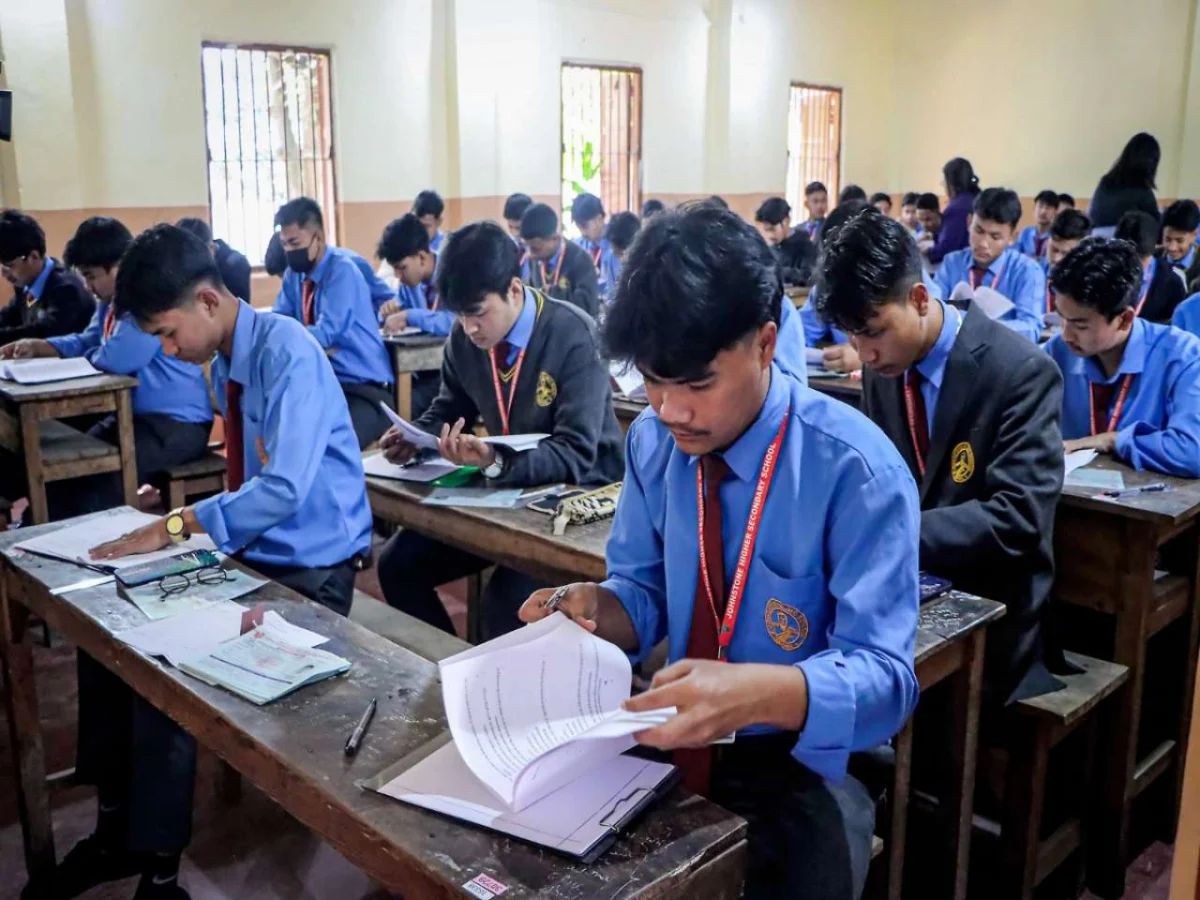
The bench, presided over by Justice Nagarathna, expressed concern that introducing a new language in the penultimate year before the crucial Class 10 board examinations would impose an undue academic burden on students. The court’s stance suggests a prioritization of student well-being and a more phased approach to curriculum enrichment.
)
The Core of the Concern: Academic Pressure and Timing
The primary contention raised by Justice Nagarathna revolved around the timing of introducing a third language. "Ninth standard is stressful," she observed, directly questioning the rationale behind adding a new linguistic subject at a juncture when students are already grappling with the intensified academic demands leading up to their board exams. The judge emphatically suggested that if the introduction of a third language is deemed necessary, it should be integrated into the curriculum much earlier, specifically from Class 6.

This viewpoint is rooted in the understanding that learning a new language requires significant time and consistent effort to achieve proficiency. Introducing it in Class 9, when students are focused on consolidating knowledge across core subjects for their board exams, could lead to diluted focus and increased stress, potentially impacting their performance in both the new language and their existing subjects.
)
Justice Nagarathna’s Personal Anecdote: A Historical Perspective
Reinforcing her argument, Justice Nagarathna drew upon her own educational experiences from the 1970s. She recalled that in her schooling days, students were introduced to concepts pertinent to Class 10 examinations as early as Class 8. This proactive approach, she highlighted, facilitated a smoother transition and better preparation for the secondary school leaving certificate examinations. The judge emphasized that this level of preparedness, even in her time, underscores the need for a more gradual introduction of new academic components.
)
"In our day, students were introduced to Class 10 concepts as early as Class 8 in preparation for board examinations. Given that level of preparation, what about students today? A new language should not be started in Class 9. It should begin in Class 6… I am recalling my experience from 1976," she stated, drawing a direct parallel between past educational practices and current student pressures. Her personal reflection serves as a powerful reminder of the importance of foundational learning and the potential pitfalls of curriculum overload.
)
The Tamil Nadu Factor: Policy Opposition and JNVs
The Supreme Court’s observations were made during the hearing of a case involving Tamil Nadu’s challenge to a Madras High Court directive compelling the state to facilitate the establishment of Jawahar Navodaya Vidyalayas (JNVs) in all districts. Tamil Nadu’s opposition to JNVs is largely attributed to their adherence to the three-language policy, which the state has historically resisted in its own educational framework.
)
The bench, while addressing Tamil Nadu’s stance, advised the state government against opposing the Union government’s education policy solely on the grounds of its origin. "You may have your education system, but don’t prevent the central government schools…. Don’t have this attitude that it is the Union government, so why should we accept it," the Bench observed. This remark underscores a judicial call for objective evaluation of policies, irrespective of the implementing authority.
)
Ongoing Discussions on JNVs in Tamil Nadu
The court acknowledged that discussions regarding the establishment of JNVs in Tamil Nadu are still in progress. "The talks haven’t concluded yet. Only if they fail will the question of us going into merits arise. There’s been a change of guard… let’s see what comes out of the discussions," the Bench noted. This indicates that the apex court is keen on allowing administrative and diplomatic channels to resolve the issue before delving deeper into the merits of the legal challenge. The mention of a "change of guard" might allude to potential shifts in policy or negotiation strategies from either the state or central government.
)
The hearing also highlighted that Tamil Nadu’s opposition to JNVs is linked to the three-language formula mandated in these central government schools. The state’s stance often stems from its commitment to promoting Tamil and English as the primary languages of instruction. The introduction of a third language, particularly Hindi, has been a point of contention in the past.
)
Broader Implications of the Supreme Court’s Stance
The Supreme Court’s questioning of the Class 9 third language introduction has far-reaching implications for the CBSE curriculum and educational policies nationwide. It signals a judicial recognition of the immense pressure students face in the current academic landscape and a potential shift towards a more student-centric approach to curriculum design.
)
Re-evaluation of Curriculum Design
The apex court’s advisory to the Union government and CBSE to reconsider the timing of introducing a third language is likely to prompt a re-evaluation of curriculum design across various boards. Educational experts and policymakers may need to conduct thorough studies on the cognitive development of students at different age groups and their capacity to absorb new linguistic inputs without compromising their overall academic progress.
)
Emphasis on Foundational Language Learning
Justice Nagarathna’s advocacy for introducing a third language from Class 6 aligns with principles of effective language acquisition. Starting earlier allows for a more gradual and immersive learning process, enabling students to build a strong foundation and develop fluency over a longer period. This could lead to a more meaningful and less stressful language learning experience.
)
Potential Impact on the Three-Language Policy Debate
The Supreme Court’s observations also add a significant dimension to the ongoing debate surrounding the three-language policy. While the policy aims to promote linguistic diversity and national integration, its implementation has often been a subject of controversy. The court’s focus on the practical challenges of introducing a new language at a critical academic stage could influence future discussions and policy formulations, potentially leading to more flexible and context-specific approaches to language education.
)
Judicial Intervention in Educational Policy
The Supreme Court’s direct engagement with the specifics of curriculum design, such as the timing of language introduction, underscores the judiciary’s increasing role in addressing educational policy matters. This intervention highlights the court’s commitment to ensuring that educational policies are implemented in a manner that is conducive to student welfare and academic success.
)
Looking Ahead: Next Steps and Future Directions
The Supreme Court has posted the matter for its next hearing on August 11. This provides an opportunity for the Union government and CBSE to consider the court’s observations and potentially present revised proposals regarding the introduction of the third language. The ongoing discussions with Tamil Nadu regarding JNVs will also be closely watched, as the outcome could set precedents for other states grappling with similar policy challenges.
)
The case serves as a critical juncture in the ongoing discourse on educational reforms, emphasizing the need for a balanced approach that integrates academic rigor with the well-being and developmental needs of students. The Supreme Court’s proactive stance is likely to encourage a more thoughtful and phased implementation of educational policies, ensuring that the pursuit of linguistic diversity does not come at the cost of student stress and academic pressure.
