

KOLKATA — In the world of fine spirits, there is a silent, invisible ingredient that no laboratory can synthesize and no technologist can accelerate: patience. It is the quiet protagonist of the Scotch whisky industry, a virtue that begins in the undulating barley fields of Scotland and culminates decades later in a crystal tumbler thousands of miles away.
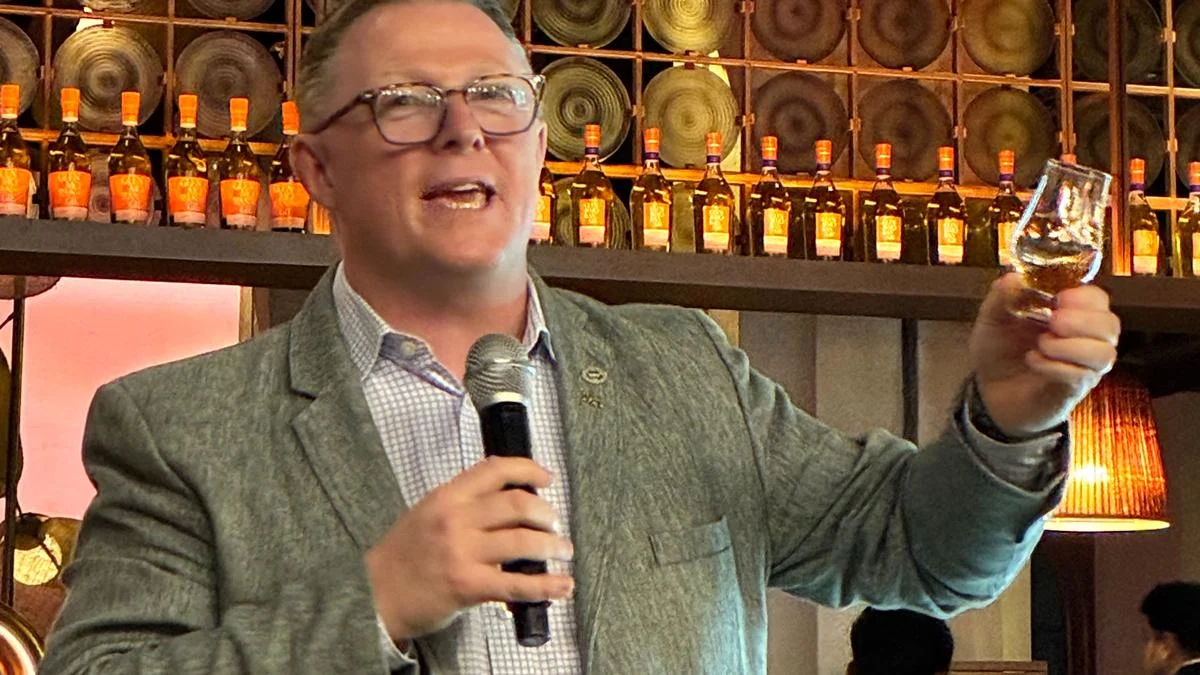
On the evening of June 11, this philosophy of endurance took center stage at Olterra, a premier Greek-themed bar and microbrewery in Kolkata. Hosted by Glenmorangie in partnership with Moët Hennessy India, the "Cask and Conversation" event served as more than a mere tasting. It was a masterclass in the slow, mysterious work of time, led by David Blackmore, the Global Brand Ambassador for Glenmorangie and Ardbeg.
Main Facts: A Sensory Journey Through the Highlands and Islay
The event was designed to showcase the diverse portfolio of the LVMH-owned distilleries, specifically highlighting the nuances of wood maturation and the distinct geographical identities of Scottish whisky. The core of the evening revolved around four distinct expressions: the foundational Glenmorangie 12-Year-Old, the newly unveiled Lasanta 15-Year-Old, the prestigious 18-Year-Old, and the peat-forward Ardbeg.
Kolkata, a city with a long-standing appreciation for heritage and "old-world" luxury, provided a fitting backdrop. As the humidity of a Bengal summer lingered outside, the interiors of Olterra were transformed into a sanctuary of Highland elegance. The gathering attracted a curated list of connoisseurs, industry experts, and lifestyle influencers, all eager to dissect the complexities of spirits that had spent more than a decade in the darkness of Scottish warehouses.

David Blackmore, who has spent the better part of his career traversing the globe to tell the story of the "Glen of Tranquility," guided the audience through the tasting. His approach was less about technical jargon and more about narrative, treating each bottle as a repository of memory—the memory of the wood, the weather, and the water.
Chronology: The Evolution of the Palate
The evening followed a meticulously planned trajectory, moving from the light, floral accessibility of the Highlands to the rugged, elemental intensity of the Islay coast.
The Foundation: Glenmorangie 12-Year-Old
The session opened with the Glenmorangie 12-Year-Old, a whisky Blackmore described as the quintessential "house style." For those unacquainted with the brand, this expression serves as the benchmark. Distilled in Scotland’s tallest stills—which are as tall as an adult giraffe—the spirit is known for its lightness and purity.
As the first pours were served, the room was filled with notes of honey, vanilla, and bright citrus. Blackmore encouraged the guests to first try the spirit neat, then add a dash of water to "let it blossom." This foundational dram set the tone, emphasizing the "fruity and floral" DNA that defines the Glenmorangie distillery.

The Transformation: The Lasanta 15-Year-Old
The highlight of the evening for many was the introduction of the newly unveiled Lasanta 15-Year-Old. This expression represents a significant step up in complexity from its younger siblings. The chronology of its creation is a testament to the "Cask" part of the evening’s title.
The spirit spends its first 12 years in American white oak ex-bourbon casks, absorbing the classic vanilla and coconut notes. However, it is the final three years that define its character. The whisky is moved to Spanish Oloroso and Pedro Ximénez sherry casks for a finishing period. This secondary maturation transforms the liquid into a deep orange hue, reminiscent of a Highland sunset.
The Pinnacle: Glenmorangie 18-Year-Old
As the evening progressed, the glasses were filled with the 18-Year-Old, a whisky that Blackmore admitted was his personal "desert island" choice. If the 12-Year-Old is a bright morning, the 18-Year-Old is a sophisticated evening.
Blackmore explained the delicate balance of this expression: approximately 70% of the spirit is aged in bourbon casks, while the remaining 30% is finished in sherry wood. "Just a little kiss of sherry, not too much," he noted. The result is a layered, silken texture with notes of dried fruits and floral complexity—a spirit that carries the confidence of nearly two decades of maturation.

The Turning Point: The Ardbeg Experience
The final act of the night was a radical departure. Moving away from the "polite" elegance of Glenmorangie, Blackmore introduced Ardbeg. Unlike the previous pours, this came without a vintage specification but brought with it a reputation for being the "ultimate Islay malt."
The atmosphere in the room shifted instantly. The citrus and honey were replaced by the scent of sea spray, wet earth, and bonfire smoke. Ardbeg is famously polarizing, and Blackmore acknowledged this, calling it an "acquired taste." Yet, for many in the Kolkata audience, the smoke was a welcome guest, described by one attendee as "an old friend."
Supporting Data: The Science of the Cask
To understand the "Conversation" part of the evening, one must look at the data behind the distillation. Glenmorangie’s signature profile is a result of several unique technical factors:
- Still Height: At 5.14 meters (16 feet 10 ¼ inches), Glenmorangie’s stills are the tallest in Scotland. Only the lightest, purest vapors reach the top, resulting in a smooth, elegant spirit.
- Water Source: The Tarlogie Springs, the distillery’s own water source, is rich in minerals. This "hard" water contributes to the raw spirit’s unique texture before it ever touches wood.
- Wood Policy: Glenmorangie is a pioneer in "wood management." While many distilleries use casks five or six times, Glenmorangie typically uses its casks only twice, ensuring that the maximum amount of flavor is extracted from the oak.
The Lasanta 15, specifically, showcases the impact of "finishing." The move from bourbon to sherry casks involves a chemical exchange where the tannins and sugars of the Spanish oak interact with the Highland spirit, introducing notes of chocolate, hazelnut, and marmalade that are absent in the initial distillation.

Official Responses: Global Perspectives on Local Markets
During the event, David Blackmore provided insights into why Moët Hennessy continues to invest heavily in the Indian market, and specifically in cities like Kolkata.
"Whisky is a global language, but every city speaks it with a different accent," Blackmore remarked. He noted that Indian consumers are increasingly moving away from "blended" whiskies toward "single malts," seeking out the story and the provenance of what is in their glass.
Moët Hennessy India has observed a significant trend toward "premiumization." As the Indian middle and upper-middle classes grow, there is a burgeoning desire for "experiential luxury." Events like ‘Cask and Conversation’ are designed to cater to this demographic—people who don’t just want to drink, but want to understand the history, the geography, and the craftsmanship behind the label.
Blackmore also addressed the "rules" of drinking whisky, debunking the myth that it must only be taken neat. "If you like to add a dash of water, that’s great. It breaks the surface tension and allows the aromas to escape," he told the audience, reinforcing the brand’s modern, inclusive approach to luxury spirits.

Implications: The Future of Single Malt Culture in India
The success of the evening at Olterra carries several implications for the alcobev industry in India:
1. The Rise of the Connoisseur Class
The level of engagement from the Kolkata audience suggests that Indian consumers are no longer passive drinkers. They are becoming "spirits enthusiasts" who value the educational aspect of brand activations. This shift is forcing brands to bring their "A-game," sending global ambassadors like Blackmore to Tier-1 and Tier-2 cities alike.
2. Kolkata as a Strategic Hub
While Mumbai and Delhi have traditionally been the focus for luxury launches, Kolkata’s deep-rooted culture of appreciation for fine arts, literature, and "the finer things" makes it a critical market for high-end single malts. The city’s historic clubs and evolving modern bar scene provide a dual-track opportunity for brands like Glenmorangie.
3. The "Finish" is the New Frontier
The enthusiastic reception of the Lasanta 15-Year-Old indicates a growing palate for "finished" whiskies. As consumers become bored with standard expressions, the industry is seeing a move toward experimental cask finishes—ranging from Sherry and Port to more exotic woods like Mizunara or even Tequila casks.

4. The Resilience of Heritage Brands
In an era of "craft" everything, legacy brands like Glenmorangie (founded in 1843) are successfully leveraging their history to remain relevant. By focusing on the "alchemy of time" and the "patience" required for maturation, they offer a sense of permanence and authenticity that newer brands struggle to replicate.
As the final glasses were emptied and the "Shortie" mascots (the Jack Russell Terrier associated with Ardbeg) faded into the night, the takeaway was clear: Scotch whisky remains a bridge between worlds. It connects the rain-swept Highlands of Scotland to the warm, vibrant streets of Kolkata, proving that while time may be a luxury, it is one that is best shared in good company.
