

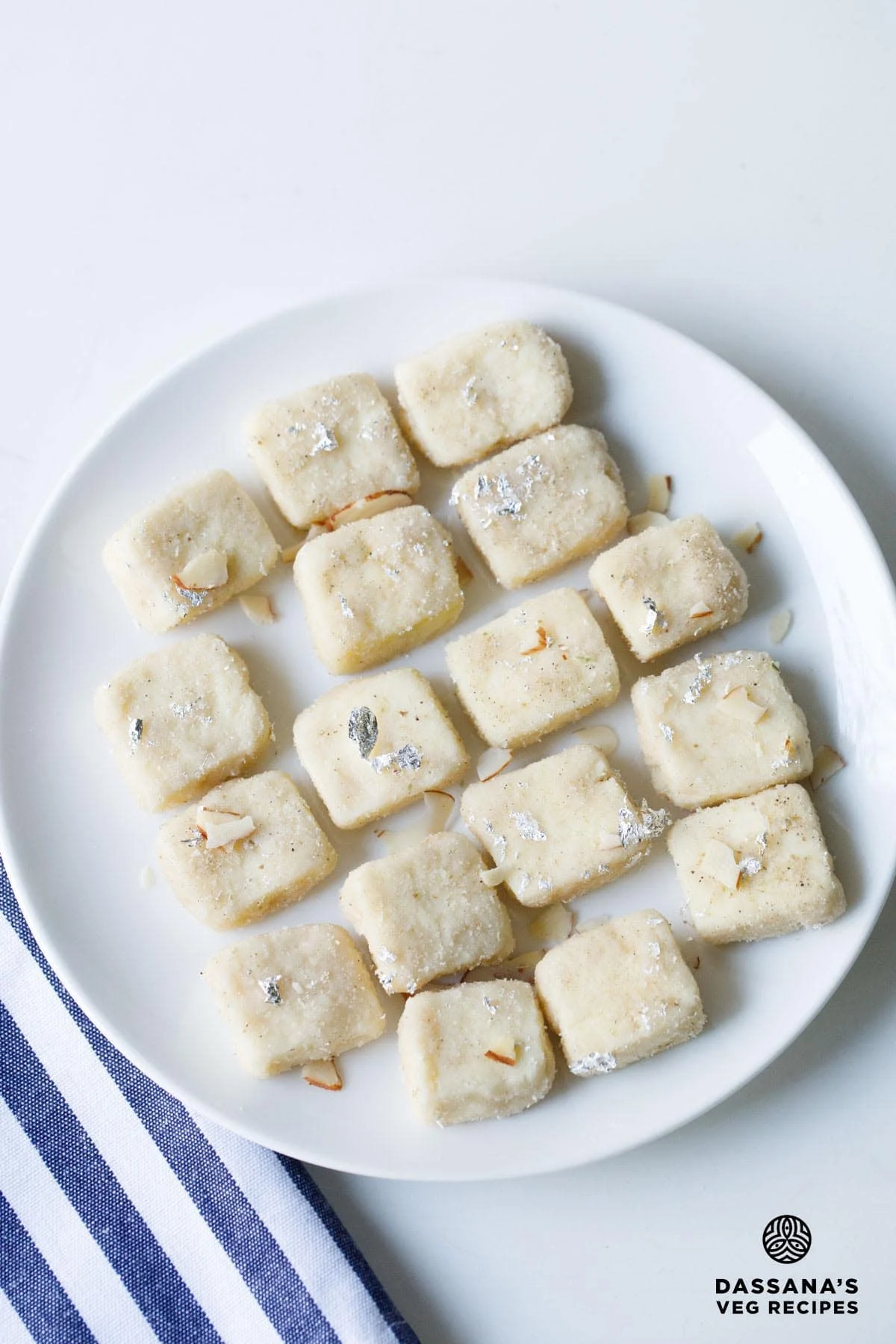
KOLKATA — In the pantheon of Indian confectionery, few regions command as much reverence as Bengal. While the world often associates the state’s sugary heritage with the syrupy Rasgulla or the creamy Sandesh, a smaller, more tactile treasure continues to hold a position of high esteem among connoisseurs: Chena Murki. A masterpiece of minimalist ingredients and maximalist technique, Chena Murki represents a unique intersection of dairy science and traditional candy-making.

Defined by its signature contrast—a crisp, snow-white shell of crystallized sugar yielding to a tender, milky heart of fresh paneer—Chena Murki is more than a dessert; it is a testament to the Bengali "murki" technique. As the festive seasons of Durga Puja and Diwali approach, culinary historians and artisanal confectioners are witnessing a resurgence of interest in this classic sweet, driven by a global appetite for gluten-free, "clean-label" traditional delicacies.
Main Facts: The Anatomy of a Minimalist Classic
Chena Murki, often spelled Chhena Murki, is a traditional Bengali sweetmeat consisting of small cubes of fresh chhena (Indian cottage cheese) or paneer that have been cooked in and coated with a delicate layer of crystallized sugar. Unlike many of its counterparts in the Indian "mithai" repertoire, Chena Murki is neither fried nor soaked in heavy syrup. Instead, it relies on the physical transformation of sugar from a liquid state back into a solid, granular form—a process known as crystallization.

The ingredient list is deceptively short: fresh paneer, refined sugar, water, and aromatic enhancers such as cardamom or rose water. However, the simplicity of the components places the burden of quality entirely on the technique. The sweet is naturally gluten-free, making it a modern favorite for health-conscious consumers seeking authentic experiences without the inclusion of flour or synthetic binders.
While it shares a linguistic and regional lineage with other "chhena" based sweets, Chena Murki is distinct from Odisha’s Chhena Gaja or Chena Khurma. While those varieties often involve frying the cheese or caramelizing the sugar to a deep brown, the Bengali Chena Murki remains pearlescent and soft, focusing on the purity of the dairy flavor.

Chronology: From Portuguese Influence to the Modern Stovetop
The history of Chena Murki is inextricably linked to the evolution of cheese-making in the Indian subcontinent.
The 17th Century Foundation:
The "chhena" used in this sweet was not always a staple of Indian cuisine. Culinary historians note that ancient Vedic traditions largely frowned upon "breaking" milk with acid. It was the arrival of Portuguese settlers in Bengal during the 17th century that introduced the technique of curdling milk with acidic agents to create fresh curd cheese. This revolutionized Bengali confectionery, leading to the creation of the entire "chhena" family of sweets, of which Chena Murki is a foundational member.

The Development of the ‘Murki’ Technique:
The term "murki" traditionally refers to food items—often puffed rice or grains—coated in a layer of crystallized jaggery or sugar. As Bengali "moiras" (traditional confectioners) refined their craft, they applied this coating technique to cubes of firm chhena. This allowed the sweet to have a longer shelf life than the moisture-heavy Rasgulla, making it an ideal gift for travelers and a staple for festive platters.
The Culinary Process (The Modern Chronology):
To produce the perfect Chena Murki today, a specific chronological sequence must be followed with scientific precision:

- Preparation and Desiccation: Fresh paneer is sliced into uniform cubes (roughly 2.5 to 3 cm). A critical, often overlooked step involves air-drying these cubes for 15 minutes to ensure the surface moisture does not interfere with the sugar’s ability to adhere.
- The Saturation Phase: A sugar syrup is prepared by dissolving refined sugar in water over medium heat.
- The "One-String" Milestone: The syrup is cooked until it reaches the "Ek Taar" (one-string) consistency. This is the thermal tipping point where the sugar concentration is high enough to crystallize but fluid enough to coat.
- The Simmering Interval: The paneer cubes are introduced to the boiling syrup and simmered for five to six minutes. This allows the heat to toughen the outer protein structure of the cheese while the sugar begins to penetrate the surface.
- The Crystallization Finale: Once the syrup begins to foam and whiten, the heat is extinguished. This is the most labor-intensive stage, requiring continuous, gentle stirring for 10 to 20 minutes as the mixture cools. As the temperature drops, the sugar precipitates out of the solution, forming a crisp, white crust around each individual cube.
Supporting Data: The Science of the "One-String" Syrup
The success of Chena Murki is governed by the laws of thermodynamics and sucrose solubility. According to food science data, the "one-string" consistency occurs when the sugar syrup reaches a concentration of approximately 80% sugar. At this stage, the boiling point of the syrup rises significantly above that of water.
Nutritional Profile (Per Serving):
An analysis of a standard serving of Chena Murki (approx. 24 small pieces) reveals a profile that balances indulgence with protein:

- Calories: 49 kcal per piece.
- Protein: 1g (derived from the high-quality dairy solids).
- Calcium: 41mg (roughly 4% of the daily recommended intake).
- Carbohydrates: 6g (primarily in the form of sucrose).
Technical Variables:
The type of sugar used significantly alters the final product. Refined white sugar, which is 99.9% sucrose, produces a bright, crystalline white coating. In contrast, organic cane sugar, which contains trace minerals and molasses, results in a pale cream or light brown coating with a softer, more powdery texture. Humidity also plays a role; in high-moisture environments, the crystallization process can take up to 30% longer, requiring the confectioner to adjust the stirring time accordingly.
Official Responses: Expert Perspectives on Culinary Integrity
Renowned chefs and culinary preservationists emphasize that the "soul" of Chena Murki lies in the quality of the dairy.

"The commercialization of paneer has been a double-edged sword for traditional sweets," says a senior pastry consultant based in Kolkata. "While store-bought paneer offers convenience, it often contains stabilizers that make the Chena Murki rubbery. For an authentic result, the chhena must be made fresh, curdled with lemon juice, and hung just long enough to retain its suppleness. The goal is a sweet that ‘pops’ with a sugar crunch but melts like butter inside."
Culinary historians also point to the importance of the "Final Stir." "Many amateur cooks fail because they stop stirring too early," notes a researcher of Vedic and post-colonial Indian diets. "The act of stirring as the temperature falls is what prevents the sugar from forming a single, hard block. It is a manual agitation that encourages the formation of small, even crystals. It is, in essence, an athletic endeavor as much as a culinary one."

Industry experts also note that the use of a flat wooden spatula is not merely a traditional preference but a functional necessity. Metal implements can easily fracture the delicate protein bonds of the paneer cubes, leading to a "crumbly" batch that lacks the aesthetic uniformity required for festive presentation.
Implications: Cultural Heritage and the Global Market
The persistence of Chena Murki in the modern era carries significant cultural and economic implications.

Cultural Identity and the Diaspora:
For the Bengali diaspora in the United Kingdom, United States, and Canada, Chena Murki has become a symbol of "home-cooked" heritage. Unlike more complex sweets that require industrial machinery, Chena Murki’s reliance on hand-stirring makes it an accessible project for families wishing to pass on traditional skills to younger generations. Its presence at Durga Puja celebrations worldwide reinforces its status as a cultural anchor.
Economic Shift Toward Artisanal Sweets:
The Indian confectionery market, valued at billions of dollars, is seeing a shift away from mass-produced, high-preservative candies toward "fresh-to-table" mithai. Chena Murki fits perfectly into this niche. Because it has a relatively short shelf life (3 to 4 days in refrigeration), it encourages a local, artisanal economy where sweets are made in small batches and consumed fresh.

Sustainability and the Dairy Sector:
The demand for high-quality chhena provides a steady revenue stream for local dairy farmers. As consumers become more discerning about the source of their paneer, there is an increased push for "A2" milk and organic dairy farming, linking the survival of traditional sweets to the health of the agricultural sector.
Conclusion:
Chena Murki stands as a brilliant example of how three simple elements—milk, sugar, and heat—can be transformed into a sophisticated sensory experience. It challenges the modern fast-food ethos, demanding patience and a deep understanding of temperature and texture. As the culinary world continues to look backward to find the future of food, the humble Chena Murki remains a shimmering, sugar-coated reminder of the timelessness of Bengali craft. Whether served with a cup of Darjeeling tea or as the crowning jewel of a Diwali platter, it remains a sweet that is, quite literally, crystallized history.
