

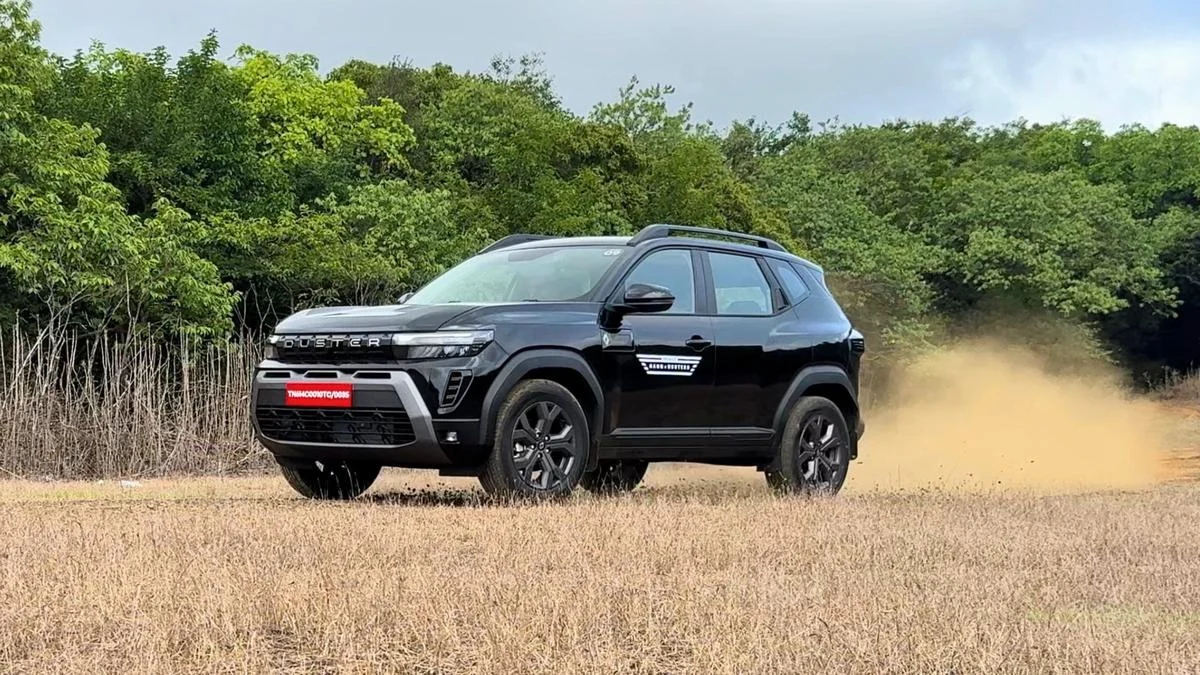
Main Facts: Challenging the "Bigger is Better" Narrative
In the competitive landscape of the Indian automotive market, a long-standing prejudice has dictated consumer behavior: the belief that an SUV’s capability is directly proportional to its engine displacement. For years, the "replacement for displacement" was a mantra that sidelined small-capacity engines, relegating them to entry-level hatchbacks. However, the introduction of the Renault Duster TCe 100 represents a significant pivot in this philosophy, challenging the notion that a 999cc engine is insufficient for a vehicle of its stature.
The Renault Duster TCe 100 is powered by a 1.0-litre, three-cylinder turbocharged petrol engine. On the surface, its output of 100 PS and 166 Nm of torque might seem modest in a segment where rivals often boast larger 1.5-litre units or high-output 1.3-litre turbos. Yet, empirical testing and real-world driving dynamics suggest that Renault has prioritized torque delivery and gear calibration over sheer horsepower. Priced between ₹10.49 lakh and ₹13.49 lakh, the TCe 100 aims to occupy the "sweet spot" of the Duster range, offering a blend of European driving dynamics, rugged utility, and fiscal pragmatism.
The vehicle’s performance is not merely a product of its internal combustion; it is a result of a holistic engineering approach that integrates a lightweight chassis with a highly responsive turbocharger. This combination allows the Duster to punch significantly above its weight class, delivering a driving experience that rivals more expensive offerings from Volkswagen and Skoda.
Chronology: The Evolution of a Legend and its Powertrain
To understand the significance of the TCe 100, one must look at the Duster’s journey in the Indian market. Launched originally as a rugged, no-nonsense SUV, the Duster garnered a cult following for its exceptional ride quality and "go-anywhere" attitude. However, as emission norms tightened and the market shifted away from diesel, Renault faced the challenge of replacing its legendary 1.5 dCi engine with a petrol alternative that didn’t sacrifice the vehicle’s character.
The development of the TCe 100 engine is a story of strategic downsizing. While the basic engine block is shared with the Renault Kiger, the version found in the Duster has undergone substantial re-engineering. Engineers focused on refining the NVH (Noise, Vibration, and Harshness) levels and remapping the ECU to handle the Duster’s heavier kerb weight and varied terrain requirements.

The transition from the naturally aspirated engines of the past to this modern turbocharged unit marks a third chapter for the Duster. The first was defined by diesel dominance, the second by the introduction of the high-performance 1.3-litre turbo petrol, and this current phase, which focuses on democratizing turbocharged performance. The TCe 100 is the culmination of Renault’s efforts to provide a balanced entry point into the premium SUV segment without the "budget" feel typically associated with small engines.
Supporting Data: Performance Metrics and Technical Analysis
The efficacy of the TCe 100 is best understood through its technical performance under varying conditions. The 166 Nm of torque is the critical figure here, peaking at 2,000 rpm. This low-end accessibility ensures that the dreaded "turbo lag"—the delay before the engine finds its rhythm—is virtually non-existent.
Powertrain and Transmission Efficiency
The Duster utilizes a six-speed manual gearbox, a choice that allows for tighter gear ratios in the lower range for city drivability and a taller sixth gear for fuel-efficient highway cruising. Data from city driving trials indicates that the vehicle can comfortably pull from speeds as low as 25 km/h in third gear. This flexibility reduces the frequency of gear changes, a common pain point in small-displacement engines.
On the highway, the TCe 100 maintains a steady 100 km/h at a relaxed RPM, leaving enough headroom for overtaking maneuvers. In mountain testing, where gradients often exceed 10-12%, the Duster’s torque spread allowed it to maintain momentum without the engine feeling "out of breath."
Ride, Handling, and NVH
While three-cylinder engines are inherently prone to imbalance, Renault has utilized advanced damping and insulation. At idle, a slight vibration is detectable, but once the tachometer crosses 1,500 rpm, the engine smoothens out.

The chassis remains the Duster’s strongest suit. The suspension setup, while leaning toward the firmer side to prevent body roll, employs long-travel shocks that absorb road imperfections with a level of sophistication rarely seen at this price point. The steering system—a hydraulic-electric hybrid—offers a weight and feedback level that provides a "connected" feel, distinguishing it from the overly light and disconnected steering found in many modern Korean and Japanese SUVs.
Interior Ergonomics and Features
The Techno variant of the Duster TCe 100 brings a more sophisticated cabin to the table:
- Aesthetics: Dual-tone finishes with brown accents and extensive use of fabric on the dashboard and door cards.
- Infotainment: A high-resolution touchscreen with lag-free Android Auto and Apple CarPlay integration.
- Safety and Hardware: All-wheel disc brakes (a rarity in this class), 17-inch alloy wheels, and a comprehensive suite of active safety features.
- Practicality: A boot capacity designed for family travel and a rear bench that, while tight for three, offers class-leading legroom for two adults.
Official Responses and Market Positioning
Renault’s strategic positioning for the TCe 100 is clear: it is the "rational choice" for the modern Indian family. While the company continues to offer the 1.3-litre turbo for enthusiasts, official marketing and product placement suggest that the TCe 100 is intended to be the volume driver.
Renault’s engineers have noted that the goal was to create a "European-flavored" experience that prioritizes mechanical integrity over "gimmickry." By focusing on the fundamentals—steering feel, braking performance (via all-wheel discs), and chassis balance—Renault is positioning the Duster as a driver-centric alternative to the feature-heavy but dynamically softer competitors in the mid-size SUV segment.
Industry analysts suggest that Renault is targeting the gap left by the rising prices of the Volkswagen Taigun and Skoda Kushaq. By offering a similar level of driving engagement at a more accessible price point, Renault aims to recapture the "rugged-yet-refined" niche it once dominated.

Implications: The Future of the Compact SUV Segment
The success of the Duster TCe 100 has broader implications for the Indian automotive industry. It serves as a proof of concept that "right-sizing" is more important than "down-sizing." If consumers embrace the 1.0-litre TCe, it could accelerate the shift away from larger, less efficient naturally aspirated engines across all manufacturers.
The Feature-vs-Function Debate
The Duster’s lack of certain "luxury" features—specifically ventilated seats and electric seat adjustment—highlights a growing divide in the market. While competitors focus on cabin "theatrics," Renault is betting that a segment of buyers still prioritizes how a car drives and how it handles poor road conditions. The implication is that there remains a loyal market for "mechanical" SUVs in an increasingly "digital" world.
Economic and Environmental Impact
With a smaller displacement, the TCe 100 offers better fuel efficiency and lower emissions compared to the older 1.5-litre engines it replaces. For the consumer, this translates to lower running costs without a significant sacrifice in highway capability. For the manufacturer, it ensures compliance with increasingly stringent Corporate Average Fuel Efficiency (CAFE) norms.
Conclusion: A New Benchmark for Value
The Renault Duster TCe 100 is a reminder that specifications on a brochure rarely tell the whole story. By focusing on torque delivery, gearbox calibration, and chassis dynamics, Renault has produced a vehicle that feels more capable than its 999cc badge would suggest.
In a market often obsessed with "more"—more screens, more sunroofs, more horsepower—the Duster TCe 100 stands as a testament to "better." It proves that a well-engineered powertrain can overcome the limitations of displacement, and that true value in an SUV is found not in the numbers on the page, but in the confidence it inspires on the road. For the buyer looking for a sophisticated, rugged, and engaging driving experience without breaking the ₹14 lakh barrier, the Duster TCe 100 is not just a viable option; it is arguably the new benchmark.

Technical Summary:
- Engine: 1.0L TCe Turbo Petrol
- Power/Torque: 100PS / 166Nm
- Transmission: 6-Speed Manual
- Price Range: ₹10.49 lakh – ₹13.49 lakh (Ex-showroom)
- Key Rivals: Skoda Kushaq 1.0 TSI, VW Taigun 1.0 TSI, Hyundai Creta 1.5 NA.
