

The Jaipur Literature Festival (JLF) has long served as a global crossroads for ideas, but few sessions during its 2022 iteration resonated with as much historical weight as the discussion on the Indonesian Ramayana. On the festival’s fourth day, a panel featuring acclaimed historian William Dalrymple and authors Malini Saran and Vinod C. Khanna delved into the profound cultural synthesis that occurred when the Indian epic traveled across the Bay of Bengal.
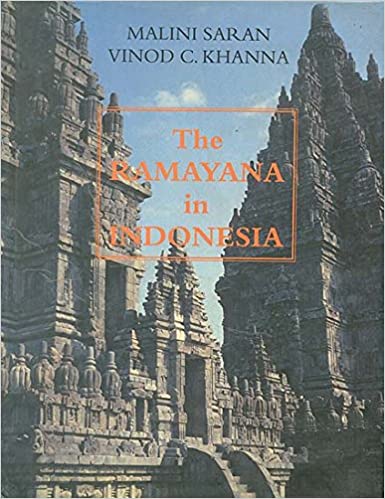
Centering on Saran and Khanna’s seminal work, The Ramayana in Indonesia, the discussion illuminated a narrative that many Indians remain surprisingly unfamiliar with: that the most magnificent expressions of their own heritage often flourish thousands of miles from the subcontinent. The session highlighted how the tale of Prince Rama was not merely imported to the Indonesian archipelago but was radically reimagined, becoming a cornerstone of Javanese and Balinese identity.
Main Facts: A Tale of Two Cultures
The Ramayana is often viewed through the singular lens of Sage Valmiki’s Sanskrit original. However, the JLF session underscored that the Indonesian version—specifically the Kakawin Ramayana—is a masterpiece of "transcreation" rather than a simple translation.
The Javanese "Transcreation"
According to Vinod C. Khanna, the Old Javanese Ramayana appeared in central Java around the end of the 9th century. This period saw the emergence of two distinct yet complementary retellings: a sculpted narration found on the walls of magnificent temple complexes and a literary version written in Old Javanese.
While the Kakawin Ramayana is rich in Sanskrit vocabulary, it belongs to an entirely different linguistic family. The authorship is traditionally attributed by the Balinese to a figure named Yogeshwara, though his historical identity remains shrouded in mystery. Crucially, the primary source for this version was not Valmiki’s text, but the Bhattikavya, a 7th-century classical Sanskrit poem by the poet Bhatti, which was designed to teach grammar while recounting the life of Rama.
The Structural Departure
One of the most striking revelations from the discussion was the structural difference between the Indian and Javanese epics. The Javanese version follows the Bhattikavya in completely omitting the Uttara Kanda—the final book of the Valmiki Ramayana. In the Javanese tradition, the story concludes on a high note, with Rama and Sita returning to Ayodhya to live in sustained bliss. This editorial choice fundamentally alters the emotional arc of the story, favoring a heroic and celebratory resolution over the tragic exile of Sita found in Valmiki’s later additions.
Chronology: The Journey of an Epic
The presence of the Ramayana in Indonesia is the result of a millennium-long process of cultural exchange, driven by trade, religion, and diplomacy.
- Early Centuries CE: Indian merchants and priests began traveling to Southeast Asia, bringing with them Sanskrit texts and the Hindu-Buddhist worldview. This period laid the groundwork for the "Indianization" of the region.
- 8th to 10th Century: This was the "Golden Age" of Central Java. Under the Sailendra and Sanjaya dynasties, massive architectural projects were undertaken.
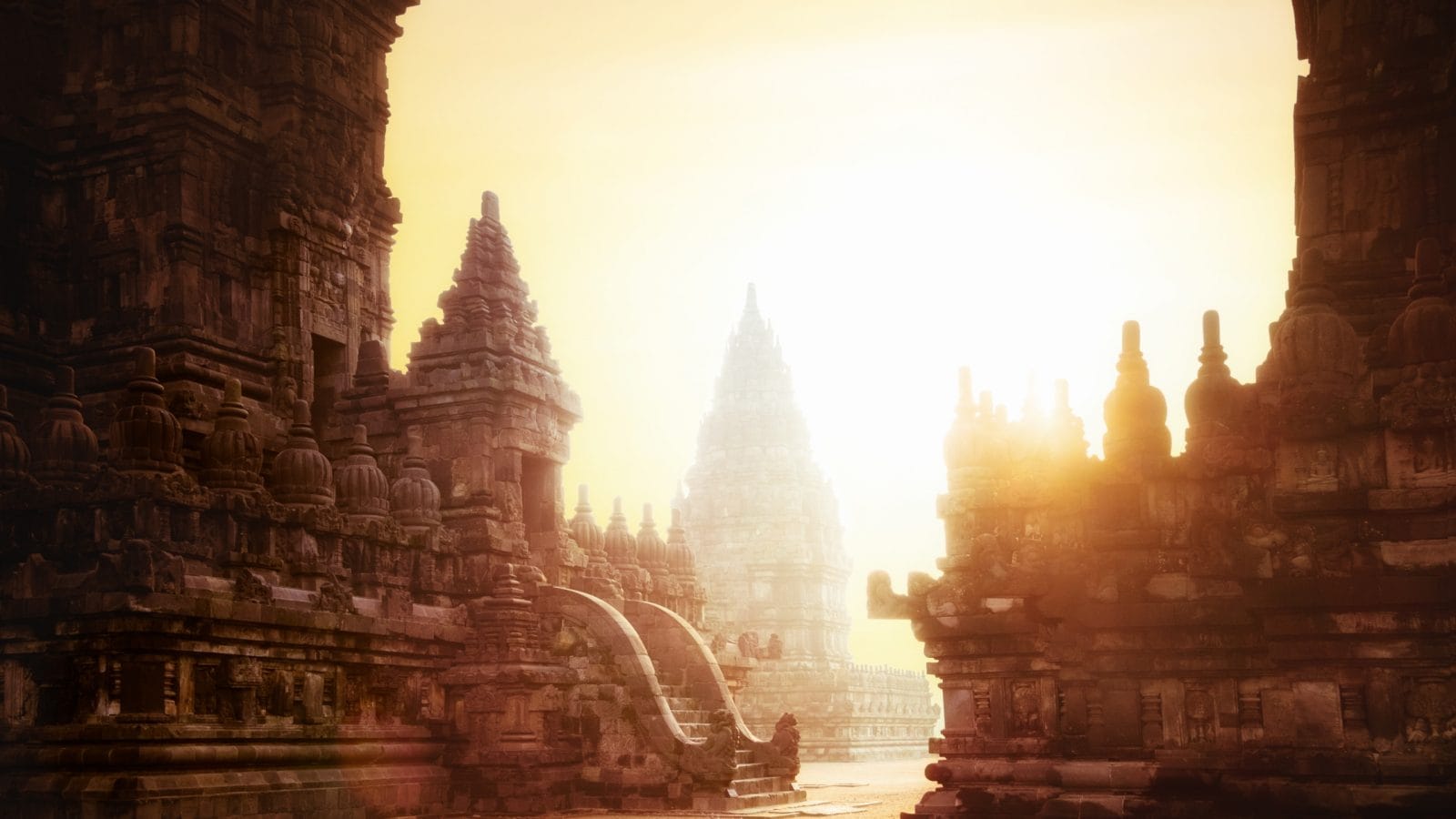
- Late 9th Century (c. 850–900 CE): The Kakawin Ramayana was composed. Simultaneously, the Prambanan temple complex was built, featuring extensive bas-reliefs of the Rama story.
- 11th to 15th Century: As the center of power shifted to East Java, the Ramayana was further localized. New versions, such as the Serat Rama, began to incorporate local Javanese folklore and shadow puppet (Wayang) traditions.
- 16th Century to Present: Despite the gradual conversion of Java to Islam, the Ramayana remained central to the cultural fabric. It transitioned from a strictly religious text to a cultural and moral compass, preserved through the oral and performing arts.
Supporting Data: Stone, Palm Leaves, and Performance
The endurance of the Ramayana in Indonesia is supported by three distinct pillars: architecture, literature, and the performing arts.
Architectural Evidence: Prambanan and Panataran
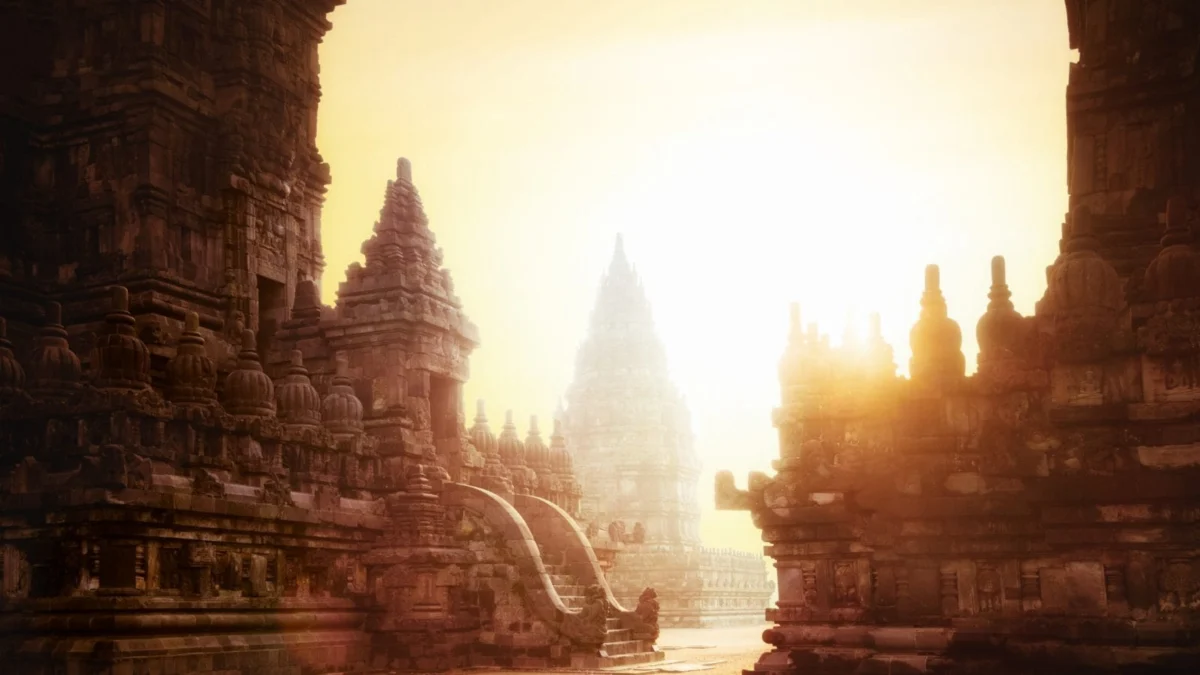
The panel discussed the "awe-inspiring" sculpting found in Indonesian temples. The Prambanan temple complex in Central Java, a UNESCO World Heritage site, contains a series of reliefs that narrate the Ramayana with incredible detail. Historians note that these reliefs often show Rama and his allies in local Javanese settings, wearing local attire, signaling that by the 9th century, the story had already been "indigenized."
Later, at the 14th-century Panataran temple in East Java, the style of the Ramayana reliefs shifted toward the "Wayang style," characterized by more stylized, two-dimensional figures that mirror the aesthetics of shadow puppetry.
Literary Preservation: The Lontar Tradition
Vinod C. Khanna highlighted the role of the Balinese people in preserving the Kakawin Ramayana. For centuries, scribes laboriously copied the text onto lontar (palm leaf) manuscripts. This tradition ensured that the Old Javanese language and the specific poetic meters of the epic survived long after they had fallen out of common use in Java.
The Performing Arts: Wayang and Dance
Malini Saran emphasized that the Ramayana lived on through the "robust and visual performing arts." The Wayang Kulit (shadow puppet theater) and Wayang Wong (human dance drama) are not merely entertainment in Indonesia; they are ritualistic performances. In these versions, characters like Hanuman and the Panakawan (clown-servants like Semar) take on outsized roles, often acting as the bridge between the divine heroes and the common audience.
Official Responses and Expert Insights
The JLF session provided a platform for experts to challenge the Eurocentric or India-centric views of history.
William Dalrymple on "The Indosphere"
William Dalrymple, a historian known for his work on the intersection of cultures, noted the irony of modern Indian awareness. "It is a remarkable thing that most Indians are unaware of," he said, pointing out that some of the most sophisticated monuments of Hinduism and Buddhism—such as Borobudur and Prambanan—exist far outside India’s modern borders. Dalrymple’s commentary suggested that the Ramayana served as a primary export of Indian "soft power" long before the term was coined.
Vinod C. Khanna on Intellectual Depth
Khanna remarked on the high level of scholarship present in ancient Java. The author of the Kakawin Ramayana was clearly a "well-read Sanskrit scholar" who did not just copy texts but engaged with them creatively. "He also uses other Sanskrit classics freely and imaginatively in his works," Khanna explained, noting that the Javanese poet often introduced a greater sense of drama and psychological depth than found in the source materials.
Malini Saran on Malleability
Saran’s insights focused on the flexibility of the epic. She explained that the "malleability of Ramayana gave the local artists freedom to shape and interpret this material." This adaptability is what allowed the story to survive the transition of the region’s dominant religion from Hinduism to Islam. In the Indonesian context, the Ramayana became a manual for statecraft and ethics (Niti Sastra) rather than just a sectarian scripture.
Implications: A Model for Cultural Pluralism
The JLF discussion on the Indonesian Ramayana carries significant implications for how we understand cultural identity and international relations today.
Cultural Identity vs. Religious Identity
Indonesia is the world’s most populous Muslim-majority nation, yet the Ramayana remains a national treasure. The Indonesian national airline is named "Garuda," after the divine mount of Vishnu, and the story of Rama is taught in schools and performed in state functions. This suggests a profound lesson in cultural pluralism: that a society can embrace a heritage rooted in a different religion without compromising its current faith.
The Concept of "Greater India"
The study of the Indonesian Ramayana revitalizes the concept of the "Indosphere" or "Greater India"—not as a political empire, but as a vast cultural zone linked by shared epics, aesthetics, and philosophies. This historical reality provides a foundation for modern diplomatic ties between India and Southeast Asia, often referred to as the "Act East" policy.
The Future of Heritage Preservation
As Saran and Khanna noted, the transmission of these stories relied on the physical labor of copying manuscripts and the oral tradition of performance. In the digital age, the challenge lies in preserving these nuances. The JLF session served as a call to action for historians and cultural practitioners to document these "transcreations" before they are flattened by globalized, standardized versions of the epic.
In conclusion, the Ramayana’s journey to Indonesia is a testament to the power of a great story to transcend borders. As the JLF panel successfully argued, the Indonesian Rama is not a pale shadow of the Indian original, but a vibrant, living hero who reflects the unique genius of the Javanese and Balinese people. Understanding this "indelible impression" is essential for anyone seeking to comprehend the true scale of Asian civilization.
