

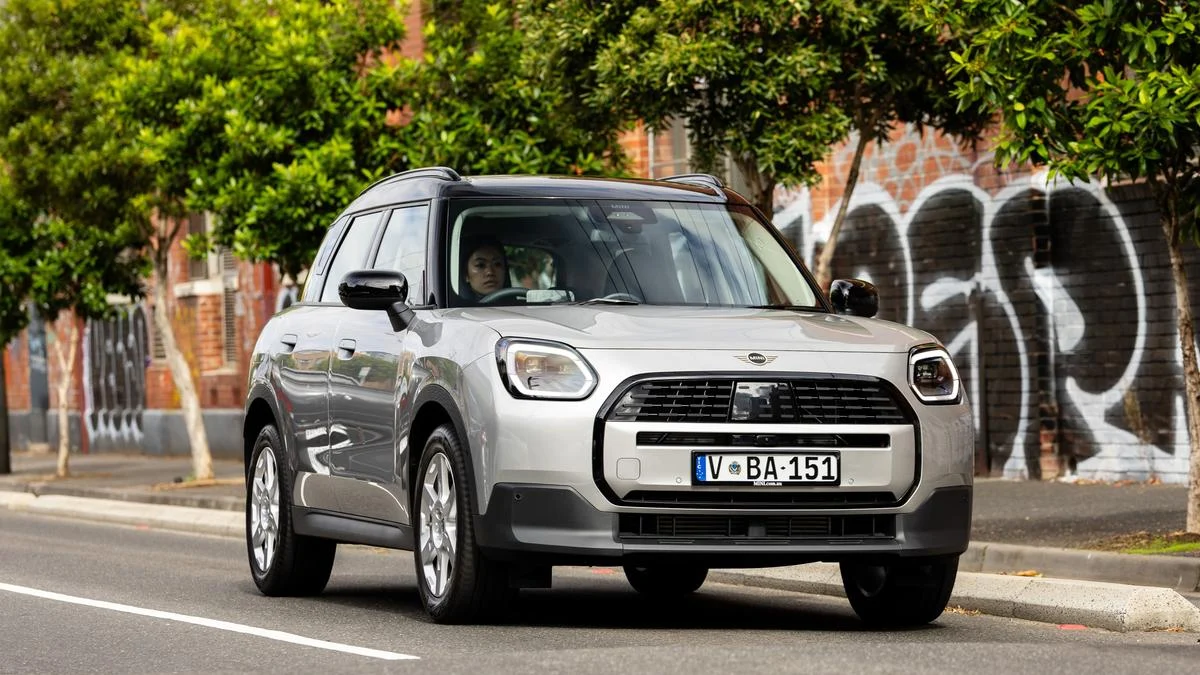
New Delhi, June 24, 2026 — For decades, the MINI brand has occupied a unique, almost untouchable niche in the Indian automotive landscape. It was the choice of the bohemian elite, the urban trendsetter, and the driving enthusiast who prioritized "go-kart" handling over rear-seat legroom. However, as the Indian luxury market matures, the demand for versatility has begun to outweigh the charm of compact dimensions.
Enter the new MINI Countryman C. This latest iteration is not merely a facelift; it represents a fundamental pivot in the brand’s DNA. By prioritizing dimensions, digital integration, and sustainable luxury, the Countryman C is no longer just a "large MINI"—it is a legitimate contender in the premium compact SUV segment, challenging established giants like the BMW X1, Audi Q3, and Mercedes-Benz GLA.
Main Facts: A Paradigm Shift in Design and Engineering
The new MINI Countryman C (the ‘C’ denoting the core internal combustion entry) arrives in India with a clear mission: to shed the "niche" label and embrace the "mainstream luxury" title. The most striking aspect of the new model is its physical presence. It has grown significantly, measuring approximately 13 centimeters longer and 6 centimeters taller than its predecessor.
Charismatic Simplicity: The New Aesthetic
MINI’s new design philosophy, dubbed "Charismatic Simplicity," is evident in the Countryman C’s silhouette. The traditional rounded edges have been replaced with more structured, octagonal lines. The front grille is now more prominent, housing sophisticated radar sensors for Level 2 Advanced Driver Assistance Systems (ADAS)—a first for the model in India.
The Power Unit and Performance
Under the hood, the Countryman C is powered by a 1.5-liter, three-cylinder turbocharged petrol engine integrated with 48V mild-hybrid technology. This powertrain produces approximately 170 hp and 280 Nm of torque. While purists might miss the larger displacement engines of yore, the mild-hybrid system provides a "torque-fill" effect, ensuring that the signature MINI "pep" remains intact during urban crawls and highway overtakes alike.
Interior Revolution: The Circular OLED
The cabin is where the most radical changes have occurred. MINI has ditched the traditional instrument cluster behind the steering wheel, moving all essential data to a stunning, 240mm circular OLED display. Running the new MINI Operating System 9, this screen is the nerve center of the vehicle, controlling everything from ambient lighting (MINI Experience Modes) to climate control and navigation.
Chronology: The Journey of the Countryman in India
To understand the significance of the 2026 Countryman C, one must look back at the brand’s trajectory in the Indian subcontinent.
- 2012: The Arrival: MINI officially entered the Indian market, debuting at the Delhi Auto Show. The first-generation Countryman (R60) was introduced as the "practical MINI," though by Indian standards, it remained a tight squeeze for families.
- 2018: Local Production Begins: In a major move, the BMW Group began local assembly of the second-generation Countryman (F60) at its Chennai plant. This lowered the entry price and solidified the Countryman as the brand’s best-seller in India, accounting for over 40% of its total sales.
- 2021: The Facelift and Digital Push: MINI updated the F60 with "Union Jack" tail lights and a digital instrument cluster, attempting to bridge the gap between retro charm and modern tech.
- 2024: Global Reveal of the U25: The third-generation Countryman (U25) was unveiled globally, showcasing a massive leap in size and a shift toward sustainable materials (removing chrome and leather).
- 2025–2026: The Indian Launch: After a period of high anticipation, the Countryman C was launched in India, specifically tailored to the "premium family" demographic that had previously overlooked the brand for being too small.
Supporting Data: By the Numbers
The shift in the Countryman’s philosophy is best illustrated through a direct comparison of specifications and market data.
Dimensional Growth
| Feature | Previous Gen (F60) | New Gen (U25/C) | Difference |
|---|---|---|---|
| Length | 4,299 mm | 4,433 mm | +134 mm |
| Height | 1,557 mm | 1,613 mm | +56 mm |
| Wheelbase | 2,670 mm | 2,692 mm | +22 mm |
| Boot Space | 450 Liters | 505 Liters | +55 Liters |
Market Dynamics
According to industry reports from early 2026, the premium compact SUV segment in India has seen a 15% year-on-year growth. Data suggests that 65% of buyers in this segment are "first-time luxury owners" who prioritize rear-seat comfort and boot space for weekend getaways. By increasing its length by over 13 centimeters, MINI has directly addressed the primary reason potential buyers previously opted for the BMW X1 or Audi Q3.
Environmental Footprint
The Countryman C also marks a shift in material science. The interior uses "Vescin"—a high-quality vegan leather alternative—and recycled polyester for the dashboard textiles. MINI reports that the use of secondary aluminum in the wheels and the omission of decorative chrome elements have reduced the production-related CO2 emissions by nearly 40% compared to the previous model.
Official Responses: The Brand’s Vision
Executives at the BMW Group (MINI’s parent company) have been vocal about why this specific version of the Countryman is vital for the Indian market.
Vikram Pawah, President of BMW Group India, commented during the launch event:

"The new MINI Countryman C is the perfect embodiment of ‘Big Love.’ We have listened to our Indian customers who wanted the MINI thrill but needed the space of a family SUV. This car is no longer just a second or third vehicle in a household; it is now fully capable of being the primary luxury vehicle for a modern Indian family."
Stefan Richmann, Head of MINI, emphasized the technological leap:
"With the new MINI Operating System 9 and our iconic circular OLED display, we are setting a new standard for user experience. We have combined the digital soul of a smartphone with the mechanical soul of a MINI. For the Indian market, where tech-savviness is at an all-time high, this is a game-changer."
Marketing heads at MINI India also noted that the "C" variant was specifically chosen for the Indian launch to provide a balanced entry point before the high-performance John Cooper Works (JCW) and all-electric (SE) variants are scaled up in the region.
Implications: What This Means for the Indian Luxury Market
The arrival of a larger, more practical Countryman has several far-reaching implications for the automotive industry and consumer behavior in India.
1. Cannibalization vs. Expansion
One of the most significant questions is whether the Countryman C will eat into the sales of its cousin, the BMW X1. Both cars share the UKL2 platform and various mechanical components. However, analysts believe the Countryman C will attract a younger, more design-conscious demographic that finds the BMW "too corporate." The Countryman C expands the BMW Group’s reach by offering a lifestyle-oriented alternative to the traditional luxury SUV.
2. The Death of Chrome and Leather
MINI’s bold move to eliminate chrome and genuine leather is a test for Indian luxury sensibilities. Historically, Indian buyers have associated "luxury" with leather seats and shiny chrome accents. By successfully marketing "Vescin" and recycled textiles as "premium," MINI is leading a shift toward sustainable luxury that other manufacturers are likely to follow.
3. Redefining the "Small Car" Brand
For years, MINI struggled with the perception that its cars were "toys"—expensive, fun, but ultimately impractical. The Countryman C effectively kills this narrative. With a 505-liter boot (expandable to 1,450 liters) and genuine room for three adults in the back, MINI is repositioning itself as a functional lifestyle brand.
4. Digital-First Ownership
The reliance on a single OLED screen for all functions is a bold bet. It simplifies the interior but requires a learning curve. If Indian consumers embrace this minimalist, digital-heavy interface, it will signal to other luxury brands that the era of physical buttons and knobs is officially over, even in the conservative Indian market.
5. Resale Value and Long-term Viability
The inclusion of a 48V mild-hybrid system is a strategic move to ensure the vehicle remains relevant as emission norms in India (BS7 and beyond) become stricter. This future-proofing is likely to result in higher resale values, making the Countryman C a more sensible financial investment than previous generations.
Conclusion
The new MINI Countryman C represents the "coming of age" for the brand in India. It successfully bridges the gap between the emotional, heritage-driven appeal of the original Mini and the cold, hard requirements of the modern Indian SUV buyer. While it has grown in size, it has not lost its soul; rather, it has matured into a vehicle that can finally handle the complexities of Indian family life without losing the "smile-on-your-face" driving dynamics that made the brand famous.
As it rolls off the assembly lines and into the driveways of South Delhi, Mumbai, and Bengaluru, the Countryman C isn’t just a new car—it’s a statement that practicality and personality are no longer mutually exclusive in the luxury world.
