

Main Facts: A City Defined by Tradition and Innovation
Boston, Massachusetts, often referred to as the "Cradle of Liberty," is undergoing a profound cultural and culinary metamorphosis. While the city’s historical significance remains its primary draw, its food scene has emerged as a sophisticated tapestry that blends centuries-old traditions with modern, global influences. As the city recently prepared to take the global stage as a host for seven matches of the FIFA World Cup 2026—including a high-stakes quarter-final at the Boston Stadium (historically Gillette Stadium)—the spotlight has shifted toward its ability to cater to an international palate.
The core of Boston’s culinary identity remains anchored in its proximity to the Atlantic. The city’s "food icons" are led by the New England clam chowder and the lobster roll, yet the execution of these dishes varies from the hyper-traditional to the avant-garde. Beyond the seafood, a burgeoning scene of immigrant-driven cuisine—ranging from Trinidadian roti in Dorchester to Salvadorian pupusas in East Boston—is redefining what it means to eat in the capital of Massachusetts. This report explores the chronological journey of a city’s flavors, supported by historical data, expert insights, and the modern implications of Boston’s status as a premier global destination.

Chronology: From Harvard Square to the Waterfront
The Ritual of Arrival: Harvard and the Comfort of Chowder
The journey into the heart of Boston’s food culture often begins where its intellectual history resides: Cambridge. In the chilly, atmospheric corridors of Harvard Square, visitors participate in the "obligatory" ritual of rubbing the boot of the John Harvard statue for luck. This gesture serves as a symbolic entry into the city’s storied past.
However, the immediate reward for the modern traveler is found at Harvest, a restaurant that has long served as a sanctuary for New England’s agricultural heritage. The chronology of the Boston meal begins with "comfort." Harvest celebrates local purveyors by serving a quintessential New England Clam Chowder. Unlike thinner versions found elsewhere, this iteration is rich with potatoes, smoky bacon, and heavy cream, balanced by the aromatic freshness of leeks and celery. It sets the stage for a city that prioritizes hearty, soul-warming fare.

The Seaport Transition: Legal Sea Foods and the Lobster Debate
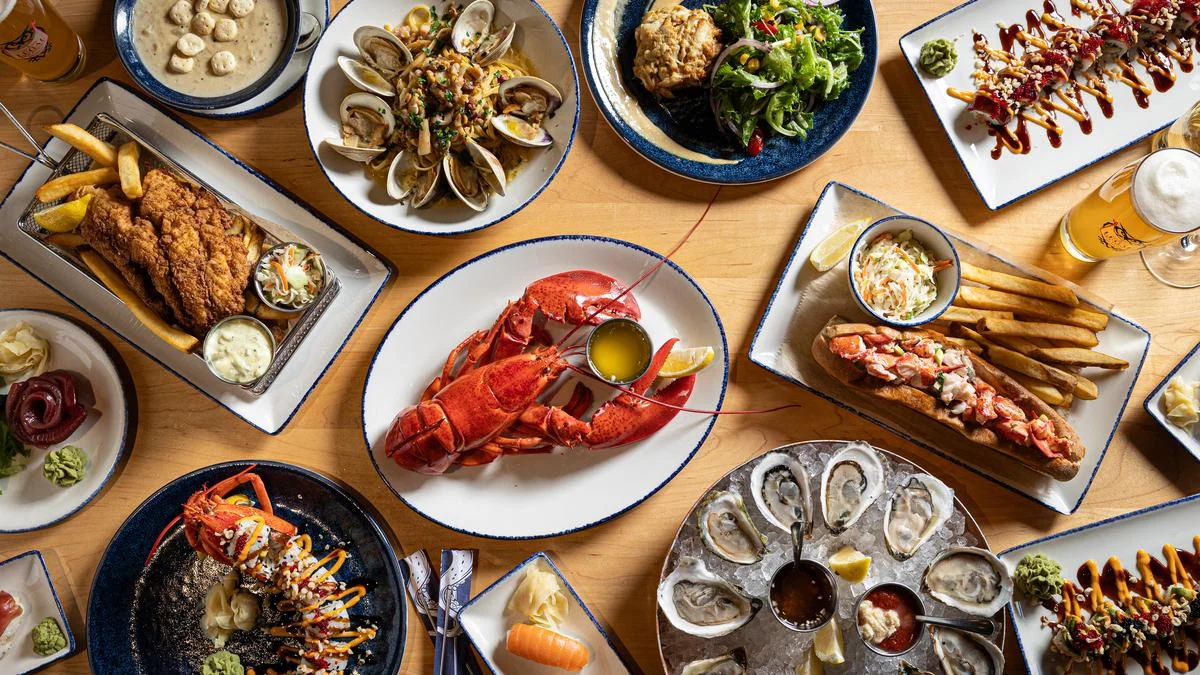
Moving from the academic brickwork of Cambridge to the salt-sprayed windows of the Boston waterfront, the narrative shifts toward the city’s most famous export: the lobster. At Legal Sea Foods’ flagship Harborside location, the environment transitions to a sunlit, expansive space overlooking the harbor.
Here, the chronology of the meal introduces the "Lobster Roll Dichotomy." Boston traditionally offers two distinct styles:

- The Maine Style: Chilled lobster meat tossed lightly in mayonnaise and served in a cold bun.
- The Connecticut Style: Warm, generous chunks of lobster drizzled with clarified butter and served on a toasted, golden-brown roll.
The choice between these two is more than a matter of taste; it is a cultural marker. While the Maine style offers a refreshing, salad-like experience, the Connecticut version—ordered frequently at Legal Sea Foods—emphasizes the richness of the locally sourced crustacean. This stage of the journey highlights Boston’s commitment to "intelligent building" in its cuisine, where ingredients are allowed to shine without over-complication.
The Historical Apex: The Union Oyster House
The journey through Boston’s culinary timeline must inevitably pass through the Union Oyster House, the oldest continually operating restaurant and oyster bar in the United States. Housed in a pre-revolutionary building, the establishment began its service in 1826. By 1897, it had launched its iconic semi-circular Oyster Bar, where oysters are still "bench opened"—shucked fresh in front of the diner.

This location represents the intersection of American politics and gastronomy. Diners can sit in "The Kennedy Booth" (Booth 18), where John F. Kennedy famously dined every Sunday at noon. The menu here is a living archive, featuring oversized prawn cocktails, fluffy cornbread made fresh daily, and the "Sam Adams Colonial Ale," a brew specially curated for the house.
Supporting Data: The Scale of Tradition
To understand the impact of these culinary institutions, one must look at the data that supports their longevity and popularity.

- Historical Longevity: The Union Oyster House has operated for nearly 200 years, surviving the Civil War, the Great Depression, and numerous urban redevelopments. It was designated a National Historic Landmark in 2003.
- Operational Scale: According to Manager John Paul, the Union Oyster House maintains a capacity for 500 diners and remains consistently packed. The restaurant processes "hundreds and hundreds of pounds" of cornbread daily to meet demand.
- Artifacts of Note: The restaurant houses a 44-pound stuffed lobster, a testament to the historical size of the North Atlantic’s bounty before modern overfishing concerns led to stricter size regulations.
- Sports Tourism Impact: The hosting of the FIFA World Cup 2026 matches at the 65,000-seat Boston Stadium (Gillette Stadium) brought an estimated influx of hundreds of thousands of international visitors, many of whom prioritized seafood dining as their primary non-sporting activity.
Official Responses: An Insider’s Guide to Innovation
While the classics define the city’s image, local experts argue that the "real" Boston is found in its diversity. Chef Carl Dooley, the helmsman of the Michelin-honoured Mooncusser and a James Beard Foundation nominee, provides a counter-narrative to the seafood-only stereotype.
On Diversity and Innovation
Chef Dooley emphasizes that first-time visitors often "get it wrong" by focusing solely on the history. "Maybe visitors come here for history, but then hopefully they realize the innovation, the arts, and definitely the food scene," Dooley states. He points to the city’s large Salvadorian and Caribbean populations as the true engines of modern Bostonian flavor.

Expert Recommendations:
- Comfort Food: Dooley identifies Singh’s Roti Shop in Dorchester as the gold standard for Trinidadian carry-out, specifically praising their goat curry and "Doubles."
- Under-the-Radar Neighborhoods: He advocates for Allston, describing it as having a "Brooklyn vibe" with its mix of dive bars, Korean BBQ, and independent music venues like Brighton Music Hall.
- Local Ingredients: Dooley suggests that the pupusas at La Reina in East Boston are as essential to the city’s identity as the lobster roll, representing the authentic, evolving community of the harborfront.
Implications: The Future of the Boston Dining Experience
The final stop in the modern Bostonian journey is often Contessa, the rooftop trattoria atop the Newbury Hotel. With its pink banquettes and Art Deco detailing, Contessa represents the "new" Boston: high-end, aesthetically driven, and globally inspired.
The "Wes Anderson" Aesthetic and Modern Luxury
Contessa’s popularity—it is widely considered one of the city’s toughest reservations—signals a shift in consumer demand. Diners are no longer just looking for a meal; they are looking for a "scene." The menu reflects this, offering a Spicy Lobster Capellini that blends Maine lobster with Calabrian chili and tomato cream, effectively bridging the gap between local ingredients and Italian technique.

The Integration of Sport and Gastronomy
The implications of events like the FIFA World Cup extend far beyond the final whistle. The infrastructure and global visibility gained from such events have forced Boston to refine its hospitality sector. The city has successfully leveraged its "Cradle of Liberty" branding to sell a sophisticated, multi-layered tourism product.
Conclusion: A Legacy Beyond the Stadium
Boston’s culinary landscape is a reflection of the city itself: rooted in a deep, sometimes stubborn respect for the past, yet increasingly open to the world. Whether it is the simple pleasure of a buttered lobster roll at a waterfront flagship or the complex spices of a Dorchester roti shop, the city offers a narrative of resilience and refinement.

As the crowds from the World Cup dissipate and the "Boston Stadium" returns to its regular schedule of American football and concerts, the lasting impact remains in the kitchens. The city has proven that it can feed the world, not just with its historical stories, but with a vibrant, evolving, and world-class food scene that honors the farmer, the fisherman, and the immigrant alike. For the traveler, the message is clear: come for the history, rub the boot for luck, but stay for the flavors that are currently shaping the future of American gastronomy.
The writer traveled to Boston as a guest of Brand USA.
