

Main Facts: Boston’s Culinary and Athletic Renaissance
As the world turns its eyes toward North America for the FIFA World Cup 2026, Boston is positioning itself not just as a hallowed ground of American history, but as a premier global dining destination. The city, colloquially known as the "Cradle of Liberty," has been selected to host seven matches of the prestigious tournament, including a high-stakes quarter-final. While the athletic prowess will be centered at the Boston Stadium—historically and locally known as Gillette Stadium—the true cultural heart of the event will beat in the city’s historic taverns, waterfront seafood houses, and avant-garde rooftop trattorias.
Boston’s identity is inextricably linked to its maritime bounty. From the briny depth of Atlantic oysters to the creamy, potato-heavy comfort of New England clam chowder, the city offers a sensory map of the North Atlantic. For the international traveler arriving for the World Cup, the challenge lies in navigating beyond the standard stadium fare of hot dogs and pretzels to discover the authentic flavors of Massachusetts. This report explores the pillars of Boston’s food scene, ranging from the oldest continually operating restaurant in the United States to the modern, Michelin-recommended kitchens defining the city’s future.
Chronology: A Gastronomic Pilgrimage Through Boston’s Neighborhoods
The Harvard Square Prelude
The journey begins in the intellectual heart of New England: Cambridge. In the crisp, chilly air that defines a Boston autumn, the first stop for any visitor is Harvard University. Here, the ritual of rubbing the boot of the John Harvard statue for good luck precedes a culinary initiation at Harvest.

Harvest serves as a bridge between the old-world academic charm of Harvard Square and the modern farm-to-table movement. The restaurant celebrates New England’s regional purveyors in a space that feels deliberately "old school" yet refined. The quintessential order here is the New England Clam Chowder. Unlike the thinner versions found elsewhere, Harvest’s rendition is a masterclass in texture—rich with cream and potatoes, punctuated by the salt of bacon, and lifted by the aromatic freshness of leeks and celery. It is a dish designed for the Boston climate, providing a literal and metaphorical warmth.
The Waterfront and the Lobster Roll Debate
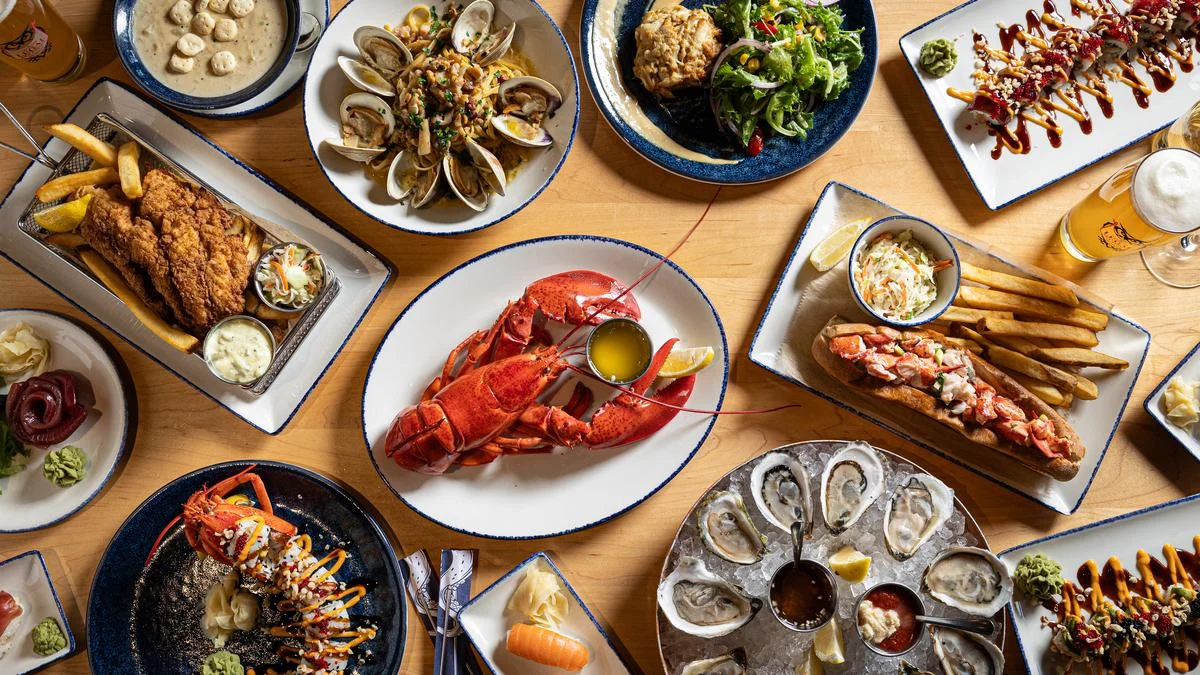
Moving from the ivory towers of Cambridge to the salt-sprayed windows of the Seaport District, the narrative shifts to the city’s most iconic export: the lobster. At Legal Sea Foods’ flagship Harborside restaurant, the experience is defined by its scale and its view. Large French windows offer a front-row seat to seagulls battling the harbor winds, while inside, a sunlit, expansive oyster bar serves as the room’s centerpiece.
The chronology of a Boston meal often begins with oysters—briny, cool, and served with nothing more than a fat lemon wedge and ice. However, the primary mission for most is the lobster roll. Boston serves as the ideological battleground for two distinct styles:

- The Maine Style: Chilled lobster meat tossed lightly with mayonnaise and served in a cold bun.
- The Connecticut Style: Warm, generous chunks of lobster meat, glossy with clarified butter, served on a freshly toasted, buttery roll.
At Legal Sea Foods, the Connecticut version remains a perennial favorite, allowing the sweetness of the locally sourced lobster to shine without the interference of heavy dressing.
A Walk Through History at Faneuil Hall
The culinary timeline reaches its most historic point at The Union Oyster House. Designated as a National Historic Landmark, this establishment is the oldest continually operating restaurant in the United States, having served diners since 1826. The building itself is pre-Revolutionary, and its semi-circular Oyster Bar, established in 1897, remains a site of "bench opened" shucking.
The history here is not merely architectural but political. The restaurant was a favorite of the Kennedy family. Today, visitors can sit in "The Kennedy Booth" (Booth 18), where John F. Kennedy reportedly dined every Sunday at noon. The menu remains steadfastly traditional: steaming clam chowder served with fluffy, crumbly cornbread baked fresh daily, and classic Daiquiris—a nod to the former president’s preferred libation.

The Modern Heights of Back Bay
The journey concludes in the sophisticated enclave of Back Bay at Contessa. Perched atop the Newbury Hotel, this rooftop trattoria offers a sharp contrast to the rustic taverns of the waterfront. With its Art Deco detailing, pink velvet banquettes, and panoramic views of the Boston Public Garden, Contessa represents the "new" Boston—cosmopolitan, luxurious, and visually stunning.
The menu here blends New England ingredients with Italian technique. The standout is the spicy lobster Capellini, featuring Maine lobster tangled in delicate angel hair pasta with a sauce of tomato, cream, and Calabrian chili. It is a testament to how Boston’s traditional ingredients are being reimagined for a global palate.
Supporting Data: The Anatomy of New England Seafood
To understand Boston’s food scene, one must look at the data of its ingredients. The New England seafood industry is a multi-billion dollar sector, with lobster being the crown jewel.

| Ingredient | Regional Significance | Common Preparation |
|---|---|---|
| Atlantic Lobster | Sourced primarily from Maine and Mass. waters; peak season is summer/fall. | Roll (Maine/CT style), Bisque, or Capellini. |
| Quahog Clams | A staple of the coastal economy; "sweet and petite" varieties are prized. | New England Clam Chowder (Cream-based). |
| Oysters | Indigenous to the North Atlantic; flavors vary by "merroir" (water salinity). | Raw on the half-shell with mignonette. |
| Cornbread | A traditional side reflecting the region’s colonial agricultural roots. | Served warm with honey butter or chowder. |
The Union Oyster House alone serves as a microcosm of this demand. According to restaurant manager John Paul, who has risen through the ranks over 11 years, the restaurant has a capacity of 500 and is consistently at peak volume. The kitchen processes hundreds of pounds of cornbread daily to keep up with the appetite of locals and tourists alike.
Official Responses: Insights from the Culinary Frontline
To gain a deeper understanding of the city’s evolution, we spoke with Chef Carl Dooley, the helmsman of the Michelin-recommended restaurant Mooncusser. Dooley, a James Beard nominee and Top Chef finalist, provides an "insider’s" perspective that diverges from the tourist-heavy waterfront.
On Boston’s Comfort Food:
Dooley points to Singh’s Roti Shop in Dorchester as a vital part of the city’s fabric. "It’s an amazing spot for Trinidad carry-out. Their goat curry and Doubles are super delicious and a great representative for the Caribbean population here in Boston," Dooley noted.

On Misconceptions:
"Visitors come here for history, but then hopefully they realize the innovation, the arts, and definitely the food scene while here," Dooley explained. He emphasizes that while the 1770s are important, the 2020s are defined by a fusion of global cultures.
On Underrated Experiences:
Dooley advocates for exploring East Boston for authentic Pupusas at La Reina, highlighting the city’s Salvadorian community. He also suggests that the best way to see the city isn’t by tour bus, but by "renting a Blue Bike and riding along the Charles River from the Esplanade into Cambridge."
On Neighborhood Gems:
"Allston has a bit of a Brooklyn vibe," Dooley said. "It has great dive bars, awesome Korean BBQ, and independent music places like Brighton Music Hall."

Implications: Sports Tourism and the Global Plate
The arrival of the FIFA World Cup 2026 represents a watershed moment for Boston. The city is not merely hosting a game; it is auditioning for a permanent spot on the global cultural stage.
The economic implications are significant. Hosting seven matches is expected to bring hundreds of thousands of international visitors to the Greater Boston area. While the stadium’s concession stands will provide the standard American "stadium experience"—fried chicken sandwiches and soft pretzels—the real economic "multiplier effect" will be felt in the city’s restaurants.
There is also a symbolic implication. For decades, Boston was viewed through a narrow lens of Irish-American history and elite academia. The contemporary food scene, as highlighted by Chef Dooley’s nods to Trinidadian and Salvadorian cuisine, suggests a city that is becoming increasingly diverse and comfortable with its global identity.

As fans from across the globe descend upon the "Cradle of Liberty," they will find a city that respects its past—maintaining the 44-pound stuffed lobsters and wood-paneled walls of the Union Oyster House—but one that is equally focused on the spicy Calabrian chilies and chilled Martinis of the modern rooftop. The 2026 World Cup will be won on the pitch, but for the city of Boston, the victory will likely be found at the dinner table.
