

For decades, the rhythm of Indian travel to Europe has been as predictable as the monsoon. From the first week of May until the end of September, a massive exodus of tourists from the subcontinent descends upon the "Old Continent." Driven by the school holiday window and the allure of a "warm and sunny" European summer, this migration has traditionally focused on a few frantic months. However, as 2024 draws to a close, a significant shift is occurring. Driven by soaring costs, the suffocating reality of overtourism, and a desire for more authentic experiences, travelers—and the airlines that serve them—are rethinking the traditional summer holiday.
The narrative of the European summer is changing from one of sun-drenched leisure to one of logistical endurance. With visitor numbers hitting record highs and local residents in major hubs beginning to push back against the "tourist tide," the savvy traveler is looking toward the "shoulder" and "off-peak" seasons to rediscover the charm that mass tourism has, in many places, obscured.
Main Facts: The Unsustainable Surge of the Summer Tides
The scale of European tourism has reached a tipping point. In 2019, the region recorded approximately 270 million international arrivals during the core July–August period. By the summer of 2024, projections and early data suggest that this figure has comfortably exceeded 300 million. This growth is not evenly distributed; it is heavily concentrated in a handful of iconic destinations, creating a phenomenon experts call "tourism saturation."

Key cities and islands, including Barcelona, Venice, Santorini, Amsterdam, and the coastal regions of Spain, are no longer just "busy"—they are under siege. The pressure on local infrastructure, from waste management to public transport, has intensified to a point where the quality of the visitor experience is frequently compromised.
For Indian travelers, external factors are also complicating the traditional summer route. Geopolitical unrest in the Persian Gulf has made traditional layover hubs more challenging to navigate, often leading to costlier connections to North America and Europe. In response, major carriers like Germany’s Lufthansa have pivoted, increasing flight frequencies directly to European hubs to capture the shifting demand.
The result is a new travel philosophy: the "Unhurried Holiday." By moving travel windows to the periods between April and June, or September and October, travelers are finding that they can bypass the three greatest hurdles of modern tourism: exorbitant prices, endless queues, and the "human traffic jam."

Chronology: From Post-Pandemic Boom to the "Cool-cation" Trend
To understand the current shift, one must look at the timeline of European tourism over the last five years:
- 2019: The Pre-Pandemic Peak. Europe reaches a high-water mark of 270 million summer visitors. The "overtourism" conversation begins to bubble in cities like Venice and Barcelona.
- 2020–2022: The Great Stagnation and Rebound. COVID-19 halts international travel. As restrictions lift, "revenge travel" takes hold. Travelers, having been confined, seek out "bucket list" destinations regardless of the cost or crowds.
- 2023: The Boiling Point. Heatwaves across Southern Europe (Cerberus and Charon) see temperatures in Greece and Italy soar above 45°C. Tourists realize that "warm and sunny" can quickly become "dangerous and unbearable."
- 2024: The Strategic Shift. A trend toward "Cool-cations" (traveling to cooler climates or during cooler months) begins to emerge. Indian travelers, specifically, start looking at the shoulder seasons (May-June and September-October) to avoid the peak European heat and the highest airfares.
- 2025 and Beyond: The projection of 300 million+ visitors forces a permanent change in travel habits. The off-season (November to March) becomes a viable, luxury-adjacent alternative for those seeking cultural depth over tan lines.
Supporting Data: The Stark Reality of Overtourism
The numbers behind the European summer surge are staggering and illustrate why the off-season is becoming so attractive.
The Case of Mallorca
Mallorca, the largest of Spain’s Balearic Islands, serves as a microcosm of this crisis.

- Population vs. Visitors: The island is home to roughly 920,000 year-round residents. In July alone, it welcomes over 2.5 million tourists.
- Annual Influx: Annually, about 14 million people visit the island.
- The Ratio: During the peak weeks, tourists outnumber locals by more than 14 to one.
- The "Seven-Minute" Metric: Local hospitality workers in Palma note that during the height of August, the turnover is so high that visitors often spend an average of just seven minutes in a café before being moved along to accommodate the next group in line.
Continental Saturation
- Venice: The "Floating City" receives 25 million visitors annually. On peak summer days, 80,000 tourists cram into a historic center that houses fewer than 50,000 residents.
- Santorini: A single day can see 10,000 cruise ship passengers disembark onto an island with narrow, cliffside paths, effectively paralyzing local movement.
- Dubrovnik: Famous as a filming location for Game of Thrones, the city’s walled Old Town often reaches capacity within hours of cruise ships docking, leading to "one-way" pedestrian traffic rules.
Official Responses: Managing the Inflow
European governments and local municipalities are no longer staying silent. The "tourist go home" graffiti seen in Barcelona and the Canary Islands has been met with actual policy changes:
- Entry Fees: Venice has introduced a pilot program for a €5 entry fee for day-trippers on peak days to discourage "hit-and-run" tourism.
- Cap on Cruise Ships: Santorini and Dubrovnik have implemented strict daily caps on the number of cruise passengers allowed to disembark.
- Anti-Tourism Protests: In Barcelona, thousands have marched to protest the rise in housing rents caused by short-term holiday rentals (like Airbnb), leading the mayor to announce a plan to scrap all tourist apartment licenses by 2028.
- Marketing the "Off-Season": National tourism boards in Spain, Greece, and Italy have begun aggressive marketing campaigns focusing on "permanent" tourism—encouraging visits in winter and late autumn to spread the economic benefits across the year.
Mallorca Unhurried: A Case Study in Off-Season Success
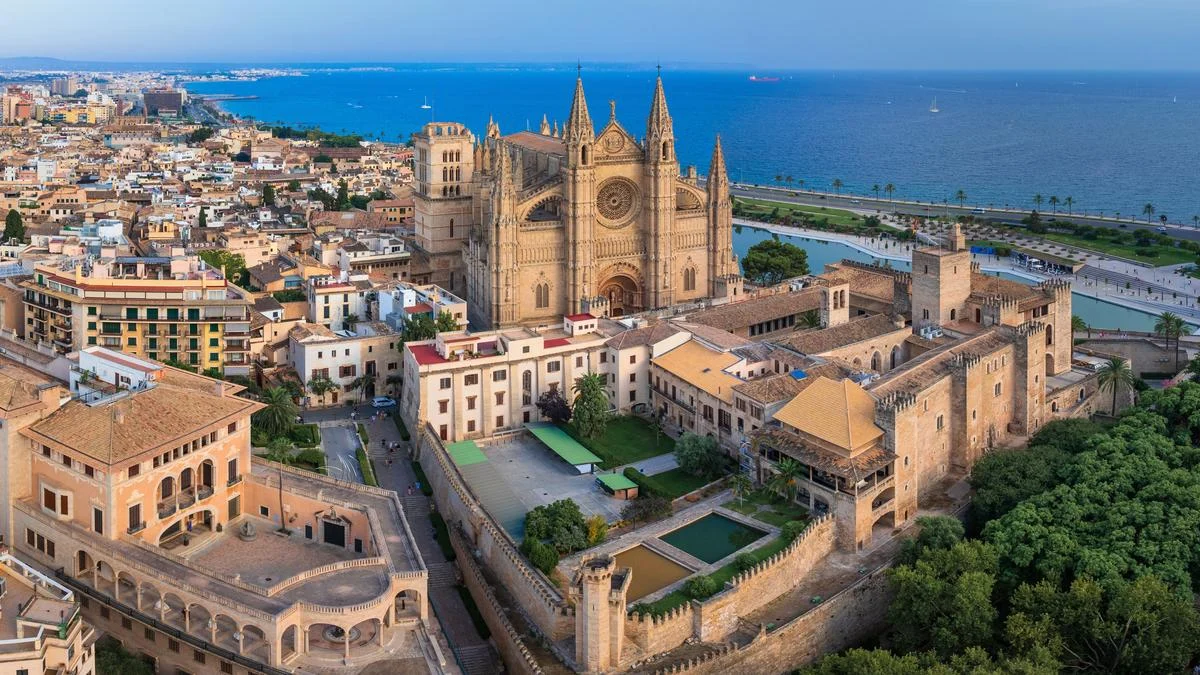
To experience the difference of off-season travel, one need only land in Palma de Mallorca in December. The contrast with the summer months is transformative.
The Culinary Experience
In the peak of summer, securing a table at a reputable restaurant like Japo Santa Catalina requires weeks of planning. In December, one can walk in and find a table immediately. The atmosphere is not one of frantic service, but of local "convivencia"—living together.

The historic bakery Can Joan de s’Aigo, which has roots dating back to 1700, offers a glimpse into the island’s soul that is impossible to catch in August. Famous for the ensaimada—a spiral-shaped, powdered-sugar pastry filled with pumpkin jam or chocolate—the bakery in winter is a sanctuary. Locals linger over thick, decadent hot chocolate and Coca de Patata (a sweet potato bun), taking the time to converse rather than rushing to the next landmark.
Architectural Solitude
The architectural marvels of Palma, such as the La Seu Cathedral and the Palau de l’Almudaina, regain their majesty when they aren’t obscured by thousands of selfie sticks. The "human traffic jam" disappears, replaced by the sound of footsteps on ancient stone.
Beyond the Capital
In the town of Sóller, the famous wooden tram that winds through citrus groves to the harbor is a peaceful journey in the off-season. In summer, the queues for this five-kilometer trip can stretch for blocks. In winter, the journey is a sensory delight of sun-warmed stone and flowering plants, even if some beach bars have shuttered for the season.

Further north, in Pollença, the 365 steps of the Calvari staircase offer a meditative climb. Instead of jostling with crowds for a view of the hills, the traveler finds themselves alone with the cypress trees and the 13th-century Church of Our Lady of the Angels.
Implications: The Future of the European Holiday
The shift toward off-season travel carries profound implications for the global travel industry and the individual traveler.
1. The Death of the "Checklist" Holiday
As destinations become more crowded, the "see everything in 10 days" itinerary is becoming physically and mentally exhausting. The off-season encourages "Slow Travel"—focusing on one region, its food, and its people, rather than its monuments.

2. Economic Rebalancing
For local economies, the "peaks and valleys" of tourism are destructive. A year-round tourism model allows for more stable employment and prevents the "ghost town" effect seen in many Mediterranean resorts during the winter.
3. The Environmental and Social Contract
Travelers are increasingly aware of their "social footprint." Visiting in the off-season is a form of sustainable travel; it reduces the strain on water and energy resources during the hot months and fosters a more respectful relationship with local residents who are often "touristed out" by August.
4. The Trade-Off
Prospective travelers must accept certain compromises. The Mediterranean in December is not for swimming; temperatures hover between 15°C and 20°C, and evenings are brisk. Some nightlife venues will be closed. However, the trade-off is space.

In conclusion, the key to enjoying Europe in the 21st century is no longer about finding a hidden, undiscovered village—social media has ensured those no longer exist. Instead, the secret lies in the timing. By choosing to visit when the "summer tides" have receded, travelers find that the cities they once thought were "tourist traps" are actually living, breathing communities waiting to be rediscovered. For the Indian traveler, the pivot from the May-June window to the cool embrace of the European autumn or winter may be the best travel decision they ever make.
