

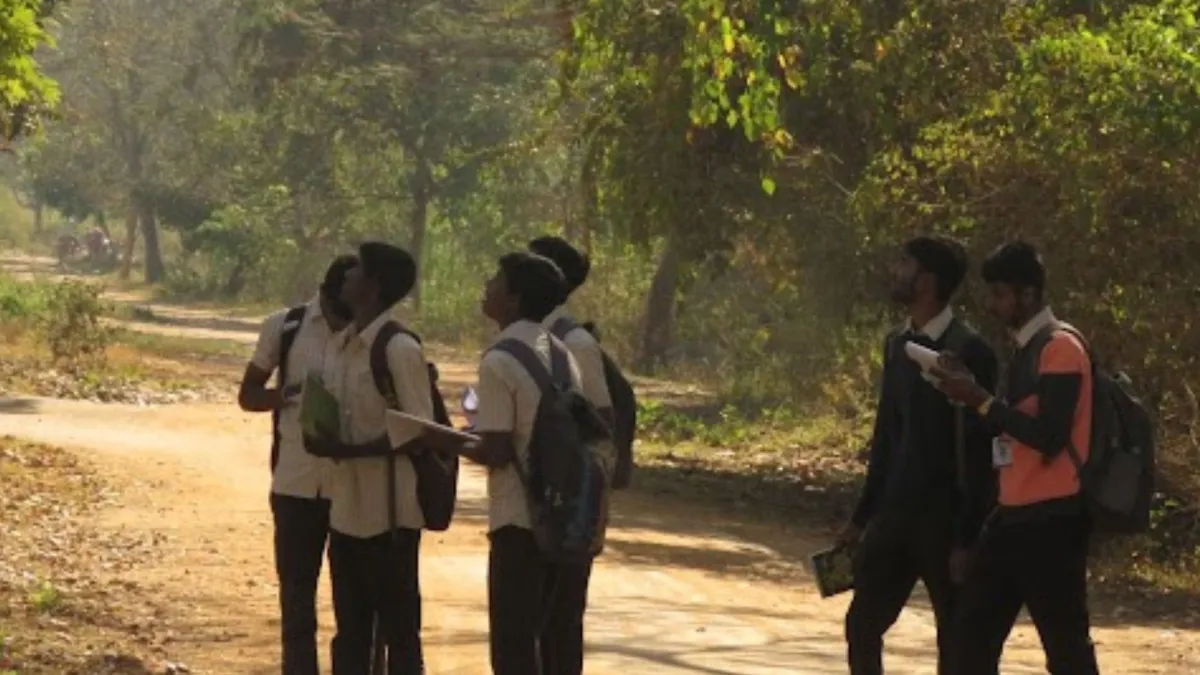
NAGPUR, MAHARASHTRA — As the concrete canopy of Nagpur expands, a quiet ecological revolution is taking root within the restricted gates of the CSIR-National Environmental Engineering Research Institute (CSIR-NEERI). A groundbreaking study has revealed that this 46-hectare institutional campus is far more than a site for scientific inquiry; it is a vital biodiversity reservoir that could provide a global blueprint for urban conservation.
The research, a collaborative effort between CSIR-NEERI, the Academy of Scientific and Innovative Research (AcSIR), and the Wrocław University of Environmental and Life Sciences in Poland, suggests that restricted-access institutional lands—such as universities, research centers, and government estates—are the missing link in achieving global conservation targets. These spaces, the study argues, should be formally recognized as "Other Effective Area-Based Conservation Measures" (OECMs), a designation that could fundamentally alter how India manages its urban sprawl.
Main Facts: Redefining the Urban Jungle
The central premise of the study is a response to a looming crisis: by 2050, an estimated 600 million Indians will reside in cities. This unprecedented migration is driving a horizontal expansion of urban centers, leading to the fragmentation and eventual disappearance of natural habitats. Traditional conservation models, which rely on large-scale national parks and wildlife sanctuaries located far from human centers, are increasingly insufficient to stem the tide of species loss within the urban matrix.
The researchers found that the CSIR-NEERI campus functions as an "ecological anchor." Unlike public municipal parks, which are often heavily "manicured" and subject to high human footfall, institutional campuses offer a rare combination of restricted access, stable long-term management, and minimal disturbance. This allows for the development of complex ecosystems that mimic mature forests rather than artificial gardens.
Key findings from the Nagpur study include:

- Species Richness: The 46-hectare site hosts 83 distinct tree species.
- Climate Mitigation: The campus is consistently 3°C cooler than the surrounding urban streets, providing a critical buffer against the "Urban Heat Island" (UHI) effect.
- Carbon Sequestration: With over 1,700 large trees, the area acts as a significant carbon sink, absorbing greenhouse gases in one of India’s fastest-growing industrial hubs.
- Microhabitat Diversity: The presence of hundreds of tree-related microhabitats (TreMs) provides nesting and foraging grounds for a wide array of urban wildlife that cannot survive in standard city parks.
Chronology of the Research: A Systematic Audit of Life
The study was born out of a need to quantify the ecological value of "incidental" green spaces—areas that were not primarily designed for conservation but have become refuges over decades of institutional protection.
Phase 1: The Systematic Grid Survey
The research team began by dividing the 46-hectare NEERI campus into a rigorous systematic grid. This methodology ensured that no corner of the estate was overlooked. They identified 172 individual plots for intensive surveying. The criteria were strict: every tree with a trunk diameter (girth) wider than 10 centimeters was recorded, identified by species, and measured.
Phase 2: The Tree Census
Over several months, the team conducted a comprehensive census. They discovered a thriving population of ,1744 individual trees. The data revealed a sophisticated balance between indigenous and introduced flora. Approximately 50% of the trees were native species, including the culturally and ecologically significant Neem (Azadirachta indica). The dominant species identified was the Yellow Flame tree (Peltophorum pterocarpum), known for its hardy nature and dense canopy.
Phase 3: The Microhabitat Analysis
Moving beyond simple tree counts, the researchers focused on "Tree-related Microhabitats" (TreMs). This involved looking for physical features that indicate high ecological value, such as hollow cavities, bark crevices, and dead branches. These features are usually pruned away in public parks for "safety" or "aesthetic" reasons, but on the NEERI campus, they were left intact, allowing the researchers to map a "vertical forest" of biodiversity.
Phase 4: Comparative Climatic Mapping
Finally, the team correlated the vegetation density with local temperature data. By comparing the on-campus ambient temperature with the data from the surrounding asphalt-heavy streets of Nagpur, they quantified the "cooling service" provided by the campus greenery.

Supporting Data: The Anatomy of a Reservoir
The data extracted from the CSIR-NEERI campus offers a compelling argument for the ecological superiority of institutional lands.
Botanical Diversity
The census of 83 tree species highlights a level of diversity rarely seen in planned urban landscapes. While the Yellow Flame tree and Neem were dominant, the presence of various fruiting and flowering trees ensures a year-round food supply for pollinators and birds. The mix of native and introduced species creates a "novel ecosystem" that is resilient to the specific stresses of urban pollution and changing rainfall patterns.
The Importance of TreMs
The study’s focus on TreMs revealed a staggering level of structural complexity:
- Deadwood: Over 700 instances of standing or fallen deadwood were recorded. Deadwood is a cornerstone of forest health, supporting fungi, wood-boring insects, and the birds that feed on them.
- Cavities: 366 natural cavities were identified. These are essential nesting sites for owls, parakeets, and small mammals like squirrels and bats.
In most urban environments, these "imperfections" are removed, effectively evicting the wildlife that depends on them. The NEERI campus’s "neglect"—in a managed sense—is precisely what makes it a sanctuary.
Temperature and Health
The 3°C temperature differential is perhaps the most significant data point for city planners. In a city like Nagpur, where summer temperatures frequently exceed 45°C, a 3-degree drop represents a massive reduction in heat-related stress for both humans and wildlife. This cooling effect is driven by evapotranspiration and the physical shade provided by the high-density canopy.
Official Responses and Global Context: The 30×30 Goal
The findings of this study align with a major international movement: the "30×30" initiative. Part of the Kunming-Montreal Global Biodiversity Framework, this goal aims to protect 30% of the world’s terrestrial and marine habitats by 2030.

Environmentalists and policy experts suggest that for a country as densely populated as India, reaching 30% protection through traditional National Parks is nearly impossible due to land scarcity and the high cost of acquisition. This is where the OECM (Other Effective Area-Based Conservation Measures) designation becomes a game-changer.
Defining OECMs
The International Union for Conservation of Nature (IUCN) defines OECMs as areas that are not managed primarily for conservation (like a research institute or a military base) but achieve the long-term "in situ" conservation of biodiversity. The researchers argue that by proving the NEERI campus meets IUCN criteria—secure land ownership, low human disturbance, and a history of stable management—they have provided a blueprint for other Indian institutions to follow.
While official government responses to the specific NEERI study are pending, the Indian Ministry of Environment, Forest and Climate Change has previously expressed interest in identifying OECMs to meet international commitments. The NEERI study provides the empirical evidence needed to move these institutional lands from "land banks" to "protected zones."
Implications: A New Urban Paradigm
The implications of this research extend far beyond the gates of a single campus in Nagpur. It suggests a fundamental shift in how we perceive urban "empty" space.
The Institutional Network
India is home to thousands of hectares of institutional land. From the vast campuses of the Indian Institutes of Technology (IITs) and Central Universities to the sprawling estates of the Defense Research and Development Organisation (DRDO), these areas represent a massive, untapped network of biodiversity corridors. If these campuses were collectively recognized as OECMs, India could significantly expand its conservation footprint overnight without displacing a single person or purchasing a single acre of new land.

Mental Health and Biophilia
The study also touches upon the "biophilia" hypothesis—the innate human need to connect with nature. For the scientists, students, and staff at NEERI, the campus provides a psychological sanctuary. As urban density increases, the preservation of these green lungs becomes essential for maintaining the mental well-being of the urban workforce.
Challenges and Future Research
However, the authors of the study urge caution. Not every college campus is an ecological haven. Many modern institutions favor "manicured" lawns and ornamental, non-native shrubs that offer little to no support for local wildlife. The NEERI campus is successful because of its mature trees and structural complexity—features that take decades to develop.
The researchers emphasize that future studies must expand beyond trees. Long-term monitoring of soil health, insect populations (especially pollinators), and migratory bird patterns is necessary to determine if these benefits remain stable as the surrounding city continues to grow and pollute.
Conclusion
The message from Nagpur is clear: the future of urban conservation lies within the walls of our institutions. By recognizing and protecting the "accidental" forests on our doorsteps, India can build cities that are not just engines of economic growth, but resilient, breathable, and living ecosystems. The 46 hectares of the CSIR-NEERI campus are no longer just a place of work; they are a testament to the possibility of a greener, cooler, and more biodiverse urban future.
