

COLOMBO — For decades, Saman Athaudahetti navigated the intricate corridors of Sri Lankan power. As a seasoned government officer, a close adviser to former President Ranil Wickremesinghe, and an influential figure in the island’s literary and cultural spheres, his life was defined by the high-stakes diplomacy of Colombo. Yet, beneath the veneer of the additional secretary and the television presenter lay a long-simmering "dream": to trade the air-conditioned offices of state for the rhythmic clatter of the Indian Railways.
Now retired, Athaudahetti has finally realized that ambition, embarking on a sprawling journey across the Indian subcontinent to document the world’s largest passenger rail network. His upcoming book, supported by the India-Sri Lanka Foundation, seeks to capture not just the logistics of the rails, but the soul of a nation connected by iron and steam.
Main Facts: A Literary Bridge Between Two Nations
Saman Athaudahetti is a man of many "avatars." To the Sri Lankan public, he is a lyricist, an author, and a former high-ranking bureaucrat. To the Indian railway officials he met over the last year, he became a dedicated chronicler of their daily toil. Having visited India nearly 40 times during his career—primarily for official state business—Athaudahetti’s perspective on the country was long filtered through the lens of diplomacy and work.
"I had managed a few holiday trips and a few train rides here and there," Athaudahetti told The Hindu in an interview in Colombo. "But I found the scale of it simply amazing. I wanted to understand how this massive network, which reaches the most remote corners of such a vast country, actually functions."
The project is more than a personal travelogue; it is a cultural bridge. The India-Sri Lanka Foundation, a trust fund established by the governments of both nations to foster bilateral relations, recognized the potential of Athaudahetti’s vision. The resulting book, initially to be published in Sinhala with a subsequent English translation, aims to introduce the Sri Lankan public to the sheer diversity and technological evolution of the Indian Railways.
Chronology: From Colonial Roots to Modern Tracks
The history of the railway in South Asia is one of shared heritage. Both India and Sri Lanka saw their networks established under British colonial rule. In Sri Lanka, the tracks were often laid by the hands of South Indian laborers—now known as the Malaiyaha Tamils—who were brought to the island to work on tea plantations. This historical synergy served as the backdrop for Athaudahetti’s journey, which he began shortly after his retirement.
Athaudahetti’s itinerary was a masterclass in geographical diversity. Accompanied by his brother, Asoka Athaudahetti, who served as the journey’s visual documentarian, the duo traversed 17 Indian states and nine distinct railway zones.
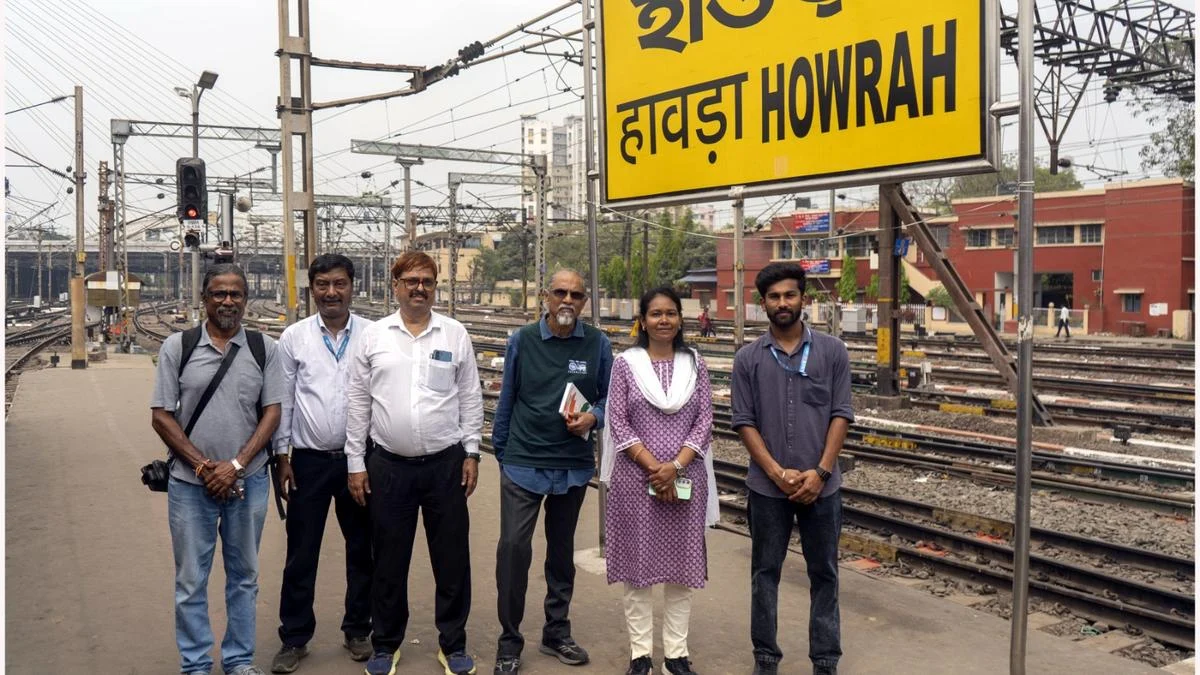
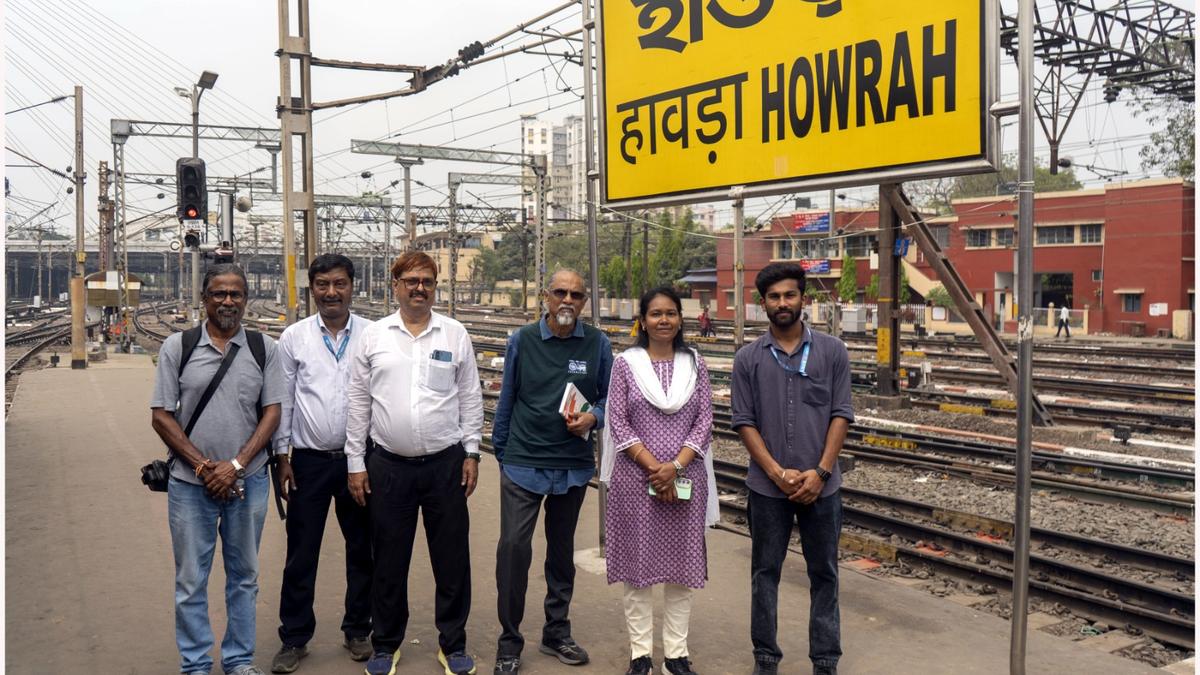
The journey began with the goal of touching the "extremes." He visited Ledo in Assam, the easternmost point of the Indian rail network. From the humid greenery of the northeast, he traveled to the mist-covered heights of Ghoom in Darjeeling, the highest railway station in India. The chronology of his travel reflects a deep dive into the records held by the network: from the Gorakhpur Junction in Uttar Pradesh, which boasts the second-longest platform in the world, to the frenetic, swarming energy of Howrah Station in Kolkata, one of the busiest transit hubs on the planet.
One of the most unique stops on his timeline was Navapur, a station famously split between two states. The platform is bisected by the border of Gujarat and Maharashtra, a quirk of Indian federalism that Athaudahetti found emblematic of the country’s complexity. "The platform is literally in two states at once," he noted. "It is a physical manifestation of how the railway binds different identities together."
Supporting Data: A Network in Transition
Athaudahetti’s observations provide a qualitative data set on the rapid modernization of the Indian Railways over the last decade. His reportage highlights a significant shift in three key areas: cleanliness, digitization, and speed.
1. The Digital Leap:
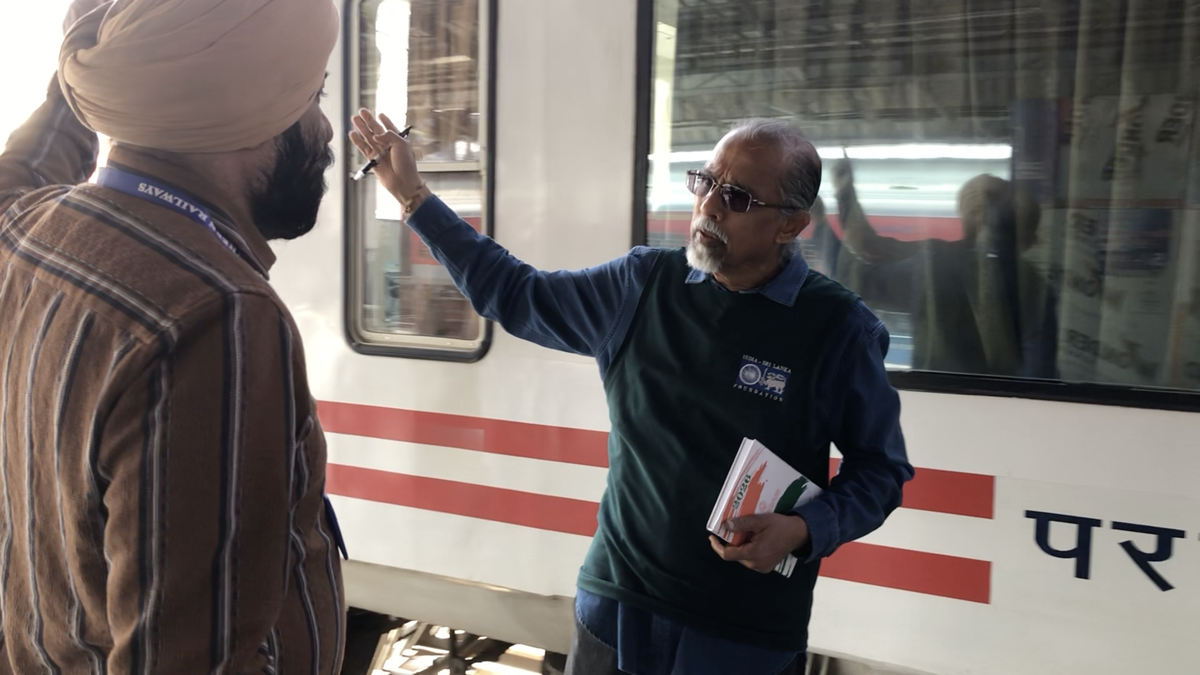
Athaudahetti observed that the era of ticket checkers lugging heavy paper ledgers is largely over. "Ticket checkers who would earlier carry those files are now using tablets. The integration of technology is seamless," he said. He pointed to the ubiquity of mobile applications that allow passengers to track PNR status, view real-time schedules, and raise complaints instantly.
2. The Logistics of Comfort:
A major point of focus in his upcoming book is the "app-based economy" within the trains. The ability to order regional cuisine via an app and have it delivered to a specific berth at a future station is a feat of logistics that Athaudahetti believes sets a global standard for public transport.
3. Infrastructure and Speed:
The retired official noted the "impressive" performance of the Vande Bharat Express trains, India’s indigenous semi-high-speed rail sets. He also looked forward to the 2027 launch of the Mumbai-Ahmedabad bullet train corridor, noting that such advancements are essential for India to "further its game" on the global stage.
4. Cleanliness and Public Responsibility:
While noting a "marked improvement" in the hygiene of coaches and stations compared to 15 years ago, Athaudahetti offered a nuanced take on the challenges. "Cleanliness depends on the passengers as much as the authorities," he remarked, suggesting that the "human element" remains the most unpredictable variable in the system’s efficiency.
Official Responses: Diplomacy through the Lens of a Traveler
The project received significant institutional backing, reflecting the "soft power" potential of such cross-border literary works. The Indian Railway Board played a pivotal role in facilitating Athaudahetti’s research.
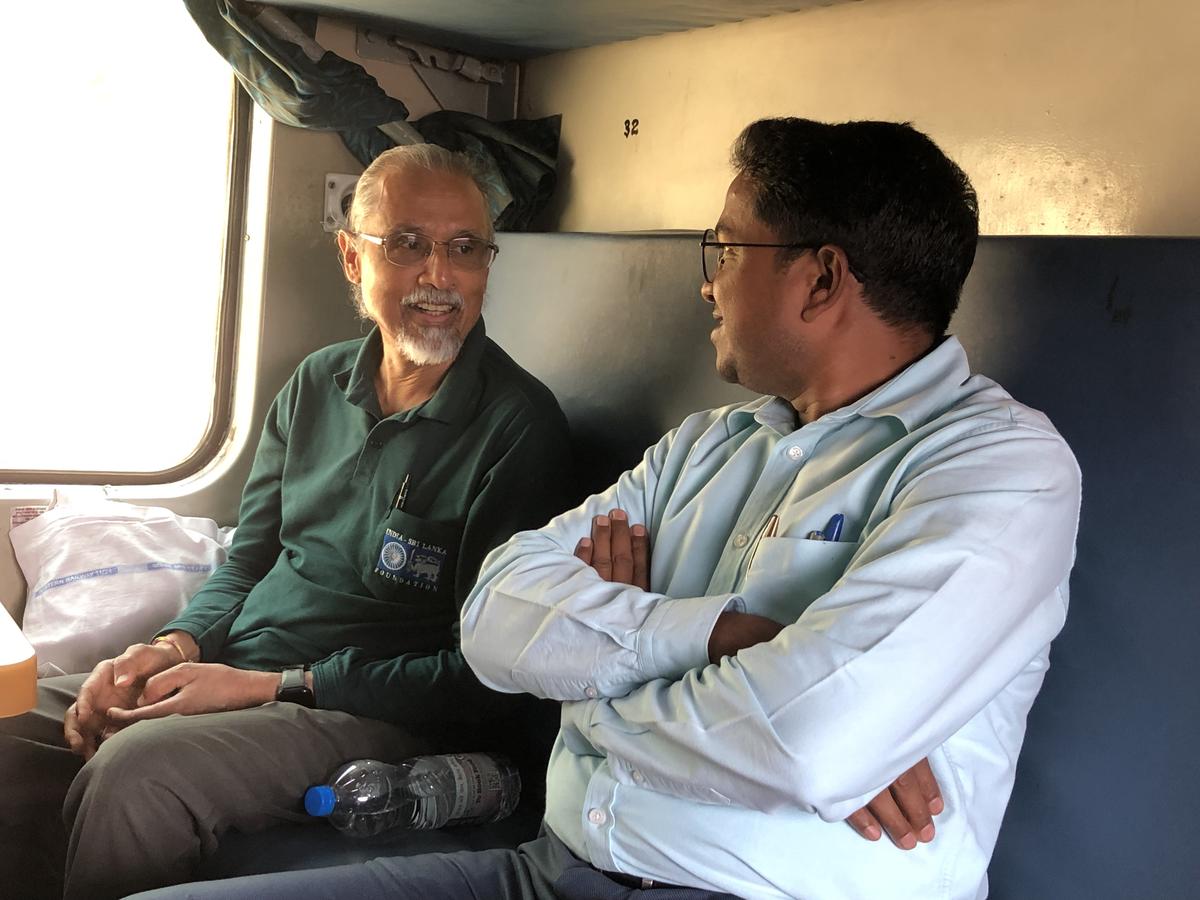
He specifically cited the assistance of Dinesh Sood, Senior Principal Private Secretary to the Member (Infrastructure) of the Railway Board, and various station masters who provided him with behind-the-scenes access. "The railway staff I met are like family now," Athaudahetti shared, noting that he still receives daily "Good Morning" greetings and WhatsApp forwards from the officials he interviewed across the 17 states.
This high-level cooperation underscores a broader diplomatic strategy. By supporting a high-profile Sri Lankan author, Indian authorities are fostering a narrative of connectivity and shared progress. The India-Sri Lanka Foundation’s financial support further cements the book as an official instrument of bilateral goodwill.
Implications: The "Beauty of Diversity" and Culinary Diplomacy
The implications of Athaudahetti’s journey extend beyond mere travel writing. His experience speaks to the "beauty of diversity"—a theme he intends to emphasize in his Sinhala publication. For a Sri Lankan audience, which shares a similar but smaller-scale colonial history, the Indian experience serves as a gargantuan mirror.
Culinary Connectivity:
Perhaps the most evocative part of Athaudahetti’s journey was his "culinary trip." He documented the transition of flavors across the zones: the fiery Chettinad curries of the south, the delicate "cloud pudding" (Nimish/Malaiyo) of Varanasi, and the hearty Rajma of Jammu. He noted the linguistic and cultural curiosities, such as "Bombay Duck" being a fish in Maharashtra, while in Assam, he was served actual bird.

The Human Element:
The most profound implication of his journey, however, was the realization of Indian hospitality. He recounted a story from Ledo, where a traffic jam threatened to make him miss his train. A railway pointsman named Raja Das invited the former Sri Lankan presidential adviser into his modest home.
"His mother and wife quickly cooked a meal just for us—rotis, rice, fish, and vegetables. It was the best meal of the trip," Athaudahetti recalled. This story, he says, will be a cornerstone of his book, illustrating that the "Iron Veins" of India are powered by the warmth of its people.
Conclusion: Only the First Leg
At 68, Saman Athaudahetti shows no signs of slowing down. While his current manuscript is nearing completion, he views this massive undertaking as merely the "first leg" of his exploration.
"I have so much more to cover in the Indian Railways that I will need to go back," he says. As Sri Lanka continues to navigate its own economic and social recovery, Athaudahetti’s work serves as a reminder of the power of connectivity—both the physical tracks that link cities and the cultural stories that link neighboring nations. His book promises to be a definitive guide for the Sinhala-speaking world, transforming the Indian Railways from a mere mode of transport into a living, breathing epic of the human spirit.
