

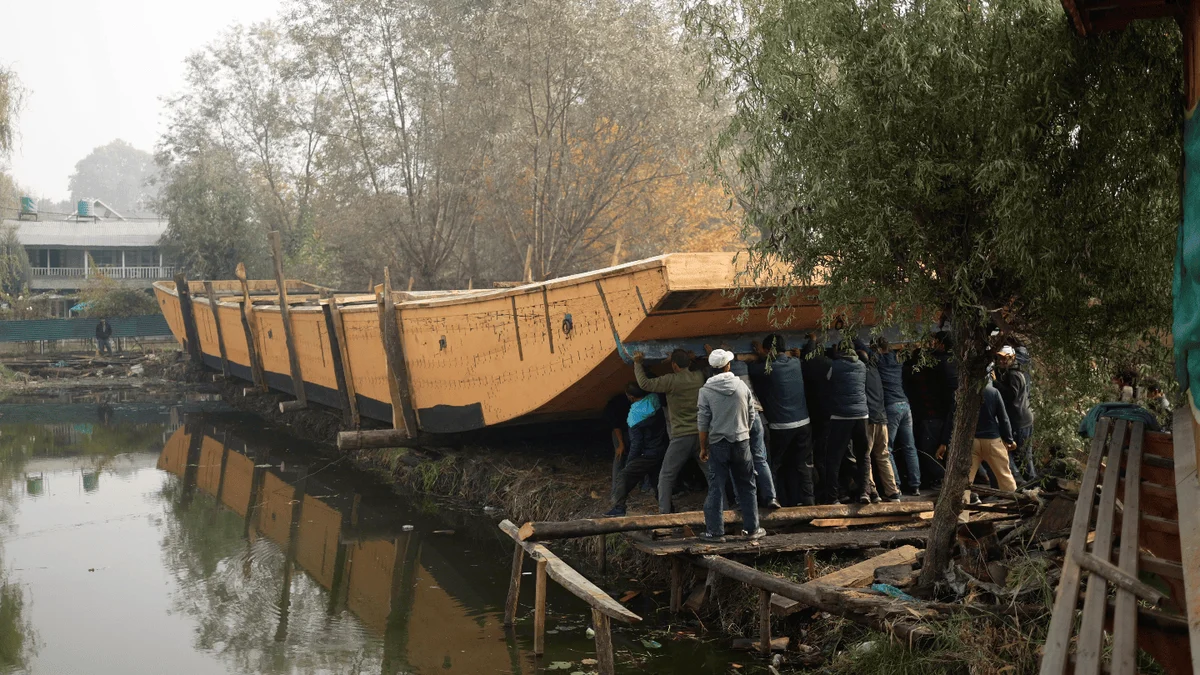
SRINAGAR/NEW DELHI — In the heart of New Delhi, at the newly developed Baansera Park along the Yamuna banks, the Delhi Development Authority (DDA) is nearing the completion of a ₹4-crore houseboat project. Designed as a permanent luxury fixture for the capital’s elite and tourists, the vessel is intended to evoke the romanticism of the Himalayas. Yet, 800 kilometers north, in the shimmering but embattled waters of Dal Lake, the very craft that inspired this project is gasping for its final breath.
The contrast presents a striking irony of modern Indian heritage management: while the capital invests millions to replicate the Kashmiri houseboat, the original master craftsmen in the Valley are forbidden by law from building new ones. Amidst this existential crisis, a high-stakes documentation project funded by the British Museum’s Endangered Material Knowledge Programme (EMKP) has just concluded its final phase. The research, led by architect Anto Gloren and researcher Sayali Athale, represents the most comprehensive effort to date to record the oral histories, structural secrets, and material science of a guild that is rapidly disappearing into the mists of history.
I. Main Facts: A Tradition in Limbo
The Kashmiri houseboat, known locally in its traditional form as the doonga, is not merely a tourist accommodation; it is a sophisticated feat of indigenous engineering. For centuries, these floating wooden structures have served as homes, transport vessels, and marketplaces. However, the industry has been paralyzed by a decades-old government moratorium on new construction, aimed at curbing the environmental degradation of Kashmir’s water bodies.
The core findings of the British Museum-funded project highlight a grim reality:

- A Shrinking Fleet: Once numbering in the thousands across Dal Lake, Nigeen Lake, and the Jhelum River, fewer than 750 houseboats remain today.
- The Last Masters: Only four "Wastas" (master craftsmen) with the comprehensive knowledge to build a hull from scratch remain alive. One of them, Nazir Ahmed Kawdari, passed away this January, leaving a massive vacuum in the guild.
- Environmental Deadlock: While the 1988 ban was intended to protect the lake’s ecology, it has inadvertently turned a living craft into a "fossilized" industry, where repair is permitted but innovation and renewal are legally stifled.
- Technological Shift: Due to the scarcity of high-quality Deodar (Himalayan Cedar) wood, craftsmen are now forced to scavenge timber from old bridges and demolished buildings, fundamentally altering the structural integrity of the vessels.
II. Chronology: From Mughal Splendor to Administrative Ban
The narrative that houseboats were a British colonial invention is a persistent myth that the recent documentation project seeks to debunk. While the British popularized the large-scale, luxury version of the houseboat in the late 19th century—largely because they were not permitted to own land in the princely state of Jammu & Kashmir—the roots of the craft go back nearly half a millennium.
The Mughal Era (1500s–1700s)
Historical records, including the Ain-e-Akbari and Jahangir-Nama, make explicit mention of floating dwellings in the Valley. During the Mughal period, these boats were essential for navigating the complex network of canals that connected the city of Srinagar to its outskirts. They were the primary mode of transport for royalty and commoners alike.
The Era of the ‘Bahast’ and ‘Doonga’ (1800s–1940s)
Until the mid-20th century, the bahast—a heavy cargo boat—was the lifeline of Kashmiri commerce. These vessels transported rice, wheat, and firewood across the city’s waterways. Master craftsman Abdul Khaliq Najar recalls stories from his elders about the era before 1947 when the water was the highway. As roads were constructed and motor vehicles took over, the bahast faded, leaving the doonga (living boat) and the tourist houseboat as the primary survivors of the craft.
The 1988 Moratorium
The turning point for the industry came in 1988. Faced with unregulated growth and increasing pollution levels in Dal Lake, the J&K government imposed a blanket ban on the construction of new houseboats. The policy was intended as a temporary measure to assess the lake’s carrying capacity but has remained largely in place for nearly 40 years. This freeze prevented new blood from entering the profession and stopped the natural cycle of replacing old, decaying vessels with new, more eco-friendly ones.

The Modern Crisis (2022–Present)
In 2022, a devastating fire on Nigeen Lake gutted seven houseboats, highlighting the vulnerability of these wooden structures. This tragedy provided a rare, albeit somber, opportunity for researchers to witness the rebuilding process—a process that revealed how much of the traditional knowledge had already begun to erode.
III. Supporting Data: The Anatomy of a Vanishing Art
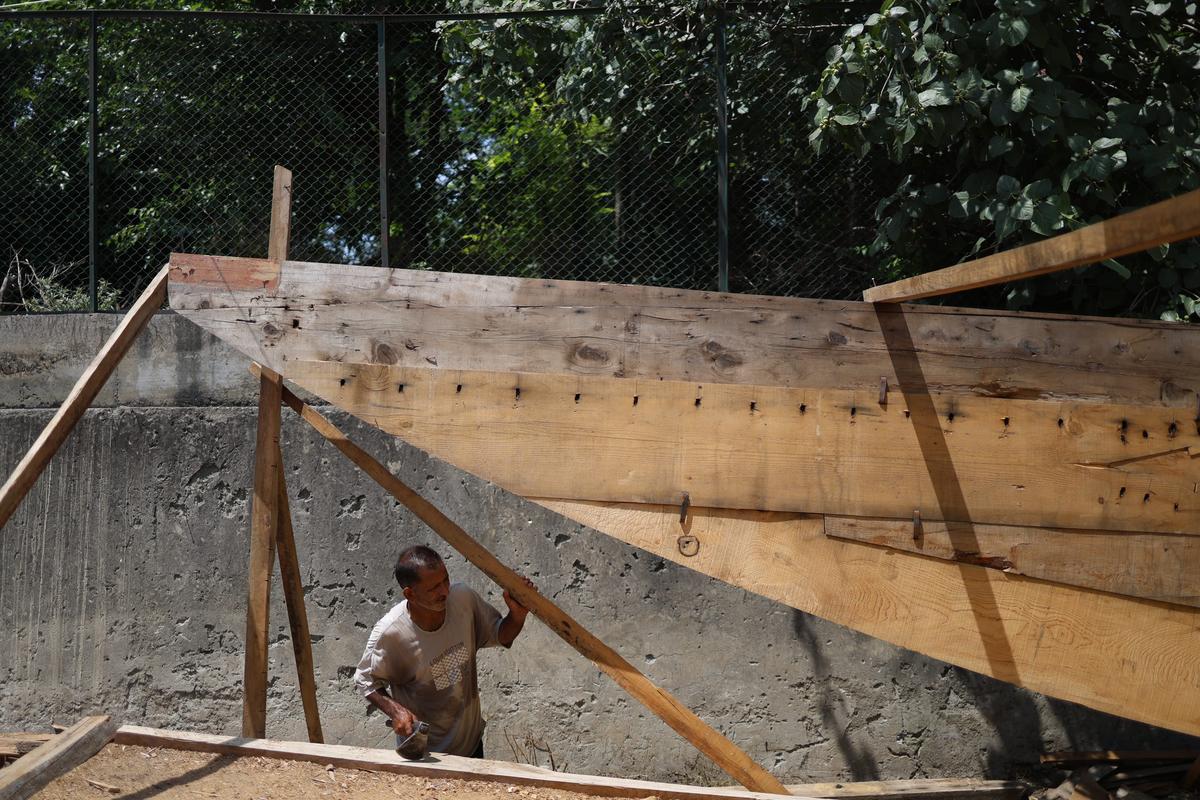
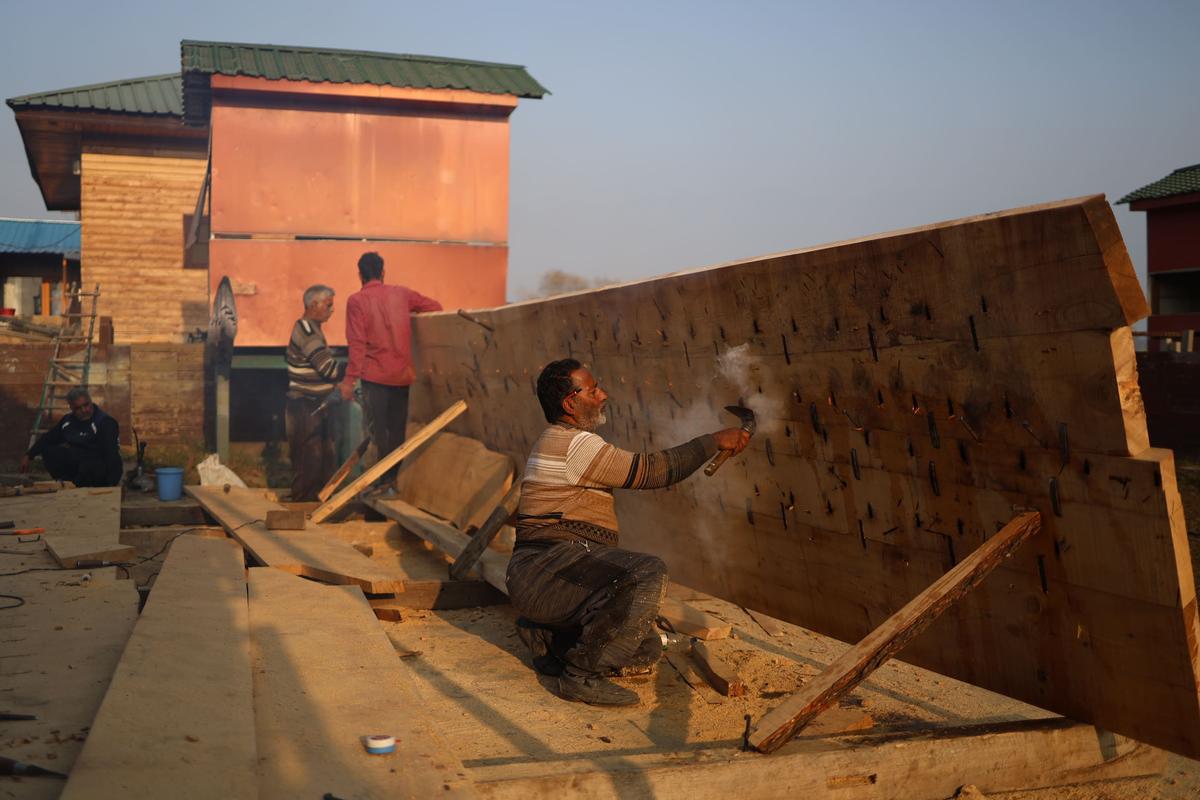
The construction of a Kashmiri houseboat is a labor-intensive process that defies modern assembly-line logic. According to the research team, the hull alone—the most critical part of the vessel—takes five to six months of meticulous labor to complete.
The Material Crisis
Traditionally, houseboats are built using Deodar, a wood prized for its water resistance and longevity. However, stringent forest conservation laws have made fresh Deodar nearly impossible to source for boatbuilders.
- Recycled Timber: Craftsmen now rely on "seasoned" wood from old structures. While this wood is durable, it comes in irregular sizes.
- The Joint Problem: A traditional pasch—the long structural beam that runs the length of the hull—was ideally made from a single, massive piece of timber. Today, because large beams are unavailable, the pasch is often composed of three pieces joined together. While this suffices for stationary boats, it weakens the vessel’s overall structural "spine."
Socio-Economic Data
The documentation project surveyed the families of the remaining master craftsmen. The data reveals a significant "generational exit":
- Succession: While many sons of the Wastas have assisted in repairs, few have the confidence or the economic incentive to build a new vessel from scratch.
- Diversification: The children of master boatmakers are increasingly moving into more stable professions, including retail, pharmacy, and the police force.
- The Livelihood Gap: With new construction banned, craftsmen are relegated to minor repairs or building smaller shikaras and sand-dredging boats, which command significantly lower wages and require less specialized skill.
IV. Official Responses: Recognition vs. Regulation
The government’s stance on the houseboat industry is a complex mix of heritage pride and environmental caution.
The Department of Handicrafts
In a significant move last year, the Director of J&K’s Department of Handicrafts formally felicitated the master craftsmen in Srinagar. Crucially, the department promised that hull builders—who had previously been categorized merely as laborers or carpenters—would be officially recognized as "Kashmiri craftspeople." This designation is more than symbolic; it makes them eligible for government welfare schemes, low-interest loans, and artisan credit cards.
The 2023 Houseboat Policy
The J&K administration recently introduced a new houseboat policy. While it allows for "minor repairs," the policy remains silent on the specific traditional techniques that must be used. Researchers argue that without specifying the use of traditional joinery and materials, the "repair" process might eventually lead to the loss of the craft’s authentic identity, as modern, cheaper materials replace traditional woodwork.
The Delhi Development Authority (DDA)
The DDA’s ₹4-crore plan for Baansera Park has been met with mixed emotions in the Valley. While some see it as a tribute to Kashmiri skill, others view it as a hollow appropriation. "It is ironic that the government will spend 4 crores to put a stationary houseboat in a park in Delhi, but will not allow us the timber or the permission to keep our own floating history alive in its natural habitat," says a local houseboat owner who requested anonymity.
V. Implications: The Future of a "Museumized" Heritage
The conclusion of the British Museum-funded project marks a transition from "living history" to "archived history." As the researchers submit their findings this month, the implications for the future of the craft are profound.
The Digital Lifeboat
The project’s primary output is an open-access platform that stores every technical detail of the boat-making process. From the specific angles of timber joinery to the oral chants used during the "hull-pushing" ceremony, the data ensures that even if the last Wasta passes away, the knowledge of how to build a houseboat will survive in a digital vault.
The Risk of Cultural Stagnation
However, an archive is not a substitute for a living industry. If the ban on new construction remains absolute, the Kashmiri houseboat faces a future as a "museum piece"—something to be looked at, but no longer lived in or built. The "museumization" of the craft risks stripping it of its soul, which lies in the rhythmic sound of the adze against timber on the banks of the Jhelum.
Environmental Reconciliation
The way forward, experts suggest, lies in a "Green Houseboat" initiative. Rather than a total ban, the government could allow for the construction of new vessels that incorporate modern sewage treatment systems and sustainable timber sourcing. This would allow the master craftsmen to pass their skills to the next generation while addressing the environmental concerns that triggered the 1988 ban.
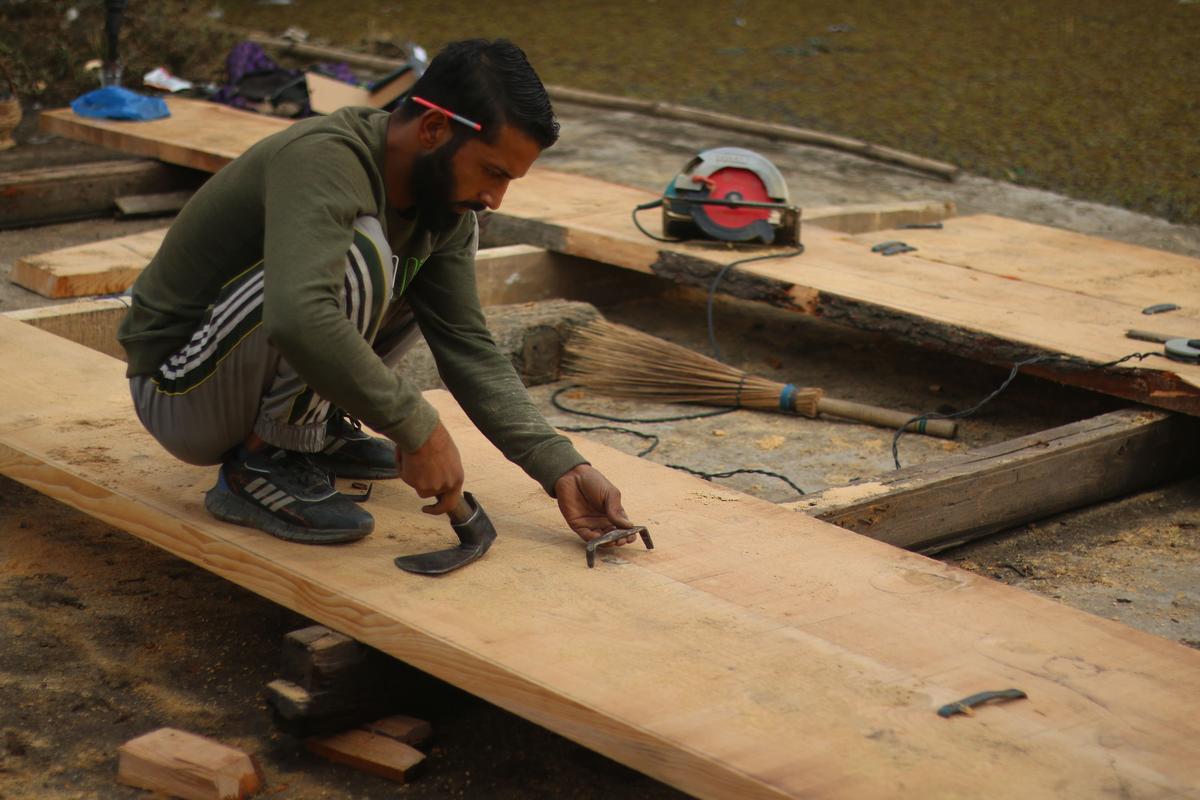
As Ghulam Ahmad Najar, one of the last remaining masters, observes: "I am bound to these boats; there is nothing else I know." His hope, and the hope of the researchers, is that the government’s recent recognition will lead to more than just a certificate on a wall. It must lead to a policy that recognizes the houseboat not as a source of pollution, but as a masterpiece of human ingenuity that deserves to float into the next century.
For now, the legacy of the Kashmiri Wasta remains caught between two worlds: a high-tech digital archive in London and a luxury replica in a Delhi park, while the masters themselves wait by the receding shores of Dal Lake, wondering if they will ever be allowed to lay a new keel again.
