

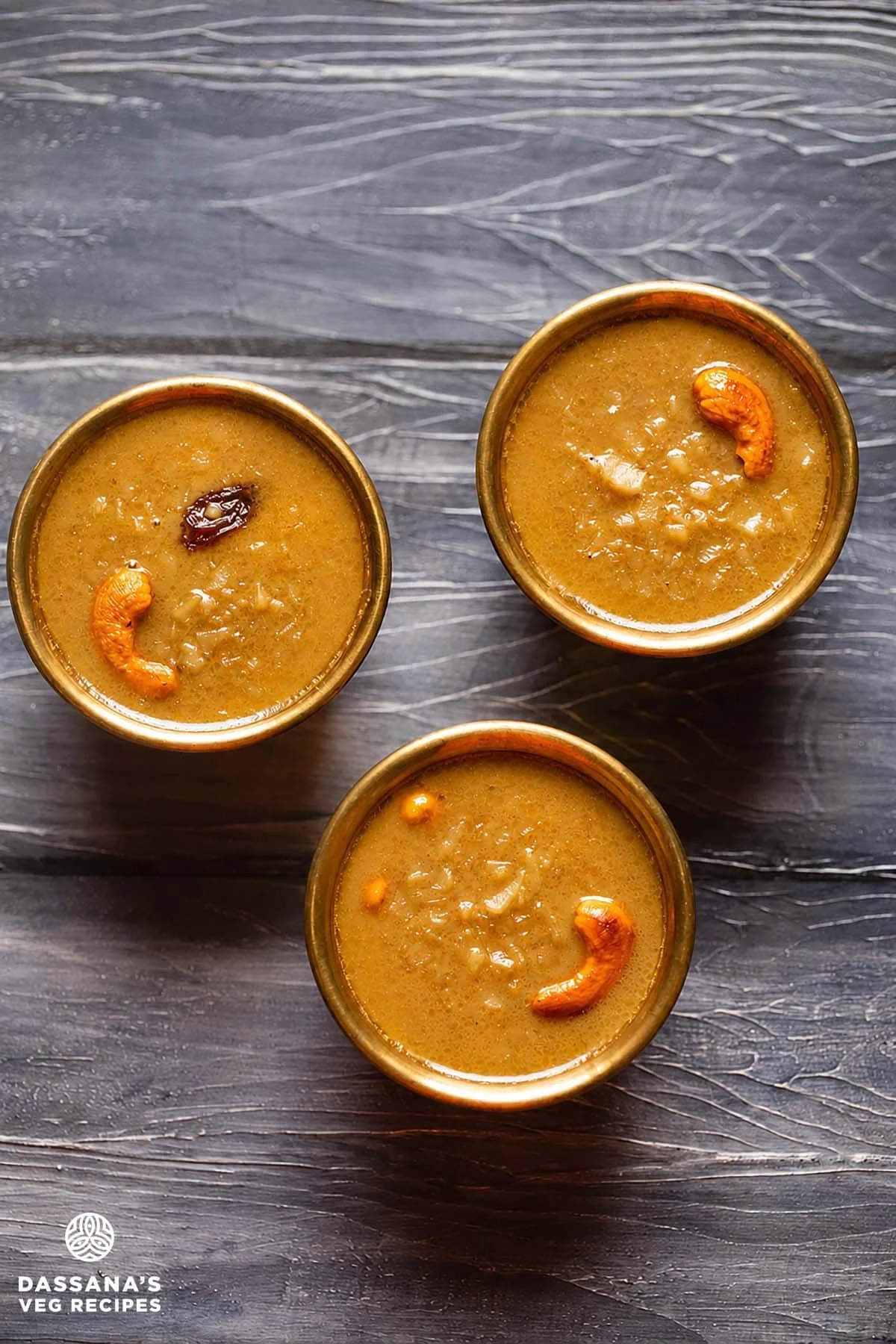
THIRUVANANTHAPURAM – As the harvest festival of Onam approaches, the air in the southern Indian state of Kerala becomes heavy with the scent of burning incense, fresh flowers, and the unmistakable aroma of simmering jaggery and coconut milk. At the heart of this cultural symphony lies the Onam Sadya, a grand vegetarian banquet served on a banana leaf. While the feast boasts dozens of dishes, none carries the prestige or the "primal position" of the Ada Pradhaman.

Often referred to as the "King of Payasams," Ada Pradhaman is more than a dessert; it is a complex architectural feat of culinary tradition. Utilizing rice ada (handmade rice flakes), dark unrefined jaggery, and varying grades of coconut milk, the dish represents the pinnacle of Kerala’s gastronomic heritage.

The Main Facts: Defining the Pradhaman
In the hierarchy of South Indian sweets, a distinction is strictly maintained between Payasam and Pradhaman. While all Pradhamans are Payasams, not all Payasams can claim the title of Pradhaman. To be classified as a Pradhaman, the dish must traditionally use coconut milk rather than dairy milk and jaggery rather than white sugar.

The defining ingredient is the Rice Ada. These are small, flat, dried pieces of rice pasta. Historically, the preparation of ada was a labor-intensive ritual: a thin batter of rice flour was spread onto wilted banana leaves, rolled, steamed, and then chopped into tiny ribbons. In the modern era, while ready-made dried ada has become the commercial standard, the fundamental flavor profile remains unchanged—a smoky, deep sweetness balanced by the creamy richness of the coconut and the warmth of dry ginger and cardamom.

Chronology of a Tradition: From Harvest to Hearth
The preparation of Ada Pradhaman follows a meticulous, multi-stage chronology that mirrors the patience required for the harvest itself.

Phase I: The Preparation of the Ada
The process begins with the hydration of the rice ada. Unlike wheat-based pasta, rice ada requires careful handling to prevent it from turning into a gelatinous mass. The ada is first plunged into rolling boiling water and cooked until it achieves a "tender-firm" or al dente texture.

Crucially, the cooked ada must be immediately rinsed in cold water. This journalistic "fact-check" of the culinary process reveals that rinsing removes excess surface starch, ensuring that each piece of rice pasta remains distinct and "slippery" when introduced to the heavy syrup later.

Phase II: The Jaggery Infusion
Once the ada is prepped, the focus shifts to the jaggery. In Kerala, the quality of the jaggery—often sourced from regions like Marayoor—determines the color and depth of the Pradhaman. The jaggery is melted into a syrup and strained to remove impurities. The cooked ada is then simmered in this concentrated syrup. This stage is vital for flavor absorption; the rice flakes must "drink" the jaggery to ensure that the sweetness is not merely superficial but embedded within the grain.

Phase III: The Hierarchy of Coconut Milk
The most technical aspect of the chronology is the addition of coconut milk. Traditional Kerala cooking recognizes three "extracts":

- Onnam Paal (First Extract): The thickest, creamiest milk.
- Randam Paal (Second Extract): Thinner milk.
- Moonnam Paal (Third Extract): The watery residue.
In a professional kitchen, the ada is first cooked in the third and second extracts. The Onnam Paal (the thickest milk) is added only at the very end. It is never allowed to boil, as excessive heat would cause the coconut fats to separate, curdling the delicate emulsion.

Phase IV: The Final Tempering
The dish concludes with the addition of "Chukku" (dry ginger powder), "Jeerakam" (cumin powder), and cardamom. Finally, cashews and raisins are fried in golden ghee (or coconut oil for a vegan variant) and poured over the top, providing a textural contrast to the soft, silky ada.

Supporting Data: The Nutritional and Economic Landscape
While often viewed as an indulgence, the components of Ada Pradhaman offer significant nutritional data points that differentiate it from Western-style desserts.

- Jaggery vs. Sugar: Unlike refined white sugar, jaggery is a non-centrifugal cane sugar that retains molasses. It contains trace minerals including iron, magnesium, and potassium. In Ayurvedic traditions, jaggery is considered a digestive aid, which is why it is served at the end of a heavy 26-dish Sadya.
- Coconut Milk Fats: While high in saturated fats, coconut milk contains Lauric acid, a medium-chain triglyceride (MCT) that is more easily metabolized by the liver for energy compared to long-chain fatty acids found in dairy.
- Economic Impact: The demand for ada and jaggery spikes by an estimated 400% during the months of Chingam (August–September). The Kerala State Civil Supplies Corporation (Supplyco) often releases specialized "Onam Kits" to ensure that even low-income households have access to these essential ingredients, highlighting the dish’s role in the state’s social welfare economy.
Official Responses: Culinary Experts Weigh In
To understand the cultural gravity of the dish, we spoke with several experts in the field of South Indian heritage.

"The Ada Pradhaman is the litmus test for any Kerala chef," says Chef Murali Krishna, a veteran of temple-style catering. "Anyone can make a milk payasam, but managing the temperature of coconut milk requires an intuitive understanding of heat. If you boil the Onnam Paal, you haven’t just ruined a dish; you’ve insulted the tradition."

Historian Dr. Lakshmi Nair notes the dish’s evolution: "The Pradhaman reflects Kerala’s history as the ‘Land of Spices’ and ‘Land of Coconuts.’ The use of dry ginger and cumin in a sweet dish is a uniquely Malayali trait. It bridges the gap between medicine and food, ensuring that the heavy feast does not lead to indigestion. It is an ‘official’ cultural ambassador in liquid form."

Furthermore, representatives from the Coconut Development Board have frequently cited the popularity of Pradhamans as a key driver in the domestic consumption of coconuts, supporting the livelihoods of thousands of farmers across the Malabar and Travancore coasts.

Implications: The Globalization of the Malayali Palate
The rise of the "Global Malayali" has led to significant implications for the future of Ada Pradhaman. With a diaspora spanning from Dubai to Dallas, the dish has undergone a transformation in accessibility.

The Rise of Convenience
The commercialization of "instant ada" and canned coconut milk has allowed the dish to transcend geographical boundaries. What was once a six-hour labor of love can now be replicated in under 45 minutes in a modern apartment in London. However, purists argue that the "canned" flavor lacks the fresh, nutty undertones of hand-grated coconut, sparking a "slow food" movement within the community to preserve traditional methods.

Veganism and Dietary Trends
Interestingly, Ada Pradhaman is gaining traction in the global "plant-based" community. Because it traditionally relies on coconut milk and jaggery, it is inherently dairy-free (provided coconut oil is used for frying instead of ghee). This has positioned the dish as a "superfood dessert" in high-end wellness circles, far removed from its humble origins in the temple kitchens of Kerala.

Cultural Identity
For the younger generation of the diaspora, the Ada Pradhaman serves as a sensory link to their heritage. In a world of fast food, the complex, layered sweetness of the Pradhaman remains a grounding force. It is a reminder of a culture that values patience, precision, and the communal joy of a shared meal.

Conclusion
As the sun sets over the Arabian Sea and the Onam festivities reach their crescendo, the serving of the Ada Pradhaman remains a moment of quiet reverence. It is the final act of the Sadya, a sweet benediction that leaves the palate satisfied and the spirit renewed. Through its meticulous preparation, its deep-rooted history, and its nutritional complexity, the Ada Pradhaman stands not just as a recipe, but as a liquid chronicle of Kerala itself—resilient, rich, and timelessly sweet.

Quick Reference: The Pradhaman Profile
- Core Grain: Rice Ada (steamed/dried rice flakes)
- Sweetener: Dark Jaggery (Unrefined cane sugar)
- Base: Three grades of fresh Coconut Milk
- Aromatics: Cardamom, Dry Ginger (Chukku), Cumin
- Garnish: Ghee-fried Cashews and Raisins
- Service Temperature: Can be served hot, warm, or chilled (thickens upon cooling)
