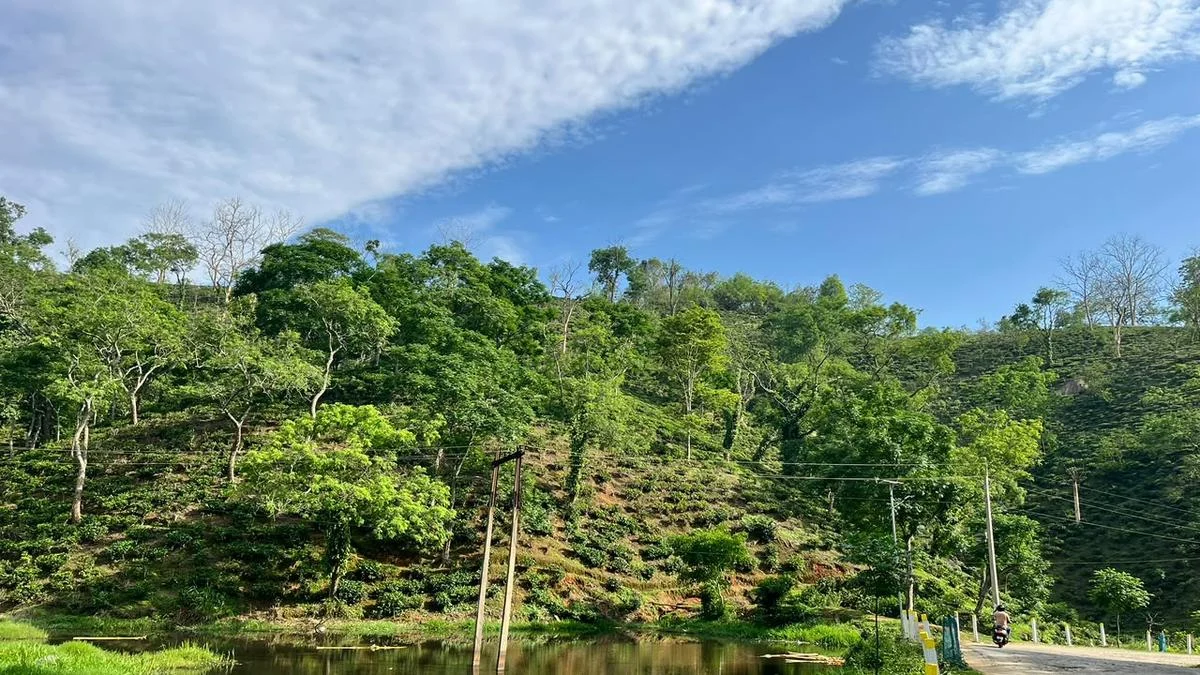
GUWAHATI — In the verdant corridors of Assam’s Brahmaputra Valley, the air has long been thick with the scent of fermenting tea leaves and the rhythmic clinking of factory machinery. However, as the global travel industry shifts toward "slow tourism" and authentic "experiential" engagement, the traditional tea garden model is undergoing a radical transformation. Leading this charge is the Amchong Tea Estate, a 68-year-old institution that has successfully pivoted from a purely industrial plantation to a premier destination for immersive tea culture.
The launch of "Amchong Leaf: A Tea Walkthrough Experience" in February 2026 marks a significant milestone in this evolution. Located just 40 minutes from the heart of Guwahati, the estate is bridging the gap between the city’s urban sprawl and the unhurried legacy of the tea industry.
Main Facts: The Genesis of Amchong Leaf
Amchong Tea Estate, sprawling across 1,782 acres on the outskirts of Guwahati, has transitioned into a third-generation enterprise that balances high-volume production with boutique tourism. The estate’s recent initiative, Amchong Leaf, is a comprehensive ecosystem designed to demystify the journey of tea.
The facility is no longer just a site of agricultural labor; it is now a curated visitor hub featuring:
The Experiential Centre: A museum-style walkthrough tracing tea’s global origins.
The Viewing Gallery: A high-vantage point overlooking the active processing floor.
The Tea Tasting Room: A sophisticated laboratory for sensory evaluation.
Steep House and Tea Leaf: High-end culinary outlets blending Assamese heritage with global cafe culture.
With packages ranging from ₹599 to ₹2,499 per person, the estate has democratized the "planter life" experience, making it accessible to day-trippers from Guwahati and international tourists alike. Since its rebranding and the introduction of these immersive modules, the estate has reported a staggering influx of approximately 10,000 visitors per month.
Chronology: From "Amsoi" Nostalgia to 2026 Modernity
The history of Amchong is intertwined with the personal memories of Guwahati’s residents. For decades, the area was known colloquially as "Amsoi," a name associated with school picnics, rolling hills, and a sense of untamed wilderness. In the pre-digital era, it was a place of mulberry trees and orange groves, often remembered through the hazy lens of analogue photography.
The Foundation (1958–1990s)
Established 68 years ago, the estate began as a standard colonial-style plantation under the Bhauram Jodhraj group. For the first few decades, its primary focus remained the production of high-quality Crush, Tear, Curl (CTC) tea for the domestic and international markets.
The Transition (2000s–2020)
As the city of Guwahati expanded toward Narengi and Sonapur, Amchong found itself uniquely positioned as the "closest tea garden to the city." The management recognized the potential for "tea tourism," a concept that was gaining traction in regions like Darjeeling and Munnar but remained underdeveloped in the Assam plains.
The Modern Era (2024–2026)
Recognizing the 200th anniversary of the Assam tea industry, the estate underwent a massive infrastructural overhaul. In February 2026, "Amchong Leaf" was officially commissioned. This move was not merely aesthetic; it involved installing projection-mapping technology in the experiential center and hiring specialized "tea sommeliers" to lead the "Blend n Sip" sessions.
Supporting Data: The Architecture of an Immersive Experience
The success of Amchong Leaf is rooted in its tiered experiential packages, designed to cater to different levels of interest, from the casual weekend traveler to the hardcore tea connoisseur.
1. The Educational Module (T’Journ)
The "T’Journ" experience is a deep dive into the socio-political history of tea. Visitors learn about the 19th-century "tea heists" where British agents smuggled saplings out of China, and the subsequent discovery of Camellia sinensis var. assamica by Robert Bruce in Upper Assam. The center uses immersive projection mapping to visualize the migration of tea culture across continents.
2. The Production Module (Factory Tours)
Unlike many estates where the factory is off-limits due to safety or hygiene concerns, Amchong has integrated a viewing gallery. Here, visitors observe the five critical stages of black tea production:
Withering: Reducing moisture in the green leaf.
Rolling/Maceration: Breaking the leaf cells to release enzymes.
Oxidation (Fermentation): The chemical reaction that gives black tea its color and strength.
Drying (Firing): Halting oxidation and preparing the leaf for storage.
Sorting: Grading the tea into Broken Orange Pekoe (BOP), Fannings, and Dust.
3. The Adventure and Nature Module
To leverage its 1,782-acre topography, the estate offers 4×4 Gypsy safaris and ATV rides. These tours take visitors to the highest vantage points of the estate, crossing natural streams and dense secondary forests that house local biodiversity. This "off-road" element has become a significant draw for younger demographics and corporate groups.
4. The Gastronomic Component
The culinary experience at the "Steep House" and "Tea Leaf" restaurants serves as a bridge between tradition and modernity.
Traditional Offerings:Khorikat diya maas (fish smoked on bamboo skewers), maas pitika (mashed fish with herbs), and til chicken (chicken cooked with black sesame).
Modern Fusion: Wood-fired pizzas and café fare designed for the urban palate.
Official Responses: Leadership Perspectives on Tea Tourism
The strategic shift at Amchong is led by a new generation of management who view tea as a lifestyle brand rather than a bulk commodity.
Ananya Khemka, Director of Bhauram Jodhraj and Amchong Leaf, emphasizes the timing of the project:
"As Assam marks 200 years of its tea industry, the time felt right to create an experience that honours its legacy. Rather than simply talking about tea, we wanted visitors to walk through the gardens, see how fresh leaves are transformed, and interact with the people behind every harvest. Today’s travellers are looking for authentic, immersive experiences, and Assam is uniquely placed to offer them."
Khemka further notes that the estate’s proximity to Guwahati allows for a "micro-vacation" model, where people can experience the serenity of a plantation without a six-hour drive to Upper Assam.
Zameer Sodhi, Head of the Tea Experience, highlights the precision required in the "Blend n Sip" sessions:
"The process is surprisingly precise. Once visitors select a tea—be it CTC, orthodox black, green, or oolong—the leaves are carefully measured and brewed according to the varietal. We use borosilicate kettles to theatrically swirl the brew, allowing guests to see the ‘agony of the leaf’ as it unfurls."
Implications: Redefining Assam’s Economic and Cultural Identity
The "Amchong Model" carries significant implications for the future of the tea industry in Northeast India.
Economic Diversification
The tea industry has historically been vulnerable to fluctuating global commodity prices and rising labor costs. By diversifying into tourism, Amchong has created a secondary revenue stream that is less dependent on the auction tea market. This model provides a blueprint for other estates in Assam to monetize their land and heritage.
Cultural Preservation
By educating the public on the difference between CTC (the strong, granular tea used for chai) and Orthodox tea (the whole-leaf tea prized by connoisseurs), Amchong is elevating the "tea IQ" of the domestic market. This helps preserve the craft of specialty tea making, which often gets overshadowed by mass-market production.
Employment and Social Impact
The transition to an experiential model has created new job categories within the estate. Beyond traditional pluckers and factory hands, the estate now employs tour guides, hospitality staff, sommeliers, and adventure sports instructors. This provides the local community with diverse career paths within the plantation ecosystem.
Environmental Stewardship
The focus on "Garden Walks" and "Nursery Visits" encourages a more sustainable approach to plantation management. As visitors become more aware of the ecology of a tea garden, there is an inherent pressure—and incentive—for estates to maintain their forest cover and water bodies, leading to better conservation of the local flora and fauna.
Conclusion
Amchong Tea Estate has successfully navigated the journey from a nostalgic "picnic spot" of the past to a sophisticated cultural hub of the future. By integrating education, adventure, and gastronomy into the "leaf-to-cup" journey, it has set a new standard for heritage tourism in Assam. As the state looks toward the next century of tea, Amchong Leaf stands as a testament to the enduring relevance of the Camellia sinensis—not just as a crop, but as an experience that connects the past to the present.