

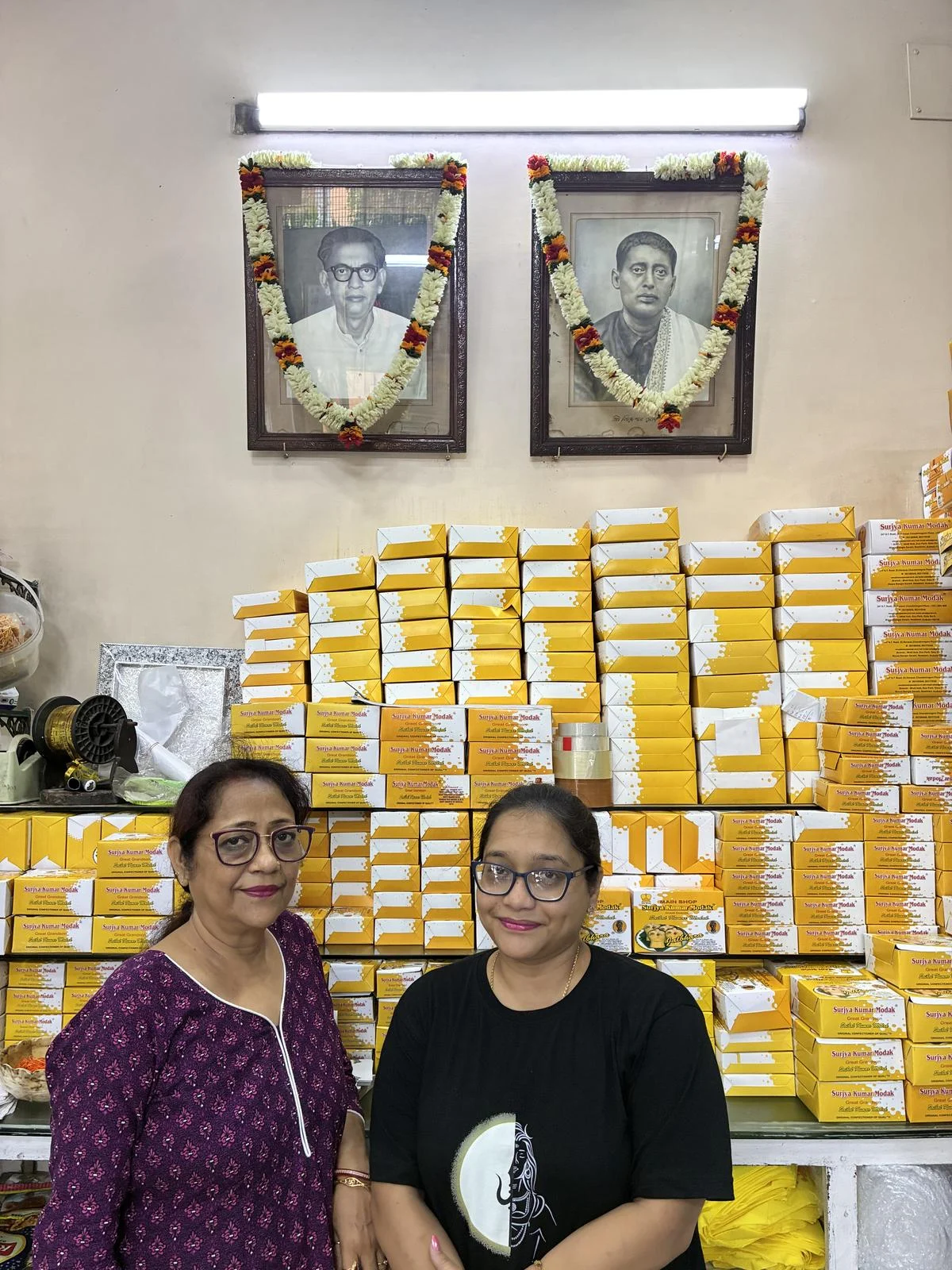
CHANDANNAGAR, WEST BENGAL – History has many hiding places, but in the quiet, river-facing town of Chandannagar, it chose to settle inside a piece of confectionery. This former French outpost, nestled along the banks of the Hooghly River, has long entrusted its cultural memory to a sweet no larger than the palm of a hand. To the uninitiated, the Jalbhara Sandesh looks like an ordinary, unassuming mound of cottage cheese. However, beneath its matte exterior lies a culinary feat worthy of a master magician: a pocket of fragrant, rose-scented syrup that remains trapped within the solid shell, refusing to leak until the very moment of consumption.
On June 26, 2026, this "water-filled" marvel officially stepped into the global spotlight. The Government of India formally awarded the Jalbhara the Geographical Indication (GI) tag, acknowledging it as a product inseparable from the soil, history, and craftsmanship of Chandannagar. For the descendants of Surjya Kumar Modak, the man who imagined this sweet nearly 220 years ago, the recognition is more than a legal milestone—it is a testament to a legacy that has outlived empires, survived the departure of the French, and navigated the complexities of a globalized economy.

Main Facts: A Confectionery Identity
The Jalbhara Sandesh is not merely a dessert; it is a structural anomaly in the world of Bengali sweets. While the region is famous for its Rasgulla (syrup-soaked balls) and Sandesh (dry sweetened curd), the Jalbhara occupies a unique middle ground.
Located at 247, Grand Trunk Road East, Barasat Chandannagar, the original shop of Surjya Kumar Modak remains a site of culinary pilgrimage. While several "Surjya Modaks" have sprouted across the district to capitalize on the name’s fame, the ancestral establishment—now managed by the fifth and sixth generations—remains the sole guardian of the original 1843 recipe. The family operates only one legitimate branch outside the town, located at the Misti Hub in Kolkata’s New Town Eco Park.

The GI tag serves to protect this specific heritage. It ensures that while others may attempt to replicate the "liquid-filled" technique, the name Chandannagar Jalbhara belongs exclusively to the artisans of this town.
Chronology: From a Zamindar’s Prank to Global Export
1843-1844: The Birth of a Trick
The story of the Jalbhara begins in the Bengali year 1250 (roughly 1843-1844). Surjya Kumar Modak, a local moira (confectioner), received a peculiar request from the grihini (matriarch) of the Telinipara Zamindar household. The family was preparing to welcome a newlywed groom, and the mother-in-law wanted a sweet that would "playfully surprise" him.

Surjya and his son, Siddheshwar Modak, rose to the challenge. They crafted a mould inspired by the talshansh—the translucent, jelly-like pulp of the ice apple. Using high-quality chhena (cow milk cottage cheese), they constructed a hollow shell. Inside, they injected a blend of aromatic rose extract and dolo (jaggery reduced to a thick, sticky consistency).
When the unsuspecting groom bit into the sweet, the hidden reservoir of syrup burst, spilling down his panjabi (traditional silk kurta). The women of the household erupted in laughter; the prank was a success, and a culinary icon was born.

The Portuguese Influence and the Chhena Revolution
The Jalbhara did not emerge in a vacuum. Its existence is tied to a pivotal shift in Bengali history. Before the arrival of the Portuguese in nearby Bandel, the use of curdled milk in sweets was considered taboo in many Hindu households, as "broken" milk was seen as an ill omen.
However, the Portuguese introduced the technique of curdling milk with acidic agents. Local Bengali artisans, with their characteristic ingenuity, adopted this "spoiled" milk and transformed it into chhena, the foundation of the modern Bengali sweet industry. Surjya Kumar Modak was among the visionaries who took this relatively new ingredient and refined it into a sophisticated art form.

The 19th Century: A Poet-Confectioner
Surjya Kumar Modak was more than a businessman; he was a representative of the 19th-century Bengali Renaissance, where the lines between craft and culture were often blurred. He was a man of letters, and his poetry collection, Geet Gobindo, is still preserved in the French Museum in Chandannagar. This dual identity—as both a poet and a confectioner—imbued the Modak legacy with a sense of literary refinement that persists today.
Supporting Data: The Science of the Shell
For nearly two centuries, visitors have asked the same question: How does the liquid stay inside?

Gitasree Modak, a sixth-generation descendant, explains that the secret lies in the consistency of the chhena shell. "The outer shell is prepared with such a specific density that it never absorbs the liquid inside," she notes. This structural integrity is so robust that even in the sweltering heat of a Bengal summer, the sweet can remain intact for four to five days without refrigeration.
Seasonal Variations and Modern Pricing
- The Winter Special: During the cooler months, the shop produces a version made entirely with nolen gur (fresh date palm jaggery). In this variant, both the shell and the filling take on a deep, amber hue and a smoky sweetness.
- The Modern Palette: To cater to changing tastes, the family has introduced contemporary flavors. These include:
- Alphonso Mango: Filled with real mango pulp (the most popular summer variant).
- Strawberry & Black Currant: Fruity iterations for younger demographics.
- Chocolate/Cadbury: A fusion approach to traditional sandesh.
- Pricing: The original Jalbhara is priced at ₹65 per piece, reflecting its artisanal labor, while the premium mango version retails for ₹90.
Logistics and Export
The reach of the Jalbhara has expanded far beyond the Hooghly district. Gitasree confirms that the shop now utilizes express couriers like DHL to meet international demand.

- Domestic: Six to seven major consignments are sent weekly to Bengaluru, Hyderabad, Delhi, and Mumbai.
- International: There is a robust market in the United States, where a dedicated vendor handles distribution across the country, ensuring the sweets reach customers within 24 to 48 hours of production.
Official Responses: What the GI Tag Means for the Future
The awarding of the GI tag on June 26, 2026, was met with celebration by the Modak family and the Chandannagar community. For the family, it represents the culmination of 220 years of labor.
"For international business, we needed official recognition," says Gitasree Modak. "Earlier, everyone knew it as Surjya Modak’s Jalbhara. Now it has formally become Chandannagar’s Jalbhara. It places our town on the global map of heritage foods."

Official representatives from the GI registry noted that the tag was granted based on the "unique geographical environment and the traditional human skills" involved in the production. The recognition provides a legal framework to prevent "passing off"—where inferior products are sold under the Jalbhara name—thereby protecting both the consumer and the original creators.
The Tagore Connection: A Cultural Endorsement
The Jalbhara’s status is further cemented by its association with Nobel Laureate Rabindranath Tagore. During his frequent stays at Patal Bari—a historic house overlooking the Hooghly—Tagore was a regular consumer of Modak’s creations.

While he adored the Jalbhara, he was particularly struck by another preparation made of fine chhena grains. Remarking that the delicate texture reminded him of tiny pearls (moti), he named it Motichur Sandesh. This name remains in use today at the Modak shop, distinct from the gram-flour Motichoor Ladoo found elsewhere in India. This endorsement by the "Bard of Bengal" elevated the shop from a local bakery to a cultural landmark.
Implications: Preserving Heritage in a Globalized Market
The GI tag for the Jalbhara comes at a critical time for traditional Indian crafts. As global fast-food chains and mass-produced desserts dominate the market, artisanal sweets face the threat of extinction.

The success of Surjya Modak’s descendants offers a blueprint for survival:
- Consistency of Sourcing: The family continues to source milk, sugar, and chhena from trusted local suppliers in the suburbs of Chandannagar, ensuring the taste remains unchanged from the 19th century.
- Generational Continuity: The involvement of Saibal Kumar Modak (5th generation) and his daughters Bhagyasree and Gitasree (6th generation) ensures that the secret recipes are not lost to time.
- Adaptation without Dilution: While introducing mango and chocolate flavors, the shop has refused to compromise on the fundamental technique of the "liquid heart."
As another tray of Jalbhara empties across the counter at the Barasat shop, the sweet performs its oldest trick once again. A brittle shell yields to the teeth, sweetness spills where none seemed possible, and a new generation of visitors laughs in astonishment—just as the zamindar’s son-in-law did two centuries ago. The GI tag may be new, but the magic of Chandannagar is eternal.
