

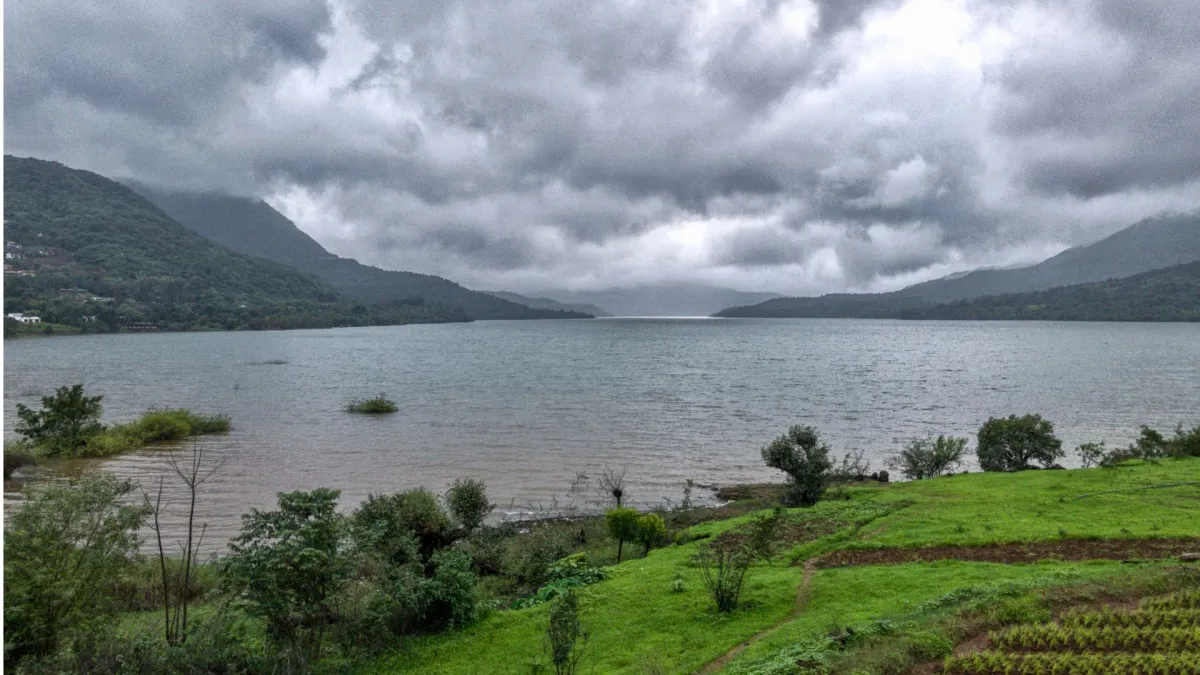
MUMBAI — For centuries, the Indian monsoon has been celebrated as the lifeblood of the nation’s agrarian economy, a seasonal phenomenon that dictates the rhythm of rural life and the health of the national GDP. However, a groundbreaking study has revealed that the monsoon’s role extends far beyond cooling the atmosphere and irrigating crops. In the coastal aquifers of Maharashtra, the annual deluge serves as a sophisticated geochemical "reset button," purging hazardous levels of salinity and refreshing vital drinking water reserves.
The research, conducted in the Palghar district by scientists from the Bhabha Atomic Research Centre (BARC) and the Homi Bhabha National Institute (HBNI), provides a comprehensive look at the fragile state of India’s groundwater. While the findings offer hope by demonstrating the monsoon’s power to dilute pollutants, they simultaneously sound a clarion call regarding the persistent threat of industrial effluent and the encroaching shadow of climate-driven sea-level rise.
Main Facts: A Seasonal Chemical Transformation
Groundwater is the primary source of drinking and irrigation water for millions in India’s coastal belts. In regions like Palghar, located on the western coast near Mumbai, the quality of this water is in a constant state of flux. The study reveals a stark dichotomy between the pre-monsoon and post-monsoon periods.
Before the rains arrive, the groundwater in Palghar is in a state of crisis. Intense summer heat leads to high evaporation rates, concentrating minerals and salts within the aquifers. Simultaneously, the over-extraction of freshwater creates a vacuum that allows the Arabian Sea to seep inland—a process known as seawater intrusion. The BARC study found that prior to the monsoon, nearly 80% of the groundwater samples were classified as "poor" or "unsuitable" for human consumption. These samples were characterized by excessive hardness and high concentrations of sodium and chloride, which pose significant risks to human health and can render agricultural soil infertile.
However, the arrival of the monsoon triggers a dramatic reversal. The massive influx of freshwater recharges the aquifers, physically pushing back the seawater and diluting the accumulated minerals. Following the rains, the researchers observed that at least 50% of the previously "unsuitable" water shifted into the "good quality" category. This seasonal cleansing is the only factor preventing a total collapse of the region’s water security.

Chronology: The Annual Cycle of Aquifer Stress and Recovery
The life cycle of Palghar’s groundwater follows a predictable but increasingly precarious annual timeline. Understanding this chronology is essential for managing the region’s water resources.
1. The Pre-Monsoon Peak (March – June)
During the summer months, the water table drops to its lowest levels. As the sun beats down on the Konkan coast, evaporation pulls moisture from the shallow soil layers, leaving behind concentrated salts. In the rock and soil layers known as aquifers, the lack of pressure from above allows the heavier, saltier seawater to move further inland. By late May, wells that were once fresh become brackish, forcing residents to rely on expensive water tankers or consume water that exceeds safe mineral limits.
2. The Monsoonal Influx (July – September)
As the monsoon clouds break over the Western Ghats, the parched earth begins to absorb the torrential rain. This "meteoric" water—water derived from precipitation—percolates through the soil, carrying a fresh chemical signature. This period marks the "recharge phase," where the volume of freshwater is sufficient to dilute the high concentrations of chloride and sodium that accumulated during the dry months.
3. The Post-Monsoon Equilibrium (October – February)
In the immediate aftermath of the rains, the groundwater quality is at its peak. The study’s isotopic analysis confirms that the water in the wells during this time is predominantly "modern" rainfall. However, as the dry season begins anew in November, the slow process of mineral concentration and seawater creep restarts, beginning the cycle of degradation once more.
Supporting Data: Isotopic Fingerprints and the Entropy Index
To move beyond traditional, often subjective methods of water testing, the BARC and HBNI team employed a multi-disciplinary approach that combined chemical analysis with advanced nuclear physics and computer modeling.

Isotopic Hydrology
The cornerstone of the study was the use of "isotopic fingerprints." Every water source has a unique ratio of stable isotopes—specifically hydrogen and oxygen. By analyzing these ratios, scientists can determine the exact origin of the water in a well.
- Oxygen-18 and Deuterium: In the pre-monsoon samples, the researchers found a heavy enrichment of these isotopes, a "smoking gun" for high evaporation and seawater mixing.
- Tritium (Hydrogen-3): This radioactive isotope of hydrogen was used to "date" the water. The presence of tritium in Palghar’s aquifers indicates "modern" water (recharged within the last 50–70 years). While this proves the system is dynamic and capable of being replenished by rain, it also revealed a darker reality.
The Industrial "DNA"
Perhaps the most alarming data point in the study was the discovery of unusually high tritium levels near industrial canals. Tritium is not only a natural marker but also a byproduct of specific industries. The researchers linked these spikes to local factories involved in dye manufacturing and watch-making, which use tritiated compounds in their processes. The presence of these chemicals in the shallow aquifer system proves that industrial waste is leaking directly into the drinking water supply, bypassing natural filtration.
The Entropy Water Quality Index (EWQI)
The team utilized the Entropy Water Quality Index to map the region. Unlike older models that might give equal weight to all pollutants, the Entropy method uses the inherent variability of the data to identify which pollutants are the most critical threats. This revealed that while salinity is the most widespread issue, the localized "hotspots" of industrial pollution are much harder to remediate, as they do not dilute as easily as natural salts.
Official Responses and Regulatory Implications
While the study was scientific in nature, its findings have significant implications for local governance and environmental policy in Maharashtra.
The Need for Stringent Industrial Oversight:
Environmental advocates have pointed to the tritium findings as evidence that current waste disposal regulations are being flouted. The detection of industrial isotopes in the groundwater suggests that "lined" canals and waste treatment facilities may have structural failures, allowing toxic runoff to penetrate the water table. State regulators are now being urged to implement more frequent isotopic monitoring around industrial clusters like Palghar and Boisar.

Rethinking Rainwater Harvesting:
Government officials from the Maharashtra Water Resources Department have noted that the study validates the state’s push for decentralized rainwater harvesting. If the monsoon is a "reset button," the goal must be to extend the duration of that reset. By artificially recharging aquifers with rainwater during the monsoon, the "good quality" window can be extended further into the summer months, reducing the period of high salinity.
Urban Planning and Infrastructure:
The geospatial mapping provided by the BARC team offers a roadmap for where not to dig wells. By identifying the exact zones where seawater intrusion is most aggressive, local panchayats (village councils) can better plan the placement of community borewells to ensure they remain viable year-round.
Implications: A Future Defined by Rising Tides
The Palghar study is more than a local report; it is a microcosm of the challenges facing coastal communities worldwide. As the global climate changes, two major factors threaten to break the monsoon’s ability to refresh the earth.
1. Sea-Level Rise
As global temperatures rise and polar ice melts, the Arabian Sea will exert greater pressure on India’s western coastline. This study suggests that the "push-back" provided by the monsoon may eventually become insufficient. If sea levels rise significantly, the salt-water wedge will move deeper inland, potentially contaminating freshwater aquifers permanently, regardless of how much it rains.
2. Erratic Monsoon Patterns
The study’s findings rely on the consistency of the monsoon. However, climate change is making Indian rainfall more erratic—shorter, more intense bursts followed by long dry spells. Such patterns may not allow for the slow, steady percolation required to deep-recharge aquifers. Instead, heavy runoff might wash away topsoil and flow into the ocean before it can dilute the groundwater’s salinity.

3. The Long-Term Industrial Shadow
Unlike salt, which the monsoon dilutes effectively, heavy metals and industrial chemicals can linger in the soil and rock matrix for decades. The discovery of tritium-linked industrial waste highlights a "hidden" crisis. While the water may look and taste fresh after the rain, the microscopic presence of industrial "DNA" poses long-term carcinogenic and neurological risks to the population.
Conclusion
The research conducted by the Bhabha Atomic Research Centre and the Homi Bhabha National Institute serves as a vital check-up on the health of India’s coastal water systems. It confirms that the monsoon remains our greatest ally in the fight for clean water, acting as a natural purification system that defies the encroaching sea.
However, the study also strips away the illusion of invulnerability. The presence of industrial isotopes and the looming threat of sea-level rise suggest that the "monsoon reset" is not an infinite resource. To protect the water security of future generations, India must move toward a management model that combines the ancient wisdom of rainwater harvesting with the cutting-edge precision of isotopic monitoring and strict industrial accountability. Without these measures, the "reset button" may one day fail to trigger, leaving coastal communities parched in a land of salt and chemicals.
