

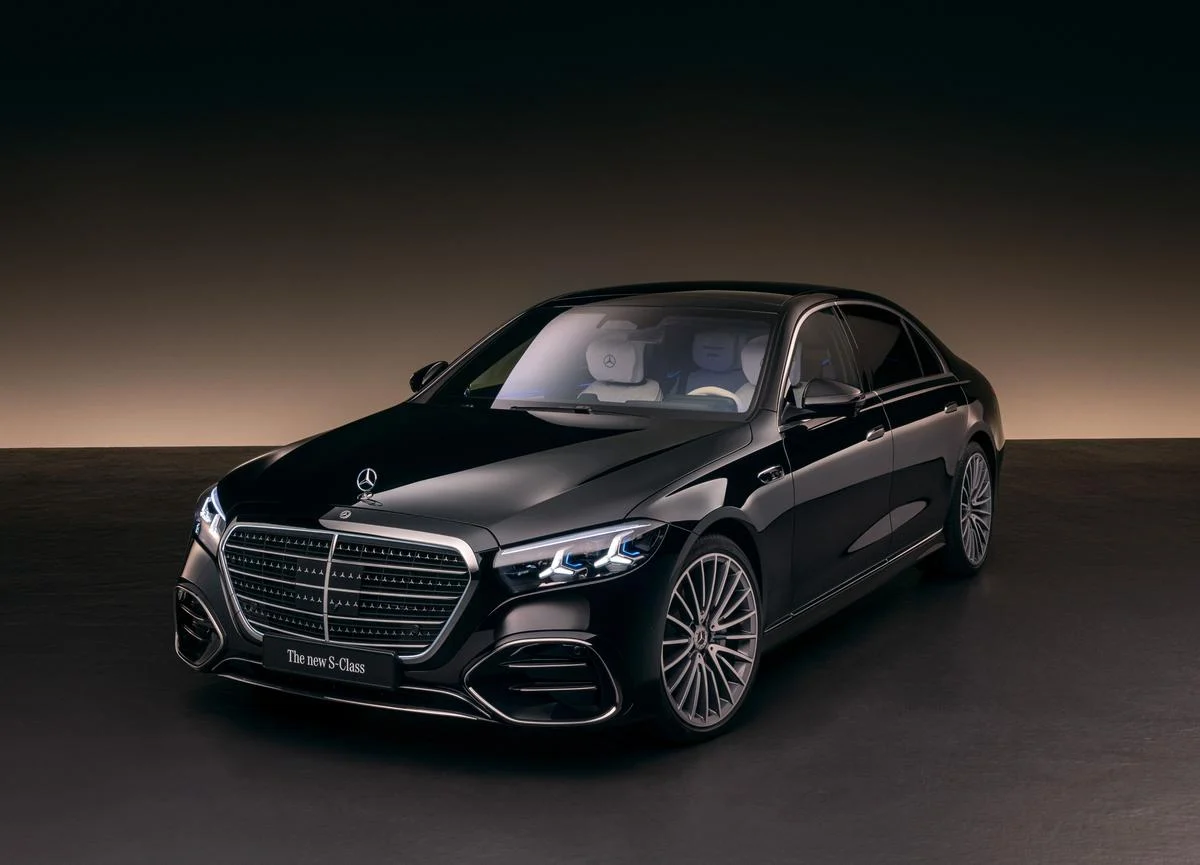
For over half a century, the Mercedes-Benz S-Class has been more than just a car; it has served as a rolling barometer for the future of the automotive industry. Often referred to by enthusiasts and critics alike as "the best car in the world," the S-Class has traditionally introduced technologies—ranging from Anti-lock Braking Systems (ABS) to airbags—that eventually trickle down to every vehicle on the road. However, as the global automotive landscape shifts toward a greener future, the flagship’s latest iteration, the S 450e plug-in hybrid, seeks to answer a more contemporary question: Can extreme luxury and environmental responsibility truly coexist without compromise?
The arrival of the Mercedes-Benz S 450e in India marks a significant milestone in the brand’s "Ambition 2039" strategy, which aims for a carbon-neutral fleet. By blending the silence and efficiency of an electric motor with the long-distance reliability of an internal combustion engine, the S 450e positions itself as the ultimate bridge for the Indian elite who are ready for electrification but wary of the current charging infrastructure.
Main Facts: The Flagship Redefined
The Mercedes-Benz S 450e is a sophisticated plug-in hybrid electric vehicle (PHEV) that sits at the pinnacle of the S-Class range in India. It is offered in two primary trims: the Launch Edition, priced at ₹2.20 crore, and the highly customizable MANUFAKTUR Edition, which commands a premium at ₹2.38 crore (ex-showroom).
At its core, the S 450e represents a departure from the traditional binary choice between petrol and diesel. It utilizes a 3.0-litre inline-six turbocharged petrol engine paired with a permanently excited synchronous electric motor. This synergy results in a combined output of 435 PS of power and 680 Nm of peak torque.
What sets this vehicle apart is its dual personality. With an electric-only range of up to 115 kilometers, it can handle the daily commutes of most urban owners entirely on battery power, effectively functioning as a pure EV in city traffic. When the journey extends beyond the city limits, the petrol engine seamlessly takes over, eliminating the "range anxiety" often associated with luxury electric vehicles.

Chronology: The Evolution Toward Electrification
The journey to the S 450e is rooted in a decades-long pursuit of refinement. To understand the significance of this model, one must look at the chronological evolution of the S-Class’s engineering philosophy:
- The Era of Displacement (1970s–1990s): For decades, luxury was synonymous with large-capacity V8 and V12 engines. The focus was on effortless power and smooth acceleration, with little regard for fuel consumption or emissions.
- The Introduction of Efficiency (2000s): With the W221 generation, Mercedes-Benz began experimenting with hybrid technology (the S 400 Hybrid), though these were "mild hybrids" intended more for assisting the engine than for pure electric driving.
- The PHEV Breakthrough (2010s): The W222 generation saw the introduction of more robust plug-in hybrids. However, these early models often suffered from limited electric range (rarely exceeding 30-40 km) and significant compromises in trunk space due to bulky battery placement.
- The Current Generation (W223): Launched globally in late 2020, the current S-Class was designed from the ground up to integrate electrification. The S 450e is the culmination of this design, featuring a battery pack that is more energy-dense and a charging system that is significantly faster than its predecessors.
The launch of the S 450e in India in 2024 (and its continued prominence into 2026) reflects the brand’s realization that the Indian luxury market is maturing, with buyers increasingly demanding sustainable options that do not sacrifice the "S-Class experience."
Supporting Data: Technical Specifications and Efficiency Benchmarks
The S 450e’s appeal is backed by numbers that would have been unthinkable for a full-sized limousine just a decade ago.
Powertrain and Performance
- Engine: 3.0L Inline-6 Petrol
- Electric Motor Output: 110 kW (approx. 150 hp)
- Combined System Output: 435 PS / 680 Nm
- Battery Capacity: 28.6 kWh (gross) / 22 kWh (usable)
- Acceleration: 0-100 km/h in approximately 5.4 seconds
Efficiency and Range
The most startling figure associated with the S 450e is its fuel efficiency. Mercedes-Benz claims a combined fuel efficiency of 32.33 kmpl. For context, this is a vehicle that weighs over 2,500 kilograms. This efficiency puts the S-Class in the same bracket as entry-level economy hatchbacks, provided the user utilizes the plug-in hybrid system effectively.
- Electric-Only Range: 115 km (WLTP)
- Top Speed in Electric Mode: 140 km/h
Charging Infrastructure
A common criticism of PHEVs is their slow charging speeds. Mercedes-Benz has addressed this by making the S 450e the first PHEV in its segment in India to support 60kW DC fast charging.

- DC Fast Charging (20% to 80%): Approximately 20 minutes.
- AC Charging (Standard Wallbox): Approximately 2-3 hours for a full charge.
The Interior Experience: A Chauffeur’s Paradise
While the technical data is impressive, an S-Class is ultimately judged by its cabin. The S 450e continues to prioritize the rear-seat passenger, recognizing that the majority of owners in India are chauffeur-driven.
The Rear Suite
The rear cabin is designed to emulate a private jet. The seats offer a degree of recline that allows passengers to find a near-flat position. These are complemented by:
- Massage Functions: Multiple programs including "Hot Stone" massage.
- Comfort Heating: Not limited to the seats; the S 450e features neck-and-shoulder heating integrated into the headrest cushions.
- Entertainment: Twin wireless controllers allow passengers to manage the MBUX (Mercedes-Benz User Experience) system, which includes media, navigation, and cabin settings.
Auditory Excellence
The vehicle features the Burmester 4D Surround Sound system. This setup includes 31 speakers and eight exciters (vibrators) built into the seats. The "4D" aspect refers to the tactile experience, where the bass frequencies are felt through the seat, creating a more immersive listening environment. With a total output of 1,600 watts, the system is designed to provide studio-quality sound while the cabin remains insulated from external road noise.
Digital Architecture
The dashboard is dominated by a 13.1-inch OLED touchscreen that uses haptic feedback. The MBUX system is powered by artificial intelligence, capable of learning the driver’s habits and predicting their needs, such as suggesting a phone call at a regular time or adjusting the climate control based on historical preferences.
Official Responses and Brand Vision
Mercedes-Benz India has positioned the S 450e not just as a new model, but as a statement of intent. According to the brand’s communications, the S 450e is the "pinnacle of the S-Class range," offering a "best-of-both-worlds" solution.

The company emphasizes that the S 450e is a direct response to the "modern luxury" customer who is tech-savvy and environmentally conscious. By offering the MANUFAKTUR Edition, Mercedes-Benz is also tapping into the growing demand for personalization. This programme allows customers to choose exclusive paint finishes, high-quality upholstery, and bespoke trim elements, ensuring that no two S-Class sedans need to be identical.
The brand’s association with Motorscribes and other automotive experts highlights their commitment to educating the Indian consumer on the benefits of PHEV technology, which remains a relatively niche segment compared to pure internal combustion or pure electric vehicles.
Implications: The Future of Luxury in India
The introduction of the S 450e has several long-term implications for the Indian automotive market:
1. The Normalization of PHEVs
For years, PHEVs were seen as a "compromise" technology. However, with a 115 km electric range, the S 450e proves that a PHEV can function as an EV for the vast majority of its life, using petrol only for occasional long-distance travel. This could encourage other luxury manufacturers to bring their high-end hybrids to India.
2. Redefining "Value" in the Ultra-Luxury Segment
At over ₹2.20 crore, "value" is a relative term. However, the S 450e offers a unique value proposition: the running costs of a small car combined with the prestige of a flagship limousine. For corporate fleets and high-net-worth individuals who travel extensively within the city, the savings in fuel and the reduction in carbon footprint are tangible benefits.

3. Impact on Resale and Longevity
As Indian cities contemplate stricter emissions norms and potential bans on older diesel vehicles, the S 450e offers a "future-proof" investment. Its ability to run as a Zero-Emission Vehicle (ZEV) in restricted zones (a concept common in Europe that may eventually reach Indian metros) ensures its longevity in the market.
4. Aesthetic Sovereignty
The S 450e also updates the visual language of the S-Class. The illuminated grille and Micro LED headlamps—which can project symbols onto the road to warn the driver of hazards—establish a high-tech aesthetic that is subtle rather than flamboyant. This "quiet luxury" approach is increasingly preferred by the modern elite.
Conclusion
The Mercedes-Benz S 450e is a testament to the fact that the automotive industry is no longer forced to choose between performance and the planet. By delivering 435 PS of power alongside 32 kmpl efficiency, Mercedes-Benz has redefined the parameters of what a flagship sedan should be.
It remains, first and foremost, an S-Class—a vehicle of unparalleled comfort, silence, and presence. However, by integrating a high-capacity battery and rapid DC charging, it has evolved into a tool for a new era. For the Indian consumer, the S 450e represents more than just a luxury purchase; it is a sophisticated transition into the future of mobility, ensuring that the "Star" remains the benchmark for another generation.
