

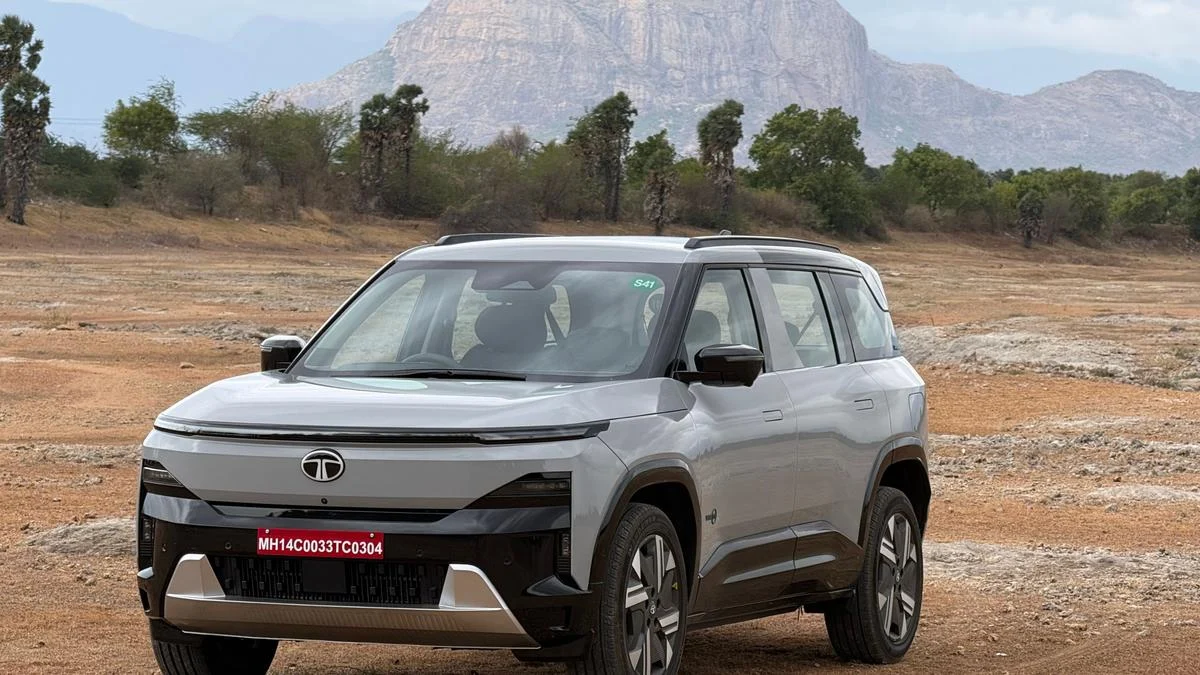
The automotive landscape in India is currently witnessing a paradigm shift, transitioning from the era of internal combustion to a future defined by electrification. At the heart of this transformation is Tata Motors, a company that has successfully pivoted from being a traditional manufacturer to a leader in the electric vehicle (EV) segment. However, their latest offering, the Tata Sierra.ev, is more than just a strategic addition to their portfolio. It represents the resurrection of a legend.
The original Tata Sierra, launched in the early 1990s, was a vehicle ahead of its time—a three-door SUV with wrap-around rear glass that captured the imagination of a generation. Decades later, the nameplate returns, not as a nostalgic gimmick, but as a sophisticated, high-performance electric SUV that aims to set a new benchmark for the Indian market. After an extensive day of testing across the diverse terrains of Coimbatore—ranging from congested city arteries and high-speed highways to a technical test track and a grueling off-road circuit—it is clear that the Sierra.ev is perhaps the most complete vehicle Tata Motors has ever produced.
Main Facts: The Specifications of a Flagship
The Tata Sierra.ev is positioned as a premium offering, bridging the gap between mainstream electric SUVs and luxury imports. It is built on a dedicated EV architecture that prioritizes cabin space, safety, and performance.
Powertrain and Performance
Our test unit was the flagship 75 kWh variant, featuring a sophisticated dual-motor Quad Wheel Drive (QWD) system. This setup employs a 234 bhp permanent magnet synchronous motor at the rear and a 138 bhp motor at the front. Together, they generate a combined torque output of 504 Nm. This enables the Sierra.ev to sprint from 0 to 100 km/h in a claimed 5.8 seconds, placing it in the upper echelons of performance for Indian-made vehicles.
For those with more conservative requirements, Tata also offers a 63 kWh variant. This model utilizes a single rear-mounted motor, focusing on efficiency and urban usability while maintaining the premium DNA of the Sierra brand.

Range and Charging
Range anxiety remains a primary concern for EV adopters in India. To combat this, the 75 kWh battery offers a claimed MIDC (Modified Indian Drive Cycle) range of 665 km. In real-world conditions, including mixed highway and city driving, a realistic range of 450 to 500 km is well within reach. Furthermore, Tata’s fast-charging technology allows the vehicle to recoup 263 km of range in just 15 minutes when connected to a compatible DC fast charger, significantly enhancing its viability for long-distance touring.
Pricing and Competition
The Sierra.ev enters the market with a competitive price bracket of INR 18.79 – 24.79 Lakh (ex-showroom). This positioning places it in direct competition with the Hyundai Creta Electric, the Mahindra BE 6, and the MG ZS EV.
Chronology of the Drive: From Urban Chaos to Off-Road Mastery
To truly understand a vehicle’s character, one must take it out of the showroom and into the real world. Our journey began in the heart of Coimbatore.
The Urban Commute
In the stop-and-go traffic of the city, the Sierra.ev masks its significant dimensions with remarkable ease. The steering is light and effortless, making lane changes and U-turns simple. However, the standout feature here is the regenerative braking system. It is adjustable via paddle shifters, allowing the driver to choose the level of deceleration. Even at the highest setting, the transition between motor-based braking and traditional friction braking is seamless, avoiding the "jerky" sensation often found in earlier EVs.
Highway Prowess
As we moved toward the outskirts, the Sierra.ev showcased its grand touring capabilities. The most impressive aspect of the highway drive was the high-speed stability. The vehicle tracks arrow-straight, requiring minimal steering corrections even at speeds exceeding 120 km/h. The rigid chassis and the low center of gravity—courtesy of the floor-mounted battery pack—provide a level of "plantedness" that inspires immense confidence.

The Test Track: Pushing the Limits
At the test track, we explored the 0-100 km/h sprints and high-speed braking. The acceleration is not the violent, neck-snapping surge found in some performance EVs; instead, it is a progressive, relentless wave of power. This "refined performance" approach ensures that the vehicle remains controllable and never feels intimidating. Under hard braking, the SUV maintained its line perfectly, with the ABS and EBD working discretely to bring the 2-ton machine to a halt without drama.
Off-Road Capability
Perhaps the most surprising element of the day was the off-road course. While many modern SUVs are "soft-roaders," the Sierra.ev’s Quad Wheel Drive system provides genuine capability. The instant torque from the electric motors allows it to crawl up steep, rocky inclines with a precision that internal combustion engines struggle to match. The 504 Nm of torque is available from zero RPM, meaning there is no need to "momentum-rush" an obstacle; the Sierra simply climbs over it.
Supporting Data: Engineering and Interior Sophistication
The excellence of the Sierra.ev is rooted in its engineering details, specifically its suspension and cabin technology.
Frequency Dependent Damping (FDD)
Tata has equipped the Sierra.ev with Frequency Dependent Damping. This mechanical system adjusts the damping force based on the frequency of the road input. On high-frequency bumps (like "washboard" dirt roads or expansion joints), the suspension softens to absorb the impact. On low-frequency inputs (like body roll during cornering), the dampers stiffen to provide better handling. This results in a ride quality that is arguably the best in its class, rounding off potholes with a "thud" rather than a "crash."
The Digital Cockpit and AirConsole
The interior is a masterclass in modern minimalist design. Three high-resolution screens dominate the dashboard:

- Instrument Cluster: A customizable digital display for the driver.
- Infotainment Hub: A large central touchscreen with seamless smartphone integration.
- Passenger Display: A dedicated screen for the front passenger.
A unique inclusion is the AirConsole integration. During charging stops, passengers can use their smartphones as controllers to play multiplayer games on the vehicle’s screens. While it may seem like a gimmick, it addresses one of the few pain points of EV ownership: the wait time at charging stations.
Audio Excellence
The audio experience deserves its own mention. The Dolby Atmos-enabled JBL Black audio system is, quite simply, transformative. The soundstage is expansive, and the clarity remains sharp even at high volumes. For audiophiles, this system alone might be a deciding factor in the purchase.
Official Responses and Manufacturer Philosophy
Tata Motors has been vocal about its "Born Electric" philosophy. While some of their earlier EVs were conversions of internal combustion engine (ICE) platforms, the Sierra.ev represents a more mature approach to vehicle architecture.
Engineers at Tata emphasize that the Sierra.ev was designed to be "uncompromised." This is evident in the packaging—the flat floor provides immense legroom, and the absence of a transmission tunnel makes the cabin feel significantly airier than its competitors. The company’s focus on "Premiumization" is also a response to the evolving Indian consumer who is now willing to pay a premium for better materials, fit, and finish. The Sierra.ev features soft-touch materials, consistent panel gaps, and a build quality that rivals European counterparts.
Implications: A New Benchmark for the Indian Market
The launch of the Tata Sierra.ev has significant implications for the Indian automotive industry and the consumer.

1. The End of "EV Compromise"
For years, buying an EV meant compromising on either range, performance, or luxury. The Sierra.ev suggests that those days are over. By offering 500 km of real-world range and 5.8-second acceleration in a luxury-grade cabin, Tata is proving that an EV can be the primary—and only—vehicle in a household.
2. Pressure on Global Rivals
The Sierra.ev puts immense pressure on players like Hyundai and MG. While the Creta EV and ZS EV are formidable, the Sierra.ev offers a sense of "occasion" and heritage that is hard to replicate. Its off-road capability also gives it an edge in a market where the SUV silhouette is prized for its perceived ruggedness.
3. Addressing Minor Flaws
No vehicle is perfect. During our test, we noted two specific areas for improvement:
- Wind Noise: At speeds above 100 km/h, there is a noticeable whistle of wind noise entering the cabin. In a silent EV, this becomes more apparent than it would in a noisy diesel car.
- Window Logistics: The one-touch driver’s window function was occasionally inconsistent, requiring multiple presses.
However, these are minor software or weather-stripping issues that Tata is likely to address in the final production iterations.
Final Verdict
The Tata Sierra.ev is a landmark achievement. It successfully blends the nostalgia of a beloved nameplate with the cutting-edge technology of the future. It is a vehicle that feels as comfortable crawling through a Mumbai monsoon as it does cruising at triple-digit speeds on the National Highway.

If you are in the market for a premium SUV—electric or otherwise—the Sierra.ev demands a spot at the top of your list. It is not just a great electric car; it is one of the best vehicles currently on sale in India. Tata has not just brought back the Sierra; they have reinvented what an Indian SUV can be.
Price Range: INR 18.79 – 24.79 Lakh (ex-showroom)
Content provided in association with Motorscribes and The Hindu.
