

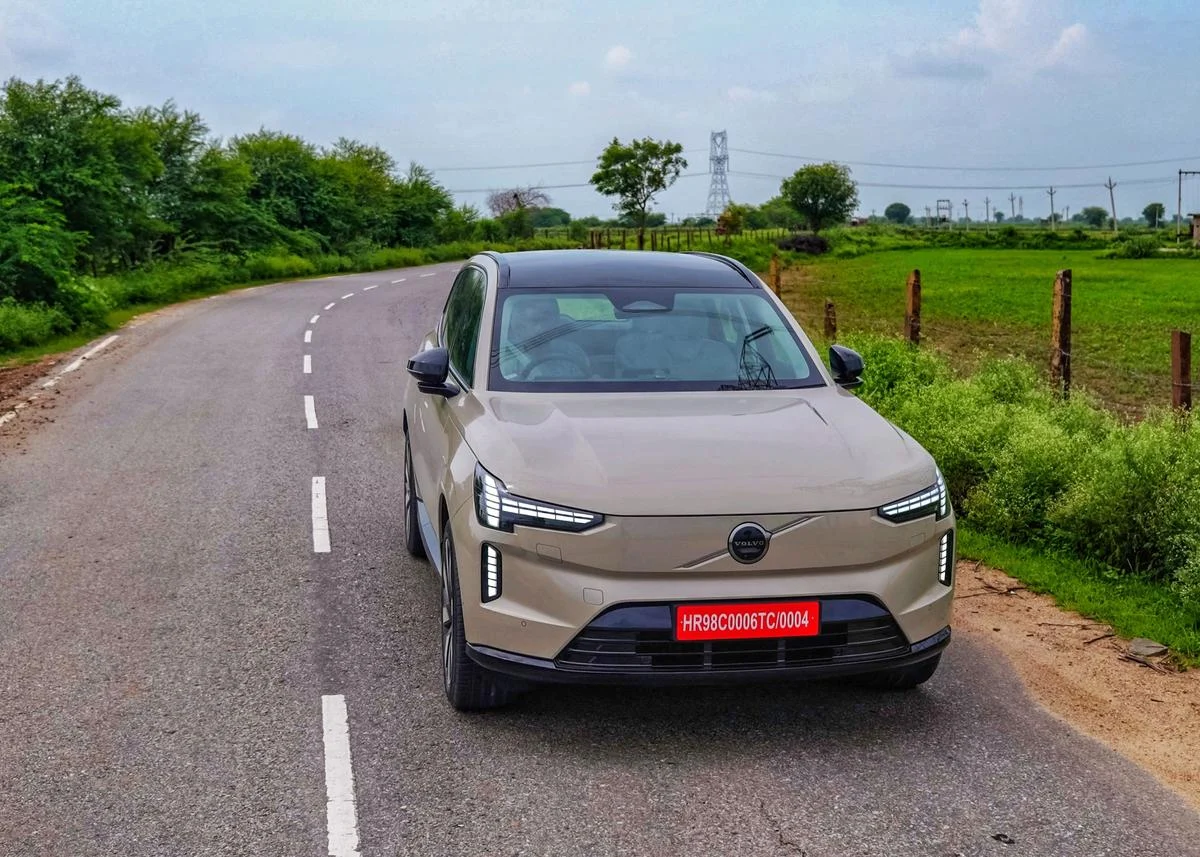
The global automotive landscape is currently witnessing a paradigm shift, transitioning from the visceral roar of internal combustion engines to the silent, calculated precision of electric propulsion. At the forefront of this evolution is Volvo, a brand that has long synonymous with safety and understated luxury. Their latest flagship, the Volvo EX90, represents more than just a new model; it is a manifesto of the brand’s future. Designed to be the spiritual and technological successor to the venerable XC90, the EX90 is a full-sized, seven-seater (six-seater in India) electric SUV that aims to redefine what a flagship vehicle should be in the age of sustainability.
As it prepares for its Indian debut, the EX90 brings with it a unique blend of Scandinavian minimalism, cutting-edge 800V electrical architecture, and a suite of safety features that continue Volvo’s legacy of protecting both occupants and the environment.
1. Main Facts: The Blueprint of a Modern Flagship
The Volvo EX90 is built upon the new SPA2 (Scalable Product Architecture) platform, a dedicated EV foundation that allows for greater interior space and better integration of battery technology compared to converted internal combustion platforms.

Design Language: Restraint as a Statement
In an era where luxury SUVs often compete for attention through oversized grilles and aggressive styling, the EX90 takes a different path. It utilizes a restrained design language characterized by clean lines and a "shield" front instead of a conventional grille. This isn’t merely an aesthetic choice; the closed-off front end significantly improves aerodynamic efficiency, a crucial factor in maximizing the range of an electric vehicle.
Technical Prowess
Under the floor lies a massive 106kWh (usable) lithium-ion battery pack. In its India-spec trim, the EX90 utilizes a twin-motor, all-wheel-drive setup that produces a combined output of 456hp and 670Nm of torque. This allows the heavy SUV to sprint from 0-100kph in just 5.5 seconds—a figure that rivals many dedicated sports cars of the previous decade.
The Indian Configuration
While the global model offers various seating configurations, the Indian market will receive the six-seater version as standard. This layout features individual captain’s chairs in the second row, emphasizing the vehicle’s role as a chauffeur-driven luxury cruiser as much as a family hauler. Furthermore, the India-spec car is equipped with a staggered tire setup—265/45 R21 at the front and 295/40 R21 at the rear—using Michelin Pilot Sport EV tires specifically designed to handle the high torque and weight of premium electric vehicles.

2. Chronology: The Road to the EX90
To understand the EX90, one must look at the trajectory of the Volvo brand over the last decade.
- 2015: The XC90 Revolution: Volvo launched the second-generation XC90, which introduced the current design language (Thor’s Hammer LEDs) and moved the brand into a more premium segment.
- 2017: The Commitment to Electrification: Volvo announced that every new model launched from 2019 onwards would have an electric motor, signaling the beginning of the end for pure ICE vehicles.
- 2021: Concept Recharge: Volvo unveiled the "Concept Recharge," a design study that previewed the flat-floor interior and minimalist aesthetic that would eventually become the EX90.
- 2022: Global Reveal: The EX90 was officially unveiled in Stockholm as the brand’s new flagship, showcasing a heavy emphasis on software-defined vehicle architecture and LiDAR technology.
- 2024-2025: Global and Indian Rollout: Following software refinements, the EX90 began rolling off production lines in South Carolina and China. The India-spec model is currently being prepared for a market that is increasingly receptive to high-end EVs, following the success of the XC40 Recharge and C40 Recharge.
3. Supporting Data: Performance, Tech, and Comfort
The EX90 is a tour de force of engineering. Below is a detailed breakdown of the specifications and features that define the driving and ownership experience.
Powertrain and Charging
The 800V architecture is the "secret sauce" of the EX90. Unlike the more common 400V systems, this allows for much faster charging speeds and better thermal management.

- Battery Capacity: 106 kWh (Net)
- Range: Up to 625 km (WLTP cycle)
- Charging: Supports up to 350kW DC fast charging, capable of replenishing the battery from 10% to 80% in approximately 22 minutes.
- V2L/V2G: The EX90 is equipped with bi-directional charging capabilities, meaning it can theoretically power your home or charge another EV during a power outage.
Interior and Infotainment
The centerpiece of the cabin is a 14.5-inch vertical touchscreen. It runs on a Google-built operating system, offering native integration of Google Maps, Google Assistant, and the Play Store.
- Audio Excellence: The Bowers & Wilkins High Fidelity audio system is a standout. It features 25 speakers and 1,610 watts of power. The inclusion of Dolby Atmos and an "Abbey Road Studios" mode allows for an immersive acoustic experience that takes advantage of the EV’s naturally silent cabin.
- Smart Glass: The panoramic roof features electrochromic technology. By applying an electric charge, the glass can transition from transparent to opaque, eliminating the need for a physical sunblind and contributing to the cabin’s airy, minimalist feel.
Chassis and Handling
Despite its size, the EX90 employs sophisticated hardware to mask its weight.
- Air Suspension: The active air suspension monitors the road and the vehicle’s movements 500 times per second. It provides a "magic carpet" ride quality and can raise the vehicle by 40mm for navigating rougher terrain.
- Steering: Speed-sensitive electric power steering ensures the car is easy to maneuver in tight urban environments while remaining stable at highway speeds.
4. Official Responses and Philosophy: The "Safety Shield"
Volvo’s leadership has consistently stated that the EX90 is the safest vehicle the company has ever produced. This is achieved through what they call a "Safety Shield" of sensors.

The Sensor Suite
The India-spec EX90 comes equipped with:
- 5 Radars
- 5 External Cameras
- 12 Ultrasonic Sensors
- 2 Internal Cameras (for driver monitoring)
While the global version features a roof-mounted LiDAR (Light Detection and Ranging) sensor as standard, the initial India-spec units will rely on the comprehensive radar and camera-based ADAS (Advanced Driver Assistance Systems). Volvo officials have noted that the system is designed to be "future-proof," with the vehicle’s core computer—powered by NVIDIA DRIVE—capable of processing vast amounts of data to improve safety via over-the-air (OTA) updates.
Sustainability as Luxury
Volvo’s official stance on luxury has shifted from "leather and wood" to "sustainability and well-being." The EX90 uses approximately 15% recycled steel, 25% recycled aluminum, and 48 kilograms of recycled plastics and bio-based materials. The seats are upholstered in "Nordico," a textile made from recycled PET bottles and bio-attributed material from sustainable forests in Sweden and Finland.

5. Implications: Market Impact and Competition
The arrival of the Volvo EX90 in India has significant implications for the luxury automotive sector.
Pricing and Positioning
With an expected price bracket of ₹90 Lakh to ₹1 Crore (ex-showroom), the EX90 will sit at the top of Volvo’s Indian portfolio. This puts it in direct competition with the BMW iX, the Audi Q8 e-tron, and the Mercedes-Benz EQE SUV. However, Volvo’s inclusion of a functional third row (even in a six-seat configuration) gives it a distinct advantage over five-seater rivals.
The Chauffeur Factor
In the Indian luxury market, the "rear seat experience" is paramount. By opting for the six-seater layout with captain’s chairs, Volvo is catering specifically to the executive class who prioritize individual space and comfort. The quietness of the electric drivetrain, combined with the Bowers & Wilkins audio system, turns the EX90 into a mobile sanctuary—a key selling point for those navigating the chaotic traffic of Tier-1 Indian cities.

Infrastructure and 800V Readiness
The EX90’s 800V architecture is ahead of its time for the current Indian charging infrastructure, where 350kW chargers are still rare. However, this "future-proofing" ensures that as the national highway charging network upgrades, the EX90 will remain relevant and capable of cross-country travel with minimal downtime.
Conclusion
The Volvo EX90 is a rare example of a vehicle that manages to be technologically dense without being overwhelming. It honors the brand’s heritage of safety and Scandinavian design while embracing a future that is electric and software-driven. For the Indian buyer looking for a flagship SUV that makes a statement through sophistication rather than shouting, the EX90 represents a compelling, mature, and highly capable choice. If Volvo can back this product with a competitive service network and realistic pricing, it may very well set the new gold standard for the electric luxury SUV segment in India.
