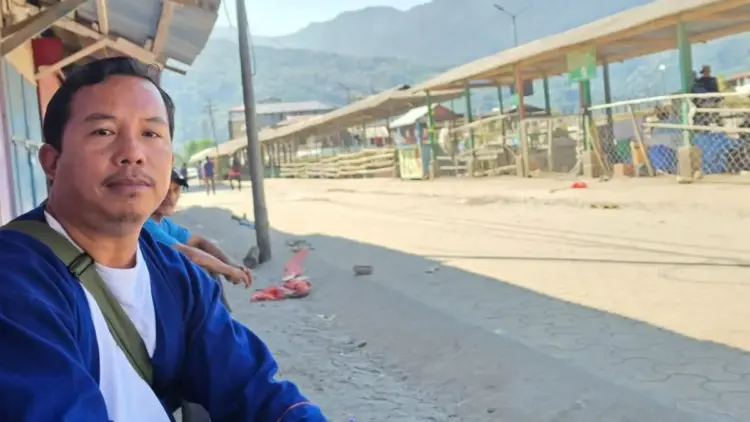
YINGKIONG, ARUNACHAL PRADESH — On the morning of October 23, the usual rhythm of Yingkiong, the headquarters of the Upper Siang district, was replaced by a heavy, suffocating silence. The main market, typically a hub of commerce for the Adi tribal community, stood shuttered. Instead of shoppers, the streets were occupied by armed personnel in fatigues, patrolling a landscape that has become the epicenter of one of India’s most volatile environmental and social conflicts.
By the afternoon, the digital tether to the outside world was severed as the state government suspended internet services across the district. For the residents of the Siang Valley, the heavy security presence felt less like protection and more like an occupation. "It feels as if they are deploying armed forces against us by force; like fighting an enemy on the border," observed Katin Burang, a 44-year-old orange and paddy farmer. "That is the change. We are treated like the enemy for protecting our home."
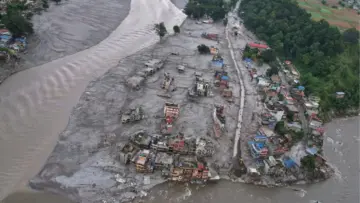
The unrest centers on the Siang Upper Multipurpose Project (SUMP), a colossal 11,200-megawatt (MW) hydroelectric and flood-control dam proposed by the Government of India and to be developed by the National Hydroelectric Power Corporation (NHPC). While New Delhi views the project as a strategic necessity to counter Chinese hydro-hegemony upstream, the indigenous people of the valley see it as a death warrant for their culture, land, and ecology.
Main Facts: A Project of Titanic Proportions
The Siang Upper Multipurpose Project is not merely a power plant; it is a geopolitical statement. Designed to generate roughly 11,200 MW, it would be one of the largest dams in the world. The project serves two primary stated purposes: energy production and "strategic storage" to manage water flow from the Yarlung Tsangpo (as the Siang is known in Tibet), where China is reportedly constructing its own "super dam."
However, the scale of the project necessitates a massive reservoir that threatens to submerge 27 villages and vast tracts of ancestral land belonging to the Adi tribe. The resistance is led by a coalition of grassroots organizations, including the Siang Indigenous Farmers Forum (SIFF), the Siang Upper Multipurpose Project Affected Area Youth Association (SAAYA), and the Adi Bane Kebang (ABK).

The conflict reached a boiling point in late October 2024, leading to:
- Mass Detentions: Protesters were detained under the Arunachal Pradesh Unlawful Activities (Prevention) Act (APUAPA), a stringent law often criticized for its potential for misuse.
- Violence and Arson: On October 23, a protest march escalated into violence, resulting in the burning of an NHPC office and damage to the homes of two Members of the Legislative Assembly (MLAs).
- Press Intimidation: Search warrants were issued against prominent journalists, including Tongam Rina, Deputy Editor of The Arunachal Times, sparking a national outcry over press freedom.
- Militarization: Between 10 and 12 companies of paramilitary and police forces have been deployed to the district to ensure the completion of Pre-Feasibility Reports (PFR).
Chronology: The Escalation of Unrest
The road to the current crisis has been paved with years of simmering resentment, but the timeline accelerated sharply in 2024.
Early 2024 – Mid-2024: The Push for Surveys
The state government, led by Chief Minister Pema Khandu, intensified efforts to begin Pre-Feasibility Report (PFR) studies. This involved sending NHPC survey teams into the valley to conduct soil testing and rig drilling. Resistance was immediate, with villagers forming human chains to block access to drilling sites.
September 14, 2024: The Call for a Halt
Residents and local forums officially called for a total halt to all PFR activities. They argued that the "pre-feasibility" stage was a Trojan horse for the project’s eventual inevitable construction, despite government claims that "no final decision" had been made.
Early October 2024: Legal Crackdowns
Tensions spiked when the state invoked the APUAPA to detain four key protesters. This move was seen as an attempt to decapitate the leadership of the anti-dam movement.

October 23, 2024: The Black Wednesday
A bandh (strike) was called to demand the release of the detainees. What began as a peaceful assembly in Yingkiong and Dite Dime turned violent. Clashes between security forces and protesters led to injuries on both sides. In the aftermath, the NHPC office was set on fire, and the homes of local political representatives were vandalized. The state responded by shutting down the internet and increasing the troop count.
November 3–10, 2024: The Failed Dialogue
Chief Minister Pema Khandu issued a public appeal for peace and invited agitating groups for talks in the capital, Itanagar. However, the groups refused to attend, stating they would not negotiate "at gunpoint" while their leaders remained behind bars.
Supporting Data: Ecology, Seismicity, and Livelihoods
The opposition to the SUMP is not merely sentimental; it is backed by significant environmental and technical concerns.
1. The Biodiversity Crisis
The Siang Valley is part of the Eastern Himalaya biodiversity hotspot. The proposed reservoir would submerge thousands of hectares of primary forests that are home to rare flora and fauna. Activists argue that the Environmental Impact Assessment (EIA) processes have been rushed or bypassed in the name of "national security."
2. The Seismic Gamble
Arunachal Pradesh lies in Seismic Zone V, the highest risk category for earthquakes. The region has a history of devastating tremors, including the 1950 Assam-Tibet earthquake. Critics, such as Thomas Borang, former president of the ABK, argue that building a massive dam in such a zone is a recipe for disaster. "Won’t it cause double the damage if we build an 11,000 MW dam of our own and it breaks during a quake? Why should we accept this risk?" he questioned during a press briefing.

3. Legal Irregularities
The government has claimed to have secured Memorandums of Understanding (MoUs) with several villages. However, legal experts like Tagori Mize of the SIFF point out that these MoUs often circumvent the Land Acquisition Act of 2013, which requires a Social Impact Assessment (SIA) and a formal public hearing. Furthermore, allegations have surfaced that signatures were obtained through financial inducements—reportedly ₹2.5 lakhs per household—outside the traditional Kebang (village council) system.
4. Economic Disruption
The Siang Valley is a agricultural powerhouse. The region produces high-quality wet rice, oranges, bananas, and tea. In recent years, a burgeoning eco-tourism industry centered on white-water rafting and birding has provided a sustainable alternative to industrial development. The dam would effectively end these local economies.
Official Responses: The "Water Bomb" Narrative
The Arunachal Pradesh government and the Central Government in New Delhi have maintained a consistent defense of the project, framed through the lens of geopolitics and disaster management.
National Security: The primary justification for the SUMP is China’s upstream activity. Officials argue that China could use its upstream dam to either divert water (causing drought) or release massive amounts of water suddenly (a "water bomb") to devastate North East India. A large dam on the Indian side, they argue, is the only way to regulate these flows and assert "riparian rights" under international law.
Chief Minister Pema Khandu’s Stance: In a series of public letters and appeals, CM Khandu has emphasized that "Bandhs, blockades, and attacks bring no solutions." He has promised that the current studies are only for the PFR and that "detailed and extensive public consultations" will happen before any construction. However, his administration’s use of the APUAPA and the deployment of the Rapid Action Force (RAF) have undermined these conciliatory gestures in the eyes of the locals.

Administrative Perspective: Upper Siang Deputy Commissioner Ashok Tajo has defended the heavy security presence as necessary to protect expensive PFR equipment. He also highlighted a livelihood scheme funded by the Ministry of Jal Shakti, which has disbursed approximately ₹8.05 crores to 322 households. Tajo frames the project as an opportunity for residents to "move to greener pastures" with "handsome compensation."
Implications: A Crisis of Trust and Press Freedom
The standoff in the Siang Valley carries implications that resonate far beyond the borders of Arunachal Pradesh.
The Threat to Press Freedom
The attempt to arrest Tongam Rina and other journalists is perhaps the most alarming development for Indian democracy. The Arunachal Pradesh Union of Working Journalists (APUWJ) described the move as a "serious threat to press freedom," suggesting that investigative powers are being used to intimidate those reporting on the human cost of the project. If journalists cannot report on the unrest without fear of being labeled "unlawful," the transparency of the entire project is called into question.
Indigenous Sovereignty vs. National Interest
The conflict highlights a fundamental tension in the Indian Constitution: the rights of indigenous tribes to their ancestral lands versus the state’s power of eminent domain for "national interest." For the Adi people, the Siang is not just a river; it is a deity and a historical marker. By bypassing the Kebang system, the state risks alienating a strategically vital border population.
Geopolitical Stability
While the dam is intended to counter China, the internal instability it has created may be counterproductive. A disgruntled and militarized border region is a vulnerability, not an asset. The refusal of youth leaders to meet with the government until detainees are released suggests a hardening of positions that could lead to a long-term insurgency or civil disobedience movement.

The Future of the Siang
As the High Court prepares to hear writ petitions regarding the detentions on November 10, the valley remains on a knife-edge. The protesters’ mantra—"We will live here, and we will die here"—underscores a level of resolve that financial compensation is unlikely to break.
In the words of Kishon Tekseng, a local eco-tourism entrepreneur: "When the citizens here are being removed forever, how is that national interest?" It is a question that New Delhi has yet to answer to the satisfaction of the people of the Siang. For now, the "sky blue" waters of the winter Siang flow past silent markets and armed checkpoints, a serene backdrop to a gathering storm.