The summit arrives at a critical juncture. While scientific data confirms that the window to prevent catastrophic warming is closing, the global community is more divided than at any point since the signing of the Paris Agreement. The challenge for COP31 is not merely technical or financial; it is a fundamental test of whether internationalism can survive in an era of retrenchment and immediate national survival.
Main Facts: The Antalya Agenda and the "35-by-35" Vision
The formal negotiations in Antalya are structured around four primary pillars: adaptation and resilience, emissions reduction, climate finance, and the "just transition" to a green economy. However, the Turkish presidency has also introduced a proactive "Action Agenda" designed to bridge the gap between high-level diplomacy and private-sector implementation. This agenda targets practical progress in clean energy, food security, ocean health, and the development of resilient urban centers.
Central to the host’s ambitions is the "35-by-35" Global Electrification Pledge. This initiative seeks to increase electricity’s share of global final energy consumption to 35% by the year 2035. Currently, much of the world’s energy use—particularly in heating, heavy industry, and transport—relies on the direct combustion of fossil fuels. By pushing for rapid electrification supported by expanded grids and storage, Turkey aims to provide a roadmap for decarbonizing sectors that have traditionally been difficult to abate.

Parallel to this is the legacy of the previous host, Brazil, whose COP30 presidency produced a voluntary "roadmap" for moving away from fossil fuels. Together, these frameworks represent the "Antalya-Belém" axis, an attempt by emerging economies to lead the climate conversation. Yet, as the summit opens, the "Emissions Gap Report 2026" from the UN Environment Programme (UNEP) warns that the disparity between these pledges and the actual atmospheric carbon levels remains "enormous."
Chronology: The Path to COP31
The road to Antalya has been marked by a series of escalating climate disasters and sobering scientific assessments released throughout 2025 and 2026.
- September 2025: At the Climate Summit in New York, UN Secretary-General António Guterres issued a blistering critique of global inertia, stating that nations must "match an accelerating crisis with accelerating action."
- Late 2025: The World Meteorological Organization (WMO) confirmed that the decade spanning 2015–2025 constituted the hottest 11-year period on record. This period saw the planet’s energy imbalance reach its highest level in over six decades.
- September 2026: Turkey officially launched the "35-by-35" pledge, gaining early endorsements from several G20 nations and major development banks.
- October 7, 2026: During the pre-COP ministerial meeting in Fiji, UN Climate Change Executive Secretary Simon Stiell warned that "preparedness lags behind" the physical reality of climate impacts, setting a somber tone for the Antalya negotiations.
- November 2–4, 2026: In the week leading up to COP31, a trio of critical reports—the State of the Cryosphere 2026, the Production Gap Report 2025, and the Adaptation Gap Report 2026—were released, providing the data-heavy ammunition for the upcoming debates.
- November 9, 2026: COP31 officially opens in Antalya, Turkey.
Supporting Data: A Planet Under Unprecedented Pressure
The scientific consensus entering COP31 is no longer about avoiding a "future" crisis; it is about managing an unfolding one. The State of the Cryosphere 2026 report highlights that overshooting the Paris Agreement’s 1.5°C goal is no longer a remote possibility but a looming reality.
The Cryosphere and Ocean Warming
The report emphasizes that once certain temperature thresholds are crossed, damage to ice sheets and glaciers becomes irreversible. For India and its neighbors, the melting of the Hindu Kush Himalaya threatens the water security of nearly two billion people. Simultaneously, the WMO reports that the world’s oceans have absorbed record-breaking amounts of excess heat, contributing to rapid sea-level rise and the intensification of "super-storms."

The Production Gap
The Production Gap Report 2025 reveals a startling contradiction in national policies: despite net-zero promises, governments still plan to produce more than double the amount of fossil fuels in 2030 than what is required to limit warming to 1.5°C. This "policy decoupling" remains the primary obstacle to meaningful emissions reduction.
The Finance Deficit
Finance remains the most contentious data point. The Adaptation Gap Report 2026 estimates that developing nations will require approximately $305 billion annually by 2035 to prepare for climate impacts. In contrast, international public adaptation finance stood at a mere $28.2 billion to $31.7 billion in 2024. Even if current promises to triple these flows are met, they will cover less than a third of the projected need.
Official Responses: National Priorities vs. Global Needs
The rhetoric in the opening days of COP31 reflects the deep-seated tensions between the Global North and South.
The UN’s Moral Clarions
UN Secretary-General António Guterres has maintained a focus on accountability, urging developed nations to stop "locking in" emissions through new fossil fuel infrastructure. Simon Stiell, the UN’s climate chief, has shifted focus toward "resilience," arguing that even if the 1.5°C target is overshot, every fraction of a degree matters in preventing the total collapse of vulnerable ecosystems.

India’s Defensive Stance
India’s Environment Minister, Bhupender Yadav, articulated a firm position for the world’s most populous nation. India is calling for climate finance that is "predictable, largely public, and concessional." Yadav emphasized that climate action must not add to the debt burdens of developing nations. "Adaptation indicators must remain voluntary," the Minister stated, signaling India’s resistance to any international "conditions" that might limit its access to development capital.
The Host’s Pragmatism
Turkey, as the host, is attempting to position itself as a bridge-builder. By focusing on electrification and AI-driven climate solutions (the "Antalya AI Pledge"), the Turkish presidency is trying to move the conversation toward technology and trade—areas where geopolitical rivals might still find common ground.
Implications: The High Cost of Geopolitical Friction
The most significant implication of COP31 is the recognition that "Energy Security" has replaced "Climate Mitigation" as the primary driver of national policy. In the wake of recent conflicts, many governments have pivoted back to domestic coal, oil, and gas to protect their economies from price shocks.
The Fossil Fuel Lock-In
The immediate danger is a "lock-in" effect. As nations build new LNG terminals or coal-fired plants to address short-term energy shortages, they commit themselves to decades of future emissions. COP31 must address how to make renewable energy as "secure" as fossil fuels in the eyes of national security hawks. The Turkish electrification pledge is a direct response to this, arguing that a grid-heavy, electrified economy is less vulnerable to the supply chain disruptions that plague oil and gas.

The Reality of the "Overshoot"
Diplomatically, the conversation is shifting from "prevention" to "management." The term "overshoot" is now central to the discourse. This implies a world that will temporarily exceed 1.5°C before—hopefully—bringing temperatures back down through massive carbon removal and reforestation. However, as the cryosphere reports suggest, a "temporary" overshoot may cause permanent damage to the Earth’s systems, such as the total loss of low-lying island nations or the collapse of the Atlantic Meridional Overturning Circulation (AMOC).
Finance as the Ultimate Test
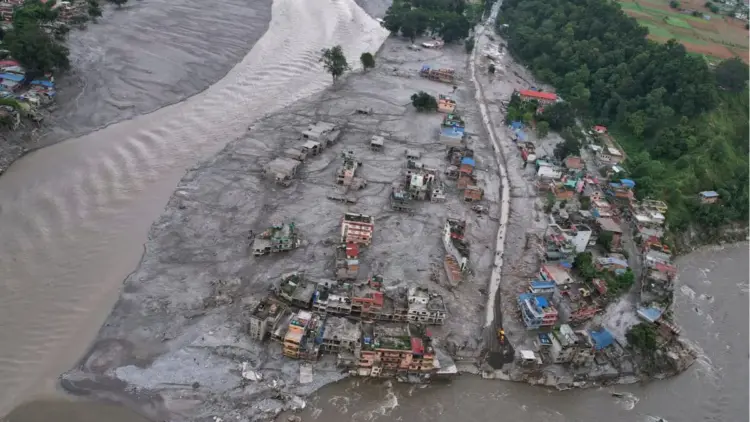
Ultimately, the success of the Antalya summit will be measured in dollars and cents. If developed nations cannot provide a credible pathway to bridge the $270 billion annual adaptation gap, the trust required for global cooperation will likely evaporate. For countries like Nepal, which recently suffered devastating floods, or India, facing "wet-bulb" temperature events, the lack of finance is not a budgetary issue—it is an existential one.
As the delegates in Antalya begin their two weeks of grueling negotiations, the stakes could not be higher. COP31 may not end the wars currently reshaping the global order, nor will it likely resolve the fundamental contradictions of the fossil fuel economy. However, it serves as the final forum where the gap between scientific reality and political will can be exposed. The choice remains: coordinate a managed transition now, or be forced into a chaotic, costly, and violent reaction to a climate that no longer supports the status quo.