

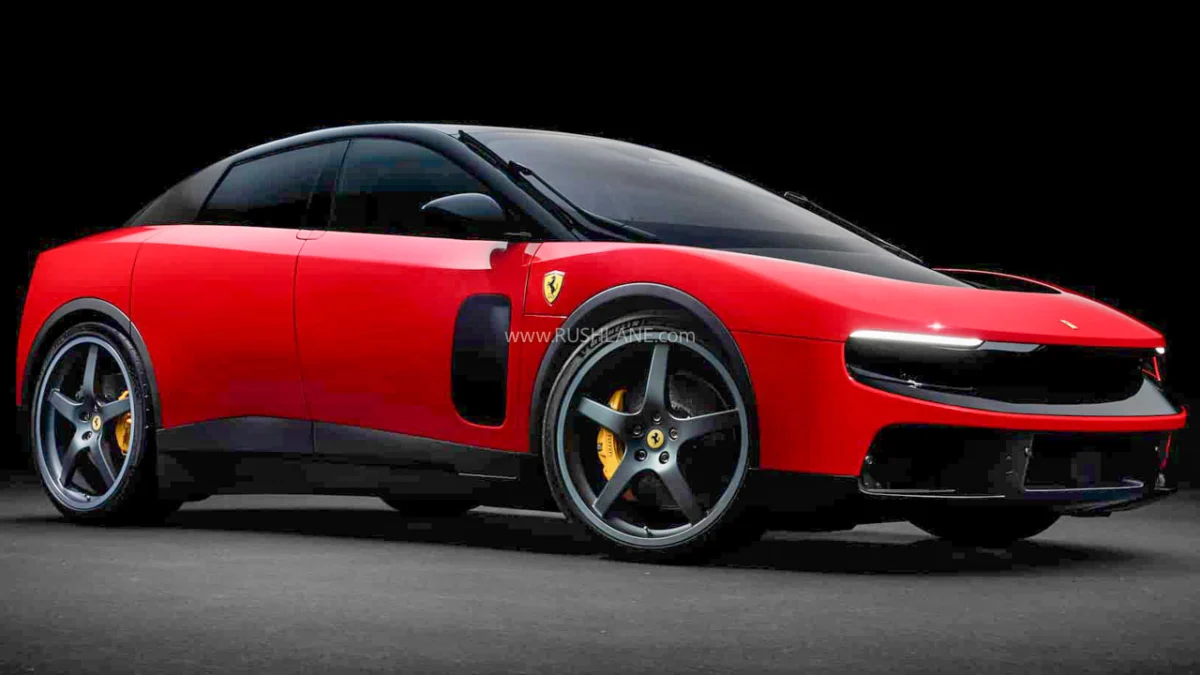
MARANELLO, ITALY — For over eight decades, the name Ferrari has been synonymous with the visceral scream of high-revving internal combustion engines. From the legendary V12s that powered the 250 GTO to the turbocharged V8s of the modern era, the "Prancing Horse" has defined its identity through mechanical symphony. However, a new era dawned this week as the Italian marque officially pulled the silk off the Ferrari Luce, the brand’s first-ever fully electric vehicle (EV).
The Luce—meaning "Light" in Italian—represents more than just a change in powertrain; it signals a radical departure in design philosophy, occupant capacity, and brand positioning. As the automotive world pivots toward a zero-emission future, the Luce is Ferrari’s high-stakes gambit to prove that "soul" can exist without gasoline.

Main Facts: A Paradigm Shift in Maranello
The Ferrari Luce is a groundbreaking vehicle that shatters several of the company’s long-standing traditions. It is not a low-slung supercar in the traditional sense, nor is it a continuation of the mid-engine silhouette that has dominated the brand’s portfolio for decades. Instead, the Luce is a four-door, five-seater "super-GT" that prioritizes aerodynamic efficiency and daily usability alongside blistering performance.
Key Specifications at a Glance:
- Powertrain: Quad-motor setup (one per wheel) with independent torque vectoring.
- Output: 1,050 brake horsepower (bhp).
- Performance: 0-100 km/h in 2.5 seconds; 0-200 km/h in 6.8 seconds.
- Top Speed: 310 km/h (electronically limited).
- Battery: 122 kWh lithium-ion pack.
- Range: 530 km (WLTP estimated).
- Charging: 350 kW DC fast-charging (adds 70 kWh in 20 minutes).
Designed in collaboration with LoveFrom, the creative collective led by former Apple design chief Sir Jony Ive and Marc Newson, the Luce adopts a "reductive" design language. This minimalist approach has already sparked intense debate among the Ferrari tifosi, as it swaps aggressive vents and flamboyant wings for smooth, monolithic surfaces and a "teardrop" aerodynamic profile.

Chronology: The Road to Electrification
The journey to the Luce was not an overnight transition. Ferrari has been cautiously testing the waters of electrification for over a decade, moving through a carefully orchestrated sequence of hybrid milestones.
- 2013 – The LaFerrari: Ferrari’s first foray into electrification used a KERS (Kinetic Energy Recovery System) paired with a V12. It proved that electric motors could enhance performance rather than just fuel economy.
- 2019 – The SF90 Stradale: The brand’s first series-production Plug-in Hybrid Electric Vehicle (PHEV). With three electric motors and a V8, it became the fastest car around the Fiorano test track at the time.
- 2021 – The 296 GTB: A V6 hybrid that emphasized "fun to drive" characteristics, further normalizing the presence of a battery pack in a Ferrari.
- 2023 – The Purosangue: While powered by a naturally aspirated V12, the Purosangue introduced the four-door architecture and active suspension technology that would eventually find its way into the Luce.
- 2024/2025 – The EV Project: Ferrari broke ground on its "e-building" in Maranello, a dedicated facility for the production of electric motors, battery packs, and power inverters.
- Today – The Luce Reveal: The culmination of these efforts, the Luce stands as a standalone model, built on a bespoke EV platform rather than an adapted internal combustion chassis.
Design and Interior: The LoveFrom Influence
The most striking aspect of the Luce is its exterior. Traditional Ferraris are often described as "sculpted by the wind," resulting in complex shapes. The Luce, however, looks like a single piece of polished metal. Its drag coefficient of 0.254 Cd is achieved through a sweeping glass canopy and a lack of traditional side mirrors (replaced by cameras) and flush-mounted suicide doors.

Exterior Highlights
The vehicle sits on massive staggered wheels—23 inches at the front and 24 inches at the rear—giving it a planted, muscular stance despite its "sober" surfacing. The fascia is dominated by black aerodynamic elements that house the sensors for advanced driver-assistance systems (ADAS), while the rear features a modern interpretation of Ferrari’s quad-circular LED tail lights.
The "Human-Centric" Interior
If the exterior is a nod to the future, the interior is a love letter to tactile history. Sir Jony Ive’s influence is most apparent here, where "digital fatigue" is combated with physical controls.

- The Screens: While the Luce uses cutting-edge Samsung custom OLED displays, they are integrated subtly. The central screen can tilt toward either the driver or the passenger, ensuring it is only used when necessary.
- Tactile Feedback: The climate controls and center console features high-quality aluminum toggles and dials. Even the "key" has a dedicated physical slot, a nostalgic touch in an age of proximity sensors.
- The Cockpit: A three-spoke aluminum steering wheel houses the Manettino dial, but it is flanked by large, cold-to-the-touch metal paddle shifters. An analogue-style instrumentation binnacle is mounted directly on the steering column, moving with the wheel to ensure perfect visibility.
- Luxury & Sound: A 21-speaker high-fidelity system provides the soundtrack, but Ferrari has also engineered an "acoustic feedback" system. This uses internal and external speakers to amplify the vibrations and frequencies of the electric motors, providing the driver with a sense of speed and load that is often missing in EVs.
Supporting Data: Engineering the "Electric Horse"
Ferrari engineers faced a significant challenge: how to maintain the brand’s legendary handling despite the weight of a 122 kWh battery. The solution lay in the quad-motor architecture and advanced chassis electronics.
Torque Vectoring and Traction
Unlike traditional AWD systems that use mechanical differentials, the Luce’s four motors can adjust torque to each individual wheel in milliseconds. In "Launch Control" mode, the system manages a combined wheel torque that Ferrari describes as equivalent to 11,500 RPM of mechanical force, allowing the 5-seater to hit 100 km/h in just 2.5 seconds—matching the SF90 Stradale hypercar.

Thermal Management
The 122 kWh battery uses a cell-to-pack construction to lower the center of gravity. To handle the heat generated by 350 kW fast-charging and high-performance driving, the Luce utilizes a patented liquid-cooling system that flows through the structural ribs of the battery casing.
Aerodynamic Data
| Feature | Metric |
|---|---|
| Drag Coefficient | 0.254 Cd |
| Front Wheels | 23-inch Alloy |
| Rear Wheels | 24-inch Alloy |
| Active Aero | Variable rear diffuser & active front flaps |
Official Responses: The Company’s Stance
During the global debut, Ferrari leadership was keen to address the concerns of purists who fear the loss of the V12.

"Enzo Ferrari always said that the best Ferrari is the one that hasn’t been built yet," stated a company spokesperson. "The Luce is not a replacement for our combustion engines; it is a new branch of the Ferrari tree. It offers a different kind of emotion—one of silence, effortless power, and unparalleled sophistication. We are not just building an electric car; we are building a Ferrari that happens to be electric."
Industry analysts have noted that the partnership with LoveFrom was a strategic masterstroke. By bringing in designers known for "timeless" products like the iPhone and the Leica M, Ferrari is signaling that the Luce is intended to be a permanent icon, not a tech gadget that will feel obsolete in five years.

Implications: A New Competitive Landscape
The unveiling of the Ferrari Luce has profound implications for the luxury automotive sector.
1. The End of the "EV Sameness"
Most luxury EVs (like the Tesla Model S Plaid or Lucid Air) have focused on straight-line speed and software. Ferrari is shifting the focus back to industrial design and tactile luxury. By prioritizing physical buttons and bespoke materials, Ferrari is creating a blueprint for how ultra-luxury brands can differentiate themselves from "mass-market" premium EVs.

2. The Practical Ferrari
With five seats and a 530 km range, the Luce is arguably the most "usable" Ferrari ever made. This positions the brand to capture a larger share of the "daily driver" market, competing directly with the Porsche Taycan Turbo S and high-end variants of the Maserati Folgore line.
3. Brand Dilution vs. Evolution
The Luce’s "sober" and "conventional" design is a risk. Ferrari’s brand equity is built on drama. If the Luce is too practical or too quiet, does it lose the "Prancing Horse" magic? However, early market feedback suggests that there is a significant demographic of younger, eco-conscious ultra-high-net-worth individuals who find traditional Ferraris too "loud" or "aggressive." For them, the Luce is the perfect understated statement.

4. Technical Leadership
By developing its own motors and battery integration in the new e-building, Ferrari is ensuring it remains a master of its own destiny. The Luce serves as a rolling laboratory for technologies that will eventually trickle down to future hybrid and electric models.
Conclusion
The Ferrari Luce is a bold, perhaps even polarizing, step into the unknown. It discards the roar of the engine but retains the relentless pursuit of performance. By blending the minimalist genius of Jony Ive with the engineering might of Maranello, Ferrari has created a vehicle that is both a departure from its past and a necessity for its future.

Whether the Luce will be remembered as the car that saved Ferrari’s relevance in the 21st century or a curious outlier in its history remains to be seen. But one thing is certain: the silence of the Luce is the loudest statement Ferrari has made in decades.
