

Mumbai, India – The cricketing world finds itself once again at the crossroads of prodigious talent and prudent development, with the spotlight firmly fixed on 15-year-old batting sensation Vaibhav Sooryavanshi. Following his latest heroics – an electrifying 29-ball 97 against Sunrisers Hyderabad in the high-stakes IPL Eliminator – a fervent clamour has erupted among fans and experts alike, advocating for his immediate fast-tracking into the senior Indian team. However, amidst this growing crescendo of demand, former India cricketer and astute commentator Aakash Chopra has emerged as a voice of caution, urging patience and a more measured approach to the young phenom’s ascent.
Sooryavanshi’s meteoric rise, underscored by his stunning ton against England in the U-19 World Cup final earlier this year and now his blistering IPL performance, has undeniably marked him as a generational talent. His audacious stroke play, remarkable composure, and ability to dominate under pressure have shattered age-old perceptions of what a 15-year-old can achieve on the professional stage. Yet, Chopra’s counsel highlights a critical dilemma: when does raw talent warrant an accelerated path, and when does a steady, developmental trajectory serve the player and the national team best in the long run?
The Prodigy’s Phenomenal Ascent: A Chronology of Brilliance
Vaibhav Sooryavanshi’s journey from a promising junior cricketer to a national talking point has been nothing short of spectacular, unfolding with remarkable speed and an uncanny knack for delivering under the brightest lights.
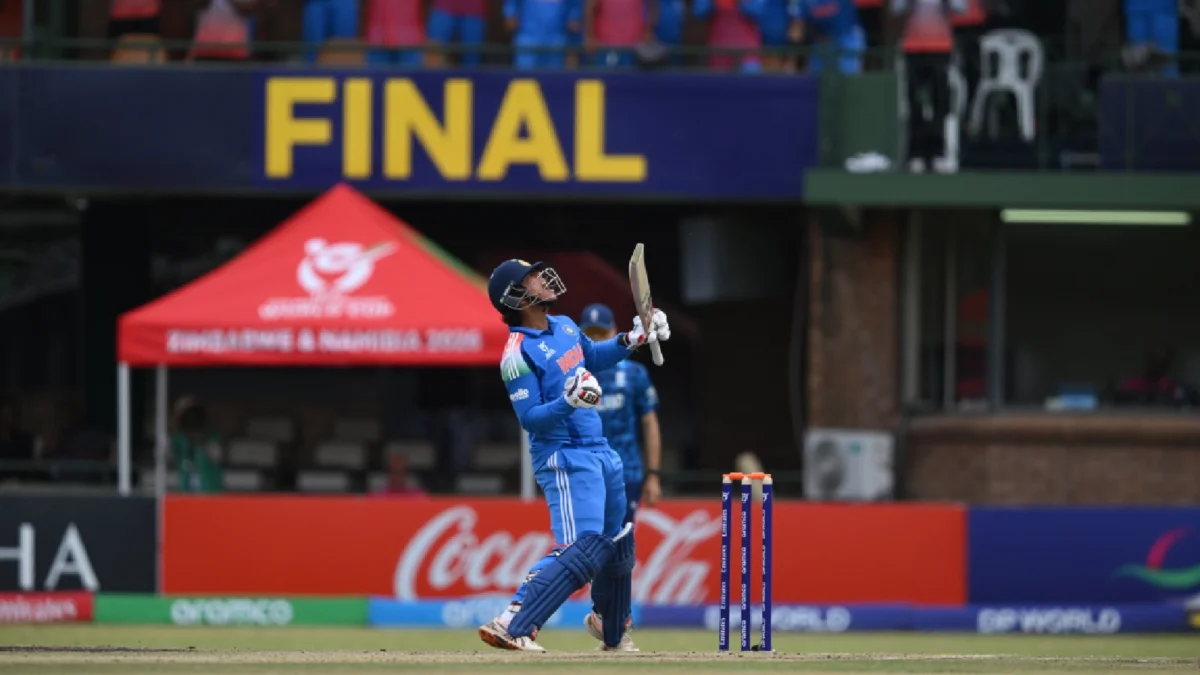
Early Glimmers and U-19 World Cup Glory: While details of his nascent career remain largely confined to junior circuits, Sooryavanshi truly burst onto the international consciousness during the recent U-19 World Cup. Representing India, he showcased glimpses of his extraordinary talent throughout the tournament. His crowning moment arrived in the final against arch-rivals England, where he crafted a magnificent century. This innings was not merely about the runs; it was about the maturity, the technique, and the fearless approach he displayed against quality age-group bowling in a high-pressure championship match. This performance immediately cemented his reputation as a player to watch, drawing comparisons to past Indian batting stalwarts who had similarly dominated at the junior level. The image of him reacting after scoring his ton against England, shared by BCCI, became an emblem of his breakthrough.
The IPL Explosion: From Prospect to Prime Time Performer: The U-19 World Cup success earned Sooryavanshi a coveted spot in the Indian Premier League, arguably the most competitive T20 league globally. Joining a formidable franchise, expectations were high, but few could have predicted the seismic impact he would make. His season has been dotted with impactful performances, but it was his astonishing 29-ball 97 against Sunrisers Hyderabad in the IPL Eliminator that truly set the cricketing world alight. In a knockout fixture, with the pressure of a million eyes and the stakes at their absolute highest, Sooryavanshi unleashed an innings of breathtaking power and precision. The sheer audacity of his stroke play, combined with his ability to maintain a strike rate hovering around 330, left seasoned commentators and fans awestruck. This wasn’t just a flash in the pan; it was a statement of intent, a declaration of arrival on the biggest domestic stage. The innings, coming at such a crucial juncture, amplified the calls for his immediate promotion to the senior national squad.
The India A Stepping Stone: Recognizing his undeniable talent, the national selectors have already begun charting a path for Sooryavanshi’s integration into the senior setup. Earlier this month, a significant step was taken with his inclusion in the India A squad for the upcoming tri-series in Sri Lanka, scheduled to commence on June 9. This selection signals a clear intent from the Board of Control for Cricket in India (BCCI) to provide him with exposure to higher-level competition against established domestic and international players. Historically, the India A platform has served as a crucial bridge for young talents, allowing them to hone their skills, adapt to different conditions, and gain valuable experience before making the leap to the senior national team.
Whispers of a Senior Call-Up: The pace of his development and the selectors’ evident keenness suggest that a senior team debut might not be a distant dream. As reported by The Indian Express, there is a strong inclination among the selectors to fast-track the young batting sensation into India’s white-ball team. Potential windows for his senior international debut are being actively discussed, with the upcoming T20 series in the UK against Ireland and England, or the subsequent series in Zimbabwe in July, being floated as definite possibilities. This proactive stance from the selection committee underscores the extraordinary nature of Sooryavanshi’s talent and the urgency they perceive in nurturing it for India’s future.
Aakash Chopra’s Call for Prudence: The Voice of Experience
While the public and media whirlwind around Sooryavanshi’s immediate future intensifies, Aakash Chopra, a respected voice in Indian cricket known for his analytical commentary, offers a sobering perspective rooted in experience and long-term vision. Chopra’s arguments are not a dismissal of Sooryavanshi’s talent, but rather a plea for measured progression.
Time on His Side, World Cup Distant: "We are still two years away from the next World Cup. There is plenty of time," Chopra stated emphatically on Star Sports. This forms the bedrock of his argument. The current clamour for Sooryavanshi’s inclusion is heavily influenced by his T20 prowess and the perceived need for explosive batting. However, a major ICC event like a World Cup requires a player to be fully seasoned, not just in terms of skill, but also mental fortitude and adaptability across formats and conditions. Two years, in a young cricketer’s career, is a substantial period for development, refinement, and gaining crucial experience without the immense pressure of senior international cricket. Rushing him now, Chopra implies, might be premature given the long runway available.
IPL Form vs. International Consistency: Chopra acknowledged the undeniable impact of IPL performances. "Yes, picking Vaibhav Suryavanshi for India based on his IPL form is an exciting thought. You can’t ignore it because the IPL is India’s top T20 tournament. He is breaking records left and right. You have to take him seriously. He is special, no doubt." This recognition validates the excitement surrounding Sooryavanshi. However, Chopra subtly draws a distinction between excelling in a domestic franchise league, however prestigious, and consistently performing at the unforgiving international level. The pressures, the quality of opposition bowling, the scrutiny, and the travel demands of international cricket are of an entirely different magnitude. While IPL is a strong indicator, it is not the sole determinant of international readiness.
The Principle of Meritocracy: Don’t Fix What Isn’t Broken: Chopra’s most potent argument revolves around the existing team dynamics and the principle of meritocratic selection. "But you don’t make changes just for the sake of it," he asserted. "It’s simple. For someone to be dropped, they need to fail. If someone is already a topper in the team, why would you replace them just because someone else scored big runs? Abhishek Sharma and Sanju Samson are those toppers right now. You don’t replace them." This directly challenges the ‘flavour of the month’ approach to selection. India’s current white-ball setup, particularly in T20s, features established performers who are delivering consistently. Players like Abhishek Sharma and Sanju Samson have earned their spots through sustained performance. Replacing them prematurely, simply to accommodate a new talent, could destabilize the team and send a mixed message to existing performers.
The Cyclical Trap: A Cautionary Tale: Chopra further warned against setting a dangerous precedent. "If you do [replace established players], then in two or three years when Vaibhav has a lean patch, the same thing will happen. The next young batter will be pushed in." This highlights a critical long-term implication. A selection policy driven purely by immediate sensational performances risks creating a revolving door for players, where consistency is undervalued, and young talents face immense pressure to constantly perform or be replaced. Such a system can be detrimental to a player’s confidence and overall development, fostering an environment of insecurity rather than stable growth.
Pressure on Selectors, But the Right Call Prevails: Chopra acknowledged the intense public pressure on the selection committee, comprising figures like Ajit Agarkar, RP Singh, and Pragyan Ojha. "So, the selectors, Ajit Agarkar, RP Singh, Pragyan Ojha, will face pressure. But they must do what is best for Indian cricket. They will make the right call." This underscores the challenging tightrope walk selectors often undertake, balancing public demand, player form, team requirements, and future vision. He expressed faith that the committee would prioritize the broader interests of Indian cricket, rather than succumbing to short-term clamour.
Patience for a 15-Year-Old: Perhaps the most poignant aspect of Chopra’s argument is the emphasis on Sooryavanshi’s tender age. "His India debut doesn’t have to happen tomorrow. It can wait. He is only 15. There is no rush." At 15, a player is still undergoing significant physical and mental development. Rushing him into the unforgiving world of international cricket could expose him to undue pressure, potentially leading to burnout or a loss of enjoyment for the game. A more gradual integration, allowing him to mature physically and mentally, while honing his skills at the India A level, might ensure a longer, more sustainable and successful career.
The Selectors’ Dilemma and Official Responses
The national selection committee finds itself in a classic Catch-22 situation. On one hand, the overwhelming public sentiment and the sheer brilliance of Sooryavanshi’s performances demand immediate action. On the other, the wisdom of gradual progression, championed by voices like Aakash Chopra, presents a compelling counter-argument.
Setting the Ball Rolling: The India A Signal: The inclusion of Sooryavanshi in the India A squad for the tri-series in Sri Lanka is the most concrete official response to his burgeoning talent. This move, as described in the original report, "set the ball rolling for Sooryavanshi’s inclusion in India’s white-ball setup." This isn’t a mere formality; it’s a strategic decision. India A tours are designed to expose promising talents to international conditions, different opposition, and the rigours of multi-format cricket. It’s a proving ground, a crucial stepping stone where players can demonstrate their adaptability and temperament before being considered for the senior team. The selectors, led by Ajit Agarkar, are clearly acknowledging his potential and providing him with the next logical challenge.
The Keenness to Fast-Track: A Vision for the Future: Beyond the India A selection, the internal discussions within the selection committee reveal a strong inclination to "fast-track the young batting sensation." This proactive approach stems from several factors:
- Uniqueness of Talent: Sooryavanshi’s ability to strike at an incredibly high rate, combined with his apparent calmness under pressure at such a young age, suggests a rare talent profile that could be invaluable for India’s white-ball future.
- Addressing Future Needs: With the ever-evolving landscape of T20 cricket, teams are constantly seeking explosive, fearless batters who can change the complexion of a game in a few overs. Sooryavanshi fits this mould perfectly, potentially offering a long-term solution in a crucial role.
- Capitalizing on Form: There’s a school of thought that when a player is in exceptional form, especially a young one, it’s best to harness that momentum. Delaying a call-up could potentially lead to a dip in form or a loss of confidence.
- Learning from the Best: Integrating a young talent into the senior squad, even if not immediately in the playing XI, allows them to train alongside experienced international cricketers, learn from their routines, and absorb the nuances of the international game.
The specific mention of the T20 series in the UK against Ireland and England, or the series in Zimbabwe in July, as "definite possibility" windows for his debut, further illustrates the committee’s serious consideration of his immediate promotion. These tours often serve as opportunities to blood new talent, test squad depth, and manage the workload of established players.
The official responses, therefore, paint a picture of a selection committee keenly aware of Sooryavanshi’s potential and actively working to integrate him into the national setup, albeit through a structured pathway that begins with India A, but with a faster pace than perhaps traditionally seen for a player of his age.
Implications: Beyond the Immediate Call-Up
The debate surrounding Vaibhav Sooryavanshi carries far-reaching implications, not just for the young player himself, but for the philosophy of Indian cricket, the careers of established players, and the broader cricketing ecosystem.
For Vaibhav Sooryavanshi’s Career:
- The Weight of Expectation: A rapid ascent to the senior team at 15 would place an unimaginable burden of expectation on Sooryavanshi. Every innings, every shot, every decision would be magnified under intense scrutiny from media, fans, and former cricketers. This level of pressure, if not managed carefully, could be detrimental to his mental well-being and long-term development.
- Risk of Burnout and Injury: Young bodies are still developing. Exposing a 15-year-old to the gruelling international cricket calendar, with its constant travel, demanding training, and high-intensity matches, carries a significant risk of physical and mental burnout, as well as career-threatening injuries.
- Holistic Development: A slightly slower, more structured pathway through domestic cricket, India A tours, and perhaps even targeted fitness and psychological conditioning programmes, could allow Sooryavanshi to develop his game holistically. This includes refining his technique against various conditions, expanding his shot repertoire, and building the physical resilience required for a long international career across formats.
- The ‘Next Big Thing’ Trap: History is replete with examples of young prodigies who were fast-tracked, only to struggle under the weight of expectations or fade away. While some, like Sachin Tendulkar, thrived, others found the transition overwhelming. The challenge lies in ensuring Sooryavanshi doesn’t fall into the ‘next big thing’ trap, where immediate hype overshadows sustained growth.
For Indian Cricket’s Selection Philosophy:
- Balancing Youth and Experience: The decision regarding Sooryavanshi will set a precedent for how Indian cricket balances the integration of exciting young talent with the stability provided by experienced campaigners. It will reflect the board’s long-term vision versus short-term gains.
- The Role of IPL: This situation further intensifies the debate about the weight given to IPL performances in national team selection. While the IPL is a fantastic platform, relying solely on T20 franchise cricket for Test or even ODI selections has its inherent risks.
- Nurturing vs. Exploiting Talent: The choice will indicate whether Indian cricket prioritizes nurturing talent for sustainable success or is inclined to exploit immediate form, even if it means potential long-term risks for the player.
For Current Senior Players:
- Pressure on Established Stars: As Chopra rightly pointed out, fast-tracking Sooryavanshi might put undue pressure on established players like Abhishek Sharma and Sanju Samson. It could send a message that consistent performance might not be enough to secure a spot if a younger, more explosive talent emerges. This could potentially destabilize team morale and foster insecurity among players.
- Fairness in Selection: The selection committee’s decision will also be scrutinized for fairness. If players are dropped despite performing well, it could raise questions about the transparency and logic of selection criteria.
Historical Precedents and the ‘Fast-Tracking’ Debate:
The history of cricket offers varied examples:
- Sachin Tendulkar: Debuted at 16, a rare success story of early integration. His exceptional talent and mental fortitude allowed him to thrive.
- Virat Kohli: While a prodigy, Kohli went through the U-19 World Cup, Ranji Trophy, and India A system before making his senior debut, allowing him to mature.
- Prithvi Shaw: A U-19 World Cup-winning captain, Shaw was fast-tracked into Tests, scored a century on debut, but later faced challenges with consistency and fitness, highlighting the difficulties of sustaining early success.
- Rishabh Pant: Another example of an explosive talent who was brought in early but took time to find his feet at the international level, benefiting from consistent backing.
These examples underscore that there’s no single blueprint for success. Some players are ready early, while others benefit from a more extended incubation period. The key lies in understanding the individual, not just the talent.
Ultimately, the Sooryavanshi conundrum is a pivotal moment for Indian cricket. The decision facing Ajit Agarkar and his selection committee is not merely about choosing a player, but about shaping the future trajectory of a remarkable talent and, by extension, influencing the philosophy that will guide Indian cricket for years to come.
Conclusion: A Delicate Balance for India’s Future
The fervent debate surrounding Vaibhav Sooryavanshi’s potential fast-tracking into the Indian senior team encapsulates the dynamic tension between seizing immediate opportunities and investing in long-term development. On one side stands the undeniable allure of a 15-year-old prodigy, whose explosive performances have set the cricketing world abuzz, demanding an accelerated path to the highest level. The selectors, acknowledging his extraordinary talent, have already initiated his ascent through the India A system, with strong indications of a potential senior call-up in the near future. This proactive stance reflects a desire to harness his unique abilities and integrate him into India’s white-ball plans.
Conversely, the seasoned voice of Aakash Chopra advocates for a more cautious and patient approach. His arguments—rooted in the availability of time before the next World Cup, the importance of meritocracy for established players, and the potential pitfalls of overburdening a young talent—offer a vital counterpoint to the prevailing enthusiasm. Chopra’s concern for the psychological and physical well-being of a 15-year-old, coupled with his warning against a cyclical selection policy, underscores the need for a holistic developmental strategy rather than one driven purely by immediate sensationalism.
The decision that Ajit Agarkar and the selection committee ultimately make will be a defining moment. It will not only determine the immediate trajectory of Vaibhav Sooryavanshi’s promising career but will also send a powerful message about the guiding principles of Indian cricket selection. Striking the delicate balance between nurturing a generational talent and ensuring his sustainable growth, while maintaining the integrity and stability of the national team, remains the paramount challenge. For the sake of both the prodigy and the future of Indian cricket, wisdom and foresight must ultimately prevail over the clamour of the moment.
May 28, 2026 05:37 PM IST
