

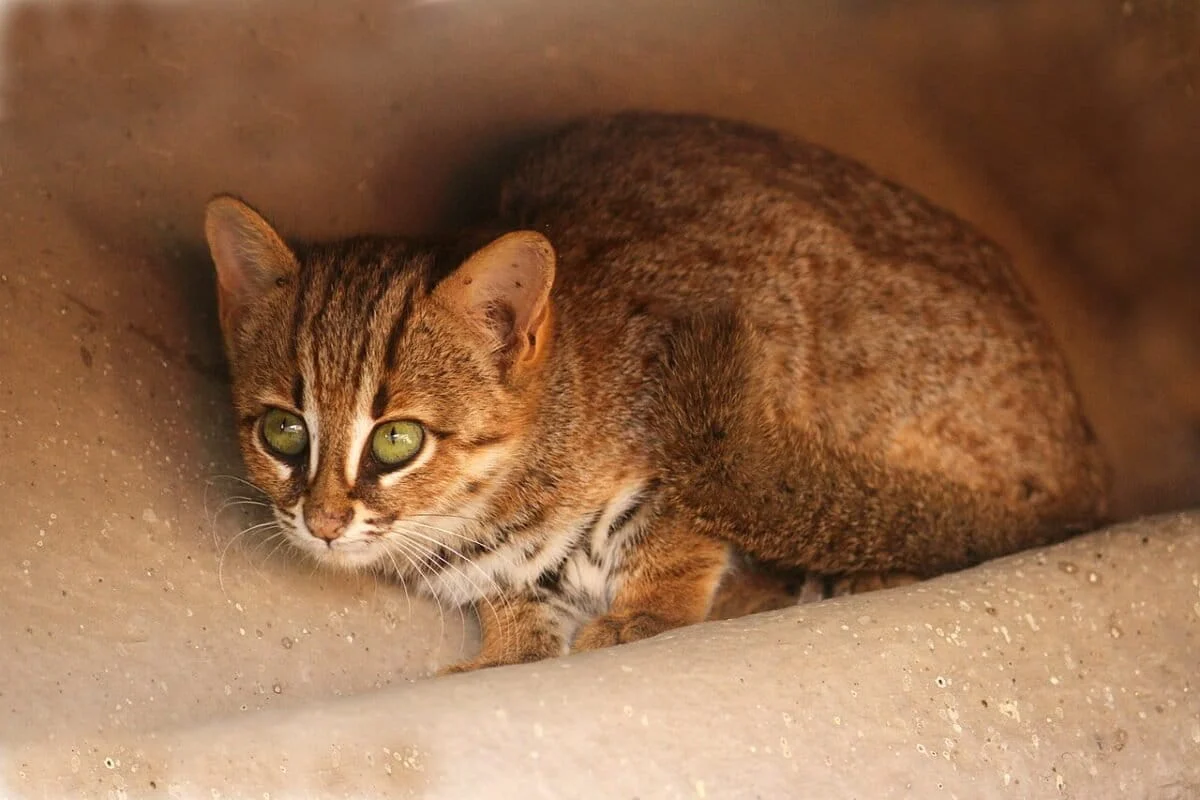
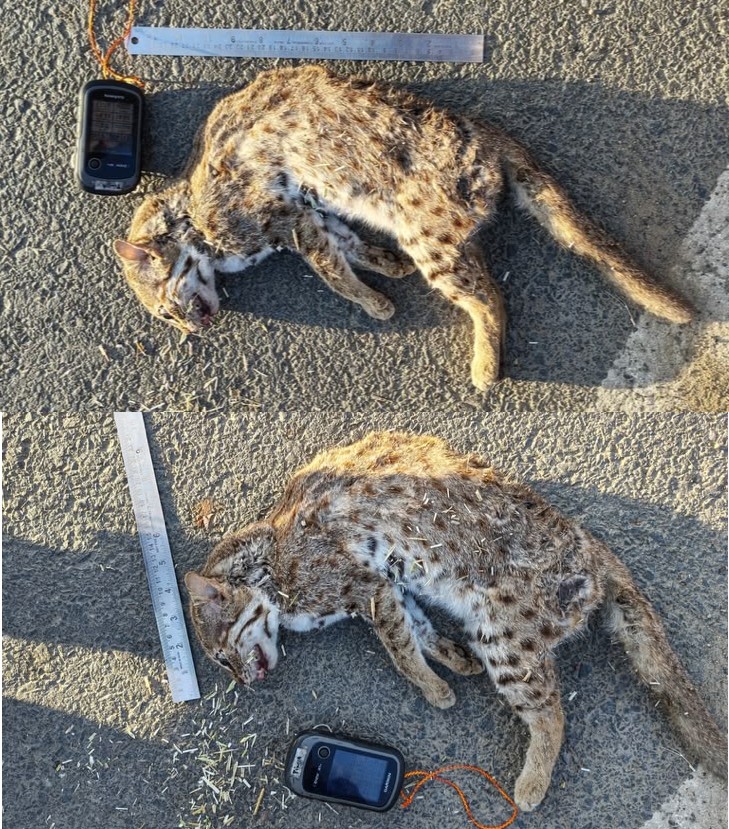
In the quiet, arid stretches of the National Chambal Sanctuary in Etawah, Uttar Pradesh, a somber discovery has provided a breakthrough in feline geography. Scientists from the Wildlife Institute of India (WII) recently documented the first-ever recorded presence of the rusty-spotted cat (Prionailurus rubiginosus) in southern Uttar Pradesh. However, the revelation came not through a camera trap or a sighting in the brush, but through the tragic remains of two individuals killed by vehicular traffic.
The findings, published in the May edition of the Journal of Threatened Taxa, underscore a bittersweet reality for conservationists: while the range of the world’s smallest wild cat may be wider than previously documented, the very infrastructure that allows humans to traverse these landscapes is becoming a terminal threat to the species.
Main Facts: A Record Defined by Loss
The rusty-spotted cat is a marvel of evolution. Native to India, Sri Lanka, and parts of Nepal, it holds the title of the world’s smallest wild cat species. To the untrained eye, an adult could easily be mistaken for a domestic kitten; they weigh between 1 and 2 kilograms and measure a mere 35 to 48 centimeters in body length. Their coats, marked with the namesake rusty-colored spots and stripes, provide perfect camouflage in the scrub forests and dry grasslands they inhabit.
The recent report from the National Chambal Sanctuary is significant for several reasons:
- New Locality: It marks the first formal documentation of the species in the southern regions of Uttar Pradesh, specifically within the Etawah district.
- Mortality as Evidence: Both records were roadkill incidents, highlighting the severe impact of linear infrastructure on small carnivores.
- Range Confirmation: While the sightings are new for this specific locality, they confirm that the sanctuary acts as a vital corridor between known populations in Rajasthan and Madhya Pradesh.
Vishnupriya Kolipakam, a senior scientist at the WII and one of the paper’s authors, noted that while the sanctuary falls within the cat’s projected distribution range, the lack of previous sightings in southern UP had left a gap in the map. The discovery of these two individuals—found dead on roads cutting through the sanctuary—serves as a grim confirmation of their presence.
Chronology: A Pattern of Accidental Discoveries
The documentation of the rusty-spotted cat in new territories has historically been a matter of "chance," as Kolipakam describes it. Because the cat is strictly nocturnal, incredibly shy, and small enough to vanish into a tuft of grass, it often evades traditional wildlife surveys.

- 2000–2020 (Rajasthan): Over two decades, four roadkill records were curated from Rajasthan, providing sporadic data points on the cat’s movement in dry deciduous habitats.
- 2016 (Nepal): The species was discovered in Nepal for the first time, a major extension of its known range. Shortly after this discovery, a roadkill incident in Shuklaphanta National Park provided further evidence of their presence and the threats they face.
- 2016–2024 (Gujarat): A surge in data from the Saurashtra Peninsula revealed nine separate roadkill incidents. This period coincided with increased road expansion in the region.
- March & April 2025 (Uttar Pradesh): The two specific incidents in the National Chambal Sanctuary occurred on March 14 and April 24, 2025. Images captured by researchers Hiyashri Sarma and Rajib Saha show the small felines lying on the asphalt, victims of nighttime traffic.
- May 2025: The Journal of Threatened Taxa publishes the formal research paper, officially adding southern Uttar Pradesh to the cat’s known range.
Supporting Data: The "Rarely Observed" vs. "Rare" Debate
One of the most persistent misconceptions about the rusty-spotted cat is its conservation status. While the IUCN Red List classifies the species as "Near Threatened," many naturalists argue that the cat is not necessarily "rare" in terms of numbers, but "rarely observed" due to its ecology.
The Impact of Camera Trapping
The recent expansion of camera trap networks across India—primarily intended for tiger and leopard monitoring—has inadvertently benefited the study of small cats. "The wild cat has been reported from areas all around Chambal, including Kuno, Ramgarh-Vishdhari, Ranthambhore, and Dholpur," says Kolipakam. These camera trap records suggest that the cat is far more widespread than 20th-century records indicated, occupying a variety of habitats from moist forests to arid scrublands.
Roadkill Statistics: The Tip of the Iceberg
The data provided by the WII and SACON (Sálim Ali Centre for Ornithology and Natural History) suggests that roadkill numbers are heavily underreported. Shomita Mukherjee, a senior principal scientist at SACON and a member of the IUCN Cat Specialist Group, emphasizes that most records are opportunistic.
"The actual number will be much higher," Mukherjee warns. Because the cats are so small, their carcasses are often scavenged quickly by birds of prey or feral dogs, or simply disintegrated by subsequent traffic before a researcher can document them.
Official Responses: Ecological Barriers and Behavior
The scientific community’s response to these deaths is focused on understanding why these cats are drawn to roads in the first place. It is not merely a case of a cat crossing the road; the road itself serves as a peculiar ecological lure.
The "Edge Effect" and Hunting Grounds
According to Dr. Mukherjee, roads fragment natural habitats but create "edge environments." These edges often have higher concentrations of sunlight, leading to denser low-level vegetation which attracts rodents, lizards, and frogs—the primary prey of the rusty-spotted cat. Furthermore, in many rural Indian landscapes, grain spillages from trucks attract rodents directly onto the tarmac, drawing the cats into the path of danger.
The Light Trap
Another factor is the attraction of insects to streetlights or vehicle headlights. Small cats, being visual hunters, may follow the concentration of insects or the smaller predators that eat them.
Behavioral Vulnerability
Vishnupriya Kolipakam points out that the cats’ natural defense mechanisms are ill-suited for the modern world. When confronted with the high-beam headlights of a speeding vehicle, the rusty-spotted cat’s instinct is often to "freeze"—a tactic used to avoid detection by natural predators in the wild. On a highway, however, this "deer in the headlights" response is fatal. Their small size also makes them nearly invisible to drivers, especially those traveling at high speeds through sanctuary zones.
Implications: Building Better Mitigation Measures
The discovery of the rusty-spotted cat in southern Uttar Pradesh via roadkill is a clarion call for changes in how India manages its "linear infrastructure"—the roads, railways, and power lines that bisect wildlife habitats.
Identifying Hotspots
Dr. Mukherjee suggests that the government and conservation bodies must identify "wildlife accident-prone sections," similar to how traffic police identify blackspots for human accidents. "Roads that are especially risk-prone for small carnivores should be identified through studies and regularly monitored," she said.
Infrastructure Solutions
The Wildlife Institute of India has recommended several mitigation strategies to be integrated into road design:
- Flyovers and Underpasses: Creating dedicated wildlife crossings allows animals to bypass traffic entirely.
- Drainage Culverts: For a cat as small as the rusty-spotted cat, even standard drainage pipes, if kept clear of debris and designed with wildlife in mind, can serve as safe passages.
- Speed Control: Mandatory speed limits and the installation of speed breakers in sanctuary zones are essential, particularly between dusk and dawn when the cats are most active.
Recognition of Threats
Currently, the IUCN recognizes habitat loss and fragmentation as the primary threats to the rusty-spotted cat. However, experts like Mukherjee argue that road networks should be elevated to a primary threat level in future assessments. As India continues to expand its national highway system, the pressure on these small felids will only intensify.

The Role of Citizen Science and Tourism
Naturalists like Aly Rashid, who operates in the Satpura Tiger Reserve, believe that the tourism industry and local communities can play a role in monitoring. While he hasn’t encountered roadkill in Satpura, he notes that in drier habitats like Chambal, Gujarat, and Rajasthan, the cats are more common and thus more vulnerable. Increased awareness among drivers and the placement of large, visible signposts indicating the presence of the world’s smallest cat could help foster a culture of caution.
Conclusion: A Tiny Species at a Crossroads
The tragedy of the two cats in Etawah is a stark reminder that even the most elusive species cannot hide from the reach of human development. The National Chambal Sanctuary, long famous for its gharials and Indian skimmers, must now also be recognized as a home to the world’s smallest feline.
The data is clear: the rusty-spotted cat is out there, navigating the shadows of our world. Whether it continues to survive depends on our ability to look down—to notice the small, the nocturnal, and the vulnerable—and to ensure that the roads we build to connect our cities do not permanently sever the lifelines of the natural world. Enrichment of our knowledge about these cats should not have to come at the cost of their lives.
