


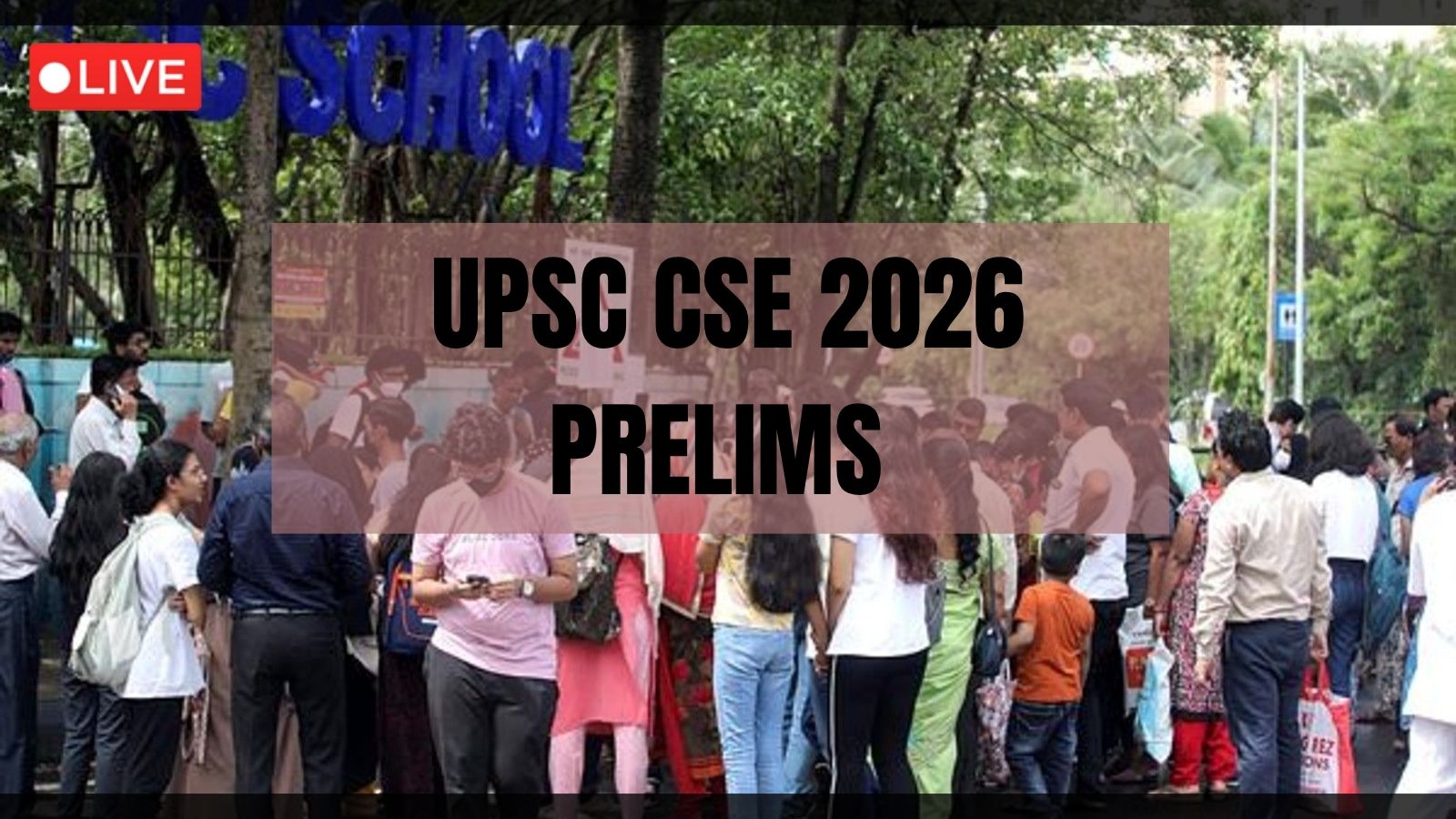
New Delhi, May 23, 2026 – The Union Public Service Commission (UPSC) is set to conduct the highly anticipated Civil Services Preliminary Examination (CSE Prelims) tomorrow, Sunday, May 24, 2026. The nationwide examination will witness an unprecedented participation of 8,19,372 candidates, all vying for a coveted spot in India’s elite administrative services. This year’s prelims aim to fill approximately 933 vacancies across various prestigious cadres, including the Indian Administrative Service (IAS), Indian Police Service (IPS), Indian Foreign Service (IFS), and other Group A and Group B central services.
The sheer scale of the examination underscores its significance as the gateway to a career in public service, attracting millions of hopefuls each year. The CSE Prelims, serving as the crucial first stage of a multi-tiered selection process, demands rigorous preparation and strategic acumen from its participants. The Union Public Service Commission has meticulously organized the examination, ensuring a fair and efficient process for all candidates.
The Examination Framework: A Two-Stage Gauntlet
The UPSC CSE Prelims is structured as an offline, OMR-based examination, comprising two distinct papers administered in two shifts. The morning session will feature the General Studies Paper I, a broad-spectrum assessment of knowledge across diverse disciplines. This paper is critical for evaluating a candidate’s understanding of national and international affairs, history, geography, economics, polity, and environmental science, among other subjects.
Following a break, the afternoon session will host the Civil Services Aptitude Test (CSAT), Paper II. CSAT is designed to test a candidate’s comprehension, analytical and logical reasoning capabilities, and decision-making skills. While CSAT is qualifying in nature, a minimum threshold of marks is essential for a candidate’s General Studies Paper I score to be considered for further evaluation. The dual-paper format ensures a holistic assessment, probing both factual knowledge and innate aptitude.
Candidate Preparedness: Essential Documents and Guidelines
With the examination just hours away, candidates are reminded of the essential prerequisites for entry into the examination halls. Each aspirant must present a current, valid photo identification alongside a printed copy of their e-admit card. The admit card, a document of paramount importance, has already been disseminated by the UPSC on its official website, upsc.gov.in. Candidates who have not yet downloaded their admit cards are strongly advised to do so without delay. This vital document contains indispensable information, including the candidate’s personal details, the precise address of their assigned examination centre, the designated reporting time, and a comprehensive list of prohibited items and mandatory documents. Meticulous review of these details is crucial to avoid any last-minute complications on exam day.
Expanding Horizons: New Exam Centres Enhance Accessibility
In a significant move to alleviate pressure on existing examination centres and improve accessibility for a large number of candidates, the UPSC has introduced three new centres for the 2026 CSE Prelims. The cities of Kanpur, Meerut, and Bhubaneswar have been added to the examination map, bringing the total number of examination centres across the country to 83, an increase from the previous 80. This strategic expansion is expected to benefit approximately 23,000 candidates who have opted to take the examination from these newly established venues. The inclusion of these centres demonstrates the Commission’s commitment to facilitating a smoother and more convenient examination experience for a geographically diverse candidate pool.
A Leap Towards Transparency: Expedited Answer Key Release
In a landmark development, the UPSC has announced that for the first time, the exam answer key will be released shortly after the conclusion of the Prelims examination. Historically, the answer key used to be published months after the exam, often coinciding with the release of final results. This new, proactive approach by the Commission is a significant stride towards enhancing the transparency of the examination process. By enabling candidates to evaluate their performance much sooner, the UPSC aims to provide greater clarity and reduce the anxiety associated with the waiting period. This move is expected to be welcomed by aspirants, allowing them to gauge their progress and strategize for subsequent stages of the selection process more effectively.
The Significance of the Preliminary Examination
The Civil Services Preliminary Examination serves as the foundational step in the arduous yet rewarding journey to becoming a civil servant. Success in the prelims is a prerequisite for progressing to the Mains examination, followed by a personality test (interview). The preliminary exam, therefore, holds immense weight in determining a candidate’s ultimate selection. The results of this crucial examination are typically declared within a span of 30 to 40 days following the examination date, a testament to the UPSC’s efficient processing capabilities.
Expert Insights and Candidate Aspirations
The UPSC CSE is renowned for its challenging syllabus and the intense competition it fosters. Experts in civil services coaching have highlighted the importance of a well-rounded preparation strategy that encompasses a deep understanding of core subjects, consistent revision, and ample practice of previous years’ papers. The introduction of new centres and the expedited answer key release are seen as positive developments that aim to streamline the examination process and enhance candidate experience.
As the nation gears up for this significant examination, the aspirations of over eight lakh candidates are focused on tomorrow. The CSE Prelims is not merely an academic test; it is a gateway to a life of public service, responsibility, and the opportunity to contribute to the nation’s development. The success achieved in this examination will pave the way for individuals to become instrumental in shaping policies, implementing programs, and serving the citizens of India. The UPSC’s commitment to a robust and transparent examination system ensures that the most deserving candidates are identified to lead the country forward.
The journey for these candidates has been one of dedication, perseverance, and immense hard work. The preliminary examination represents a critical milestone, and tomorrow, they will put their knowledge and skills to the ultimate test. The nation watches with anticipation as these future leaders embark on the next crucial step in their pursuit of serving the public.
