

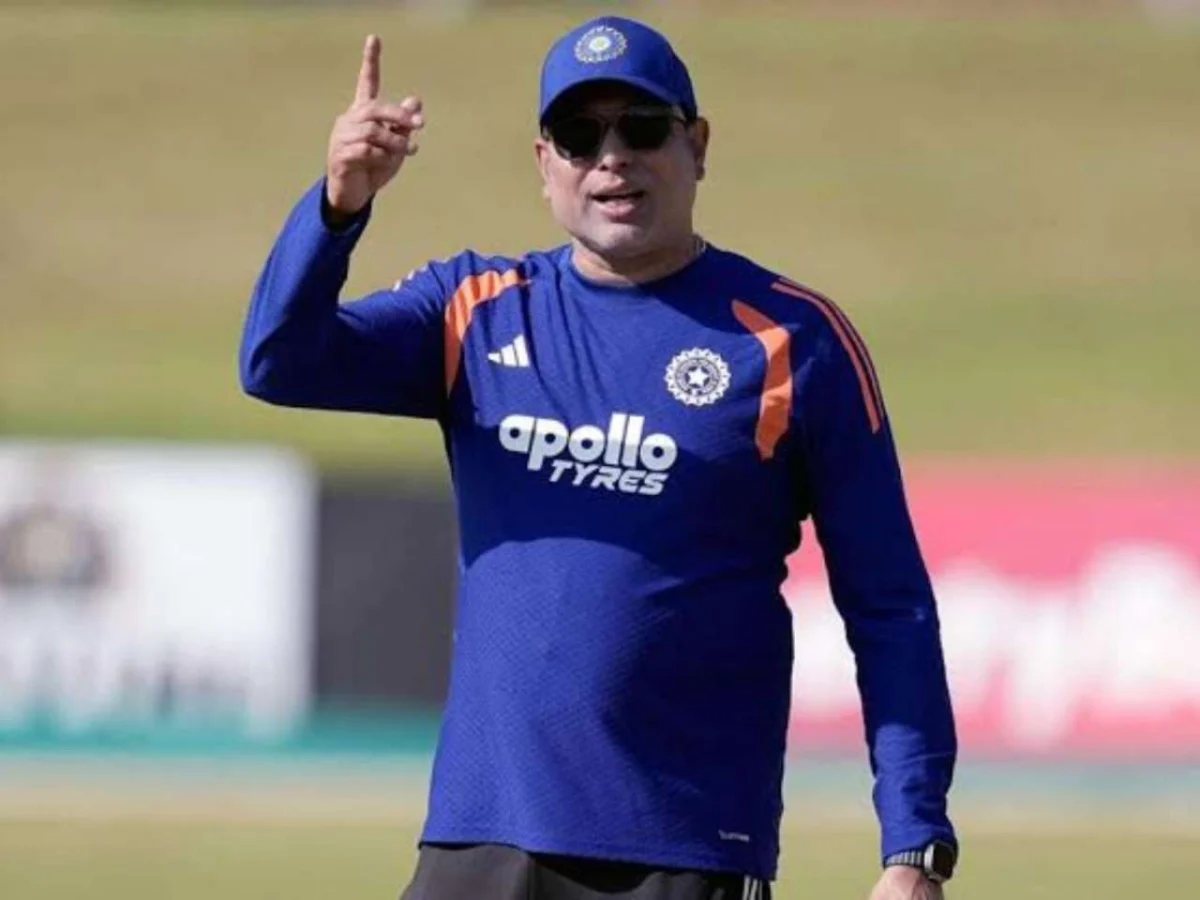
Mumbai, India – In the high-stakes world of international cricket, player fitness is paramount, and injuries are an unwelcome but constant companion. The Indian cricketing landscape has recently been abuzz with discussions surrounding the management of elite players’ injuries, particularly under the watchful eye of the National Cricket Academy’s (NCA) Centre of Excellence (CoE). Amidst this growing scrutiny, former Indian batting maestro and current head of cricket at the CoE, VVS Laxman, has stepped forward to address concerns, particularly regarding the cases of star pacer Jasprit Bumrah and promising batsman Sai Sudharsan.
Laxman, known for his elegant stroke play during his playing days, now finds himself navigating the intricate challenges of sports science and player welfare. In a recent press conference, held alongside BCCI secretary Devajit Saikia, Laxman adopted a firm yet empathetic tone, cautioning against the quick assignment of blame. "Don’t use the word blame," Laxman urged, emphasizing the complexity of injury rehabilitation and the collaborative efforts involved in managing player fitness. His remarks come at a crucial juncture, as the CoE’s protocols and decisions face intensified public and media examination.
The Epicentre of Concern: Player Injuries and the CoE’s Role
The Centre of Excellence, a cornerstone of the Board of Control for Cricket in India’s (BCCI) infrastructure, was established with the ambitious goal of developing young talent, providing high-performance training, and crucially, managing the fitness and rehabilitation of India’s elite cricketers. Over the years, it has become the central hub for players recovering from injuries, undergoing fitness assessments, and preparing for their return to competitive cricket. However, a series of high-profile injuries and subsequent questions about player availability have increasingly placed the CoE’s effectiveness under the microscope.
Cricket, in its modern avatar, is an incredibly demanding sport. The advent of three distinct formats – Tests, One-Day Internationals (ODIs), and Twenty20 Internationals (T20Is) – coupled with extensive domestic leagues like the Indian Premier League (IPL), has significantly increased the physical and mental workload on players. Fast bowlers, in particular, bear a heavy brunt, with the repetitive high-impact action of bowling putting immense strain on their bodies. Similarly, batsmen and fielders are subjected to rigorous training and match conditions that test their endurance and resilience.
)
Chronology of Scrutiny: Recent Setbacks and Public Discourse
The recent discourse around player injuries has been fueled by several instances where key players have either been sidelined or have had their return delayed. While Laxman refrained from delving into specific medical details of Bumrah and Sudharsan’s injuries, their names have become emblematic of the broader concerns.
Jasprit Bumrah, India’s premier fast bowler, has endured a challenging period with recurring back issues, which have kept him out of significant portions of international cricket. His absence has been keenly felt, particularly in crucial tournaments. The management of his return, and the timing of his re-entry into the squad, have been subjects of intense debate. Fans and pundits alike eagerly await his full fitness, often questioning the pace of his rehabilitation and the decisions surrounding his comebacks.

Sai Sudharsan, a promising young batsman, also found himself in the spotlight regarding his fitness ahead of the Sri Lanka Test series. The original news snippet mentions that his name, along with Bumrah’s, was associated with the phrase "subject to fitness," which became a point of contention and confusion for many followers of the game. This scenario, where a player is named in a squad with a fitness caveat, often triggers speculation about whether they are truly ready or if there’s an element of rushing them back into action.
These individual cases, while distinct, collectively contribute to a narrative that questions the efficacy of the injury management protocols and the communication surrounding player fitness. The public, invested emotionally in the team’s success, naturally seeks clarity and accountability when star players are unavailable.
)
Supporting Data: The Intricacies of Sports Science and Rehabilitation
Laxman’s defense of the CoE hinges on the intricate process of injury management, which he stressed is underpinned by "real medical assessments, hard data, and putting the long-term health of players first." This statement underscores the critical role of sports science and medicine in modern cricket.
Rehabilitation is not a linear process; it involves multiple stages, rigorous monitoring, and constant evaluation. When a player sustains an injury, a comprehensive assessment is conducted by a team of specialists, including doctors, physiotherapists, strength and conditioning coaches, and sometimes even sports psychologists. This team devises an individualized rehabilitation plan, which often involves:
)
- Diagnosis and Initial Treatment: Accurate identification of the injury, followed by immediate medical intervention.
- Pain Management and Rest: Allowing the injured tissues to heal, often involving a period of reduced activity.
- Restoration of Range of Motion: Gentle exercises to regain flexibility and movement in the affected area.
- Strength Training: Gradually rebuilding muscle strength around the injury site to prevent recurrence.
- Proprioception and Balance Training: Exercises to improve the body’s awareness of its position in space, crucial for preventing re-injury.
- Sport-Specific Drills: Progressing to activities that mimic cricketing movements, such as batting, bowling, or fielding drills, initially at low intensity and gradually increasing.
- Match Simulation: Engaging in practice matches or net sessions to assess readiness for competitive play.
- Fitness Tests: A series of standardized physical tests (e.g., Yo-Yo test, agility drills, strength assessments) to objectively evaluate a player’s physical readiness.
Throughout this process, data is meticulously collected. This includes subjective feedback from the player, objective measurements from fitness tests, biomechanical analysis of movements, and imaging studies (MRI, X-rays) to monitor healing. The decision to clear a player is never taken lightly and is based on a consensus among the medical and support staff, ensuring that the player is not just "fit enough" but robust enough to withstand the rigors of international cricket without undue risk of re-injury. Rushing a player back, even under immense pressure, can lead to chronic issues and shorten careers, a risk that medical professionals are trained to mitigate.
Official Responses: Laxman’s Steadfast Defense of the CoE
Laxman’s press conference served as a vital platform for the CoE to articulate its operational philosophy and defend its processes against the backdrop of public skepticism. His primary message was a strong repudiation of the "blame game."
)
"Let’s not use the word ‘blame’. As soon as you talk about blame, you’re just looking for someone to point a finger at," Laxman stated emphatically. He argued that assigning blame oversimplifies a multifaceted process that involves numerous stakeholders and variables. He highlighted the "great coordination" that exists between the CoE, team management (for both senior and ‘A’ teams), the Sports Science and Medicine staff, and the selection committee. This synergy, he explained, ensures that "everyone stays in touch, and no one is left in the dark."
Laxman meticulously broke down the information flow and decision-making process:
"If a player’s coming back from injury, the selector reaches out to the CoE to get a current fitness status. The team at the CoE puts this together and sends it to the head of the selection committee, the head coaches, and the BCCI. That way, everyone knows where things stand."
)
This transparent internal communication mechanism, according to Laxman, is designed to provide all relevant parties with up-to-date information, allowing for informed decisions regarding player selection.
He also clarified the much-debated phrase "subject to fitness." This asterisk, often seen next to a player’s name in team announcements, does not imply that a player has been prematurely selected or that there’s a disconnect. Instead, it signifies a deliberate, phased approach to rehabilitation and selection. "Whenever there’s an asterisk next to a player, it means they haven’t cleared fitness yet—they’re included ‘subject to fitness.’ That’s the whole point," Laxman explained. "You move players through stages in rehabilitation, and if progress slows, you tell the selectors and coaches right away. There’s no confusion or hidden steps."
)
This process allows selectors to provisionally include a player who is on the cusp of full fitness, while simultaneously having contingency plans in place. "If someone doesn’t pass the fitness test, the selectors already know who’s next in line to step in," he affirmed. This proactive approach minimizes disruption and ensures that the team always has a ready replacement, safeguarding both player welfare and team stability. Laxman reiterated that every decision is ultimately about "what’s best for the player—and the team."
He concluded his remarks by underscoring the CoE’s commitment to transparency, stating, "Every press release shows exactly who’s fit and who’s been picked conditionally. It’s basic common sense, and transparency is non-negotiable." This emphasis aims to build trust with the cricketing public by providing clear, unambiguous information.
)
Implications: Balancing Performance, Welfare, and Public Trust
Laxman’s staunch defense of the CoE and its processes carries several significant implications for Indian cricket.
1. Reaffirming the CoE’s Authority and Expertise: By clarifying the intricate details of injury management and inter-departmental coordination, Laxman sought to reinforce the CoE’s position as the authoritative body for player fitness. This is crucial for maintaining confidence among players, coaches, and selectors in its scientific approach.
)
2. Managing Player Workload: The increasing number of matches across formats necessitates a more sophisticated approach to player workload management. The CoE plays a vital role in monitoring players’ physical output, advising on rest periods, and designing individualized training programs to mitigate injury risks. Laxman’s comments implicitly highlight the continuous challenge of balancing a player’s desire to play every game with the imperative of long-term physical well-being.
3. Building Bench Strength: When frontline players are injured, the depth of the talent pool is tested. The CoE’s development programs are therefore critical not only for rehabilitating established stars but also for nurturing a strong bench of young players ready to step up. The "next in line" philosophy, as articulated by Laxman, is integral to this strategy, ensuring that India remains competitive even in the face of key absences.
)
4. Public Education and Trust: Laxman’s detailed explanation of "subject to fitness" and the rehabilitation process serves as an important educational tool. By demystifying these terms and processes, the CoE aims to foster greater understanding and trust among the cricketing public and media. Reducing speculation and misinterpretation is vital for maintaining a positive relationship with stakeholders.
5. Evolution of Sports Science in Indian Cricket: The ongoing scrutiny also serves as an impetus for the CoE to continually review and enhance its sports science and medical protocols. As the understanding of biomechanics, physiology, and injury prevention evolves globally, the CoE must remain at the forefront, incorporating the latest advancements to benefit Indian cricketers. This might involve investing in cutting-edge technology, further research, and continuous professional development for its staff.
)
6. Impact on Team Selection and Strategy: The CoE’s fitness reports directly influence team selection. A robust and reliable system ensures that selectors have accurate information, allowing them to pick the best available squad while making provisions for players returning from injury. This directly impacts team strategy, composition, and ultimately, performance on the field. The coordinated approach described by Laxman suggests a unified front in this critical aspect.
In conclusion, VVS Laxman’s intervention is a timely and necessary clarification amidst a climate of concern. By urging a move away from the simplistic "blame game" and instead emphasizing the complexities, the scientific rigor, and the collaborative spirit of injury management, he has sought to reinforce confidence in the Centre of Excellence. The ongoing challenge for Indian cricket will be to consistently uphold these principles of thorough assessment, player-centric rehabilitation, and transparent communication, ensuring that both the short-term competitive goals and the long-term welfare of its prized athletes are optimally managed.
