

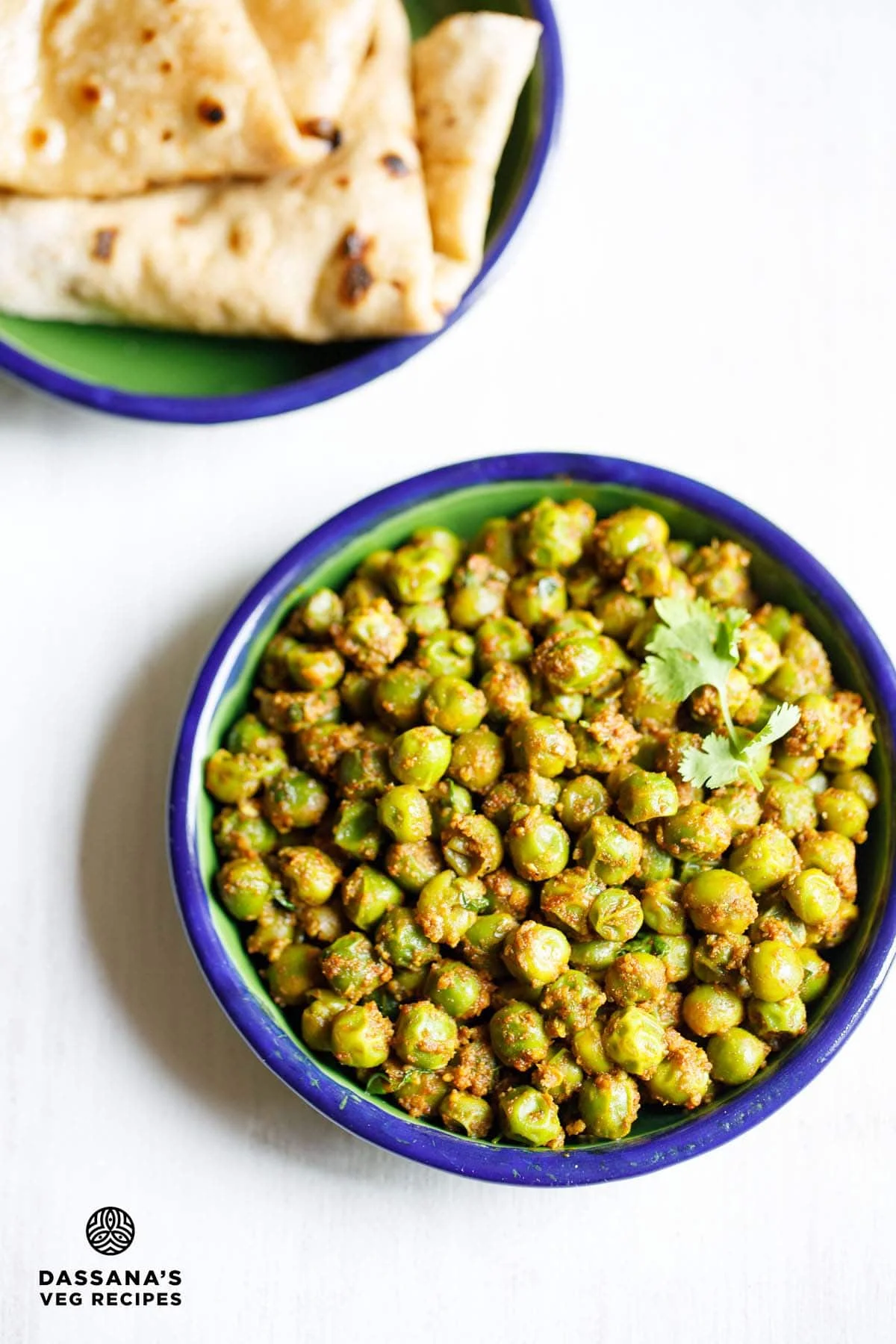
In the vast and complex landscape of Indian culinary arts, where gravies are often enriched with heavy creams and intricate spice blends, there exists a counter-movement of elegant simplicity. At the forefront of this minimalist tradition is Matar Ki Sabji, a dry vegetable preparation that celebrates the humble green pea. This dish, characterized by its "no onion, no garlic" profile, has emerged not only as a staple of North Indian households but as a prime example of how traditional dietary restrictions—such as veganism and gluten-free living—have been embedded in the Indian subcontinent for centuries.
Main Facts: The Anatomy of a Heritage Staple
Matar Ki Sabji is a quintessential North Indian dry vegetable dish (sabzi) that prioritizes the natural sweetness of green peas (Pisum sativum) over the pungent foundations of typical curries. Unlike many globally recognized Indian dishes that rely on a base of sautéed onions, ginger, and garlic, this specific preparation adheres to a "Sattvic-adjacent" philosophy, making it suitable for various religious observances and dietary preferences.

Core Characteristics
- Dietary Profile: Naturally vegan, gluten-free, and devoid of Allium species (onion and garlic).
- Primary Ingredient: Green peas, utilized either fresh during the peak winter harvest or frozen for year-round accessibility.
- Flavor Profile: A delicate balance of sweetness from the peas, heat from green chilies, and a signature tang provided by amchur (dry mango powder).
- Versatility: Served primarily as a dry accompaniment to flatbreads like roti, phulka, or paratha, it also functions as a nutritious side dish for a traditional meal of dal (lentils) and rice.
The dish represents a broader trend in Indian home-style cooking where "less is more." By removing the heavy aromatic bases, the cook allows the specific texture and flavor of the vegetable to remain the protagonist of the meal.
Chronology: From Field to Table
The lifecycle of Matar Ki Sabji is deeply tied to the agricultural rhythms of Northern India. To understand the dish, one must trace its journey from the winter harvest to the precision of the pressure cooker.

1. The Seasonal Peak
In states like Punjab, Uttar Pradesh, and Haryana, the arrival of winter signals the "Pea Season." From November to February, local markets are flooded with fresh pods. Historically, this was the only time the dish was consumed, leading to a cultural association between the crisp winter air and the steaming bowl of spiced peas.
2. The Modern Evolution of Sourcing
With the advent of flash-freezing technology, the chronology of the dish has shifted from seasonal to perennial. While purists argue that fresh peas offer a superior "pop" and sweetness, the recipe has adapted to utilize frozen peas, allowing for a 15-minute preparation time that fits the schedule of the modern urban workforce.

3. The Preparation Sequence
The technical execution of Matar Ki Sabji follows a precise chronological order to ensure the peas do not lose their vibrant chlorophyll pigment or turn mushy:
- Steaming (The Foundation): The peas are first steamed—often using a stovetop pressure cooker—to reach a state of tender resilience. In a traditional 2-liter cooker, this typically requires 5 to 6 whistles (approximately 7 minutes).
- Tempering (The Aromatics): Oil or ghee is heated over a low flame. Slit green chilies are introduced first to infuse the fat with heat.
- Integration: The steamed peas are tossed in the infused oil, ensuring a light coating that acts as an adhesive for the dry spices.
- Spicing (The Final Flourish): Ground spices—turmeric, red chili powder, coriander powder, and garam masala—are added only at the end to prevent the delicate powders from burning.
- The Acidic Finish: The heat is reduced or extinguished before adding amchur or lemon juice, preserving the brightness of the flavor.
Supporting Data: The Nutritional Profile
While often viewed as a "simple" side dish, the nutritional data provided by culinary experts reveals Matar Ki Sabji to be a powerhouse of macro and micronutrients. A standard serving (approximately two portions) yields a complex nutritional matrix.

Macro-Nutrient Breakdown (Per Serving)
- Calories: 173 kcal
- Dietary Fiber: 8g (Approximately 30% of the recommended daily intake)
- Protein: 6g (A significant plant-based source)
- Total Fat: 8g (Primarily monounsaturated fats when prepared with heart-healthy oils)
Micronutrient Density
The dish is particularly rich in fat-soluble and water-soluble vitamins:
- Vitamin A: 1001 IU (Crucial for ocular health and immune function)
- Vitamin C: 47 mg (An antioxidant boost that remains relatively stable due to the short sautéing time)
- Vitamin K: 29 µg (Essential for bone metabolism and blood clotting)
- Iron and Magnesium: Providing 2mg and 48mg respectively, supporting oxygen transport and muscle function.
Data suggests that the inclusion of turmeric (curcumin) and black pepper (often found in garam masala) increases the bioavailability of the nutrients, making this dish not just a meal, but a functional food.

Official Responses: Culinary and Health Perspectives
The simplicity of Matar Ki Sabji has garnered attention from nutritionists and culinary historians who advocate for a return to "whole food" cooking.
The Nutritionist’s View
Dietitians often recommend this dish for patients managing diabetes or weight. "The high fiber content of green peas, combined with the lack of heavy fats or sugars found in restaurant-style gravies, makes Matar Ki Sabji an ideal ‘low-glycemic index’ meal," says Dr. Ananya Sharma, a Delhi-based nutritionist. "The absence of onion and garlic also makes it a preferred choice for those following a Low-FODMAP diet to manage Irritable Bowel Syndrome (IBS)."

The Culinary Historian’s Context
Culinary researchers point to the "No Onion No Garlic" (NONG) aspect as a significant cultural marker. Traditionally, these ingredients were avoided in various Brahmin and Jain households as they were believed to be ‘Tamasic’ (inducing heaviness or lethargy). By mastering the use of hing (asafoetida) and amchur, Indian home cooks developed a way to create "Umami" and depth without the use of Alliums. Matar Ki Sabji stands as a surviving testament to this ingenious flavor engineering.
Implications: The Global Rise of Indian Veganism
The popularity of recipes like Matar Ki Sabji has implications that reach far beyond the borders of India. As the global North shifts toward plant-based diets, the "accidental veganism" of traditional Indian cooking is becoming a blueprint for sustainable eating.

1. Sustainability and Nitrogen Fixation
Green peas are legumes, which are known for their nitrogen-fixing properties in soil. As global food systems look toward crops that require fewer chemical fertilizers, the promotion of pea-based dishes aligns with ecological sustainability goals.
2. The "Clean Label" Trend
Modern consumers are increasingly wary of long ingredient lists and processed additives. Matar Ki Sabji, with its reliance on five or six whole spices and a single primary vegetable, fits perfectly into the "Clean Label" movement. It offers a template for "Fast Food" that is actually healthy—a meal that can be prepared in under 20 minutes but offers the complexity of a slow-cooked dish.

3. Cultural Preservation in the Diaspora
For the Indian diaspora, Matar Ki Sabji is more than a meal; it is a "comfort food" that connects generations. Its ease of preparation makes it a frequent entry point for young adults learning to cook their heritage cuisine. The dish’s ability to be packed in a lunch box (tiffin) without leaking or spoiling quickly makes it a practical bridge between traditional lifestyle and modern professional demands.
Conclusion
Matar Ki Sabji is a masterclass in culinary restraint. In a world of over-seasoned and ultra-processed food, it serves as a reminder that the quality of an ingredient—when treated with the correct technique and a handful of ancestral spices—is sufficient to create a world-class gastronomic experience. Whether it is the nutritional density, the ease of preparation, or its adherence to ancient dietary philosophies, this simple pea sauté remains an indispensable pillar of the North Indian kitchen. As we move toward a future that values both health and heritage, the humble Matar Ki Sabji is likely to remain a permanent fixture on the global plate.
