

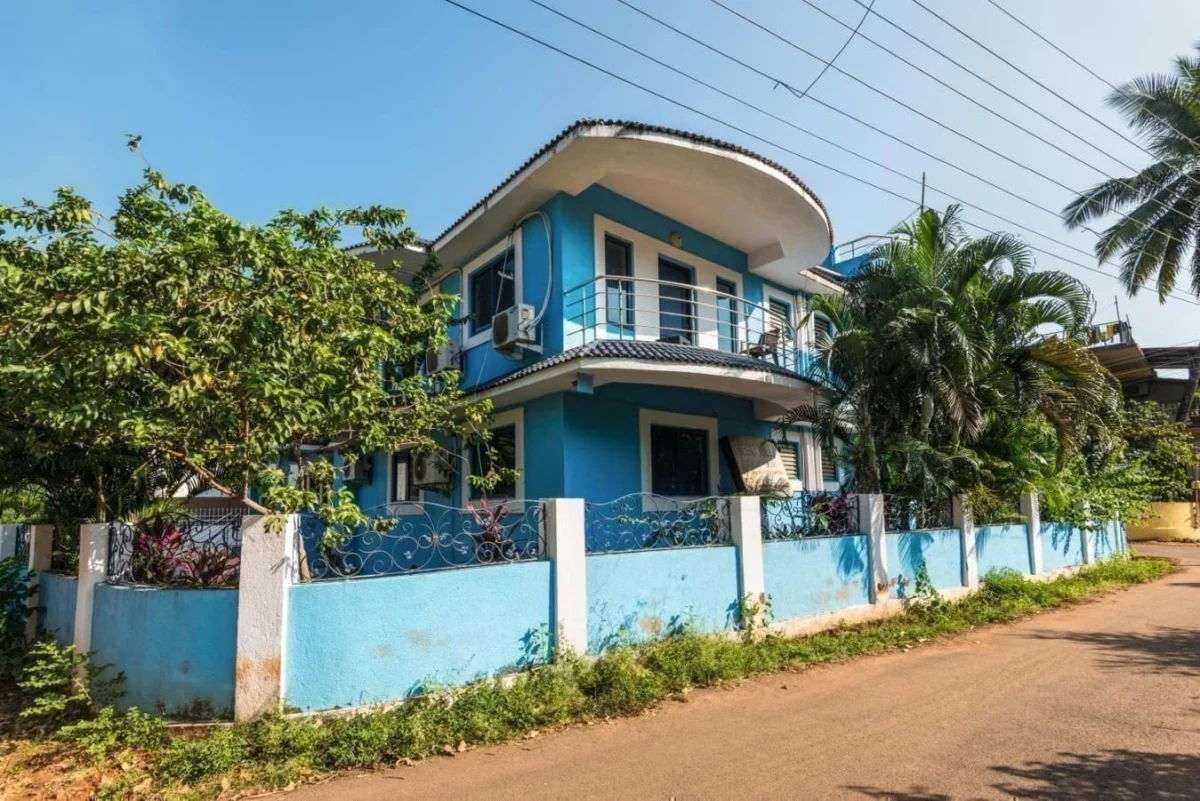
The real estate market in Goa has long been a magnet for domestic investors, NRIs, and those seeking a lifestyle change amidst the palm-fringed coastlines of India’s smallest state. However, beneath the allure of luxury villas and heritage homes lies a rigorous regulatory framework designed to ensure transparency and fiscal accountability. At the heart of this framework are the Ready Reckoner (RR) Rates, also known as "Circle Rates."
As we move through 2026, understanding these rates is no longer just a task for legal experts; it is a fundamental requirement for any serious buyer or seller. This article provides an in-depth analysis of the current RR rates in Goa, the methodology behind their calculation, and the socio-economic factors that continue to shape the state’s property valuation landscape.
1. Main Facts: Understanding the Foundation of Property Valuation
Ready Reckoner rates represent the minimum price at which a property—whether land, residential, or commercial—can be registered during a transfer of ownership within a specific jurisdiction. These rates are determined by the State Government of Goa and serve as a benchmark to prevent the undervaluation of property, which in turn curbs the circulation of unaccounted money (black money) and ensures the state receives its fair share of revenue.
The Legal Mandate
In Goa, the Department of Revenue and the Department of Stamps and Registration are the primary bodies responsible for notifying these rates. It is a legal requirement that no property transaction occurs below the stipulated RR rate. If a transaction is recorded at a price lower than the circle rate, the government treats the difference as "undisclosed income," and the buyer may face significant legal penalties. Furthermore, stamp duty and registration fees are always calculated based on the higher of the two values: the actual transaction price or the RR rate.
Geographic Variance
One of the defining characteristics of Goa’s RR rates is their extreme variance. Unlike some states where rates might be uniform across a district, Goa’s rates fluctuate significantly even within the same village or town. A plot in the "Billionaire’s Row" of Assagao will command a vastly different rate than a plot in the quiet hinterlands of Bicholim, reflecting the state’s diverse topography and economic zoning.
2. Chronology: The Evolution of Rates into 2026
The trajectory of Goa’s RR rates reflects the state’s transition from a sleepy tourism destination to a high-demand real estate hub.
- Pre-2020 Era: Rates were updated sporadically, often trailing behind the actual market boom seen in coastal belts like Calangute and Candolim.
- The 2024 Revision: A pivotal moment occurred in September 2024. The Government of Goa, via the Official Gazette Series I No. 24 (Extraordinary No. 2), released a comprehensive update to the circle rates. This revision sought to bridge the gap between the "government value" and the "market value," which had widened during the post-pandemic property surge.
- The 2026 Status Quo: As of the current fiscal year 2026, the Revenue Department has opted to maintain the benchmarks established in the late 2024 notification. While market prices have continued to climb in specific pockets, the official RR rates remain pegged to the 2024-25 notification. This provides a level of stability for investors, though it requires the government to monitor the market closely for potential revenue leakage.
3. Supporting Data: Key Localities and Calculation Methodology
To understand the financial implications of buying property in Goa, one must look at the specific numbers assigned to high-growth areas. The following table highlights the verified circle rates for key localities as of 2026.
Circle Rates of Key Localities (Verified for 2026)
| Locality | Region | Circle Rate (per sq. m) |
|---|---|---|
| Assagao | North Goa | ₹25,000 |
| Baga (Calangute) | Coastal North | ₹25,000 |
| Arpora | North Goa | ₹15,000 |
| Saligao | North Goa | ₹12,000 |
| Verla | North Goa | ₹12,000 |
| Canca | North Goa | ₹12,000 |
| Tivim | North Goa | ₹10,000 |
| Nagoa | North Goa | ₹8,000 |
Source: Compiled from the Government of Goa, Department of Revenue, Official Gazette notifications.
How to Calculate the Property Value
The calculation of the minimum value is a straightforward mathematical formula, but it requires precision regarding the "Carpet Area."
The Formula:
Property Value = [Carpet Area (in sq. m) + Inner Wall Thickness] × Circle Rate of the Region (per sq. m)
Example Case Study:
If an investor intends to purchase a luxury apartment in Assagao with a carpet area of 100 square metres:
- Area: 100 sq. m
- Rate: ₹25,000 per sq. m
- Minimum Valuation: 100 × 25,000 = ₹25,00,000 (25 Lakhs)
In this scenario, even if the buyer negotiates a deal for ₹20 Lakhs, the Stamp Duty and Registration fees will be levied on the ₹25 Lakhs valuation. Conversely, if the market price is ₹1 Crore, the taxes will be paid on the ₹1 Crore figure.
4. Factors Influencing the Determination of Rates
The Goa government does not set these rates in a vacuum. A sophisticated array of factors determines why one street in Mapusa might be more expensive than another just a kilometer away.
I. Infrastructure and Accessibility
Proximity to major transit hubs plays a massive role. The inauguration and expansion of the Manohar International Airport (Mopa) in North Goa have led to a gradual upward pressure on RR rates in the surrounding talukas of Pernem and Bardez. Similarly, proximity to National Highway 66 (NH66) increases a land parcel’s commercial viability, leading to higher circle rates.
II. Social Amenities
Areas boasting high-quality "social infrastructure"—such as international schools, multi-specialty hospitals, and premium retail markets—are assigned higher rates. This explains the premium rates in areas like Panaji, Porvorim, and Margao.
III. Zoning and Land Use
The Goa Regional Plan plays a critical role here. Land categorized as "Settlement" (where construction is permitted) carries a significantly higher RR rate than land categorized as "Agricultural" or "Natural Cover." Commercial zones, intended for hotels or malls, have the highest rates, reflecting their income-generating potential.
IV. Market Demand and Supply
While RR rates are "fixed" by the government, they are a lagging indicator of market demand. In spots like Assagao and Siolim, where the demand for "second homes" has skyrocketed, the government eventually raises RR rates to capture the increased economic activity.
5. Official Responses and Expert Perspectives
The government’s stance on RR rates focuses on the balance between revenue and growth.
Official Statement from the Goa Department of Stamps and Registration:
"Our objective is to maintain a balanced approach towards property valuation, ensuring that the circle rates are in line with the prevailing market conditions while safeguarding the interests of all stakeholders. Transparency in these rates is the cornerstone of our digital governance initiative."
This sentiment is echoed by industry veterans who view the RR rates as a stabilizing force in an often volatile market.
Perspective from a Leading Real Estate Analyst:
"The government of Goa has committed to ensuring equitable property assessments and improving tax production. By keeping the 2024 rates in force through 2026, they are providing a predictable environment for long-term capital investment. These fees give purchasers and sellers of real estate an open and transparent framework for dealings, reducing the ‘information asymmetry’ that previously plagued the Goan market."
6. Implications for Stakeholders in 2026
The persistence of the 2024 rates into 2026 has several multi-layered implications for the Goan economy.
For Buyers and Investors
The stability of RR rates allows for better financial planning. Investors can calculate their "exit costs" and "entry taxes" with high precision. However, buyers must be cautious; in high-demand areas where the market rate is significantly higher than the RR rate, the "gap" can sometimes lead to requests for cash transactions. Experts strongly advise against this, as the legal and tax risks in 2026 are higher than ever due to increased digitization of land records.
For the State Exchequer
By maintaining realistic RR rates, the Goa government ensures a steady stream of revenue through Stamp Duty. This revenue is often reinvested into the very infrastructure (roads, water supply, and power) that further boosts property values, creating a "virtuous cycle" of development.
For the Luxury Housing Segment
Goa has become the "Luxury Capital of India." For developers building high-end villas, the RR rates act as a floor. While their selling prices might be 5x or 10x the circle rate, the RR rate ensures that even the most basic land transaction in a premium zone contributes a minimum threshold of tax to the state.
7. Conclusion: The Path Forward
As we look toward the remainder of 2026, the Goa Ready Reckoner Rates stand as a vital pillar of the state’s real estate sector. They represent a compromise between the government’s need for revenue and the citizen’s need for a fair, transparent market.
For anyone looking to participate in the Goan dream—whether by buying a small plot in the hills of Sattari or a beachside apartment in Colva—the advice remains the same: Consult the latest Official Gazette, verify the rates with the local Sub-Registrar’s office, and ensure that every rupee of the transaction is accounted for against the stipulated circle rates.
In a digital-first era, where Goa’s land records are increasingly integrated with Aadhaar and PAN systems, staying compliant with Ready Reckoner rates is not just a legal obligation—it is the only way to ensure a secure and prosperous investment in the "Pearl of the Orient."
Disclaimer: While this report is based on the most recent government notifications and market data available as of 2026, property laws and rates are subject to change. Readers are encouraged to verify specific plot rates with the relevant Sub-Registrar Office in Goa before finalizing any legal agreements.
