

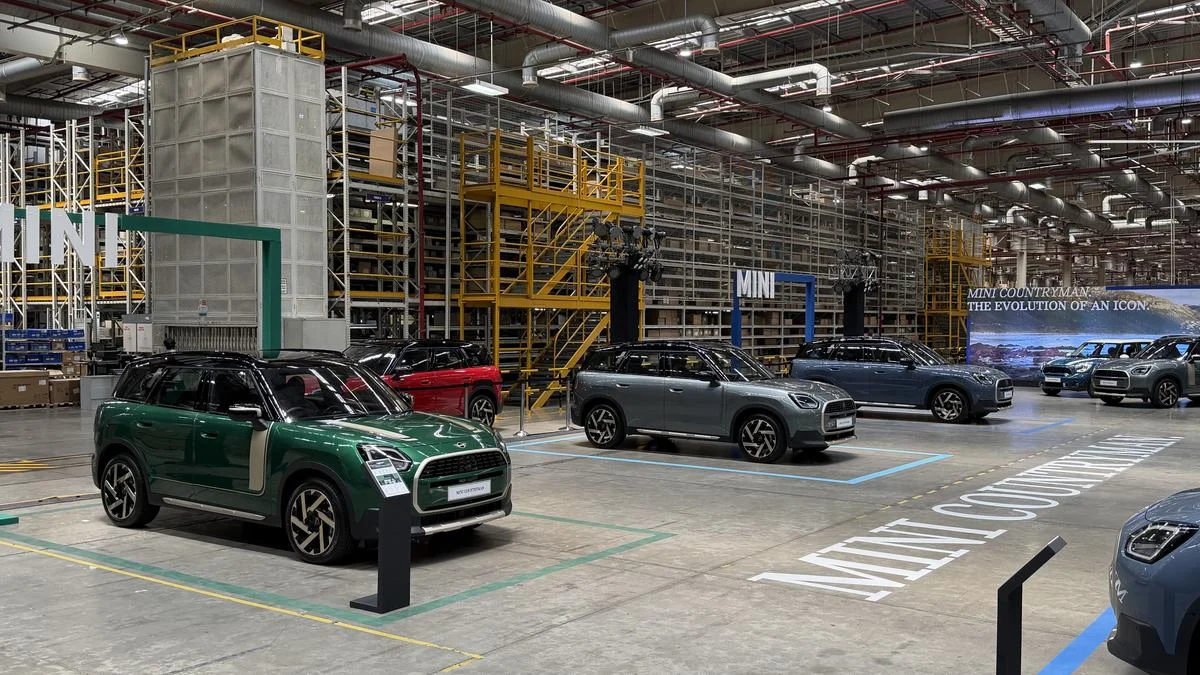
The Indian luxury automotive landscape witnessed a significant shift on June 17, 2026, as MINI, the storied British marque under the BMW Group umbrella, officially launched the all-new Countryman C in Chennai. This launch is not merely the introduction of a new model; it represents a strategic pivot for the brand in South Asia. For the first time in the history of the nameplate in India, the petrol-powered Countryman will be manufactured locally at the BMW Group Plant Chennai.
Priced at ₹47.50 lakhs (ex-showroom), the Countryman C is positioned as a sophisticated, tech-forward, and practical evolution of the classic MINI silhouette. By transitioning to local production, MINI aims to consolidate its presence in the burgeoning premium compact SUV segment, offering a more competitive value proposition to Indian consumers who demand a blend of international prestige and local accessibility.
I. Main Facts: The "New Kind of BIG"
The all-new MINI Countryman C arrives with a clear mandate: to redefine what a premium compact SUV can be by balancing "Go-Kart" handling with family-oriented utility. The vehicle is offered in five distinct color variants, catering to the brand’s tradition of personalization and aesthetic flair.
Key Specifications and Pricing
- Launch Price: ₹47.50 Lakhs (Ex-showroom India).
- Engine: 1.5-liter 3-cylinder MINI TwinPower Turbo Petrol.
- Performance: 156 hp and 240 Nm of peak torque.
- Transmission: 7-speed dual-clutch Steptronic Sport transmission.
- Dimensions: Significantly larger than its predecessor, providing more interior volume and a more commanding road presence.
- Production: Locally assembled at BMW Group Plant Chennai.
Aesthetic and Design Philosophy
The Countryman C introduces the "Charismatic Simplicity" design language. This approach strips away unnecessary ornamentation in favor of clean lines and a minimalist aesthetic. Notable features include:
- The Octagonal Grille: A modern reinterpretation of the classic MINI front end.
- Customizable LED Signatures: For the first time, owners can select different light patterns for the daytime running lights (DRLs) and rear lamps, allowing for a unique digital "handshake."
- Aerodynamic Efficiency: Despite its rugged SUV stance, the vehicle features short overhangs and optimized surfaces to improve fuel efficiency and reduce wind noise.
II. Chronology: The Road to Localization
The journey of the MINI Countryman in India has been one of gradual integration and increasing market relevance.
- 2012 – The Entry: MINI officially entered the Indian market, initially operating through a Completely Built Unit (CBU) model, which subjected vehicles to high import duties.
- 2018 – Initial Localization: Recognizing the potential of the Indian luxury market, the BMW Group began exploring local assembly for specific models to remain competitive against rivals like Audi and Mercedes-Benz.
- 2024 – The Transition: BMW Group India unveiled a roadmap for aggressive expansion, including a focus on both Electric Vehicles (EVs) and high-demand petrol variants.
- June 17, 2026 – The Milestone: The launch of the Countryman C in Chennai marks the culmination of this strategy. It is the first time a petrol variant of the Countryman has been manufactured on Indian soil, signifying a long-term commitment to the "Make in India" initiative.
This chronological shift highlights the BMW Group’s confidence in the Indian manufacturing ecosystem and the growing appetite for premium compact SUVs among India’s urban elite.

III. Supporting Data: Technology, Interior, and Performance
The MINI Countryman C is not just a larger car; it is a smarter one. The internal and mechanical upgrades represent a generational leap in automotive engineering.
Digital Innovation and MINI OS 9
The centerpiece of the interior is a world-first in the automotive industry: a high-resolution, circular OLED display. This 240mm diameter screen serves as both the instrument cluster and the infotainment hub.
- MINI Operating System 9: Developed in-house by the BMW Group, this system allows for intuitive touch and voice control.
- Intelligent Personal Assistant: Activated by the command "Hey MINI," the assistant can control climate, navigation, and entertainment, learning the driver’s habits over time.
- Connectivity: The vehicle supports wireless Apple CarPlay and Android Auto, remote software upgrades (OTA), and a "Digital Key" feature that allows users to unlock and start the car using only their smartphone.
Interior Versatility and Sustainability
The cabin has been redesigned to maximize space without sacrificing the premium feel.
- Cargo Capacity: The boot offers 505 liters of space, which expands to a massive 1,450 liters when the rear seats are folded down.
- Adjustable Seating: The rear bench can slide forward or backward by up to 13 centimeters, allowing owners to prioritize either legroom or luggage space.
- Materials: In a move toward sustainability, the cabin utilizes high-quality recycled materials and vegan leather alternatives, reflecting a modern approach to luxury.
Mechanical Prowess
Under the hood, the 1.5-liter TwinPower Turbo engine is designed for the urban environment. While 156 hp ensures brisk acceleration, the 240 Nm of torque provides the "punch" needed for highway overtaking. The 7-speed dual-clutch transmission ensures that gear shifts are virtually imperceptible, maintaining a smooth power delivery that complements the car’s refined suspension tuning.
IV. Official Responses: Leadership Vision
During the launch event in Chennai, leadership from BMW Group India emphasized the strategic importance of this specific model for the Indian market.
Hardeep Singh Brar, President and CEO of BMW Group India, remarked on the vehicle’s dual nature:

"The all-new MINI Countryman C is essentially ‘a new kind of BIG.’ It brings a larger-than-life personality to the streets while maintaining the soul of a MINI. By producing this petrol variant locally at our Chennai plant, we are not just delivering a car; we are delivering enhanced value, quicker delivery times, and a product that is perfectly tailored for the Indian premium consumer."
Brar further noted that the local production of the Countryman C is a testament to the skill and capability of the Indian workforce at the BMW Group Plant, which now meets the stringent global quality standards required for the MINI brand.
Industry analysts suggest that this move is a direct response to the "localization" trend seen in the luxury segment, where brands like Mercedes-Benz and Jaguar Land Rover have seen sales surges after moving to local assembly, thereby avoiding the 100% plus import duties on CBUs.
V. Implications: The Future of Premium Mobility in India
The launch of the locally produced Countryman C has several far-reaching implications for the Indian automotive industry and the luxury consumer base.
1. Market Competitiveness
At ₹47.50 lakhs, the Countryman C sits in a "sweet spot" of the luxury market. It competes directly with the likes of the BMW X1, Audi Q3, and Mercedes-Benz GLA. However, the Countryman offers a "lifestyle" appeal that its more traditional German rivals often lack. The "MINI community" factor remains a strong USP (Unique Selling Proposition) that the company is keen to leverage.
2. The "Make in India" Momentum
The transition of the Countryman C to the Chennai plant reinforces India’s position as a global manufacturing hub for high-end automobiles. This move likely involves a significant investment in the local supply chain, as the BMW Group seeks to source more components domestically to manage costs and hedge against global supply chain disruptions.

3. The Digital Shift
By introducing the circular OLED and MINI OS 9, the brand is targeting a younger, tech-savvy demographic. In India, where the average luxury car buyer is significantly younger than in European markets, the emphasis on "gadgetry" and connectivity is a calculated move to win over Gen Z and Millennial entrepreneurs.
4. Environmental Consciousness
While this is a petrol variant, the use of sustainable interior materials and more efficient engine technology signals MINI’s gradual transition toward a greener future. It sets the stage for the brand’s eventual move to a fully electric lineup in India, following the global directive of the BMW Group.
Conclusion
The MINI Countryman C is a bold statement of intent. It proves that a car can grow in size and practicality without losing the rebellious, fun-to-drive spirit that made the brand a cultural icon in the 1960s. For the Indian buyer, the "Made in India" Countryman C offers the best of both worlds: the prestige of a British heritage brand and the sensible economics of local production. As the first units roll off the Chennai assembly line, the MINI brand appears well-positioned to navigate the complex and competitive waters of the Indian luxury SUV market.
