

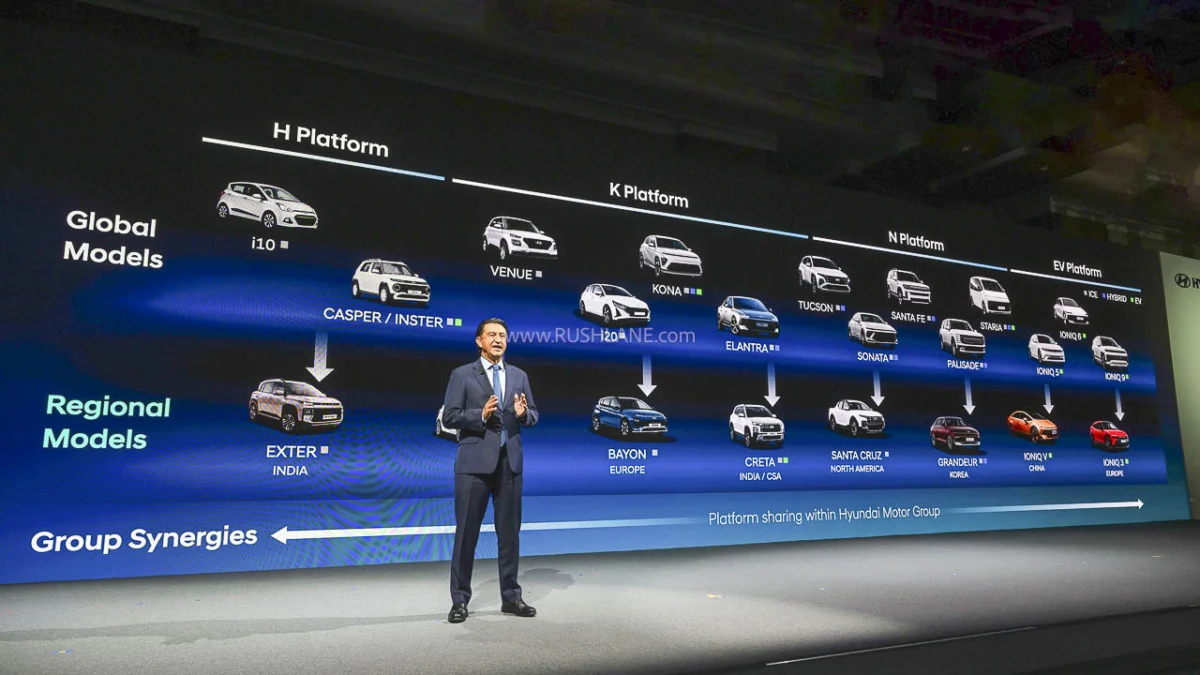
The global automotive landscape is undergoing a seismic shift, and at the heart of this transformation lies India—a market that has evolved from a burgeoning regional player into a central pillar of global strategy for the world’s leading carmakers. At the 2026 Hyundai CEO Investor Day, Hyundai Motor Company unveiled an ambitious and aggressive "Vision 2030" roadmap specifically tailored for the Indian subcontinent. This blueprint does not merely suggest incremental growth; it outlines a total offensive involving 26 new product launches, a massive expansion in manufacturing capacity, and a deep-rooted commitment to electrification and localization.
As Hyundai seeks to solidify its position as the primary challenger to market leaders and a pioneer in the Electric Vehicle (EV) space, the announcements made at the Investor Day serve as a clear signal to competitors: Hyundai is playing for the long term, with India as its primary global export and production hub.
Main Facts: The Pillars of Hyundai’s Indian Strategy
The 2026 CEO Investor Day highlighted several critical milestones that will define Hyundai’s trajectory over the next four years and beyond. The strategy is built upon three primary pillars: Product Diversification, Capacity Expansion, and Technological Localization.
1. The 26-Model Offensive
Hyundai has committed to introducing 26 new models and significant updates by the year 2030. This includes a mix of Internal Combustion Engine (ICE) vehicles, Battery Electric Vehicles (BEVs), and alternative fuel options like Compressed Natural Gas (CNG). The goal is to ensure that Hyundai has a presence in every viable segment of the Indian market, from entry-level urban commuters to high-end luxury offerings.
2. Strategic Focus on SUVs
Recognizing the Indian consumer’s overwhelming preference for SUVs, the roadmap prioritizes two key upcoming launches: an all-new A-segment electric SUV and a midsize ICE SUV based on the global Bayon platform. These vehicles are designed to plug gaps in the current portfolio and capture market share in high-growth segments.

3. Manufacturing and Localization
Hyundai is set to increase its annual production capacity in India by 3.2 lakh (320,000) units. This will bring the company’s total manufacturing capability to approximately 1.4 million vehicles per year. Accompanying this is a target of 90% localization for all India-made vehicles, a move aimed at insulating the company from global supply chain shocks and optimizing price competitiveness.
4. Luxury and Diversified Mobility
In a significant move for the premium segment, Hyundai confirmed the official launch of its luxury brand, Genesis, in India by 2027. Furthermore, the company is diversifying into the commercial micro-mobility space through a partnership with TVS Motor Company to develop electric three-wheelers.
Chronology: The Road to 2030
The rollout of Hyundai’s strategy follows a meticulous timeline, designed to build momentum as the decade progresses.
- 2024–2025: Developmental Phase and Testing: Currently, Hyundai is in the intensive testing phase for several key models. Spy shots of the Bayon-based SUV and the A-segment EV have become frequent, indicating that the engineering for Indian road conditions and consumer preferences is nearing completion.
- Q4 2026: The EV Breakthrough: The fourth quarter of 2026 will mark a pivotal moment with the launch of the A-segment electric SUV. This vehicle is expected to be the catalyst for mass EV adoption within the Hyundai ecosystem in India, sitting strategically below the upcoming Creta EV.
- 2027: The Luxury Pivot: Hyundai will elevate its brand image with the introduction of Genesis. By 2027, the company plans to have localized assembly for certain Genesis models, allowing it to compete directly with established European luxury marques like Mercedes-Benz, BMW, and Audi.
- 2028–2030: Scaling and Export Dominance: By the end of the decade, Hyundai aims to hit its peak production capacity. This period will see the realization of the 30% export target, where Indian-made Hyundais will be shipped in massive volumes to markets across Asia, Africa, the Middle East, and South America.
Supporting Data: Infrastructure and Supply Chain
Hyundai’s "Vision 2030" is backed by staggering numbers that highlight the scale of the investment. To support the production of 1.4 million vehicles, the company is leveraging an ecosystem that is increasingly "Indianized."
Capacity and Workforce
The addition of 3.2 lakh units to the existing 11 lakh unit capacity represents a nearly 30% increase in output. This expansion is not just about floor space; it involves a massive influx of human capital. Hyundai currently utilizes over 900 local engineers dedicated to Research and Development (R&D), ensuring that global platforms are "re-engineered" to survive the rigors of Indian heat, dust, and traffic.

The Supplier Ecosystem
Localization is the cornerstone of Hyundai’s cost-management strategy. By 2030, the company aims for 90% local content. To achieve this, Hyundai has integrated over 1,400 domestic suppliers into its value chain. This high level of localization is particularly crucial for the upcoming A-segment EV, where battery assembly and motor components will need to be sourced or manufactured locally to benefit from government incentives and maintain a competitive price point.
Export Contributions
India is no longer just a consumption market for Hyundai; it is a vital export hub. The company projects that by 2030, approximately 30% of its total Indian production will be destined for international markets. This strategy serves a dual purpose: it maximizes factory utilization and earns valuable foreign exchange, further integrating Hyundai India into the parent company’s global profit centers.
Deep Dive: The New Product Frontier
The A-Segment Electric SUV
The upcoming A-segment electric SUV (slated for Q4 2026) is perhaps the most critical model for Hyundai’s volume aspirations. While the Creta EV will target the premium buyer, the A-segment SUV is aimed at the urban commuter.
- Technology: Hyundai has confirmed that this vehicle will feature a next-generation infotainment system and Level 2 Advanced Driver Assistance Systems (ADAS), bringing high-end safety and tech to a compact footprint.
- Market Positioning: It will likely compete with the likes of the Tata Punch EV and the Citroen eC3, focusing on a balance between range and affordability.
The Bayon-Based Midsize SUV
The Indian midsize SUV segment is one of the most contested arenas in the automotive world. Hyundai’s decision to bring a model based on the European Bayon platform is a strategic move to offer a "crossover" alternative to the traditional boxy SUV.
- Powertrains: Unlike its European counterpart, the Indian version will likely feature factory-fitted CNG options. This is a direct response to the success of Maruti Suzuki’s S-CNG lineup.
- Design: While the platform is global, the styling is expected to be more aggressive to suit Indian tastes, featuring higher ground clearance and a more robust suspension setup.
Official Responses and Strategic Vision
During the CEO Investor Day, Hyundai’s leadership emphasized that India is "at the heart of Hyundai’s future growth." The executive team noted that the Indian market is unique because it demands global-standard technology at a highly optimized price point.

The CEO remarked that the company’s "aggressive product roadmap" is a response to the "dynamic evolution of the Indian consumer." By focusing on a "multi-pathway" approach—which includes EVs, ICE, and CNG—Hyundai is hedging its bets against the uncertainty of infrastructure development, ensuring they have a vehicle for every type of buyer, regardless of their access to charging stations.
Regarding the partnership with TVS Motor, officials stated that this collaboration is a "strategic entry into the last-mile delivery and micro-mobility sector," recognizing that the future of Indian transport involves more than just four-wheeled passenger cars.
Implications: A New Era of Competition
The implications of Hyundai’s 2030 roadmap are far-reaching, affecting competitors, consumers, and the broader Indian economy.
1. Competitive Pressure on Market Leaders
Hyundai’s push into the CNG and entry-level EV segments is a direct shot across the bow of Maruti Suzuki and Tata Motors. By introducing factory-fitted CNG in a Bayon-based SUV, Hyundai is challenging Maruti’s dominance in the "green fuel" space. Simultaneously, the A-segment EV aims to chip away at Tata Motors’ current 70%+ market share in the electric passenger vehicle segment.
2. The Democratization of Technology
By committing to Level 2 ADAS and next-gen infotainment in an A-segment vehicle, Hyundai is forcing a "feature war." This benefits the Indian consumer, as high-end safety and connectivity features—once reserved for luxury cars—will become standard in the mass-market segment.

3. Strengthening "Make in India"
Hyundai’s 90% localization target and its status as a major exporter align perfectly with the Indian government’s "Make in India" and "Self-Reliant India" (Atmanirbhar Bharat) initiatives. This deep integration into the local economy makes Hyundai a "local" player in the eyes of policy-makers, potentially easing the path for future regulatory approvals and incentives.
4. The Genesis Effect
The introduction of Genesis in 2027 will test the appetite of the Indian elite for a non-European luxury brand. If successful, it could redefine the premium segment, proving that brand value in the luxury space can be built through technology and ownership experience rather than just heritage.
5. Environmental Impact
While Hyundai is maintaining a strong ICE portfolio, the sheer volume of 26 new models—many of which will be electrified—will significantly contribute to the reduction of the fleet-average carbon footprint in India. The focus on localized EV production will also help lower the total cost of ownership for electric cars, accelerating the nation’s transition away from fossil fuels.
Conclusion
Hyundai’s 2026 CEO Investor Day has set the stage for a transformative decade. With a clear focus on SUVs, a localized EV supply chain, and an expansion into luxury and micro-mobility, Hyundai is not just reacting to market trends—it is attempting to define them. As the company scales its capacity to 1.4 million units and deepens its roots in Indian soil, the message is clear: the future of Hyundai is inextricably linked to the future of India. For the Indian car buyer, this means more choices, better technology, and a front-row seat to the evolution of global mobility.
