

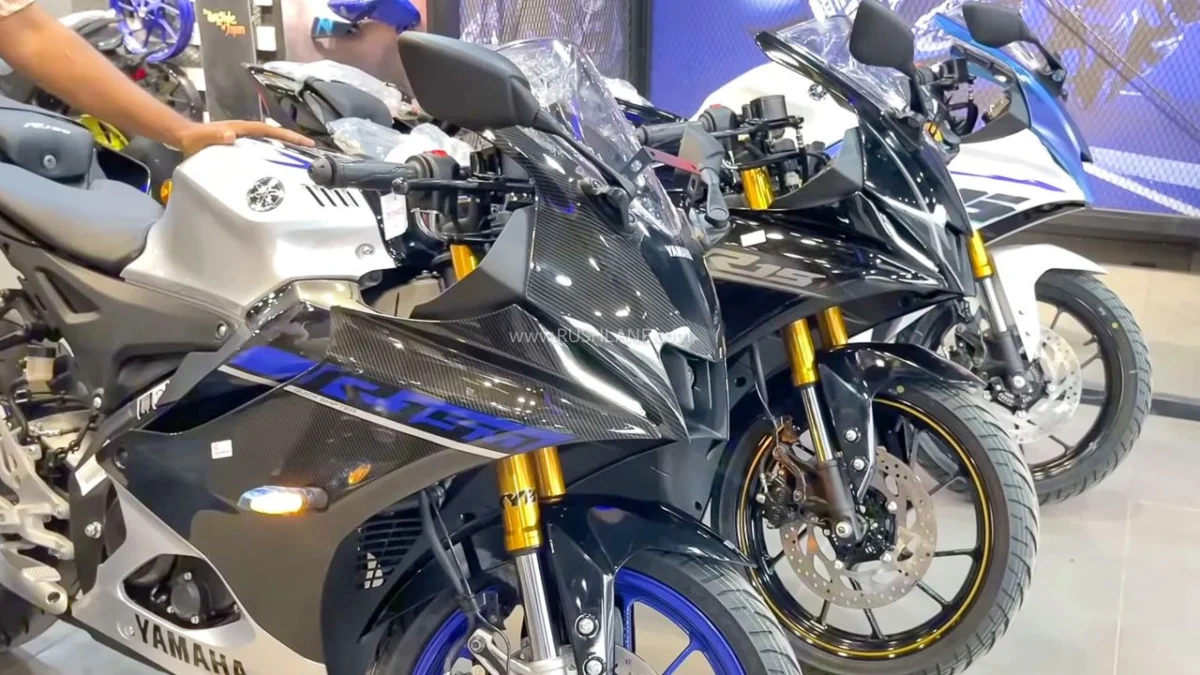
The Indian two-wheeler industry continues to showcase a fascinating dichotomy of steady traditional demand and a surging appetite for performance-oriented commuting. In July 2026, the 150cc to 200cc motorcycle segment—often referred to as the "premium commuter" or "entry-level performance" category—cemented its position as a vital engine of growth for the domestic market. According to the latest retail and wholesale data, the segment registered a robust year-on-year (YoY) growth of 25.32%, even as it navigated a minor month-on-month (MoM) correction.
Main Facts: A Segment in Ascension
In July 2026, total sales for the 150cc to 200cc category reached 1,75,865 units. This represents a significant leap from the 1,40,331 units sold during the same month in 2025. The volume gain of over 35,500 units underscores a shift in consumer preference, where buyers are increasingly bypassing the 100cc-125cc economy segment in favor of motorcycles that offer a blend of styling, modern technology, and highway-capable power.
However, the market showed signs of stabilization when compared to June 2026, which saw sales of 1,77,866 units. This marginal MoM decline of 1.13% is largely attributed to seasonal factors, including the onset of the monsoon across various parts of India, which traditionally impacts footfalls in showrooms.
The competitive landscape remains concentrated at the top. The "Big Three"—TVS Apache, Honda Unicorn, and Bajaj Pulsar—accounted for a staggering 1.25 lakh units, representing over 70% of the total segment volume. This concentration highlights the immense brand equity these nameplates carry in the Indian psyche.

Chronology of Market Movement: From July 2025 to July 2026
To understand the current surge, one must look at the trajectory over the past twelve months. In July 2025, the market was recovering from supply chain bottlenecks and inflationary pressures on raw materials. By early 2026, manufacturers had stabilized their production lines and introduced several "Refresh" models to meet the new OBD-2 (On-Board Diagnostics) Stage II norms more efficiently.
Throughout the first half of 2026, the segment saw a steady climb. June 2026 marked a peak for the year, driven by pre-monsoon promotional campaigns and the graduation of college students entering the workforce—a primary demographic for these bikes. The slight dip in July 2026 is viewed by analysts not as a cooling of demand, but as a "breather" before the massive inventory build-up expected for the upcoming festive season starting in September.
A significant milestone occurred concurrently with the release of these sales figures: Yamaha’s official launch of the YZF-R2. While the R2 sits at the upper limit of this price bracket (Rs 2.30 lakh), its introduction is expected to disrupt the 200cc hierarchy in the coming months, much like the R15 did for the 150cc class years ago.
Supporting Data: Brand-Wise Performance and Trends
The TVS Apache Juggernaut
TVS Motor Company emerged as the undisputed titan of July 2026. The Apache series—comprising the RTR 160, 160 4V, 180, and 200 4V—recorded 59,404 units. This is a massive 58.13% increase over the 37,566 units sold in July 2025. TVS’s strategy of consistent "Race-Tuned" (RT-Fi) updates and the introduction of segment-first features like riding modes and adjustable levers has clearly resonated with the youth.
The Honda Counter-Attack
Honda’s performance was a tale of two philosophies: the legacy of the Unicorn and the modernism of the SP160.

- Honda Unicorn: Despite being one of the oldest designs in the market, the Unicorn sold 35,007 units, up 14.51% YoY. Its reputation for bulletproof reliability and smooth refinement continues to attract mature commuters.
- Honda SP160: This model saw a meteoric rise, with 3,731 units sold, marking a 67.01% YoY growth and a 64.29% MoM jump. It appears Honda is successfully migrating SP125 owners up the ladder.
The Yamaha "Blue Square" Strategy
Yamaha’s dominance in the top seven is unprecedented. With four models (R15, MT-15, FZ, and XSR) performing well, Yamaha has successfully moved away from the mass market to become a "premium-only" player in this segment.
- Yamaha R15: 10,505 units (Up 58.61% YoY).
- Yamaha MT-15: 10,347 units (Up 21.53% YoY).
- Yamaha FZ: 9,912 units (Down 10.78% YoY).
- Yamaha XSR: 5,032 units (Up 19.84% MoM).
The decline in FZ sales suggests that even within Yamaha’s portfolio, buyers are shifting toward the more expensive and aspirational R15 and MT-15 models.
Niche and Performance Players
- Hero Xpulse 200: The only true dual-purpose motorcycle in this list, the Xpulse recorded 4,649 units. Its 57.22% MoM growth suggests a growing culture of weekend trail riding and touring.
- KTM 160/200: The Austrian brand saw a YoY growth of 81.90% (2,945 units), though it suffered an 11.30% MoM decline, likely due to buyers waiting for the rumored 2027 generation updates.
- Hero Xtreme 160: In contrast to the Xpulse, the Xtreme 160 struggled, with sales dropping 68.82% YoY to just 498 units. Analysts suggest the model is facing stiff competition from the updated TVS Apache and Bajaj Pulsar N160.
Official Responses and Industry Sentiment
While individual manufacturers rarely comment on monthly fluctuations, industry bodies like the Society of Indian Automobile Manufacturers (SIAM) have pointed toward a "premiumization" trend.
An industry analyst at a leading brokerage firm noted: "The 150cc to 200cc segment is no longer just about commuting. It has become a lifestyle choice. We are seeing a ‘K-shaped’ recovery in the two-wheeler market where the entry-level 100cc bikes are stagnant, but the 150cc+ bikes are flying off the shelves. Consumers are willing to pay a premium for safety features like dual-channel ABS and connectivity suites."
Yamaha India, during the launch of the YZF-R2, hinted that their focus remains on the "Call of the Blue" campaign, aiming to capture the 20-30-year-old demographic that prioritizes global branding and performance over pure utility.

Conversely, the zero-unit sales for the Bajaj Avenger and Kawasaki W175 in this specific dataset suggest either a transition to new model years, a temporary production halt, or a shift in how these companies are reporting regional dispatches.
Implications: What This Means for the Future
The July 2026 data serves as a barometer for several looming shifts in the Indian automotive landscape:
- The Death of the "Basic" 150cc Bike: The struggle of the Hero Xtreme 160 and the slight decline of the Yamaha FZ suggest that "basic" styling is no longer enough. Consumers want either the aggressive "Streetfighter" look (MT-15, Pulsar N-Series) or the "Full-Faired" racing aesthetic (R15, Apache RR).
- Adventure and Retro-Modern Growth: The success of the Hero Xpulse and the Yamaha XSR indicates that the market is diversifying. We can expect more manufacturers to launch scramblers and small-capacity adventure tourers based on existing 160cc-200cc platforms.
- Pricing Thresholds: With the Yamaha R2 entering at Rs 2.30 lakh, the ceiling for the 200cc segment has been raised. This gives other manufacturers room to increase prices for their flagship 200cc models while still appearing "affordable" by comparison.
- The Electric Threat (or Lack Thereof): Interestingly, despite the push for electrification, the 150cc–200cc internal combustion engine (ICE) segment remains largely untouched by EVs. The range and performance required to match a Pulsar 200 or an Apache 200 at a similar price point do not yet exist in the electric space, ensuring a strong future for petrol-powered bikes in this category for the next 3–5 years.
Conclusion
As India moves toward the final quarter of 2026, the 150cc to 200cc segment stands as a beacon of resilience. With 25% YoY growth, it is outpacing the general economy’s growth rate, reflecting a confident middle class and a youth population that views motorcycles as an extension of their personality. While TVS remains the king of the hill for now, the aggressive moves by Yamaha and the steady reliability of Honda ensure that the battle for the Indian "Sweet Spot" is only just beginning. All eyes will now be on the August and September numbers to see if the festive season can push the segment past the 2-lakh unit monthly milestone.
