

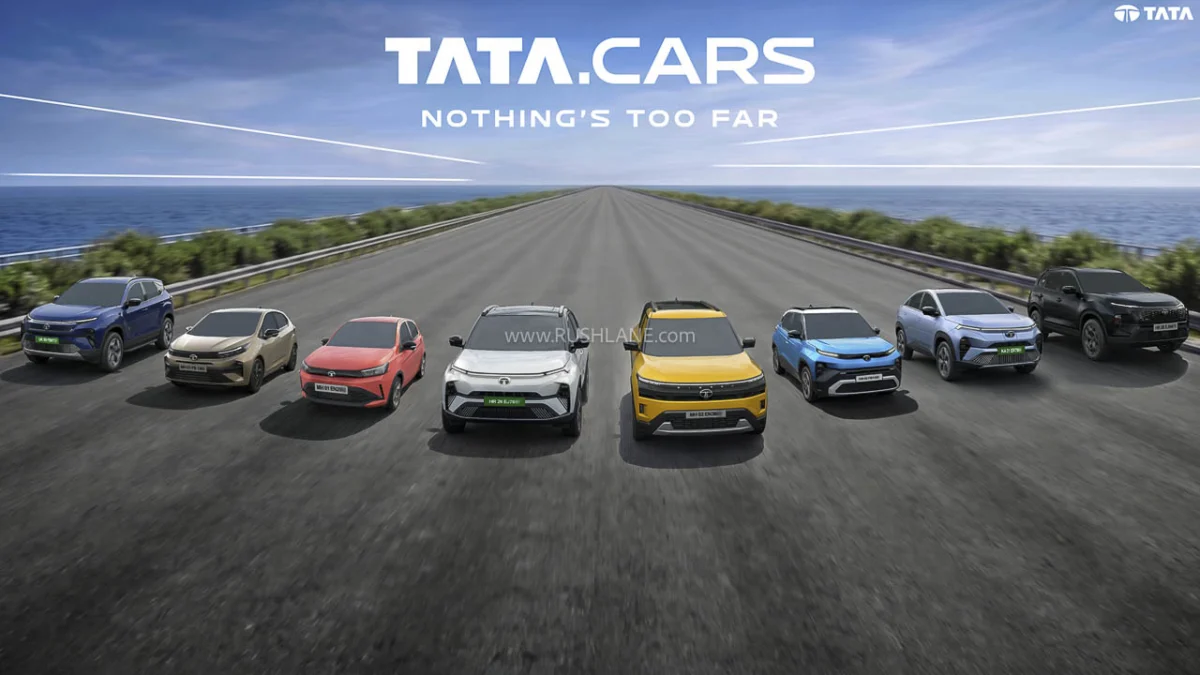
In a move that signals a profound shift in its market positioning and brand architecture, Tata Motors Passenger Vehicles has officially pulled the curtain back on TATA.CARS. This new consumer-facing global brand identity is designed to serve as the unified master brand for the company’s extensive and rapidly diversifying portfolio of passenger vehicles. Accompanied by the evocative new brand promise, “Nothing’s Too Far,” the transition marks a pivotal moment for India’s third-largest carmaker as it seeks to harmonize its internal combustion engine (ICE) and electric vehicle (EV) offerings under a singular, premium umbrella.
This rebranding effort is not merely a cosmetic update; it represents a comprehensive overhaul of how the company interacts with its customers across digital platforms, retail environments, and service touchpoints. By formalizing the colloquial term "Tata car"—a phrase used by generations of Indian consumers—into a sophisticated brand identity, Tata Motors is bridging the gap between its heritage of trust and its future of high-tech mobility.
1. Main Facts: The Architecture of TATA.CARS
The introduction of TATA.CARS is a calculated effort to streamline the consumer journey. As the automotive industry moves toward a "phygital" (physical + digital) model, Tata Motors is ensuring its identity remains consistent regardless of the medium.
A Unified Master Brand
TATA.CARS will now function as the overarching identity for all passenger vehicle categories. This includes:

- Hatchbacks and Sedans: Tiago, Tigor, and Altroz.
- SUVs: Punch, Nexon, Harrier, and Safari.
- Electric Vehicles: The entire .ev range (Tiago.ev, Nexon.ev, Punch.ev).
- New Segments: Recent and upcoming launches like the Curvv and future mobility solutions.
The New Brand Promise
The tagline “Nothing’s Too Far” has been introduced to replace or augment previous communication pillars. This promise is intended to resonate with the modern Indian consumer’s aspirations—symbolizing both the physical capability of the vehicles to traverse any distance and the brand’s commitment to making premium technology and sustainable mobility accessible to everyone.
What Remains Unchanged
To maintain continuity and preserve the immense brand equity built over decades, Tata Motors has clarified two critical points:
- Corporate Identity: Tata Motors Passenger Vehicles Ltd. remains the legal corporate entity for all regulatory, statutory, and investor-related matters.
- The Visual Badge: The familiar "Tata Ellipse" (the ‘T’ logo) seen on the grilles and steering wheels of the vehicles will remain unchanged. This ensures that the core symbol of trust and reliability remains the centerpiece of the product.
2. Chronology: From Utility to Lifestyle Aspiration
The birth of TATA.CARS is the culmination of a decade-long transformation. To understand the significance of this move, one must look at the timeline of Tata Motors’ evolution in the passenger vehicle space.
- The Utility Era (Pre-2016): For years, Tata Motors was primarily associated with rugged utility vehicles like the Sumo and Safari, or the budget-conscious Indica. While reliable, the brand struggled to capture the "lifestyle" or "premium" sentiment of the growing middle class.
- The "Impact" Design Revolution (2016–2020): Under the leadership of late design chief Pratap Bose and the launch of the Tiago, Nexon, and Harrier, Tata introduced the "Impact" design language. This era saw the company move toward safer, more stylish, and feature-rich cars.
- The EV Leadership (2020–2023): With the launch of the Nexon.ev, Tata Motors became the undisputed leader in India’s electric car market. However, the EV business was often marketed under the "Tata.ev" sub-brand, creating a slight divergence in brand experience between ICE and electric customers.
- The Premiumization Phase (2024 and Beyond): With the arrival of the Safari and Harrier facelifts and the introduction of the Curvv, Tata has pushed into the 20-30 lakh INR price bracket. The realization dawned that the "Tata Motors" name, while respected, carried the weight of its commercial vehicle legacy. TATA.CARS was conceived to provide a sleeker, more consumer-centric identity that aligns with these premium products.
3. Supporting Data: The Retail and Digital Transformation
The TATA.CARS identity is supported by a new visual and sensory language that will be rolled out across the country.

Retail Overhaul: The Showroom of Tomorrow
One of the most striking elements of the announcement is the preview of the revamped dealership format. The new retail identity features:
- Minimalist Aesthetics: Large glass facades and clean exterior lines that mimic global luxury showrooms.
- Ambition Blue: A new signature color palette dominated by "Ambition Blue," which provides a sense of calm, technology, and premiumness.
- Integrated Spaces: Unlike many competitors who separate their EV and ICE showrooms, the TATA.CARS concept appears to house both under one roof, reflecting a "one family" approach to mobility.
Visual and Sonic Identity
Tata has introduced "Parallel Pathways," a visual concept inspired by the geometry of the road and the Tata ‘T’. This is complemented by:
- Parallel Display Typeface: A bespoke font designed for high legibility and a modern digital feel.
- Sonic Branding: A new audio signature that will accompany digital advertisements and vehicle startup sequences, creating a sensory association with the brand.
Digital Footprint
The rollout has already begun on social media. Individual model handles have been rebranded. For example, the Nexon’s social media presence is now TATA.CARS.NEXON. This naming convention creates a clear hierarchy, where the master brand (TATA.CARS) validates the sub-brand (NEXON), providing a cohesive digital ecosystem.
4. Official Responses: Formalizing a Natural Association
In its official communication, Tata Motors emphasized that the name "TATA.CARS" was not chosen by a boardroom in isolation but was inspired by the customers themselves.

The company stated that the new identity "takes inspiration from something customers have been doing for generations—simply referring to its vehicles as a ‘Tata car’." By formalizing this, the company is leaning into its heritage while stripping away the "Motors" suffix, which often carries connotations of heavy industry and commercial trucking.
According to the brand strategy team, the objective is to establish a consistent experience throughout the customer journey. This journey begins at the moment of discovery on a smartphone, continues through a premium walk-in experience at a dealership, and extends to the service centers where the "TATA.CARS" branding will signify a standardized level of care and technological competence.
5. Implications: What This Means for the Automotive Landscape
The introduction of TATA.CARS has several far-reaching implications for Tata Motors and the Indian automotive industry at large.
Brand Decoupling
By creating TATA.CARS, the passenger vehicle division is effectively distancing its consumer-facing identity from the commercial vehicle (trucks and buses) division. While they remain part of the same parent company, TATA.CARS allows the passenger division to compete more effectively with lifestyle-oriented brands like Hyundai, Kia, and Volkswagen, which do not have a heavy-truck presence in the Indian consumer’s mind.

Bridging the ICE-EV Divide
Many global manufacturers are struggling with whether to keep their EV brands separate. By using TATA.CARS as an umbrella, Tata is signaling that EVs are no longer a "niche" or "experimental" wing of the company—they are the core business. This unified identity ensures that an EV buyer and a petrol SUV buyer feel part of the same premium ecosystem.
Enhancing Resale and Aspiration
A premium brand identity often translates to better brand equity, which in turn can stabilize resale values. As Tata Motors moves further upmarket with vehicles like the Harrier and the upcoming Sierra and Avinya-inspired models, a sophisticated brand identity like TATA.CARS is essential to justify premium price points.
Global Ambitions
The ".CARS" suffix is inherently global. As Tata Motors explores expanding its passenger vehicle footprint into international markets, TATA.CARS provides a clean, easily understood, and digitally-friendly identity that works across borders and languages.
Conclusion
TATA.CARS is more than a name change; it is a declaration of intent. With 7 million customers already in its fold and a product lineup that is increasingly defined by design and technology, Tata Motors is no longer content being "the reliable Indian alternative." Through TATA.CARS and the promise that "Nothing’s Too Far," the company is positioning itself as a modern, aspirational, and unified mobility powerhouse ready to take on the global stage.
