

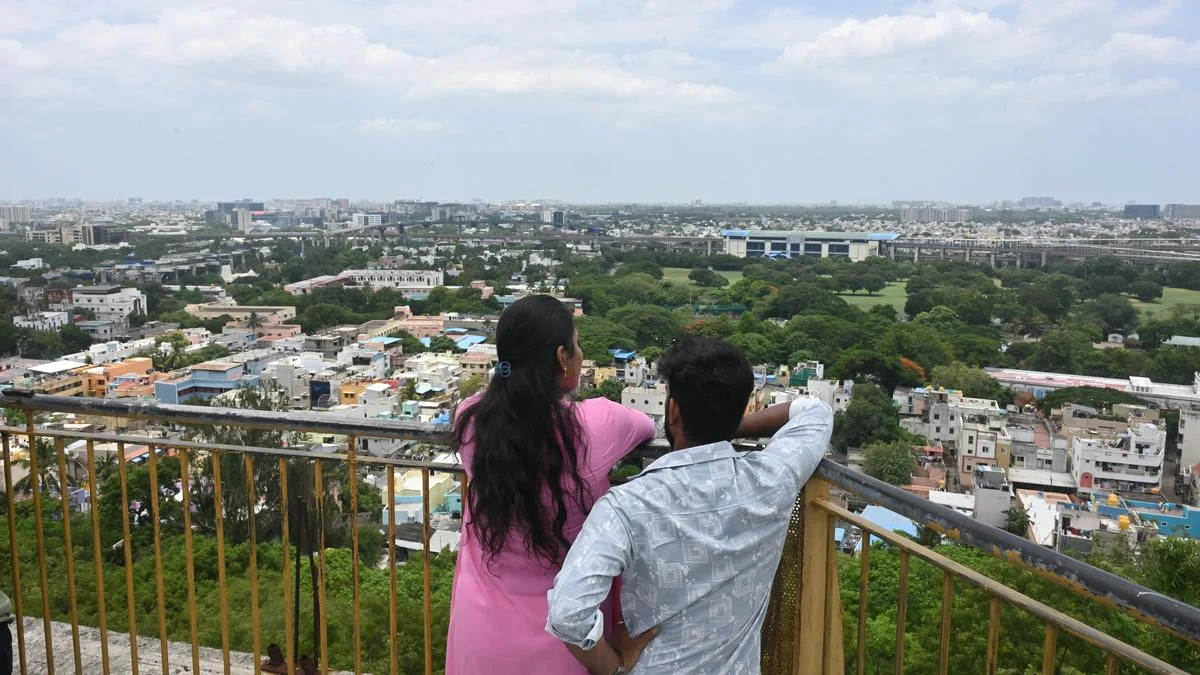
Chennai, India – August 14, 2026 – St. Thomas Mount, a landmark steeped in religious significance and colonial history, continues to be a place of profound personal connection for many, evoking memories of faith, romance, and the enduring spirit of Chennai. This historic precinct, crowned by the 500-year-old shrine believed to be the martyrdom site of St. Thomas, the apostle of Christ, offers a panoramic vista of the bustling metropolis, a stark yet harmonious contrast to its ancient roots.
The journey to St. Thomas Mount is more than just a physical ascent; for many, it’s a pilgrimage through personal history, a walk down memory lane that intertwines spiritual devotion with the palpable echoes of the past. The site, with its venerable Church of Our Lady of Expectation, a Portuguese edifice dating back to 1523, stands as a testament to centuries of faith. The once humble red mud path, which wound its way to the shrine, was transformed into a macadamized road in 1986, specifically to welcome Pope John Paul II, a moment that underscored the Mount’s enduring religious importance on a global scale.
Echoes of Childhood and Colonial Grandeur
For some, like the author of this piece, the allure of St. Thomas Mount is deeply rooted in cherished childhood memories. Summers spent with grandparents, crossing a wooden bridge over a tributary of the Adyar River to reach the Mount Hotel for a simple, yet beloved, tumbler of Horlicks, paint a vivid picture of a bygone era. This seemingly mundane ritual is imbued with the warmth of family and the innocent pleasures of youth, a stark contrast to the rapid urbanisation that now surrounds the area.

The author’s recollections extend to the spiritual heart of the neighbourhood: St. Patrick’s Church. In the 1980s, Sunday masses there were an experience marked by the rustic charm of goats grazing amidst thorny bushes and the triumphant swell of choir hymns. Christmas celebrations were particularly vibrant, filled with the comforting aromas of cutlets and cake, the sparkle of lights, and the joyous sounds of Anglo-Indian families heading home to Magazine Road and European Lines, their laughter and camaraderie a testament to a close-knit community.
A Labyrinth of History and Romance
The St. Thomas Mount precinct is a geographical and historical tapestry, where religious sites intermingle with remnants of colonial military presence. For nearly two decades, the author’s connection to the Mount remained primarily functional, a shortcut to the Grand Southern Trunk (GST) Road or an occasional Lenten Stations of the Cross. The steps leading to the shrine, meticulously constructed in 1726 by the Armenian merchant Coja Petrus Uscan, served as a physical and spiritual marker in the author’s life.
However, the neighbourhood revealed its deeper layers with the discovery of the Officers Training Academy (OTA) on the other side of the hill. This vast military establishment, a symbol of India’s post-independence defense prowess, also carries within its grounds the grandeur of its colonial past. The St. Thomas Garrison Church, built in 1774 for the British soldiers of the Madras Artillery, stands as a silent witness to the ebb and flow of history. Nearby, the former Military Hospital, with its distinctive wards, the unit gurudwara, and the venerable 200-year-old Adyar Mess, all contribute to the area’s rich historical narrative. The Ram Singh Dwar, a significant gateway, opens to the OTA, symbolising the transition from colonial structures to a modern military academy.

It was within this evocative setting that a personal chapter of romance unfolded. A young Gentleman Cadet, characterized by the author as "dashing," transitioned from friendship to a deeper connection, his promotion from cadet to captain mirroring the unfolding of their relationship. This personal narrative is interwoven with the very fabric of St. Thomas Mount, imbuing its historical sites with a profound emotional resonance.
A Landscape of Shared Experiences
The Mount became a backdrop for countless shared moments. Walks along Rudra Road, skirting the Mohite Stadium, a site that witnessed the French siege of Madras in 1759 and later hosted polo matches before its transformation into a golf course, offered glimpses into Chennai’s multifaceted past. The author and their beau would pause to watch local hockey matches outside the gates of St. Dominic’s school, a scene framed by fragrant jasmine flowers and ancient raintrees groaning under the weight of history. The sight of boys diving for coins in the Battery River, the architectural intricacies of old colonial buildings with their Burmese teak rafters, and the solemn monument to Lt Col Sam Dalrymple, all contributed to the unique charm of the locale.
The picturesque houses, with their distinctive slatted windows, rounded pillars, and deeply set eaves, spoke of a different architectural era, while the spacious forecourts, dotted with fruit trees, offered a sense of tranquil living. Even the simple act of sipping cold coffee at a cafeteria was punctuated by the cheerful greetings of OTA cadets cycling past, their salutations of "Good evening sir, good evening mam" adding a touch of youthful exuberance to the historical ambiance.

A Summit of Vistas and Vows
The ascent to the Mount, whether by the winding road or the flight of 134 steps, offered more than just physical exertion. Pauses were taken not only to catch one’s breath but also to absorb the breathtaking views and the poignant statues depicting Christ’s journey on Calvary. Beneath a sprawling tree, the bust of William Lambton, the pioneering geographer-soldier who initiated the Great Trigonometrical Survey of India from this very spot, stands as a reminder of India’s meticulous mapping efforts.
It was on one such evening, as rose-tinted clouds painted the sky in a cinematic spectacle, that the proposal of marriage took place. The scene was set against a bustling backdrop: the sprawling city on one side, the shimmering estuary meeting the Bay of Bengal in the distance, and the nearby airport, with aircraft skimming the treetops as they took off and landed. Amidst the roar of jet engines, a whisper, filled with love and anticipation, sealed a promise that would forever link the author’s life to the hallowed grounds of St. Thomas Mount.
Enduring Significance and Future Prospects
St. Thomas Mount, with its layered history, continues to be a site of spiritual solace, historical reflection, and personal significance. The confluence of ancient religious traditions, colonial architectural remnants, and modern military establishments creates a unique urban landscape. As Chennai continues its relentless growth, preserving these heritage sites and the narratives they hold becomes increasingly crucial.

The St. Thomas Mount precinct serves as a potent reminder of the diverse cultural influences that have shaped Chennai. From its sacred origins as a site of martyrdom to its colonial past and its present-day role as a spiritual and historical landmark, the Mount offers a compelling glimpse into the city’s soul. The personal stories intertwined with its physical landscape underscore its enduring appeal, ensuring that its legacy continues to resonate with generations to come. Future development in and around the Mount will undoubtedly need to balance the demands of urban progress with the imperative of heritage conservation, ensuring that this iconic location remains a cherished part of Chennai’s identity.
