

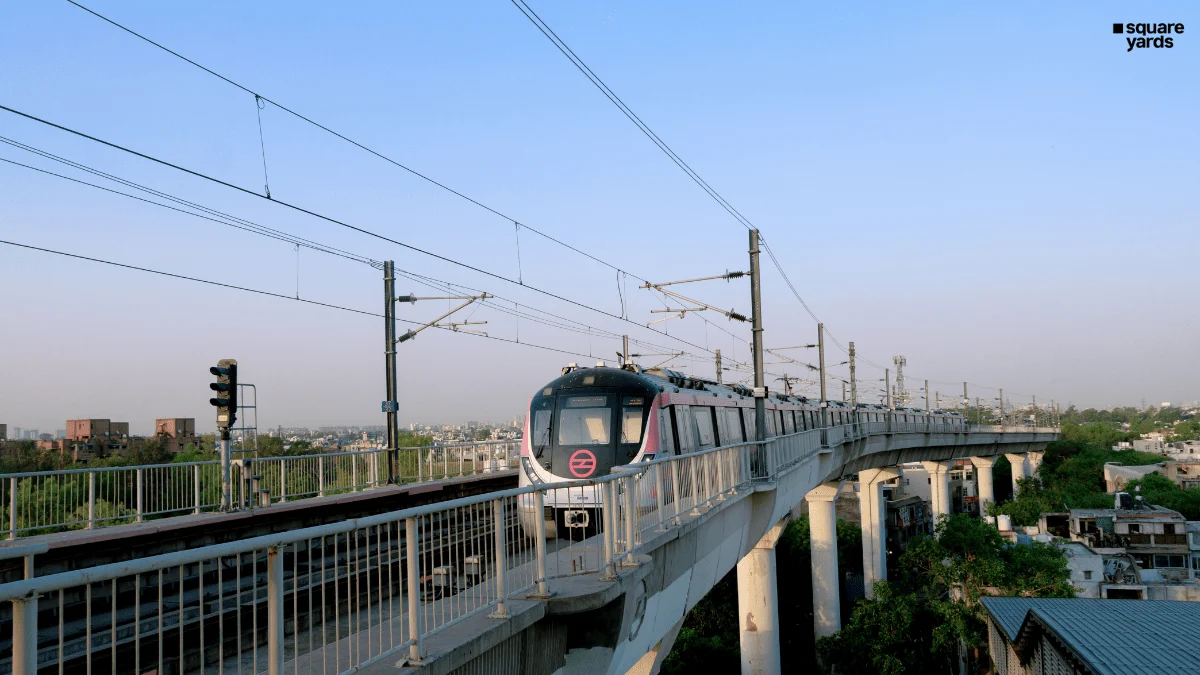
Vasant Kunj, one of South Delhi’s most prestigious and sprawling residential hubs, has long been characterized by its wide boulevards, lush green belts, and low-density planning. However, for years, the primary critique of this upscale locality was its lack of direct "doorstep" metro connectivity. Residents and commuters have historically relied on a network of nearby stations on the Yellow and Magenta lines to bridge the gap.
As of late 2024 and looking toward 2026, the landscape of Vasant Kunj’s connectivity is undergoing a radical shift. With the Delhi Metro Rail Corporation (DMRC) aggressively pushing its Phase 4 expansion, the "last-mile" struggle is nearing its end. This report provides an in-depth analysis of the current metro options, the upcoming Golden Line infrastructure, and the subsequent impact on real estate and lifestyle in the region.
1. Main Facts: The Current State of Connectivity
Currently, Vasant Kunj does not have a metro station bearing its name within its immediate sector boundaries. Instead, it is served by a "perimeter" of stations that cater to different sectors of the locality. The choice of station depends heavily on a commuter’s specific starting point within Vasant Kunj—which is divided into Sectors A, B, C, and D—and their ultimate destination in the National Capital Region (NCR).
The Primary Hubs: Vasant Vihar and Chhatarpur
The two most critical lifelines for Vasant Kunj residents are the Vasant Vihar Metro Station (Magenta Line) and the Chhatarpur Metro Station (Yellow Line).
- Vasant Vihar (Magenta Line): Located approximately 3 to 4 km from the heart of Vasant Kunj, this station is the preferred choice for those residing in Sector A, Sector B, or near Nelson Mandela Marg. It provides a direct link to the business hubs of Noida and the educational corridors of West Delhi.
- Chhatarpur (Yellow Line): This station serves the bulk of the daily commuters from Sector D, Kishangarh, and the 110070 PIN code area. It offers the most direct route to the commercial centers of Gurgaon (Cyber City and Huda City Centre) and the administrative heart of Delhi (Connaught Place and Central Secretariat).
Secondary Options: Aerocity and Arjangarh
For specialized travel needs, two other stations play a vital role:
- Delhi Aerocity (Airport Express Line): Located roughly 5 km away, this is the go-to for frequent flyers or those needing to reach the New Delhi Railway Station in under 20 minutes.
- Arjangarh (Yellow Line): While further away (approx. 7 km), it serves as a strategic "escape valve" for commuters heading to Gurgaon who wish to avoid the notorious peak-hour congestion at Chhatarpur.
2. Chronology: The Evolution of the Vasant Kunj Transit Network
The journey of Vasant Kunj’s connectivity can be viewed through three distinct phases:
Phase I: The Reliance on Roadways (Pre-2010)
Before the expansion of the Yellow Line towards Gurgaon, Vasant Kunj was almost entirely dependent on private vehicles and DTC buses. The opening of the Yellow Line extension to HUDA City Centre in 2010 brought Chhatarpur into the fold, providing the first major metro link to the area.
Phase II: The Magenta Line Integration (2018)
The inauguration of the Magenta Line (Janakpuri West to Botanical Garden) in 2018 was a significant milestone. The Vasant Vihar station significantly reduced travel time for residents heading toward the airport’s Terminal 1 and Noida, offering an alternative to the often-congested Ring Road.
Phase III: The Golden Line Era (2024–2026 and Beyond)
The DMRC Phase 4 project introduced the Golden Line (Line 10), a 23.62 km corridor connecting Tughlakabad to Delhi Aerocity. This is the most transformative phase for Vasant Kunj, as it introduces underground stations directly within the locality, specifically at Kishangarh and Vasant Kunj Sector D.
3. Supporting Data: Distance, Timing, and Route Analysis
Navigating the current "metro distance" requires an understanding of the local geography. Below is a detailed breakdown of the travel metrics for a Vasant Kunj resident.
Comparative Metro Access Table
| Metro Station | Line | Distance from Vasant Kunj | Avg. Travel Time (Auto/Car) | Key Route |
|---|---|---|---|---|
| Vasant Vihar | Magenta Line | 3.0 – 4.0 km | 8 – 12 mins | Nelson Mandela Marg |
| Chhatarpur | Yellow Line | 3.0 – 3.5 km | 10 – 15 mins | Anuvrat Marg / Mehrauli |
| Delhi Aerocity | Airport Express | 4.5 – 6.0 km | 12 – 18 mins | Vasant Kunj – Mahipalpur Rd |
| Arjangarh | Yellow Line | 6.5 – 7.5 km | 15 – 20 mins | MG Road |
| Kishangarh | Golden Line | < 1.0 km | 2 – 5 mins | Aruna Asaf Ali Marg |
Destination-Based Route Recommendations
To maximize efficiency, commuters are advised to align their choice of station with their final destination:
- To Gurgaon (Cyber City/Golf Course Rd): Chhatarpur is the closest, but Arjangarh is recommended during peak hours (8:30 AM – 10:30 AM) to ensure a seat and avoid platform crowds.
- To Noida/South-East Delhi: Vasant Vihar is the undisputed choice, offering a seamless journey to Okhla, Kalkaji, and Botanical Garden.
- To IGI Airport (T3): Delhi Aerocity via the Mahipalpur bypass remains the fastest route, despite potential road traffic.
- To North Delhi/CP: Chhatarpur provides the most direct "no-interchange" route to the city center.
4. Official Responses and Infrastructure Progress
While the DMRC does not typically comment on individual real estate sentiment, official project reports for Phase 4 highlight the strategic importance of the Vasant Kunj corridor.
DMRC Phase 4 Objectives:
According to official planning documents, the Golden Line is designed to decongest the existing Yellow Line and provide a "high-speed" alternative for South Delhi residents. The construction of the Kishangarh underground station is a complex engineering feat, given the rocky terrain of the South Ridge area.
Urban Planning Perspective:
Urban development experts suggest that the integration of the Golden Line will transform Vasant Kunj from a "destination" locality into a "transit-oriented development" (TOD) zone. This means that future developments will likely focus on higher density near metro entrances, coupled with improved pedestrian walkways and cycling tracks—features currently lacking in the area’s older DDA blocks.
5. Implications: Real Estate, Economy, and Lifestyle
The "metro effect" is perhaps most visible in the real estate market of Vasant Kunj. Historically a high-value area, the arrival of direct connectivity is acting as a massive catalyst for capital appreciation.
Real Estate Impact
- Valuation Surge: Property rates in Vasant Kunj currently average around Rs 23,000 per sq. ft. However, sectors directly adjacent to the upcoming Golden Line stations (Sector D and Kishangarh) have seen a price uptick of 12-15% since the commencement of construction.
- Rental Yields: The demand for rental housing is shifting. Traditionally dominated by families, the area is seeing an influx of young professionals working in Aerocity and Gurgaon who prefer Vasant Kunj for its lifestyle but previously avoided it due to the "last-mile" commute.
- Investment Security: Vasant Kunj’s proximity to the Aerocity commercial hub—which houses major MNCs and luxury hotels—ensures a steady, high-paying tenant pool.
Lifestyle and Social Infrastructure
Vasant Kunj is home to premium lifestyle markers:
- Shopping: Ambience Mall, DLF Promenade, and DLF Emporio.
- Healthcare: Fortis Flt. Lt. Rajan Dhall Hospital and ILBS.
- Education: Proximity to JNU, TERI University, and top-tier international schools.
The reduction in commute time will further integrate these amenities with the rest of Delhi, making Vasant Kunj not just a residential enclave but a central social node for the city.
Conclusion: The Near-Zero Distance Future
As of 2026, the concept of "Vasant Kunj metro distance" is rapidly becoming a thing of the past. While Vasant Vihar and Chhatarpur continue to serve as vital gateways, the completion of the Golden Line will provide the locality with the one thing it has lacked for decades: effortless, walkable access to the Delhi Metro grid.
For the investor, Vasant Kunj remains one of the safest and most lucrative bets in South Delhi. For the resident, the expansion means an end to the daily struggle with auto-rickshaw negotiations and "Y-point" traffic jams. The transformation of Vasant Kunj into a fully connected urban hub is no longer a distant plan—it is a reality currently taking shape beneath the streets of South Delhi.
