

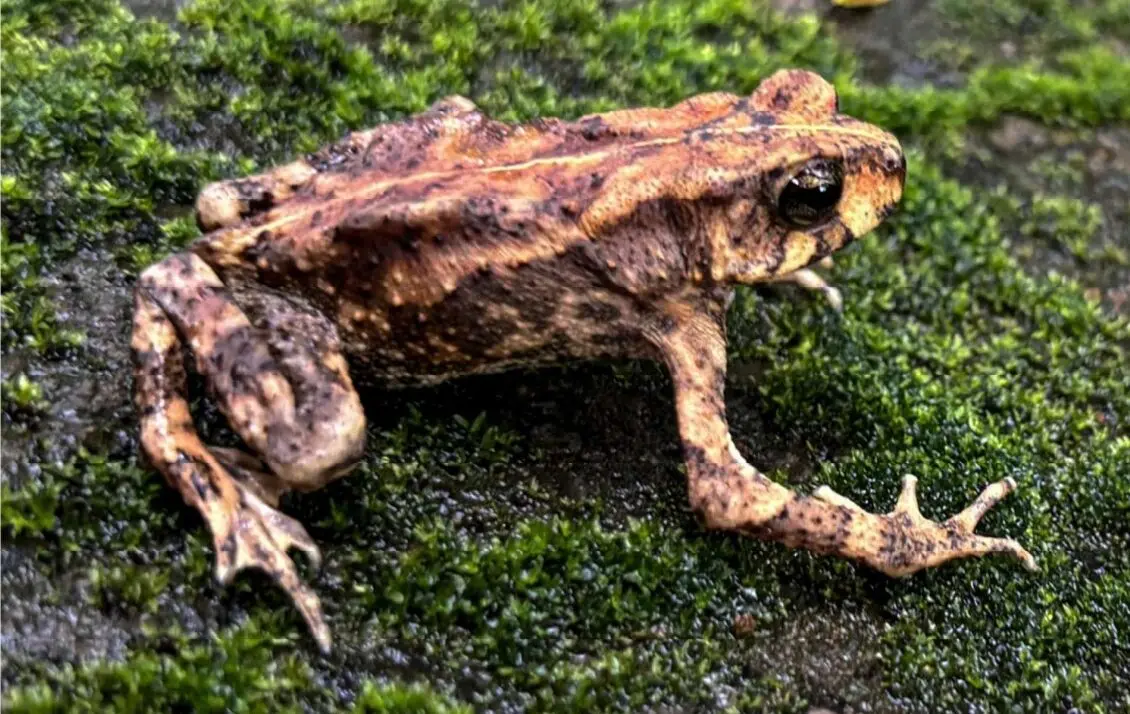
PHAWNGPUI, MIZORAM – In a significant contribution to the herpetological map of Southeast Asia, a team of researchers has announced the discovery of a new species of true toad, Duttaphyrnus phawngpui sp. nov., found near the summit of Mizoram’s highest mountain. The discovery, detailed in a May 2026 study published in the journal Taprobanica, highlights the ecological uniqueness of the Indo-Burma biodiversity hotspot and underscores the precarious future of species confined to high-altitude "sky islands."
The species is named after Phawngpui, also known as the "Blue Mountain," which rises to 2,157 meters above sea level in southeastern Mizoram, near the international border with Myanmar. The discovery was the result of a collaborative effort between Mizoram University, Assam Don Bosco University, and Help Earth, a Guwahati-based non-profit dedicated to wildlife conservation.
Main Facts: The Blue Mountain Toad
The newly identified Duttaphyrnus phawngpui is a member of the Duttaphyrnus genus, a group of "true toads" widely distributed across South and Southeast Asia. While many members of this genus are generalists—often found in disturbed habitats or even urban, polluted environments—this new species belongs to a specialized clade of high-altitude toads.
Key characteristics of the discovery include:
- Taxonomic Distinction: Through a combination of morphological measurements and DNA sequencing, researchers confirmed that D. phawngpui is genetically and physically distinct from its closest relatives, D. stuarti, D. chandai, and D. dhara.
- Restricted Range: The toad appears to be endemic to the high-elevation montane forests of Phawngpui National Park, specifically above the 2,000-meter mark.
- Ecosystem Role: As a ground-dwelling insectivore, the toad plays a vital role in controlling invertebrate populations within its specialized niche.
- Defense Mechanisms: Like its congeners, the species possesses parotid glands located behind the eyes, which secrete a toxic, milky fluid to deter predators such as snakes and birds.
The discovery was led by a team including Jayaditya Purkayastha, a renowned herpetologist and general secretary of Help Earth, who has been instrumental in describing dozens of new species in Northeast India over the past two decades.
Chronology: From the Field to the Laboratory
The journey to describing Duttaphyrnus phawngpui began with high-altitude surveys conducted in the rugged terrain of southeastern Mizoram. Phawngpui National Park, characterized by its sheer cliffs and dense evergreen forests, has long been suspected of harboring undiscovered biodiversity due to its relative isolation.
The Field Encounter
During the expedition, researchers focused on the trails leading to the mountain’s summit. It was along the edges of these trails, at elevations exceeding 2,000 meters, that two individuals of the new species were encountered. The toads were found amidst thick leaf litter on the forest floor, a microhabitat that provides both camouflage and moisture.
The researchers noted that the specific area was dominated by a mix of dense shrubbery and bamboo patches. Unlike the more common toad species found in lower valleys, these individuals were only active in areas with high humidity and minimal human interference.
The Identification Process
Following the collection of the specimens, the team moved to the laboratory to perform an "integrative taxonomic" analysis. This process involves two main pillars:
- Morphological Analysis: Researchers meticulously measured the toad’s body proportions, snout shape, and the texture of its skin. They found subtle but consistent differences in the structure of the head and the arrangement of warts compared to D. stuarti.
- Molecular Phylogeny: DNA was extracted to compare the genetic sequence of the Phawngpui specimens with existing data in global databases. The results confirmed a significant genetic divergence, placing the toad as a sister species to other Eastern Himalayan high-altitude toads, yet distinct enough to warrant its status as a new species.
The study was finalized and peer-reviewed, culminating in the official publication in May 2026, marking a milestone for Mizoram’s biological records.
Supporting Data: The Ecology of a High-Altitude Specialist
The discovery of D. phawngpui provides critical data on the evolution of amphibians in the Eastern Himalayas. While most Duttaphyrnus species are adaptable, the D. phawngpui clade is restricted to the "Sky Islands" of the region.
The "Sky Island" Phenomenon
In biology, a "sky island" refers to an isolated mountain range rising out of a radically different lowland environment. For the species living at the top of Phawngpui, the surrounding low-altitude valleys act as a "sea" of inhospitable heat and different vegetation. This isolation limits gene flow, leading to the evolution of unique species found nowhere else on Earth.

Diet and Behavior
While specific feeding trials were not part of the initial study, observations of related species in the same landscape suggest that D. phawngpui is an opportunistic predator. Its diet likely consists of:
- Termites and Ants: Often the primary food source for forest-floor amphibians.
- Orthoptera: Including locusts and grasshoppers that thrive in the grassy patches of the summit.
- Blattodea: Forest cockroaches found within the leaf litter.
The presence of parotid glands is a significant evolutionary trait. These glands produce bufotoxins, which can cause cardiac distress or even death in smaller predators. This chemical defense is essential for a slow-moving, ground-dwelling animal in a forest teeming with snakes.
Official Responses: Expert Insights on Conservation
Jayaditya Purkayastha, a co-author of the study and a leading figure at Help Earth, emphasizes that the discovery is a "double-edged sword." While it celebrates the region’s biodiversity, it also highlights how much is at risk.
"The species is very susceptible to ecosystem changes," Purkayastha noted. "Unlike generalist toads that can live in a backyard or a drain, D. phawngpui is habitat-specific. It requires very precise conditions: high humidity, specific grassy patches, and clean forest streams for breeding. If any of these factors are altered, the population could collapse."
Purkayastha also raised concerns about the "thermal ceiling." As global temperatures rise, species living at the very top of mountains have nowhere to go. "They cannot adapt to high temperatures. They are already at the summit. As the climate warms, their habitat literally shrinks until it disappears."
The involvement of Help Earth is significant; the organization has helped describe over 38 species since 2006, including the urban bent-toed gecko (Cyrtodactylus urbanus). Purkayastha views these discoveries as a race against time.
Implications: The Threat of ‘Dark Extinction’
The discovery of the Phawngpui toad brings the concept of "dark extinction" to the forefront of the conservation dialogue in Northeast India. Dark extinction refers to the loss of species before they are even discovered or described by science.
Climate Change and Encroachment
The Eastern Himalayas are warming at a rate higher than the global average. This poses an immediate threat to high-altitude specialists. Furthermore, even in protected areas like Phawngpui National Park, human pressures are increasing.
- Tourism Infrastructure: While tourism brings revenue, the development of trails and facilities at high altitudes can fragment the delicate micro-habitats required by amphibians.
- Agricultural Creep: As populations grow, the pressure to use higher slopes for cultivation increases, leading to deforestation and the drying up of mountain streams.
The Path Forward for Conservation
The researchers argue that the description of D. phawngpui must lead to immediate policy shifts. Suggestions include:
- Strict Micro-Habitat Protection: Identifying and cordoning off specific breeding streams and grassy patches within the National Park.
- Long-term Monitoring: Establishing weather stations and population monitoring sites at the Phawngpui summit to track the impact of climate change.
- Community Engagement: Working with local Mizo communities to foster pride in their unique "Blue Mountain" residents, ensuring that the toad becomes a symbol of the mountain’s health.
Conclusion
The discovery of Duttaphyrnus phawngpui is more than a taxonomic update; it is a reminder of the hidden wonders residing in the clouds of Northeast India. As the world grapples with a global decline in amphibian populations—often cited as the "canaries in the coal mine" for environmental health—the Blue Mountain Toad stands as a testament to the resilience of nature, but also as a warning of its fragility.
The scientific community now looks toward the government of Mizoram and international conservation bodies to ensure that this newly discovered "jewel of the peak" does not vanish into the shadows of dark extinction before its story can be fully told.
