

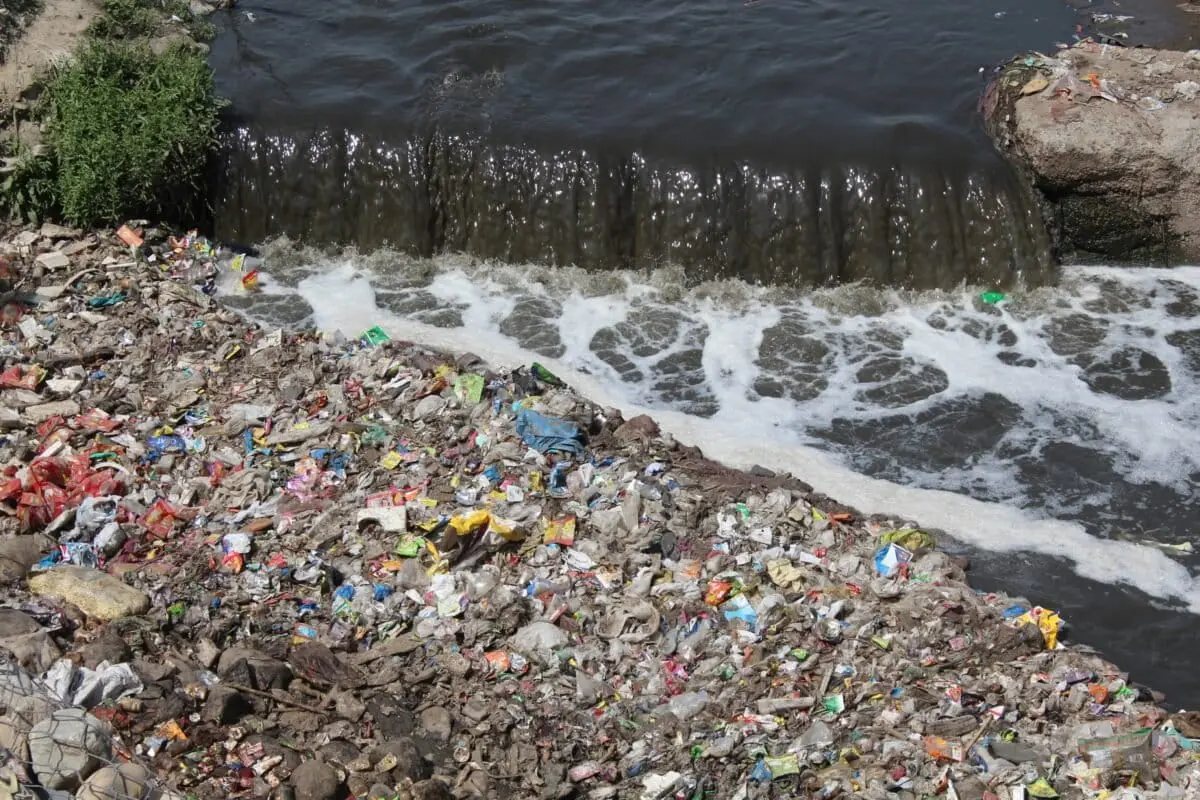
In the shadow of the Himalayas, the city of Dehradun is witnessing a quiet but catastrophic transformation of its hydrological landscape. What were once vital sub-tributaries of the sacred Ganga—the Bindal Rao and the Rispana—have effectively been repurposed into open-air conduits for municipal waste. While the visual degradation of these rivers has long been a local grievance, a groundbreaking study led by researchers from the Indian Institute of Technology (IIT), Roorkee, has revealed a far more insidious threat: these waters are now primary vectors for antimicrobial resistance (AMR), a "silent pandemic" that threatens global public health.
The research, which meticulously tracked the presence of antibiotic-resistant genes (ARGs) and fecal contaminants across seasonal cycles, suggests that urban mismanagement is not merely an aesthetic or environmental failure. It is a direct driver of a burgeoning healthcare crisis, where the very infrastructure meant to support a growing population is instead facilitating the spread of untreatable infections.
Main Facts: The Desecration of the Bindal and Rispana
The Bindal Rao and Rispana rivers serve as the primary drainage veins for the densely populated city of Dehradun. Historically, these rivers provided essential ecological services, including groundwater recharge and flood regulation. Today, however, they are defined by their pollution levels rather than their flow.
A Confluence of Waste
The Rispana is a perennial stream, while the Bindal Rao is seasonal, traditionally drying up before the monsoon. However, observations by Kenyum Bagra, an Assistant Professor at IIT-Varanasi (then a Ph.D. student at IIT-Roorkee), revealed that even during the dry season, the Bindal maintains a "slim flow." This flow is not natural spring water but a concentrated stream of untreated city wastewater.
Statistical data underscores the scale of the discharge:

- Rispana River: Receives approximately 10 million liters per day (MLD) of municipal wastewater.
- Bindal Rao: Carries an estimated 18 MLD of wastewater.
- Downstream Impact: These two sub-tributaries merge to form the Suswa River, a heavily polluted stretch currently listed under the federal Namami Gange river restoration program.
The Emergence of "Superbug" Genes
The core finding of the IIT-Roorkee study, published in Environmental Pollution, is the pervasive presence of antibiotic-resistant genes (ARGs). These are genetic materials that allow bacteria to survive exposure to antibiotics. The researchers identified high concentrations of:
- Sulphonamide resistance genes (sul1, sul2): Linked to common antibiotics used for urinary tract infections and bronchitis.
- Macrolide resistance (ermF): Affecting drugs used to treat respiratory and soft tissue infections.
- Tetracycline resistance (tetW): Impacting a broad-spectrum antibiotic class.
The presence of these genes in river sediments, even after the monsoon flush, suggests that the riverbeds have become permanent reservoirs for antimicrobial resistance.
Chronology: From Fieldwork to Scientific Revelation
The journey to uncovering this environmental hazard began in the pre-pandemic era and evolved through rigorous laboratory analysis and international collaboration.
May 2019: The Initial Sampling
The primary fieldwork was conducted in 2019 by Kenyum Bagra under the mentorship of Gargi Singh, Associate Professor at IIT-Roorkee. Bagra’s field observations provided the first qualitative evidence of the crisis. She documented residents dumping solid waste and dead animals directly into the riverbeds. Most disturbingly, she noted children playing and bathing in the water just downstream from these dump sites, highlighting a direct pathway for human exposure.
2019–2020: Seasonal Monitoring
To understand the impact of weather patterns on pollution, the team conducted multilocational samplings across three distinct phases:

- Pre-monsoon: Capturing the concentrated levels of waste in low-flow conditions.
- Monsoon (June to September): Testing the hypothesis that rain might dilute pollution.
- Post-monsoon: Assessing the long-term retention of contaminants in river sediments.
2021–2023: International Collaboration and Analysis
The study gained a global perspective through a partnership with Uli Klümper, a Senior Scientist from Technische Universität Dresden in Germany. Bagra spent 18 months in Germany, utilizing advanced genomic sequencing to identify the specific ARGs present in the Dehradun samples. This phase allowed the researchers to compare the highly polluted Indian urban rivers with European systems, revealing much more complex exposure pathways in India due to the close proximity of human settlements to open wastewater drains.
Supporting Data: The "Monsoon Paradox" and Heavy Metal Co-selection
One of the most significant scientific contributions of this study is the debunking of the "dilution myth." It is often assumed that heavy monsoon rains dilute pollutants in river systems. In Dehradun, the opposite occurred.
The 1000x Surge
The study found that monsoon rainfall was associated with a surge in fecal pollution and ARGs by a factor of 10 to 1,000 times (measured in relative abundance). This phenomenon is attributed to the monsoon "scouring" the city. Heavy rains wash out accumulated solid debris, overflow septic tanks, and flush out informal dumping sites and open drains, concentrating the city’s entire microbial load into the river channels simultaneously.
The Role of Heavy Metals
In addition to biological waste, the rivers are heavily contaminated with metals, including Lead (Pb), Cadmium (Cd), Chromium (Cr), and Zinc (Zn). While the study did not find a direct seasonal variation in metal levels, it noted that these metals are "strongly enriched" in sediments compared to the water.
Scientifically, this is critical because of co-selection. In many environments, the presence of heavy metals can trigger bacteria to develop resistance mechanisms that also make them resistant to antibiotics. While the Dehradun study found that sewage influx was the dominant driver of ARGs, the presence of metals creates a "stressful" environment that encourages the long-term survival of these resistant strains.

The STP Failure
The data revealed a troubling lack of difference in water quality between samples taken upstream and downstream of Sewage Treatment Plants (STPs). This suggests that the sheer volume of untreated wastewater—entering the rivers via open drains and illegal sewer connections—completely overwhelms any positive impact the STPs might have.
Official Responses and Infrastructure Challenges
The findings regarding the Bindal and Rispana rivers reflect a broader systemic failure in India’s urban planning and sanitation infrastructure.
The National Treatment Gap
According to a 2021 report by the Central Pollution Control Board (CPCB), there is a staggering 78.7% gap between the sewage generated in Indian cities and the installed capacity to treat it. This translates to over 22,000 million liters of untreated sewage entering India’s water bodies every single day.
State-Level Scrutiny
In Uttarakhand, the situation has drawn the ire of the Comptroller and Auditor General (CAG). A recent audit revealed that nearly a third of the state’s STPs were discharging untreated or partially treated sewage directly into the Ganga and its tributaries. Despite a spend of over ₹1,000 crore under various cleaning schemes, 12 out of 44 STPs were found to be non-compliant with environmental standards.
The Controversial Elevated Corridor
Amidst this ecological crisis, the National Highways Authority of India (NHAI) has proposed a ₹6,500 crore elevated road project that would run along the Rispana and Bindal rivers for 26 kilometers. While intended to ease traffic congestion, environmentalists and urban water experts like Nidhi Singh from the Centre for Ecology Development and Research (CEDAR) have raised alarms.

"The utmost priority should be to understand and restore the ecological and hydrological functions of these rivers," says Nidhi Singh. Experts argue that building massive concrete structures over the riverbeds could further restrict natural drainage, amplify flood risks, and permanently bury the chance for river restoration.
Implications: A "One Health" Emergency
The transformation of Dehradun’s rivers into conduits for antibiotic resistance is not merely an environmental footnote; it is a public health emergency that demands a shift in policy.
The Human Cost of Flooding
As climate change leads to more intense rainfall events, the risk of "exposure through inundation" grows. When the Bindal and Rispana overflow, they carry antibiotic-resistant bacteria into homes, streets, and agricultural fields. "Floodwaters laden with these pathogens serve as conduits for the transmission of infections that our current antibiotics may not be able to treat," warns Gargi Singh. This places an enormous burden on the healthcare system and the local economy.
Moving Toward "One Health"
The researchers advocate for a "One Health" approach—a framework that recognizes that the health of people is closely connected to the health of animals and our shared environment. Cleaning the river is no longer just about removing trash; it is about biosecurity.
Policy Recommendations
- Targeted Septic Management: Immediate interventions are needed to manage septic tank seepage, which the study identifies as a major source of fecal ARGs.
- Rivers as Infrastructure: Policy must shift from treating rivers as "drains" to viewing them as "critical urban infrastructure" essential for flood mitigation and public health.
- Surveillance: AMR monitoring must be integrated into regular water quality testing, with a specific focus on "strong seasonal events" like the monsoon that create temporary but extreme spikes in risk.
The story of the Bindal and Rispana is a cautionary tale for urbanizing India. If the country continues to prioritize grey infrastructure (roads and buildings) over blue-green infrastructure (rivers and wetlands), the resulting health crisis may prove far more expensive than any road project. As Nidhi Singh concludes, "If we continue to treat our rivers as drains… these ecological problems will increasingly become an economic, social, and public health crisis for the city."
