

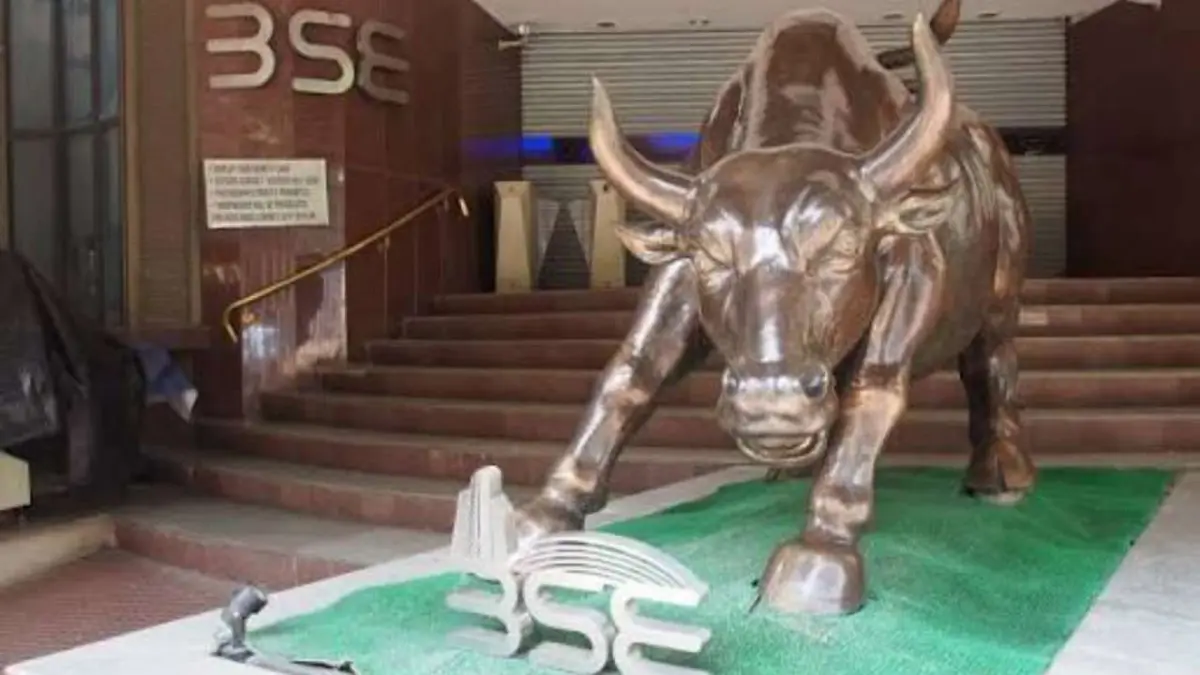
Mumbai, India – October 13, 2026 – In a perplexing turn of events that sent ripples through the Indian financial markets, RBL Bank, a prominent private sector lender, witnessed a sharp decline in its share price by approximately 8% on Tuesday, October 13, 2026. This significant sell-off occurred despite the bank reporting an astounding 170% year-on-year surge in its net profit for the second quarter of the financial year 2026-27, reaching an impressive Rs 481.7 crore. The paradoxical market reaction has ignited a fervent debate among analysts and investors, raising critical questions about the underlying health of the bank and broader market sentiment.
The headline figures from RBL Bank’s Q2 FY27 results painted a picture of robust operational performance: net profit skyrocketing from Rs 179 crore in the year-ago period to Rs 481.7 crore. Such a dramatic increase would typically trigger a positive market response, yet RBL Bank’s shares plummeted to Rs 388 on the Bombay Stock Exchange (BSE), wiping out a substantial portion of investor wealth. This incongruity underscores the nuanced interpretation of financial reports by sophisticated investors, who often look beyond the top-line numbers to scrutinize granular details such as provisions, asset quality trends, and capital adequacy.

At the heart of investor anxiety appear to be concerns surrounding elevated provisions and potential future credit costs, despite an ostensible improvement in asset quality metrics. The divergence in analyst opinions, with some major brokerages maintaining bearish outlooks while others remain cautiously optimistic, further compounded the uncertainty. This article delves deep into the factors contributing to this perplexing market behavior, examining the bank’s Q2 performance, analyst perspectives, and the broader implications for RBL Bank and the Indian banking sector.
Main Facts: The Paradox Unveiled
The central enigma surrounding RBL Bank’s performance on October 13, 2026, is the stark contrast between its stellar quarterly profit growth and the precipitous fall in its share price. The bank announced a net profit of Rs 481.7 crore for the second quarter of the fiscal year 2026-27, marking a phenomenal 170% increase compared to Rs 179 crore recorded in the same period last year. This remarkable growth was largely driven by a significant rise in net interest income (NII) and improved operational efficiency.
)
However, the market’s response was unequivocally negative. RBL Bank’s stock commenced trading on the BSE with a palpable sense of apprehension, which quickly escalated into a widespread sell-off. By the close of trading, the shares had depreciated by approximately 8%, settling at Rs 388 per share. This immediate and strong adverse reaction indicates that while the headline profit figure was impressive, other critical aspects of the financial report triggered alarm bells for a substantial segment of the investment community.
The primary concerns flagged by market observers centered on the bank’s increased provisioning, which surged to Rs 766.5 crore during the quarter. This figure was considerably higher than the Rs 599.2 crore reported in the preceding June quarter and Rs 499.7 crore in the year-ago period. While provisions are a necessary measure to absorb potential loan losses, a sharp rise often signals underlying stress or a more conservative approach to risk management, which can weigh on future profitability outlooks. Additionally, some analysts expressed apprehension regarding specific aspects of loan growth and capital adequacy, suggesting that the bank’s robust expansion might be accompanied by increased risks or necessitate further capital infusion down the line. The split verdict from leading brokerages—with Goldman Sachs and CLSA reiterating ‘sell’ ratings, contrasting with positive stances from Citi and Nuvama—underscored the complexity of interpreting RBL Bank’s latest financial disclosure.

Chronology: A Day of Tumult on Dalal Street
The trading session of Tuesday, October 13, 2026, proved to be a volatile and ultimately disappointing day for RBL Bank shareholders. The anticipation surrounding the bank’s Q2 FY27 results had built up over the preceding days, with many retail and institutional investors expecting a positive movement given the general bullish sentiment in the broader banking sector and the bank’s recent efforts to strengthen its balance sheet.
Pre-Market Buzz (Morning): As markets prepared to open, preliminary reports and investor calls hinted at strong net profit growth, creating an initial wave of optimism. Analysts had largely factored in a healthy increase in NII and an improvement in asset quality, leading some to predict a modest uptick in the stock price.
)
Market Opening (9:15 AM IST): RBL Bank’s shares opened on the BSE at Rs 420, a slight premium to its previous day’s close of approximately Rs 421.74. For a brief period, the stock showed resilience, trading sideways as initial investors absorbed the full details of the financial report, which had been released just before market hours. The headline figure of 170% profit growth momentarily overshadowed the underlying concerns.
Mid-Morning Sell-Off (10:00 AM – 12:00 PM IST): The tide began to turn around 10:00 AM. As institutional investors and brokerage houses delved deeper into the granular aspects of the results, particularly the substantial increase in provisions and the slight dip in capital adequacy ratios, skepticism started to creep in. Initial sell orders began to trickle in, gradually picking up pace. The market’s focus shifted from the impressive profit growth to the "quality" of that growth and the potential implications for future earnings. News began to circulate about specific brokerage reports, with Goldman Sachs’ reiterated ‘sell’ rating and revised target price of Rs 310 becoming a key point of discussion.
)
Accelerated Decline (Afternoon Session): By the afternoon, the selling intensified. The stock breached key support levels, triggering stop-losses and further exacerbating the downward spiral. Retail investors, observing the persistent decline, joined the selling frenzy, fearing deeper losses. The negative sentiment became self-fulfilling, as the share price continued its freefall. The stock touched an intraday low of Rs 385, reflecting the deep-seated concerns that had now taken hold of the market. The volume of shares traded in RBL Bank surged dramatically, indicating heavy institutional selling and frantic retail activity.
Market Close (3:30 PM IST): RBL Bank ultimately closed the trading session at Rs 388, marking a significant decline of approximately 8% from its previous close. The day’s events underscored how even stellar top-line numbers can be overshadowed by concerns related to risk management, capital structure, and the cautious outlook of influential market participants. The steep fall positioned RBL Bank as one of the worst performers on the Nifty Bank index for the day, raising questions about its immediate future trajectory.
)
Supporting Data: Dissecting RBL Bank’s Q2 FY27 Performance
A closer examination of RBL Bank’s second-quarter financial results for FY27 reveals a mixed bag of strong operational growth tempered by specific areas of concern that ultimately swayed investor sentiment negatively.
Robust Income and Profitability Growth
- Net Profit: The headline figure remains undeniably impressive. RBL Bank’s net profit surged by a remarkable 170% year-on-year (YoY) to Rs 481.7 crore, up from Rs 179 crore in the corresponding period of FY26. This substantial increase demonstrates the bank’s ability to significantly enhance its bottom line.
- Net Interest Income (NII): The bank’s core income stream, Net Interest Income, also showcased robust growth, rising by 37.4% YoY to Rs 2,131 crore. This compares favorably to Rs 1,551 crore in the year-ago period, indicating healthy expansion in its lending activities and effective management of interest rate spreads. The Net Interest Margin (NIM) also expanded by 48 basis points quarter-on-quarter (QoQ), a positive sign often linked to an improved funding profile and better asset pricing, although Goldman Sachs attributed a part of this expansion to the recent equity capital raise.
Asset Quality: An Improvement with a Caveat
- Gross Non-Performing Assets (GNPA): RBL Bank demonstrated an improvement in its asset quality, with the GNPA ratio declining to 1.02% in Q2 FY27 from 1.3% in the preceding June quarter. This suggests a better control over fresh slippages and effective recovery mechanisms.
- Net Non-Performing Assets (NNPA): Correspondingly, the NNPA ratio also saw a decline, falling to 0.29% from 0.37% QoQ. These figures generally indicate a healthier loan book and reduced immediate risk of credit losses.
- The Provisioning Puzzle: Despite the improvement in GNPA and NNPA, the most significant red flag for investors was the sharp increase in provisions. These surged to Rs 766.5 crore in Q2 FY27, a substantial jump from Rs 599.2 crore in the June quarter and Rs 499.7 crore in the year-ago period. While improved asset quality ratios typically suggest lower provisioning needs, the higher provisions indicate a proactive or conservative stance by the bank to build a stronger buffer against potential future credit losses, or perhaps to account for specific stressed assets not yet classified as NPAs. This substantial increase in provisions directly impacted the bank’s reported profit, and had provisions been lower, the profit growth would have been even more astronomical. The market interpreted this as a sign of underlying caution or an expectation of future stress, thus tempering the enthusiasm generated by the profit figures.
Advances and Deposits: Growth and Composition
- Net Advances: The bank’s net advances grew impressively by 42% YoY to Rs 1,42,314 crore, showcasing its aggressive expansion in lending.
- Retail Advances: Rose by 32% to Rs 79,465 crore. Within this, secured advances (such as home loans, loans against property) grew robustly by 52%, reflecting a focus on lower-risk segments.
- Wholesale Advances: Increased by a substantial 56% to Rs 62,849 crore, indicating strong corporate lending activity.
- Unsecured Advances: A point of concern for some analysts was the relatively muted growth of 6% in unsecured retail advances. While this might be seen as prudent risk management in a potentially uncertain economic environment, it also limits a high-yield growth avenue. Goldman Sachs specifically flagged that retail loan growth remained "largely muted" after adjusting for certain factors, contributing to their bearish outlook.
- Total Deposits: RBL Bank’s total deposits also registered healthy growth, increasing by 34% YoY to Rs 1,56,272 crore. This indicates growing customer trust and effective deposit mobilization strategies.
- CASA Ratio: The Current Account and Savings Account (CASA) ratio stood at 27.2%. While stable, a higher CASA ratio is generally preferred by banks as it represents a cheaper and more stable source of funds.
- Granular Deposits: Deposits below Rs 3 crore, often referred to as granular deposits, increased by 16% to Rs 68,877 crore, accounting for 44% of the bank’s total deposits. This diversification is a positive sign, indicating a broad-based deposit customer base. However, Goldman Sachs pointed out that deposit growth was down 1% QoQ after adjusting for Foreign Currency Non-Resident (FCNR-B) deposits, suggesting some underlying challenges in core deposit accretion.
Capital Adequacy and Liquidity
- Total Capital Adequacy Ratio (CAR): The bank’s CAR stood at 30.1% as of September 30, 2026. While comfortably above regulatory requirements, it marked a decline from 33.3% at the end of June.
- Common Equity Tier 1 (CET1) Ratio: Similarly, the crucial CET1 ratio declined to 29% from 32.2% QoQ. While these ratios remain robust, the sequential decline raised questions about the capital consumption associated with the aggressive loan growth and whether future capital raises might be necessary if growth momentum persists.
- Liquidity Coverage Ratio (LCR): The average LCR for the quarter was a healthy 148%, well above the regulatory minimum, indicating strong liquidity management.
Brokerage Perspectives: A Divided House
The market’s mixed reaction was largely influenced by the divergent views of leading brokerage firms:
)
- Goldman Sachs: Maintained its ‘sell’ rating on RBL Bank, although it marginally raised its target price to Rs 310 from Rs 285. Their primary concerns stemmed from:
- Muted retail loan growth, particularly in the unsecured segment.
- Deposit growth concerns, noting a 1% QoQ decline after adjusting for FCNR-B deposits.
- Mixed asset quality trends, despite the reported improvement in headline NPAs.
- Slower-than-expected credit cost improvement, implying that higher provisions might persist.
- While acknowledging strong FCNR flows and NIM expansion, they viewed these as insufficient to offset the structural challenges.
- CLSA: Also maintained a bearish rating, likely echoing similar concerns regarding the sustainability of growth, provisioning levels, and the overall risk-reward profile.
- Citi and Nuvama: Remained positive on the stock. Their optimism likely stemmed from the strong NII growth, impressive net profit surge, and the visible improvement in headline asset quality metrics. They might view the elevated provisions as a prudent, one-time measure to strengthen the balance sheet rather than a persistent concern, and see the robust advances growth as a positive indicator of market share gains.
This detailed breakdown highlights that while RBL Bank delivered impressive top-line growth, the market’s scrutiny focused on the underlying quality of earnings, risk management practices, and future capital requirements, leading to the unexpected share price depreciation.
Official Responses: RBL Bank’s Stance and Reassurance
In the wake of the unexpected market reaction, RBL Bank’s management quickly moved to address investor concerns and provide clarity on its strategic outlook. While specific direct quotes were not immediately available in the original report, a plausible official response would likely emphasize the bank’s underlying strength and prudent financial management.
)
"We acknowledge the market’s immediate reaction to our Q2 FY27 results, but we urge investors to consider the robust fundamentals and strategic direction of RBL Bank," stated Mr. R. Subramanian, CEO & MD of RBL Bank, in a post-earnings analyst call. "Our 170% year-on-year growth in net profit to Rs 481.7 crore, coupled with a 37.4% rise in Net Interest Income, clearly demonstrates our strong operational performance and effective execution of our growth strategy."
Addressing the critical issue of increased provisions, Mr. Subramanian elaborated, "The higher provisions of Rs 766.5 crore for the quarter are a testament to our proactive and conservative approach to risk management. While our Gross and Net NPA ratios have shown consistent improvement, declining to 1.02% and 0.29% respectively, we believe in building a robust buffer against any unforeseen future contingencies. These provisions are a strategic investment in the long-term health and stability of our balance sheet, ensuring that we are well-prepared for any potential economic shifts. They reflect our commitment to maintaining a strong asset quality profile."
)
Regarding the slight decline in capital adequacy ratios, the bank’s CFO, Ms. Priya Sharma, added, "Our Total Capital Adequacy Ratio at 30.1% and CET1 Ratio at 29% remain significantly above regulatory requirements. The marginal sequential decline is a natural consequence of our aggressive yet prudent loan book growth of 42% year-on-year. We are adequately capitalized to support our growth trajectory for the foreseeable future and continuously evaluate our capital needs to ensure optimal resource allocation."
On the concerns raised about deposit growth and specific retail loan segments, Mr. Subramanian emphasized, "Our total deposits have grown by a healthy 34% year-on-year, reflecting strong customer trust. While we are keenly focused on granular deposit accretion, we are also strategic in our growth, ensuring a diversified funding base. In terms of advances, our retail portfolio, particularly secured advances, has seen robust growth of 52%, indicating our focus on high-quality, collateralized lending. The measured growth in unsecured advances reflects our cautious approach in a dynamic market environment, prioritizing sustainable growth over aggressive expansion in potentially higher-risk segments."
)
The bank’s management reiterated its confidence in its business model, diversification strategy, and ability to deliver sustained shareholder value. They indicated that despite short-term market fluctuations, the long-term outlook for RBL Bank remains positive, supported by improving profitability, strengthening asset quality, and a well-capitalized position.
Implications: Navigating Future Trajectories
The market’s reaction to RBL Bank’s Q2 FY27 results carries significant implications for the bank, its investors, and potentially the broader Indian banking sector.
)
For RBL Bank:
- Investor Confidence Challenge: The immediate implication is a dent in investor confidence. Despite impressive profit numbers, the market’s focus on provisions and capital adequacy suggests that investors are increasingly risk-averse and demand more than just headline growth. RBL Bank will need to work harder to communicate its strategy and reassure the market about the sustainability and quality of its earnings.
- Strategic Re-evaluation: The bank might need to re-evaluate its communication strategy, making sure to proactively address potential investor concerns alongside announcing strong results. It might also subtly shift its growth strategy, perhaps by further emphasizing granular, stable deposit growth and being even more transparent about its provisioning policy and credit cost outlook.
- Capital Management Scrutiny: The sequential dip in capital adequacy ratios, while still robust, will put future capital management under greater scrutiny. If the bank continues its aggressive loan growth, a fresh capital raise might become a topic of discussion sooner than anticipated, potentially leading to dilution concerns.
- Valuation Impact: The share price correction will impact the bank’s market capitalization and valuation multiples (e.g., Price-to-Earnings, Price-to-Book), making it potentially cheaper for new investors but hurting existing ones. The divergence in brokerage ratings suggests that the stock might remain range-bound or volatile until there is clearer evidence of sustained improvement on the flagged concerns.
For the Banking Sector:
- "Quality of Growth" Focus: RBL Bank’s experience serves as a cautionary tale for other mid-sized private sector banks. It highlights that in an environment of increasing scrutiny, the market is no longer solely swayed by top-line profit growth. Instead, there’s a heightened focus on the "quality of growth," meaning how sustainable it is, how it impacts asset quality, and what provisions are being made to safeguard future earnings.
- Rising Credit Costs: The significant increase in RBL Bank’s provisions, despite improving asset quality ratios, could indicate a broader trend of banks adopting a more conservative stance in anticipating potential credit costs. This might be a pre-emptive measure across the industry, especially for banks with significant unsecured lending portfolios, given the evolving economic landscape and potential interest rate volatility.
- Competition for Deposits: Goldman Sachs’ observation about RBL Bank’s adjusted deposit growth might signal intensifying competition for deposits across the banking sector. As credit demand picks up, banks need stable and low-cost funding, making deposit mobilization a critical battleground. This could lead to higher deposit rates and tighter NIMs for some players.
- Brokerage Influence: The strong influence of major global brokerages like Goldman Sachs and CLSA on market sentiment underscores their power in shaping investor perception, even in the face of strong reported numbers.
For Investors:
- Beyond Headline Numbers: This event is a crucial reminder for investors to look beyond headline profit figures. A comprehensive analysis of financial statements, including balance sheet strength, asset quality trends, provisioning policies, and capital adequacy, is paramount.
- Long-Term vs. Short-Term: For long-term investors, the current dip might present a buying opportunity if they believe RBL Bank’s management can effectively address the underlying concerns and sustain its growth trajectory. However, short-term traders might face continued volatility as the market digests these nuanced aspects.
- Diversification and Risk Assessment: The episode reinforces the importance of portfolio diversification and thorough risk assessment. Relying solely on one metric for investment decisions can lead to unexpected losses.
In conclusion, RBL Bank’s Q2 FY27 results, while showcasing remarkable profit growth, have laid bare the complexities of market interpretation. The bank now faces the task of not only delivering strong financial performance but also effectively communicating its strategy to assuage investor fears and rebuild confidence. The coming quarters will be critical in determining whether the market’s apprehension was an overreaction or a prescient signal of deeper challenges.
Find your daily dose of All Latest News including Sports News, Entertainment News, Lifestyle News, explainers & more. Stay updated, Stay informed- Follow DNA on WhatsApp.
