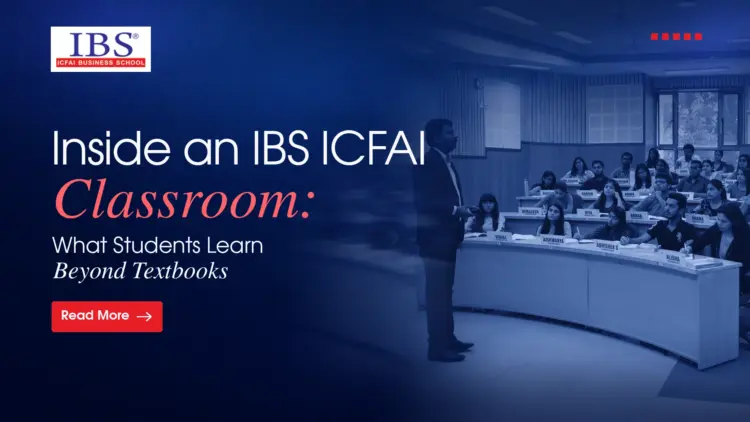
New Delhi, India – While placement reports offer a quantitative snapshot of where business school graduates land their first jobs, they often fail to capture the qualitative metamorphosis that occurs within students during their MBA journey. This evolution, moving from theoretical understanding to practical application and personal growth, is the true measure of a transformative education. ICFAI Business School (IBS) is actively fostering this development through a pedagogy that emphasizes active learning, critical thinking, and experiential engagement, moving beyond rote memorization to cultivate well-rounded business leaders.
The Crucial Interlude: From Admission to First Interview
The period between a student’s admission to an MBA program and their first significant job interview is a critical window of development. It’s a time when academic rigor meets real-world challenges, shaping not just knowledge but also character and capability. At IBS, this transformative process is intentionally cultivated through a multi-faceted approach. Central to this are the ubiquitous case discussions, intensive presentations, collaborative group assignments, and invaluable internships. These elements are not merely components of a curriculum; they are designed to create a fertile ground where students can practice the art of making informed decisions and articulating their rationale with conviction – skills that textbooks alone cannot impart.
The true value of an MBA program, for prospective students, lies in understanding what happens between admission day and the crucial first job interview. It’s about the intangible skills and the personal growth that enable students to not just secure a role, but to excel in it. This article delves into the specific pedagogical strategies employed by IBS and explores how they contribute to this vital transformation.
Learning Beyond Textbooks: The Power of Case-Based Discussions
The traditional academic model, often characterized by reading, understanding, and then answering, provides a comfortable yet often insufficient foundation for the complexities of the business world. Business cases, however, disrupt this predictable sequence. They present intricate scenarios that demand more than just theoretical knowledge; they necessitate critical analysis, debate, and the ability to defend one’s viewpoint, even when it differs from peers.
Consider a hypothetical business grappling with declining sales. A superficial analysis might immediately suggest a price reduction. However, a robust case discussion would prompt deeper inquiry: what are the implications for profit margins? Is the problem with the product itself, necessitating a fundamental overhaul rather than a promotional fix? These types of probing questions, driven by peer interaction and guided by faculty, underscore the profound utility of case-based learning. Every recommendation carries consequences, and understanding these repercussions is a cornerstone of effective management.
IBS’s commitment to a case-based approach encourages students to dissect complex business situations, meticulously analyze problems, and collaboratively explore potential solutions. This process transcends the mere acquisition of management jargon. It requires students to discern critical information, identify underlying assumptions, and rigorously weigh alternative courses of action.
Arshneet Singh, a member of IBS Gurgaon’s 2022-2024 batch, vividly recalls the impact of this methodology, particularly in his marketing classes under Dr. Vibha Arora. He describes how cases served as catalysts for vibrant exchanges among classmates, transforming lectures into dynamic dialogues. His initial semester, a whirlwind of assignments, quizzes, and presentations, laid the groundwork for this active engagement.
The critical takeaway for MBA aspirants here is the participatory nature of these discussions. Contributing meaningfully requires more than simply identifying the chapter from which a concept originates. It demands a well-formed perspective, backed by thorough preparation and the confidence to articulate it. Furthermore, the process inherently cultivates intellectual humility. When a classmate effectively challenges an argument, the inclination should not be to defend it more forcefully, but to acknowledge the valid critique and revise the recommendation accordingly. This willingness to adapt and refine one’s thinking in response to new evidence is an indispensable skill for future managers.
Building Essential Communication and Presentation Skills
The prospect of public speaking often evokes apprehension among students. However, IBS recognizes that possessing a valuable idea and effectively communicating it are distinct, yet equally crucial, skills. Some students may excel in analytical tasks, such as navigating spreadsheets, yet feel hesitant in group discussions. Conversely, others might possess remarkable fluency but struggle to convey their message concisely and impactfully. Both scenarios present opportunities for growth, and IBS’s curriculum is designed to address these areas comprehensively.
The B-school’s emphasis on soft skills encompasses the development of both communication and interpersonal abilities. The MBA program at IBS Bengaluru, for instance, explicitly outlines spoken and written English proficiency, presentation skills, teamwork, and leadership as key learning outcomes. These focus areas provide students with a structured framework to hone their ability to convey knowledge and ideas effectively.
The real value of this training lies in consistent practice coupled with constructive feedback. Can a student present a recommendation without simply reading directly from slides? Can they directly answer the question posed, rather than deflecting or providing tangential information? Can they express disagreement respectfully while ensuring the discussion remains productive? These seemingly routine classroom interactions hold significant relevance for the professional world, equipping students with the tools to navigate diverse workplace dynamics.
The Synergy of Teamwork and Peer Collaboration
Peer learning introduces another vital dimension to the educational experience. Business challenges are rarely monolithic; they often appear multifaceted and complex depending on an individual’s academic background, professional experience, and exposure to diverse market segments. A well-facilitated discussion allows these varied perspectives to surface and contribute to a more comprehensive understanding of the problem.
Shikha Rani, another student from IBS Gurgaon’s 2022-2024 cohort, highlights the diversity within her class. She recounts a group assignment that involved conceptualizing a startup business plan and presenting it to a panel of simulated investors. This task seamlessly integrated classroom concepts into a practical scenario, requiring the team to craft a compelling and convincing business proposition.
The learning, however, extends far beyond the final presentation. Before even reaching that stage, the group must collectively establish its foundational assumptions, delineate individual responsibilities, and ensure that the financial projections robustly support the proposed strategic direction. Individually brilliant contributions must coalesce into a unified and coherent whole.
Anyone who has undertaken a significant group project will recognize the inherent challenges. One’s assigned section might be meticulously completed, yet the team’s overall recommendation may remain ambiguous or unconvincing. Recognizing this gap and actively contributing to bridging it is a fundamental aspect of developing dependability and fostering a collaborative spirit.
Industry Exposure Through Meaningful Internships
Internships serve as the crucial bridge, transporting the theoretical and collaborative learning from the classroom into a professional setting. Here, the work has a tangible audience beyond the academic faculty, demanding a higher level of accountability and performance.
Vaibhav Vinchurkar, an MBA student at IBS Mumbai, provides a compelling illustration of this experience. During a three-month finance internship at HDFC Life, he was immersed in equity research and analysis. He credits the placement office with crucial support during the selection process, followed by invaluable guidance from both a faculty mentor and an industry supervisor.
His reflections highlight significant gains: enhanced analytical and financial acumen, a bolstered sense of confidence, and a more profound understanding of the professional work environment. Vaibhav’s account is particularly illuminating because it delineates the underlying effort that drives such learning. It involved diligent research, meticulous analysis, and the practical experience of operating within the structured framework of a corporate organization.
For aspiring finance professionals, this level of detail is precisely what they should be inquiring about. What specific tasks did the project entail? How was the conducted analysis ultimately utilized? What form of feedback did the student receive? The answers to these questions offer far greater insight than simply the name of the company on an internship certificate.
Moreover, these experiences provide students with rich material for future job interviews. Articulating the specifics of a project undertaken requires the ability to connect the assigned task, one’s individual contribution, and the resultant outcome. Even the capacity to discuss what one would approach differently demonstrates a thoughtful and reflective engagement with the experience, showcasing a keen analytical mind.
Learning Beyond the Classroom: Cultivating Growth Through Events and Industry Interactions
The learning ecosystem at IBS extends beyond the formal curriculum, encompassing a vibrant array of campus activities. The institution actively promotes seminars, guest lectures, student publications, and inter-business school competitions as integral opportunities to broaden the scope of classroom learning.
Taking ownership of organizing such activities introduces practical lessons in coordination and project management. Effective execution demands clear communication of instructions, assignment of responsibilities for deadlines, and the flexibility to adapt plans as unforeseen circumstances arise. A smoothly executed event, while appearing effortless to the audience, often imparts a wealth of knowledge about meticulous preparation and strategic planning to its organizers.
Neha Maggu, reflecting on her time at IBS Bangalore (Batch 2014), attributes her personal and professional growth to a combination of factors. She credits the accessibility of faculty, meaningful interactions with industry professionals, and active participation in both management and cultural events with helping her discover her interests and build self-assurance. Her experience adds a crucial dimension to the narrative of classroom learning: students can often uncover their passions and aptitudes by stepping outside their comfort zones and embracing unfamiliar responsibilities.
Guiding MBA Aspirants: What to Look For When Choosing a Business School
The individual narratives presented here, drawn from various IBS campuses, offer unique contexts but share a unifying theme: the profound correlation between active student participation and meaningful learning. Whether it’s diligently reading a case study, actively seeking constructive feedback, contributing thoughtfully to group discussions, or embracing the responsibilities of an internship, each of these actions demands a proactive effort from the student.
For prospective MBA students meticulously building their shortlist, this insight provides a valuable framework for their campus visits and interactions with current students. Beyond the standard inquiries about fees, specialized programs, and placement statistics, it is crucial to delve into the actual work that students undertake during their program.
A pertinent line of questioning would include:
- Which discussion fundamentally shifted your perspective on a particular business problem?
- Which presentation revealed a weakness in your understanding or communication that you subsequently worked to improve?
- Which internship assignment provided you with a clear insight into a potential career path or industry sector?
A truly effective management education should equip students with increasingly nuanced and thoughtful answers to these questions. The experiences highlighted from IBS offer a compelling vision of what such an education looks like in practice: the development of clearer arguments, the capacity for more considered decision-making, a heightened sense of personal confidence, and a more sophisticated understanding of collaborative work dynamics.
The foundational concepts of business are undoubtedly provided by textbooks. However, the true measure of progress becomes evident when a student can confidently and competently translate that knowledge into actionable solutions and demonstrable results in the real world. This journey of transformation is the ultimate promise of a premier MBA program.