

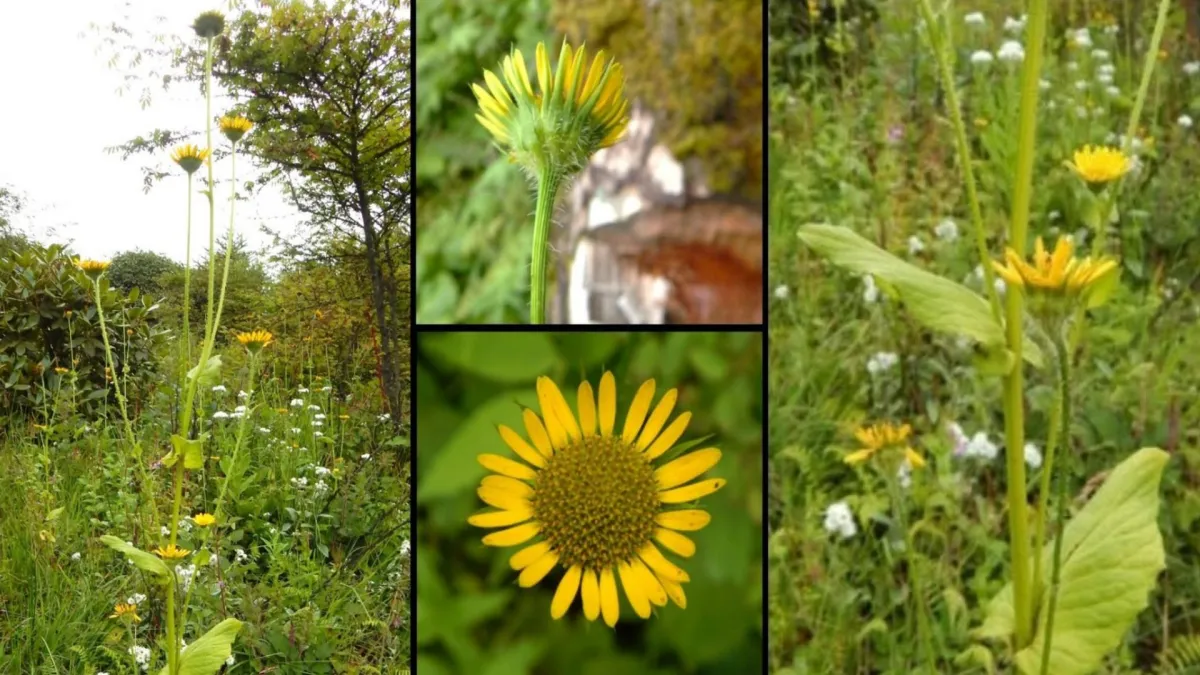
TAWANG, ARUNACHAL PRADESH — In a landmark discovery that underscores the biological richness of India’s northeastern frontier, researchers from the Council of Scientific and Industrial Research-Institute of Himalayan Bioresource Technology (CSIR-IHBT) have identified a new plant species in the high-altitude reaches of Arunachal Pradesh.
The species, named Doronicum sanctum, belongs to the Asteraceae (sunflower) family and is commonly referred to as a member of the "Leopard’s Bane" genus. Found at a staggering elevation of approximately 4,086 meters (13,405 feet) above sea level, this discovery marks the first time the Doronicum genus has been recorded in Northeast India. Historically, all Indian records of this genus were confined to the western Himalayan regions, making this find a significant geographical expansion of the plant’s known range.
Main Facts: The Identification of Doronicum sanctum
The discovery of Doronicum sanctum occurred during a systematic botanical survey aimed at documenting the floral diversity of the Tawang district, a region known for its rugged terrain and sensitive ecological balance. The plant was located along the mountain slopes on the route to Damteng, a remote area characterized by alpine meadows and rocky outcrops.
Morphological Distinctiveness
While Doronicum sanctum bears a superficial resemblance to other members of its genus found in Tibet and China, detailed taxonomic analysis revealed several unique characteristics:
- Vibrant Floral Display: The plant features striking yellow composite flowers typical of the sunflower family.
- Unique Seeds: Scientists identified "pubescent ray cypselae"—tiny, hairy seeds located at the edge of the flower head.
- Fragile Pappus: It possesses a "caducous pappus," a feathery structure used for wind dispersal that falls off more easily than in related species.
- Structural Differences: Unlike its closest Chinese relatives, D. conaense and D. stenoglossum, the new species has dilated flower stalks (peduncle apex) and flat, lance-shaped green bracts that form a protective cup around the flower.
Spiritual Etymology
The naming of the species reflects the cultural landscape of the Tawang region. The specific epithet "sanctum" is derived from the Latin word for "holy" or "sacred." This choice was made because the "type locality"—the specific place where the species was first found and described—is situated near the Chumi Gyatse Holy Waterfalls. This site is of profound spiritual importance to the local Monpa community and Buddhist pilgrims, who believe the waters possess healing properties.

Chronology: From the High Slopes to the Laboratory
The journey to identifying Doronicum sanctum as a species new to science was a multi-year process involving rigorous field exploration and painstaking laboratory verification.
Phase 1: The High-Altitude Expedition
The initial collection took place during a botanical expedition led by the CSIR-IHBT team. Navigating the treacherous slopes of the Eastern Himalayas, the researchers encountered a small cluster of yellow-flowered herbs that did not immediately match the known flora of the region. Given the extreme altitude and the proximity to the Tibetan border, the team suspected the specimen might be a rare immigrant from across the frontier or a species entirely new to the Indian record.
Phase 2: Taxonomic Comparison
Upon returning to the CSIR-IHBT facilities in Palampur, Himachal Pradesh, the specimens underwent a series of rigorous tests. Researchers utilized stereo microscopy to examine the minute anatomical structures of the seeds and floral bracts.
To confirm its status, the team conducted an exhaustive review of global botanical literature and compared their specimens against digital and physical records from major herbaria, including the Central National Herbarium in Kolkata and international repositories. The comparison focused heavily on the Doronicum species documented in the Flora of China, as the Eastern Himalayas share many ecological similarities with the Tibetan Plateau.
Phase 3: Validation and Publication
After determining that the morphological traits—specifically the hairy seeds and the shape of the flower stalk—were distinct from any previously described species, the findings were prepared for peer review. The confirmation of Doronicum sanctum as a new species serves as a testament to the "cradle of speciation" that is the Arunachal Himalaya.

Supporting Data: A Rare and Vulnerable Population
While the discovery is a cause for scientific celebration, the data regarding the plant’s population density is a source of concern for conservationists.
Population Statistics
During the survey, the research team observed only a single, isolated population of Doronicum sanctum. This group consisted of a mere 10 to 12 individuals. Such a small number suggests that the species is either extremely rare, highly specialized to a very specific micro-habitat, or potentially on the brink of local extinction.
Conservation Assessment
Due to the lack of broader data regarding its distribution across other parts of the Eastern Himalayas, the researchers have assigned a provisional conservation status of "Data Deficient" (DD) according to the International Union for Conservation of Nature (IUCN) guidelines. However, the scientists noted that if further surveys do not locate additional populations, the species would likely qualify for "Critically Endangered" status.
Habitat Characteristics
The habitat at 4,086 meters is characterized by:
- Extreme temperature fluctuations.
- Thin, rocky soil with high mineral content.
- A short growing season dictated by heavy winter snowfalls.
- High levels of ultraviolet (UV) radiation.
These factors suggest that Doronicum sanctum has evolved highly specific physiological adaptations to survive where few other vascular plants can thrive.

Official Responses and Scientific Perspective
The discovery has prompted responses from the scientific community and highlights the ongoing mission of the CSIR to map India’s "hidden" biodiversity.
Insights from CSIR-IHBT
Spokespersons from the CSIR-Institute of Himalayan Bioresource Technology emphasized that this discovery is part of a larger effort to understand how Himalayan flora is responding to environmental shifts. "The Eastern Himalayas remain one of the least explored regions on Earth in terms of high-altitude botany," a lead researcher noted. "Finding a member of the Doronicum genus here changes our understanding of the plant’s evolutionary migration and its adaptation to the unique monsoon-influenced climate of Arunachal Pradesh compared to the drier Western Himalayas."
The Role of Biodiversity Hotspots
Botanists across India have hailed the find as a reminder of why Arunachal Pradesh is considered a "Global Biodiversity Hotspot." The state acts as a biological bridge between the Southeast Asian, Chinese, and Himalayan floral kingdoms. Official statements from regional environmental bodies suggest that this discovery will bolster arguments for increased protection of the Tawang alpine zones, which are often overlooked in favor of lower-altitude tropical forests.
Implications: Conservation and the Future of Himalayan Botany
The discovery of Doronicum sanctum carries weight far beyond the addition of a name to a botanical ledger. It has significant implications for conservation policy, climate change research, and the potential for bio-resource discovery.
1. The "Sky Island" Effect
The high-altitude peaks of the Himalayas act as "sky islands," where isolated populations evolve in separation from one another. Doronicum sanctum is a prime example of this phenomenon. Such species are often the first to be affected by climate change. As temperatures rise, these plants have no higher ground to migrate to, making them "sentinel species" for monitoring the health of the alpine ecosystem.

2. Urgent Need for Further Exploration
The fact that a plant as striking as "Leopard’s Bane" remained undiscovered until now suggests that many more species—some perhaps with medicinal or economic potential—remain hidden in the valleys of Arunachal Pradesh. This discovery underscores the need for "taxonomic capacity building"—training a new generation of botanists to recognize and document these rare life forms before they disappear.
3. Sacred Groves and Conservation
The proximity of the plant to the Chumi Gyatse Holy Waterfalls highlights the intersection of cultural heritage and environmental conservation. In many parts of India, "Sacred Groves" or "Sacred Sites" have acted as de facto wildlife sanctuaries. The spiritual significance of the area may have inadvertently protected Doronicum sanctum from grazing or human interference, suggesting that involving local communities and respecting traditional land sanctity is a viable path for modern conservation.
4. Policy and Protection
With only a dozen individuals identified, there is an immediate call for the Arunachal Pradesh forest department to consider site-specific protection measures. This could include restricting trekking in the immediate vicinity of the type locality or establishing ex-situ conservation programs, such as seed banking and cultivation in botanical gardens like those managed by CSIR-IHBT.
Conclusion
The discovery of Doronicum sanctum is a poignant reminder of the mysteries still held by the world’s highest mountain range. As researchers continue to map the "shadows" of the Himalayas—from the smooth-coated otters of the Ganga to the yellow sunflowers of Tawang—each find adds a crucial piece to the puzzle of India’s natural heritage. However, the rarity of this new "Leopard’s Bane" serves as a sobering warning: we are in a race against time to document the Earth’s biodiversity before the dual pressures of climate change and habitat loss erase these unique evolutionary experiments forever.
