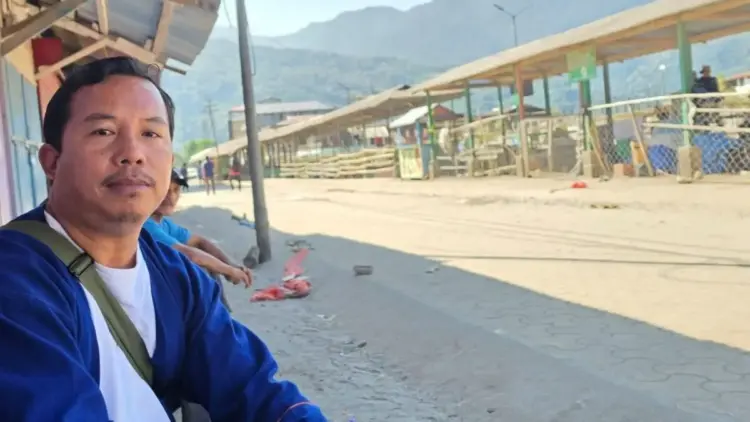
On the morning of October 23, the town of Yingkiong, the administrative headquarters of the Upper Siang district in Arunachal Pradesh, presented a haunting tableau of a region under siege. Shops were shuttered, the main market—usually a hub of activity for the Adi people—was deserted, and the silence was broken only by the rhythmic thud of boots belonging to paramilitary forces in fatigues. By the afternoon, the digital tether to the outside world was severed as the state government implemented a total internet shutdown across the district.
For the residents of the Siang valley, this atmosphere of militarization has become the new normal. The catalyst for this tension is the Siang Upper Multipurpose Project (SUMP), a massive hydroelectric and flood-control dam projected to generate 11,200 megawatts (MW) of power. While the Indian government frames the project as a vital pillar of national security and renewable energy, local indigenous communities view it as an existential threat to their ancestral lands, culture, and safety.
“It feels as if they are deploying armed forces against us by force; like fighting an enemy on the border,” remarked Katin Burang, a 44-year-old paddy and orange farmer from Gosang village. His sentiment captures a growing rift between the state’s strategic ambitions and the lived realities of the people who inhabit India’s northeastern frontier.
Main Facts: The Scope of the Siang Upper Multipurpose Project
The Siang Upper Multipurpose Project is not merely a local infrastructure endeavor; it is one of the most ambitious and contentious engineering projects in modern Indian history. Spearheaded by the National Hydroelectric Power Corporation (NHPC), the dam is designed to be a "multipurpose" facility, intended for power generation, flood moderation, and strategic water management.
Key Specifications and Stakes:

- Power Generation: At 11,200 MW, it would be the largest hydroelectric project in India, significantly contributing to the nation’s green energy targets.
- Strategic Importance: The project is located on the Siang River, which becomes the Brahmaputra as it flows into Assam. It is positioned as a strategic "counter-dam" to China’s reported plans to build a mega-dam upstream on the Yarlung Tsangpo (the Tibetan name for the Siang).
- Human Impact: Current projections suggest the project will directly affect at least 27 villages, leading to the total submergence of several ancestral settlements, including Geku.
- Environmental Sensitivity: The Siang Valley is recognized as one of the world’s most biodiverse regions. It is home to rare flora and fauna and serves as a critical corridor for wildlife. Furthermore, the region sits in a High Seismic Zone (Zone V), making large-scale concrete structures a point of significant geological concern.
Chronology: A Season of Unrest
The current escalation is the culmination of months of simmering resentment and failed negotiations between the state government and indigenous representative bodies.
September 14, 2024: Residents and activist groups, including the Siang Indigenous Farmers Forum (SIFF), called for an immediate halt to all Pre-Feasibility Report (PFR) studies. The PFR involves drilling rigs and soil sampling to determine the geological viability of the dam sites.
Late September 2024: Tensions flared in Geku village during a visit by Chief Minister Pema Khandu. Clashes broke out between security forces and villagers who attempted to block the CM’s convoy to protest the deployment of Central Armed Police Forces (CAPF) used to escort NHPC survey teams.
Early October 2024: The state government took a hardline approach, detaining four prominent protesters under the Arunachal Pradesh Unlawful Activities (Prevention) Act (APUAPA), 2014. This draconian law allows for detention without trial, further inflaming local sentiment.
October 23, 2024: A massive protest march demanding the release of the detainees turned violent in Yingkiong and Pasighat. Protesters allegedly damaged the homes of two Members of the Legislative Assembly (MLAs) and set fire to an NHPC office. In response, the government intensified the crackdown, deploying additional companies of the Rapid Action Force (RAF) and shutting down the internet.

November 3, 2024: The Chief Minister’s Office issued a formal invitation for talks, but agitating groups, led by the SUMP Affected Area Youth Association (SAAYA), refused to attend, stating they would not negotiate "at gunpoint" while their leaders remained in custody.
Supporting Data: Militarization and Legal Maneuvers
The scale of the state’s response is reflected in the sheer volume of security personnel deployed to the region. According to Upper Siang Deputy Commissioner Ashok Tajo, the number of security companies in the district rose from seven in mid-October to approximately 12 by early November. This includes specialized units from the Central Reserve Police Force (CRPF) and the RAF.
Legal and Press Crackdown:
The police have filed at least eight criminal cases and arrested 26 individuals in connection with the October violence. However, the scope of the investigation has expanded to include members of the civil society and the media. Search warrants were sought against youth leaders Otul Jerang and Tajong Talom, their legal counsel Sunny Tayeng, and most notably, Tongam Rina, the Deputy Editor of The Arunachal Times.
The move against Rina has drawn international attention. The Arunachal Pradesh Union of Working Journalists (APUWJ) described the investigation as a "serious threat to press freedom," suggesting that the state is using investigative powers to intimidate journalists who provide critical coverage of the anti-dam movement.
The MoU Controversy:
The state government claims to have signed Memorandums of Understanding (MoUs) with households in dozens of villages to allow PFR studies. Government records indicate that in villages like Janbo and Ramsing, nearly 50% of households have signed. However, indigenous leaders allege these signatures were obtained through coercion or by bypassing the Kebang—the traditional Adi village council whose decisions are historically binding for the entire community.

Furthermore, reports suggest that the government has disbursed approximately ₹8.05 crores to 322 households under a "livelihood scheme" funded by the Union Ministry of Jal Shakti. While the administration maintains these are separate from the dam project, residents view them as a "buy-in" tactic to manufacture consent.
Official Responses: The "Water Bomb" and National Interest
The Arunachal Pradesh government, led by CM Pema Khandu, has consistently framed the SUMP as a matter of "national security." The primary argument is that China’s upstream activities could allow Beijing to weaponize water flow—either by diverting the river or by releasing massive volumes of water during a conflict (a "water bomb").
"Bandhs, blockades, and attacks bring no solutions and only make our own people suffer," Khandu stated in a public appeal. The government argues that a large reservoir on the Indian side is the only way to regulate such erratic water flows and protect the downstream populations of Arunachal Pradesh and Assam.
Furthermore, officials like Deputy Commissioner Ashok Tajo argue that the project offers a path to modernization. He suggested that with "handsome compensation," the villagers—who currently rely on subsistence wet-rice farming and orchards—could "move to greener pastures" and provide better education for their children.
Implications: Ancestral Identity vs. Geopolitical Strategy
The conflict in the Siang Valley represents a classic confrontation between a "top-down" developmental state and "bottom-up" indigenous sovereignty.

1. The Risk of Seismic Catastrophe:
Local activists, such as Thomas Borang, former president of the Adi Bane Kebang United (ABKU), argue that the government’s security logic is flawed. If the region is prone to earthquakes, building a massive 11,000 MW dam creates a self-inflicted "water bomb." A structural failure due to seismic activity would result in a catastrophe far greater than any natural flood.
2. Cultural and Livelihood Erosion:
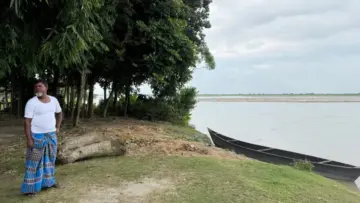
For the Adi people, the Siang is not just a source of power; it is the lifeblood of their civilization. "From November to February, the river is sky blue. In the days of jhum cultivation, it told people when to clear the forest and when to plant paddy," said Opek Taku, a 60-year-old resident of Geku. The transition from landowners to "compensated" refugees is a trade-off many are unwilling to make. Experience from other mega-dams in India suggests that monetary compensation rarely compensates for the loss of communal land, traditional knowledge, and social cohesion.
3. The Precedent for Indigenous Rights:
The use of the APUAPA to detain activists and the targeting of journalists sets a concerning precedent for how the Indian state handles dissent in border regions. By framing every objection as a threat to "national security," the state risks alienating the very frontier communities it needs as allies to secure the border.
4. Eco-Tourism and Sustainable Alternatives:
Residents like Kishon Tekseng, who runs an eco-tourism business, argue that the valley’s future lies in its rapids and biodiversity, not in its submergence. The Siang is world-renowned for white-water rafting, often compared to the Zambezi in Africa. A mega-dam would permanently destroy this burgeoning sustainable economy.
Conclusion
The standoff in Upper Siang is far from over. As a 300-kilometer march organized by the Adi Galo Welfare Society moves through the state, the demands remain clear: the release of all detainees, the withdrawal of central forces, and a genuine dialogue that respects indigenous land rights.

The Siang Upper Multipurpose Project stands at the crossroads of India’s energy future and its democratic values. Whether the government can find a way to address its geopolitical fears without erasing the identity of the Adi people will be the defining challenge of the region for decades to come. As Otik Taku, a local woman who has faced police barricades, poignantly stated: "We will live here, and we will die here. Our Adi women are strong. They are not afraid of anyone."