LUCKNOW – For years, the majority of Uttar Pradesh’s government employees viewed the Manav Sampada portal as little more than a digital filing cabinet—an online repository to be accessed only when absolutely necessary. However, that perception shifted dramatically in early 2026. A series of administrative crackdowns, resulting in the withholding of salaries for tens of thousands of state workers, transformed this HR tool into the most critical digital interface for the state’s 20-lakh-strong workforce.
Behind the headlines of "salary holds" and "mandatory compliance" lies the Electronic Human Resource Management System (eHRMS), a sophisticated platform designed by the National Informatics Centre (NIC) to bring transparency, efficiency, and accountability to one of the largest bureaucratic machineries in the world.
Main Facts: The Architecture of eHRMS
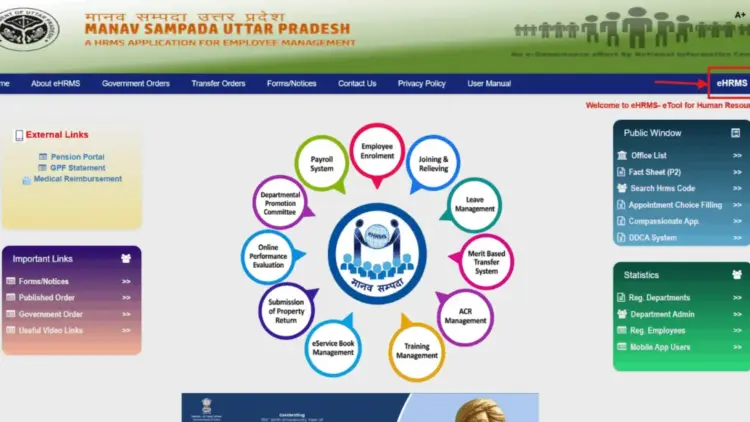
Manav Sampada UP, hosted at ehrms.upsdc.gov.in, serves as the centralized platform for the Uttar Pradesh government’s human resource management. Built and maintained by the NIC’s UP State Centre in Lucknow, the portal is an ambitious attempt to digitize the entire lifecycle of a government employee—from their initial appointment and training to their retirement and pension processing.
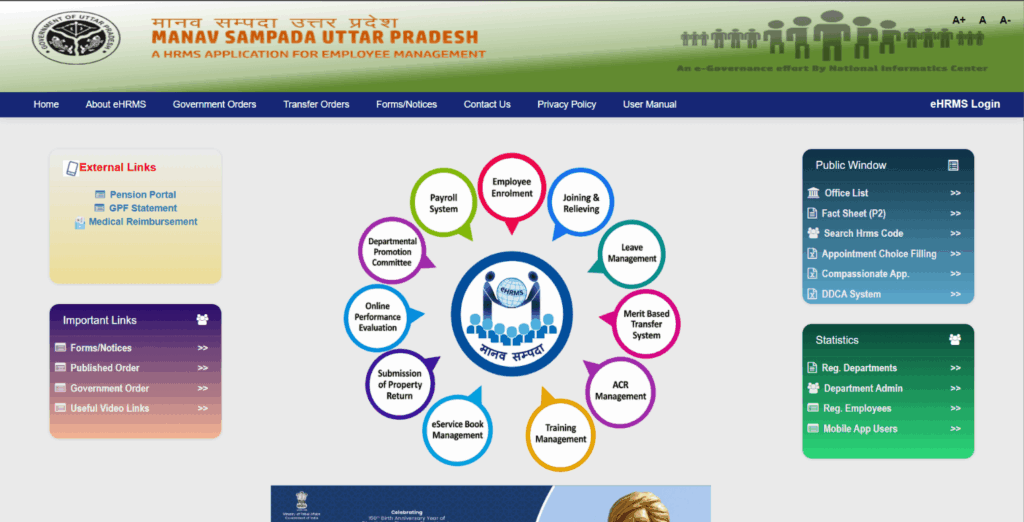
The system is built upon 11 core modules that form a circular ecosystem on the portal’s homepage:
- Employee Enrolment: The gateway for new entries.
- Joining and Relieving: Tracking movements between departments.
- Leave Management: A paperless application and approval workflow.
- Merit-Based Transfer System: Automating transfers to reduce nepotism.
- ACR Management: Annual Confidential Reports for performance tracking.
- Training Management: Recording skill upgrades.
- eService Book Management: The digital version of the physical service record.
- Submission of Property Return: The mandatory annual declaration of assets.
- Online Performance Evaluation: Data-driven appraisal systems.
- Departmental Promotion Committee (DPC): Facilitating career advancement.
- Payroll System: The engine that generates salary slips and manages disbursements.
The shift from paper-based service books, traditionally kept in dusty office cupboards, to a centralized server is not merely a matter of convenience. According to the portal’s "About eHRMS" documentation, the primary objectives include reducing administrative delays, ensuring "one employee, one record," and complying with the Right to Information (RTI) Act regarding postings and transfers.
Chronology: From Digitization to Enforcement
The transition to a fully digital HR system has been marked by several key milestones and periods of high-stakes enforcement:
The 2024 Warning Shot
In August 2024, the state government signaled its intent to enforce digital compliance. The salaries of approximately 2.45 lakh employees who had failed to declare their assets were initially stopped. Following a massive administrative scramble, the order was temporarily reversed on September 3, 2024, and the deadline was extended to September 30. This served as the first major indication that the portal was no longer optional.
The December 2025 Search Surge
As the deadline for the 2025 asset declaration approached, search interest in the portal skyrocketed. Google keyword data reveals that searches for "Manav Sampada UP" peaked at approximately 15 lakh in December 2025. This surge underscored the growing anxiety among the workforce regarding digital compliance.
The 2026 Salary Freeze
The most significant enforcement action occurred in early February 2026. News reports confirmed that the January salaries of more than 68,000 employees had been withheld. The reason was a failure to upload property details for assets acquired up to December 31, 2025. By July 2026, the crackdown intensified; reports from Patrika indicated that 47,816 employees faced both salary holds and stalled promotions due to non-compliance with property return filings.
Supporting Data: Search Trends and User Demographics
The portal is designed to serve an estimated 20 lakh employees across various state departments. While it spans the entire government spectrum, the heaviest users are concentrated in the following sectors:
- Education: Including Basic Education (primary teachers) and Secondary Education.
- Agriculture and Animal Husbandry: A vast network of rural-based staff.
- Medical and Health: Healthcare workers across the state’s districts.
- Commercial Tax and Cooperative Departments: Key revenue and administrative wings.
The "Public Window" on the portal offers high-level transparency even before logging in. It features tools like the "Search HRMS Code," "Fact Sheet (P2)," and lists of registered departments. This public-facing data ensures that the government can be held accountable for the distribution and deployment of its workforce.
Official Responses and Procedural Guidelines
The government’s official stance, as reflected in various Government Orders (GOs), is that digital literacy is now a core requirement of state service. To assist employees, the NIC has established clear protocols for portal usage.
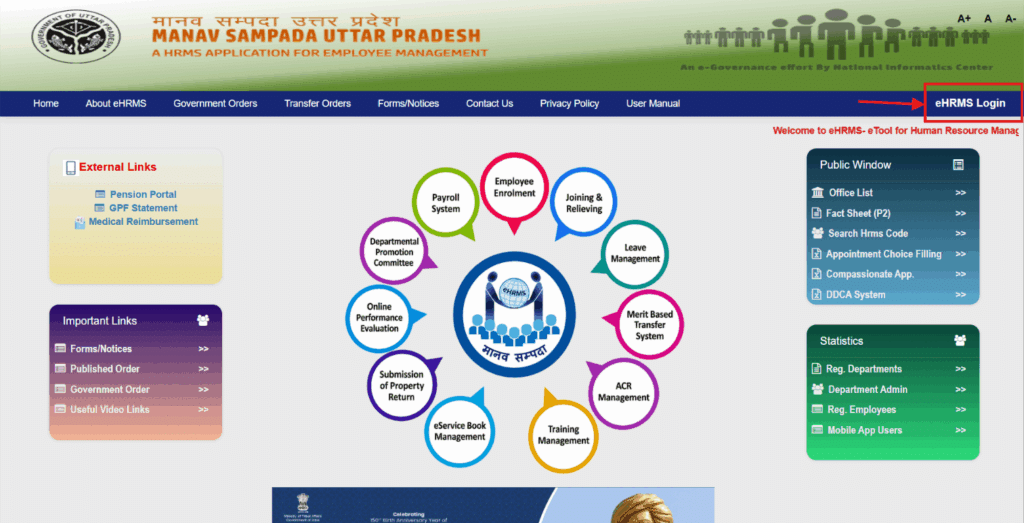
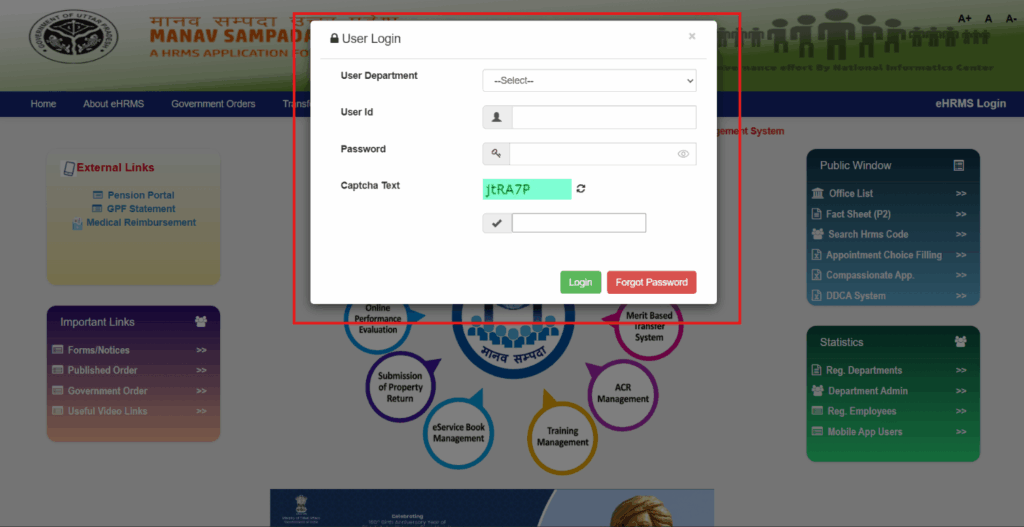
The Login Protocol
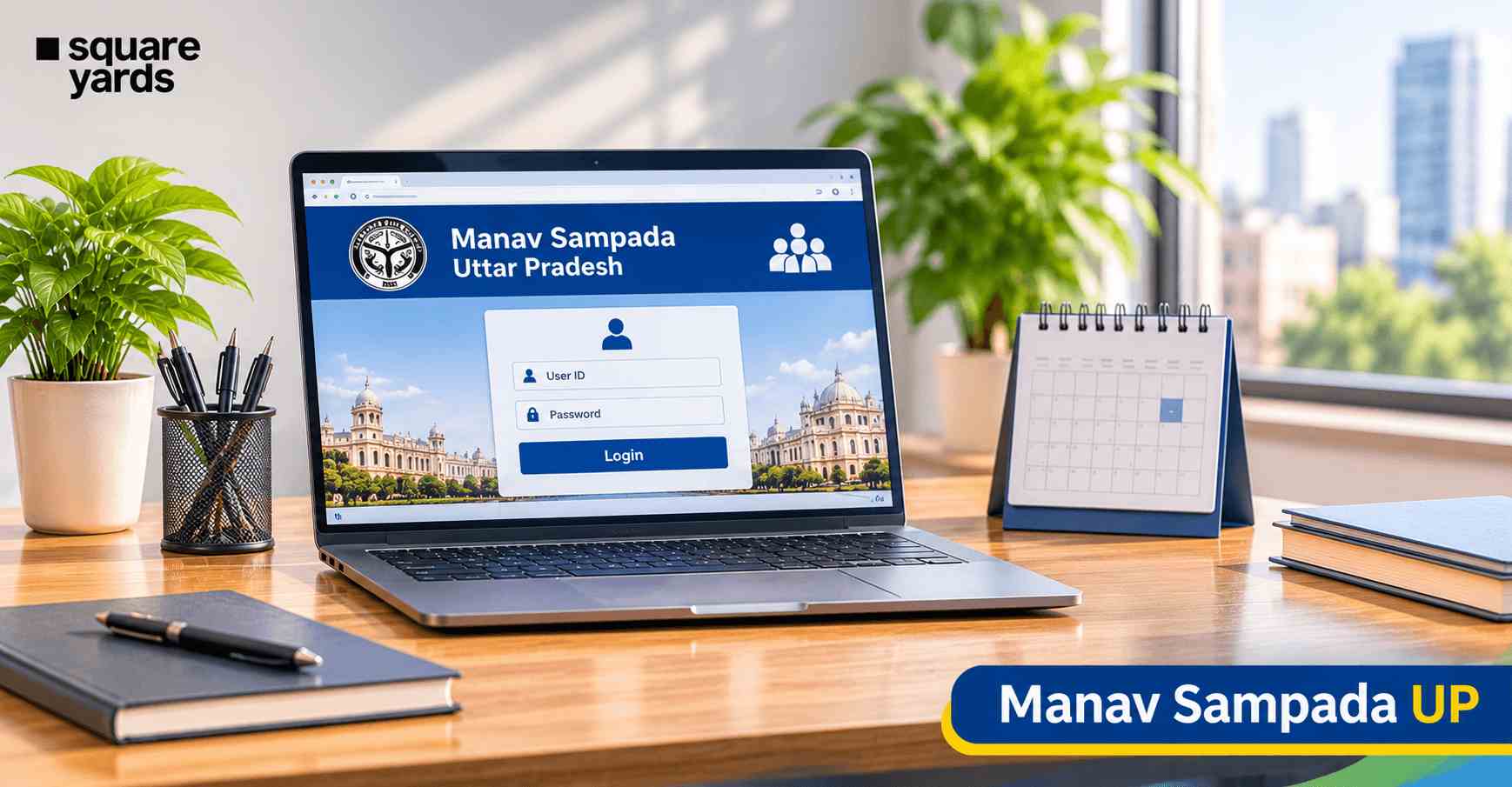
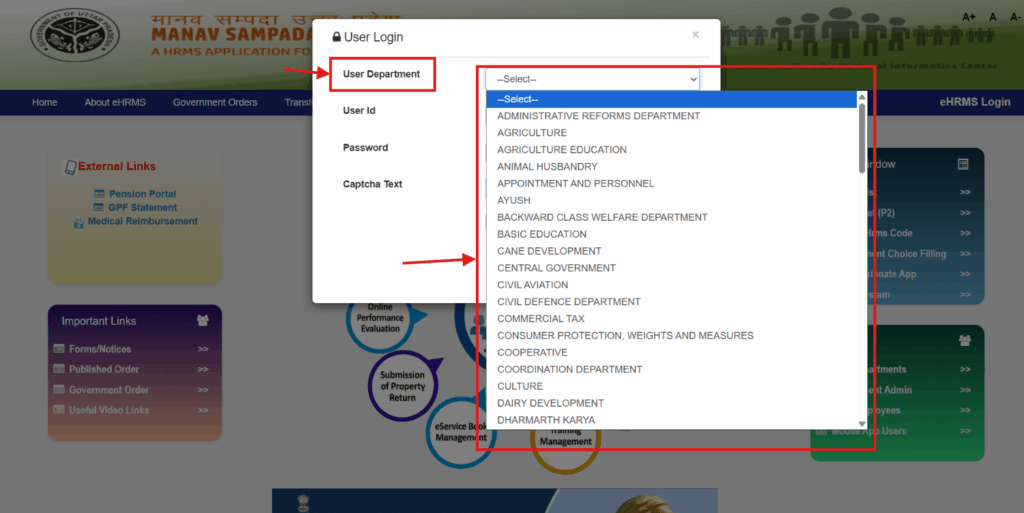
The login process is strictly centralized. Employees must select their department, enter their unique User ID (HRMS Code), provide a password, and solve a captcha.
Official Security Warning: The government emphasizes that ehrms.upsdc.gov.in is the only legitimate portal. Employees are warned against using third-party apps or "look-alike" websites that may attempt to phish for credentials.
Troubleshooting and Support
For technical failures, the official response is tiered:
- Data Errors: If an employee’s service book contains incorrect information (wrong date of birth, misspelling of names), they must contact the Manav Sampada Nodal Officer in their specific establishment office.
- Software Glitches: Technical bugs or portal loading issues are handled by the NIC technical team via email at
[email protected]. - Password Recovery: A "Forgot Password" feature is available, but if it fails, the employee must revert to their office administrator, as password creation and reset rights are often vested with the Nodal Officer.
Detailed Functional Guides: Leave, Payroll, and Service Records
To maintain the 1,200-word depth required for a comprehensive overview, we must examine the three most utilized functions of the portal.
1. Leave Management: The End of Paper Applications
The digital leave module has replaced the traditional system of handwritten applications.
- The Process: An employee logs in, selects the "Leave Module," and fills out a form specifying the type of leave (Casual, Medical, Earned), the dates, and the reason.
- The Approval Workflow: The request is instantly routed to the "Reporting Officer." The system tracks the status—Applied, Approved, Rejected, or Cancelled—ensuring that there is a digital trail for every absence.
2. The E-Service Book: A Career-Long Audit
The E-Service Book is perhaps the most critical component for long-term career security. It contains 11 distinct sections, including:
- Personal and Professional Info: Name, cadre, and joining date.
- Nomination Details: GPF/CPS nominees, which are vital for family security.
- Service History: A record of every increment, transfer, and promotion.
- Disciplinary Records: Any departmental proceedings or suspensions.
Administrative experts advise employees to audit their digital service book at least once a year. A discrepancy in the joining date or a missing promotion entry can lead to significant delays in pension processing or seniority lists.
3. Payroll and Property Returns: The Financial Link
The "Payroll System" module allows employees to download monthly pay slips, which are essential for bank loans and financial planning. However, the most contentious feature remains the Annual Property Return.
- Legal Requirement: Employees must declare both movable and immovable assets.
- The Impact: As evidenced by the 2024 and 2026 crackdowns, the link between the property return module and the payroll module is now "hard-coded" in administrative practice—no return, no salary.
Implications: Transparency vs. The Digital Divide
The enforcement of Manav Sampada UP marks a paradigm shift in Indian governance. By making salary disbursement contingent on digital compliance, the Uttar Pradesh government has achieved in two years what decades of memos could not: the near-total digitization of employee records.
The Benefits
- Accountability: It is now much harder to maintain "ghost employees" or for staff to remain in one posting for decades through back-channel influence.
- Efficiency: Teachers and rural staff no longer need to travel to district headquarters just to submit a leave application or check their service record.
- RTI Compliance: The system provides a searchable database that aligns with the spirit of the Right to Information Act.
The Challenges
The transition has not been without pain. The "digital divide" remains a reality for older employees or those stationed in areas with poor internet connectivity. Furthermore, the centralization of power in the hands of "Nodal Officers" has created new bureaucratic bottlenecks. If a Nodal Officer is slow to update a record, the employee remains at the mercy of the system, often facing financial penalties for errors not of their making.
Conclusion: The Future of State Employment
Manav Sampada UP is no longer just a portal; it is the digital heartbeat of the Uttar Pradesh administration. The message from the Lucknow State Centre is clear: the era of paper files and "lost" service books is over. For the 20 lakh employees of the state, staying updated on the portal is now as fundamental to their job as the work they perform in their offices and schools.
As the system evolves to include AI-driven performance evaluations and even more stringent merit-based transfer algorithms, the reliance on ehrms.upsdc.gov.in will only grow. For the modern UP government employee, the five minutes spent checking their E-Service Book or filing a property return early is the best insurance against administrative and financial stress.
Frequently Asked Questions (FAQ) Summary
- Is there an official mobile app?
Yes, the portal references an app called m-Sthapana. It is recommended to download it only via the links provided on the official ehrms.upsdc.gov.in homepage. - Can I register myself?
No. New accounts must be created by the establishment’s Office Administrator/Nodal Officer. - What if my pay slip isn’t showing?
This is usually a delay at the Drawing and Disbursing Officer (DDO) level. Employees should contact their office’s accounts section. - Is Manav Sampada the same as eHRMS?
Yes, Manav Sampada is the specific branding used by several Indian states, including UP, for the national eHRMS framework.