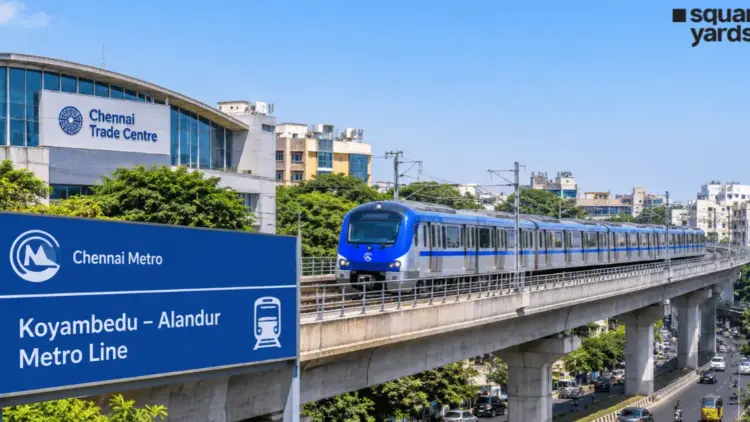
CHENNAI – In a move to expedite the ambitious Phase II expansion of the Chennai Metro, the Chennai Metro Rail Limited (CMRL) has officially initiated a high-intensity, 45-day countdown to complete the final track-laying operations between the Chennai Trade Center and Alandur. This critical 4.5-kilometer segment represents the final hurdle in the track infrastructure for the nearly 15-km Koyambedu-Alandur stretch of Corridor 5.
As the city’s transit landscape undergoes a radical transformation, this particular section of the Red Line is poised to become a lifeline for Western Chennai, bridging the gap between established residential hubs and the city’s burgeoning IT and commercial corridors. With a projected operational date of March 2027, the project is moving into a phase of rapid execution designed to meet the growing demands of India’s fourth-largest metropolitan economy.
I. Main Facts: The 45-Day Sprint and Corridor 5 Overview
The current focus of CMRL’s engineering wing is the completion of the "missing link" in the track infrastructure. While much of the elevated viaduct work on Corridor 5 has been visible to commuters for months, the installation of the actual rails—the plinth-based track system—is the current priority.
Key Project Specifications
The Koyambedu-Alandur section is a vital artery of the 47-km Red Line (Corridor 5). This corridor is designed to eventually span the city from Madhavaram Milk Colony in the north to Sholinganallur in the south.
- Current Focus: 4.5 km of track-laying between Chennai Trade Center and Alandur.
- Total Section Length: 15 km (Koyambedu to Alandur).
- Target Completion for Tracks: 45 days.
- Corridor Designation: Corridor 5 (Red Line).
- Infrastructure Type: Primarily elevated, including sections of shared infrastructure with the Phase II Yellow Line.
- Projected Launch: March 2027.
The 15-km stretch will serve as a mid-city connector, weaving through densely populated and commercially significant neighborhoods including Virugambakkam, Valasaravakkam, Ramapuram, and Manapakkam. By the time the Red Line is fully operational, it will encompass 45 stations, creating a comprehensive north-south-west transit loop.
II. Chronology: The Evolution of Chennai Metro Phase II
The journey toward the 2027 opening of the Koyambedu-Alandur section has been a multi-year endeavor marked by complex land acquisition, engineering challenges, and strategic planning.
- Phase II Approval (2018-2019): Following the success of Phase I, the Tamil Nadu government and the Central Government greenlit the 118.9 km Phase II project, with Corridor 5 identified as a priority for its ability to de-congest the city’s interior roads.
- Pillar and Viaduct Construction (2021-2023): Work on the Koyambedu-Alandur stretch saw rapid progress in piling and pier construction. The elevated structure over the Mount-Poonamallee Road and Arcot Road required careful coordination with traffic authorities to minimize disruption.
- Track-Laying Commencement (Late 2023): Once the viaducts were secured, the focus shifted to the "Permanent Way" (track) work.
- The 45-Day Target (Present): CMRL has entered a sprint phase. This 45-day window is dedicated to the 4.5 km stretch near the Chennai Trade Center, aiming to ensure that the structural phase of the track is completed before the next phase of signaling and overhead electrification (OHE) begins.
- Projected Systems Integration (2025-2026): Following track completion, the subsequent 18-24 months will involve the installation of electrical systems, telecommunications, and rigorous trial runs.
- Full Operational Status (March 2027): The section is expected to welcome its first commercial passengers, marking a milestone for the Red Line.
III. Supporting Data: Connectivity and Network Integration
The strategic value of the Koyambedu-Alandur section lies in its role as a "network multiplier." It does not merely add a new route; it integrates existing lines to create a seamless web of transit.
Interchanges: The Heart of the Network
The utility of this section is amplified by two massive interchange hubs:
- Koyambedu Interchange: Connects Corridor 5 (Red Line) with the existing Green Line (Chennai Central to St. Thomas Mount). This provides passengers from the west direct access to the Chennai Mofussil Bus Terminus (CMBT) and the central railway station.
- Alandur Interchange: This is perhaps the most critical node in the entire Chennai Metro network. At Alandur, the Red Line will meet both the Blue Line (Airport to Wimco Nagar) and the Green Line. This gives commuters from areas like Ramapuram or Manapakkam a one-stop connection to the Chennai International Airport, Guindy, and the northern industrial belts.
Localities Served
The alignment ensures that major residential and commercial pockets are no longer isolated from the rapid transit map:
- Northern End: Koyambedu Market, Natesan Nagar.
- Central Residential Belt: Virugambakkam, Alwarthirunagar, Valasaravakkam, Karambakkam, Alapakkam.
- Commercial/IT Belt: Mugalivakkam, Ramapuram, Manapakkam (serving the DLF IT SEZ and Chennai Trade Center).
- Southern End: Butt Road and Alandur.
IV. Official Responses and Engineering Outlook
While official statements from CMRL emphasize the 45-day deadline, the broader sentiment from the management highlights a commitment to "Transit-Oriented Development" (TOD).
According to CMRL officials, the 45-day target is not just about speed but about precision. "The track-laying between Chennai Trade Center and Alandur is a technically demanding phase because it involves integrating the line into the Alandur hub, which is already a high-traffic operational area for Phase I," noted a project engineer (anonymized for journalistic reporting).
The use of "shared infrastructure" with the Yellow Line is another highlight. In certain sections, the two corridors will share the same elevated structure, a design choice intended to optimize land use and reduce the environmental footprint of the massive concrete viaducts. Officials believe this "double-decker" or "parallel" approach will set a precedent for future urban metro projects in India.
Furthermore, CMRL is coordinating closely with the Chennai Corporation to ensure that "last-mile connectivity" is addressed before the 2027 launch. This includes planning for feeder buses, dedicated cycling tracks, and improved pedestrian walkways around the upcoming stations in Virugambakkam and Valasaravakkam.
V. Implications: Real Estate and Economic Impact
The announcement of the track-laying deadline has sent ripples through the Chennai real estate market. The Koyambedu-Alandur belt is currently witnessing a surge in interest from both residential buyers and commercial developers.
Price Insights and Market Trends
Based on data from Square Yards, the pricing along this corridor reflects the premium associated with upcoming Metro access.
| Locality | Average Price per Sq. Ft. (INR) | Key Developers |
|---|---|---|
| Koyambedu | 6,900 – 13,300 | Radiance Realty, Ramaniyam, Akshaya |
| Virugambakkam | 8,000 – 14,000 | Ceebros, Royal Splendour, Appaswamy |
| Valasaravakkam | 8,000 – 13,200 | Radiance Realty, ETA Star, Ceebros |
| Mugalivakkam | 7,000 – 11,500 | Shriram, India Builders, Royal Splendour |
| Ramapuram | 8,000 – 12,000 | Kgeyes, Step Stones, Appaswamy |
| Manapakkam | 8,500 – 12,500 | Shriram, TVS Emerald, DLF |
| Alandur | 7,200 – 10,800 | Casagrand, Appaswamy, Rajni Foundation |
Regional Market Analysis
- Koyambedu’s Commercial Renaissance: Beyond its status as a transport hub, Koyambedu is preparing for the redevelopment of the 36-acre former CMBT site. The Metro’s Red Line will be the primary transit feeder for the proposed retail, hotel, and Grade-A office spaces expected to rise on this land.
- The "IT Effect" in Manapakkam and Ramapuram: These areas are already home to massive employment hubs like the DLF IT SEZ. Currently, employees face significant congestion on Mount-Poonamallee Road. The Metro will offer a reliable alternative, likely leading to a spike in rental demand and the conversion of older independent houses into modern apartment complexes.
- Residential Stability in Virugambakkam: Known for its quiet residential streets, Virugambakkam and Valasaravakkam are seeing a shift toward luxury high-rises. The Metro connection to Alandur (and subsequently the airport) makes these areas highly attractive for mid-to-senior management professionals.
- The "Exhibition Economy": The station at the Chennai Trade Center will revolutionize how large-scale events are managed. With direct Metro access, the Trade Center can host international-scale exhibitions without the paralyzing traffic jams that currently plague Butt Road during major events.
VI. Conclusion: A New Era for Chennai’s Commuters
The 45-day target set by CMRL is more than just a construction milestone; it is a signal that the most complex phase of Phase II is nearing completion. For the residents of Western Chennai, the March 2027 opening represents the end of long, grueling commutes through the congested Arcot Road and Mount-Poonamallee stretches.
By linking the wholesale markets of the north, the IT hubs of the west, and the transport interchanges of the south, Corridor 5 is set to redefine the city’s geography. As the tracks are laid down over the coming weeks, they form the foundation for a more connected, economically vibrant, and mobile Chennai.
Disclaimer: This report is based on current project timelines and market data. Real estate prices are subject to market fluctuations, and project completion dates are estimates provided by the transit authorities.