In the heart of India, within the bustling construction sites and rural fields of Madhya Pradesh, millions of workers form the backbone of the state’s economy. Consider the life of a mason in a district like Rewa or a seasonal farm labourer in Vidisha. These individuals work on daily wages, often without the safety nets of a Provident Fund (PF), Employee State Insurance (ESI), or private life coverage. For these families, a single accident or a sudden illness doesn’t just mean a medical bill; it represents a total collapse of their financial stability.
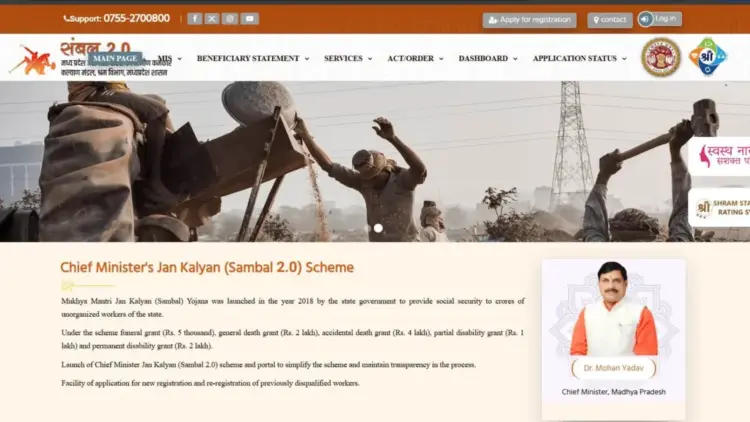
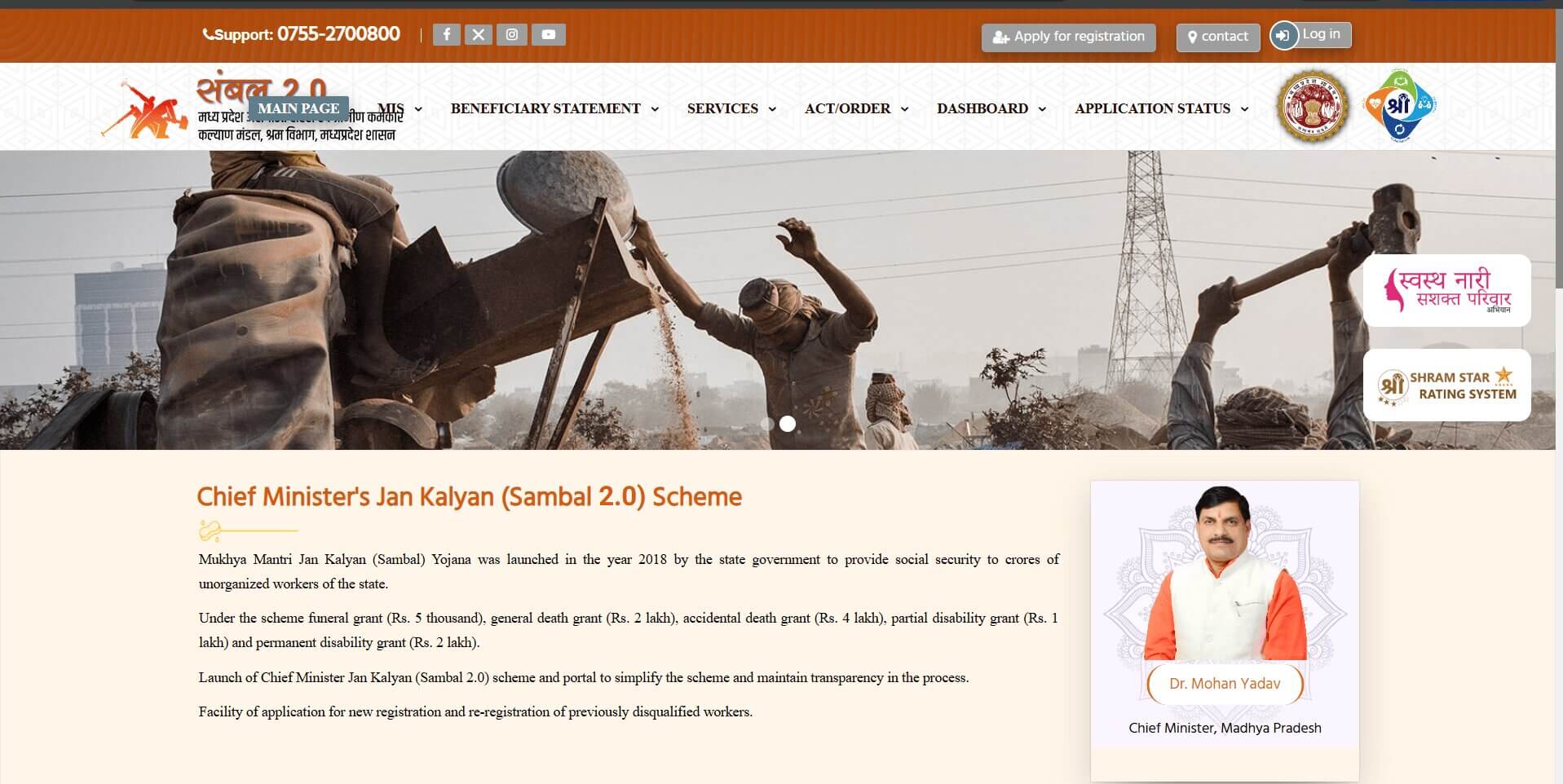
To bridge this gap, the Government of Madhya Pradesh launched the Mukhyamantri Jan Kalyan (Sambal 2.0) Yojana. This initiative is more than just a welfare scheme; it is a digital-first social security framework designed to provide a "Sambal" (support) to the state’s most vulnerable workforce. Central to this scheme is the Sambal Card, a digital identity that validates a worker’s eligibility and streamlines the delivery of life-altering financial assistance.
1. Main Facts: The Architecture of Social Security
The Sambal 2.0 scheme is managed by the Unorganised Urban and Rural Workers Welfare Board under the Labour Department of Madhya Pradesh. It represents a paradigm shift in how the state interacts with the unorganised sector, moving away from cumbersome paperwork toward a Direct Benefit Transfer (DBT) model.
Key Scheme Specifications
| Detail | Information |
|---|---|
| Official Name | Mukhyamantri Jan Kalyan (Sambal 2.0) Yojana |
| Governing Body | Unorganised Urban and Rural Workers Welfare Board, Labour Department, MP |
| Core Objective | Financial protection for unorganised workers against death and disability |
| Mode of Payment | Direct Benefit Transfer (DBT) to Aadhaar-linked bank accounts |
| Application Fee | Nil (Free of cost) |
| Official Portal | sambal.mp.gov.in |
| State Helpline | 0755-2700800 / CM Helpline: 181 |
The Digital Identity: The e-Sambal Card
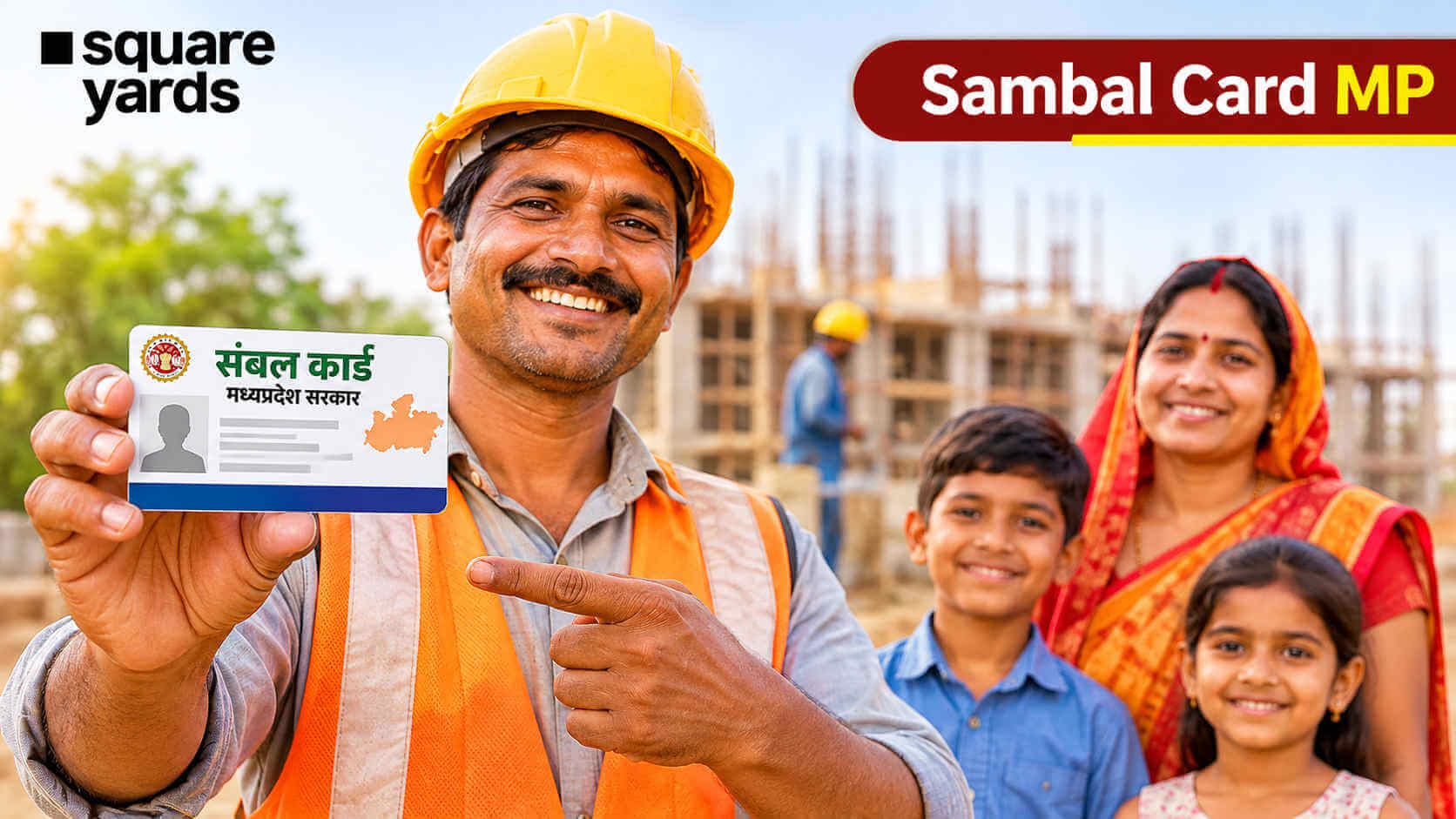
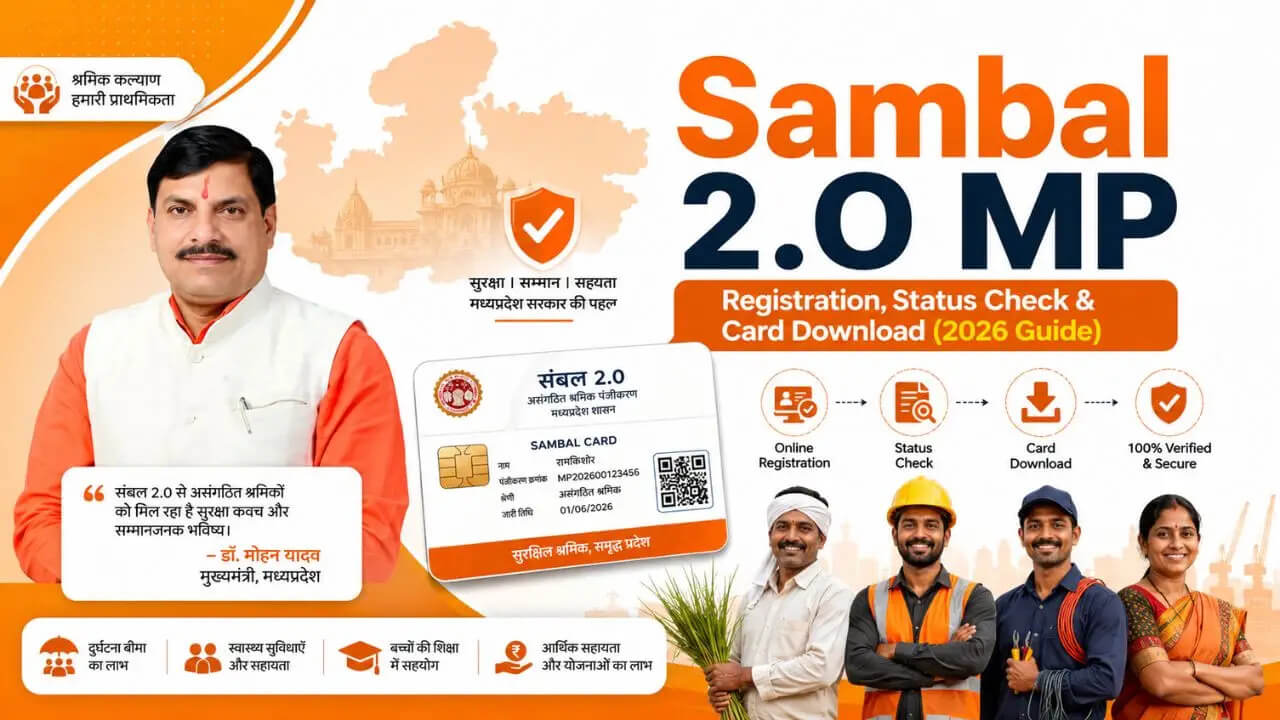
The Sambal Card serves as the primary proof of registration. It contains critical data, including the worker’s Sambal ID, Samagra ID, name, gender, category, and specific type of unorganised labour. The reverse side features a QR code for instant verification by authorities, ensuring that benefits reach the intended recipient without middleman intervention.
2. Chronology: From Evolution to Implementation
The journey of the Sambal scheme has seen significant administrative evolution to ensure better targeting and transparency.
- April 1, 2018: The original Sambal Yojana was launched to provide a comprehensive social safety net.
- June 4, 2019: Introduction of mandatory Aadhaar e-KYC to eliminate ghost beneficiaries and ensure that the "One State, One Identity" goal was met through the Samagra portal.
- May 2022: The government revamped the initiative into Sambal 2.0. This version introduced a more robust portal and allowed workers whose applications were previously rejected a second chance to apply and appeal.
- August 29, 2022: Further administrative orders were issued to streamline the "Ex-gratia" (Anugrah) payment process, making it more time-bound for grieving families.
- Present Day: The portal serves as a 24/7 interface for registration, status tracking, and claim filing, integrating data from Samagra and Aadhaar in real-time.
3. Supporting Data: Financial Assistance and Eligibility
The efficacy of the Sambal Card is best understood through the specific financial tiers it offers. These are not loans but non-repayable grants provided by the state to the registered worker or their next of kin.
Schedule of Financial Benefits
| Assistance Type | Amount (INR) | Purpose |
|---|---|---|
| Funeral Assistance | ₹5,000 | Immediate costs for last rites |
| Normal Death | ₹2,00,000 | Support for the family in case of natural demise |
| Accidental Death | ₹4,00,000 | Enhanced support for sudden loss due to accidents |
| Permanent Disability | ₹2,00,000 | For workers who lose their livelihood due to total disability |
| Partial Disability | ₹1,00,000 | For workers suffering significant physical impairment |
Who Qualifies?
The definition of an "unorganised worker" is specific. To be eligible for a Sambal Card, an applicant must satisfy the following criteria:
- Residency: Must be a permanent resident of Madhya Pradesh.
- Employment Status: Must be engaged in unorganised sector work (e.g., small-scale farming, construction, domestic help, street vending).
- Land Ownership: The applicant or their spouse must not own more than one hectare (approx. 2.5 acres) of agricultural land.
- Tax & Service Status: Must not be an income tax payer and must not be in government service.
- Social Security Exclusions: Must not be covered under PF (Provident Fund) or ESI (Employee State Insurance).
- Age Limit: Generally between 18 and 60 years (applicants are advised to verify the current age bracket on the portal during registration).
4. Official Responses: The Registration and Claim Workflow
The Madhya Pradesh Labour Department has established a clear, multi-step process to ensure that only genuine workers are enrolled. Officials emphasize that Registration and Claim Filing are two distinct administrative actions.
Step 1: Mandatory Aadhaar e-KYC
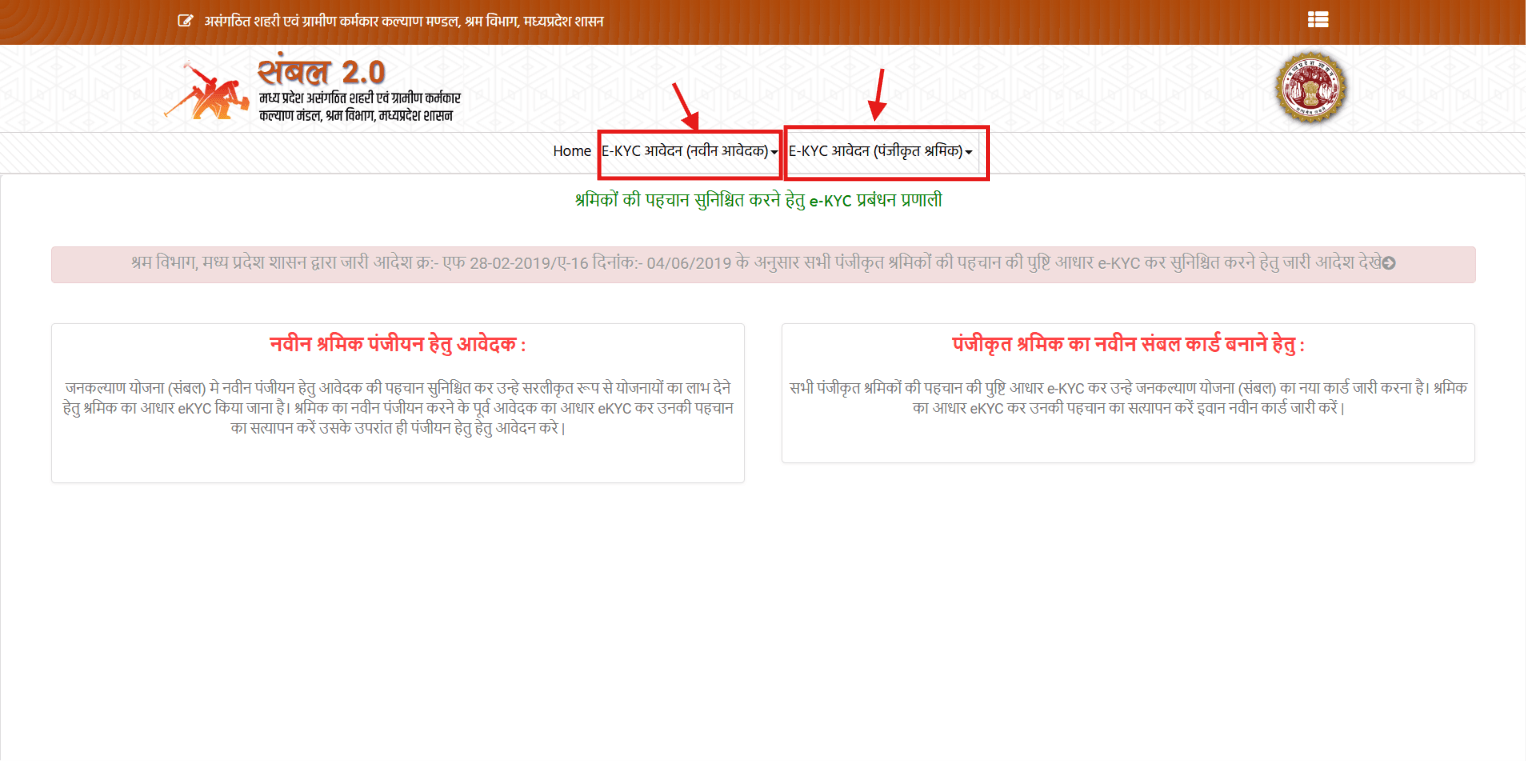
Before a worker can even apply, they must complete an Aadhaar e-KYC via the Samagra portal. This links their biometric identity with their Samagra ID. If the mobile number is not linked to Aadhaar, the applicant must visit an MP Online kiosk or a Lok Seva Kendra for biometric (fingerprint) authentication.
Step 2: Online Application
The application is submitted through the sambal.mp.gov.in portal using the Samagra Member ID and Family ID. The system automatically fetches personal details, reducing the margin for manual entry errors.
Step 3: Local Verification (The Inquiry Phase)
Once submitted, the application does not immediately result in a card. It is routed to an Inquiry Officer in the applicant’s local ward or village.
- Rural Areas: Verified by the Janpad Panchayat.
- Urban Areas: Verified by the Municipal Corporation or Nagar Parishad.
The officer conducts a field inquiry to verify the worker’s status and land ownership. Upon their recommendation, the local body grants final approval.
Step 4: Claiming Benefits (The Anugrah Process)
Holding a card is the prerequisite; however, when a tragedy occurs, the family must file an Ex-gratia (Anugrah) Claim.
- Time Limits: Funeral assistance is intended to be immediate. Other claims (death/disability) must generally be filed within 180 days of the incident.
- Designated Officers: The Janpad CEO (Rural) or Municipal Commissioner (Urban) is responsible for processing these claims through the portal.
5. Implications: Social Impact and Transparency
The transition to Sambal 2.0 carries deep implications for the socio-economic fabric of Madhya Pradesh.
Elimination of Middlemen
By mandating that all payments be made via Direct Benefit Transfer (DBT), the state has significantly reduced "leakage." The money goes directly from the state treasury to the beneficiary’s Aadhaar-linked bank account, ensuring that the full amount of ₹4 lakh or ₹2 lakh reaches the family in their time of need.
Administrative Accountability
The portal features a "Public Dashboard" where pending cases at the level of the SDM (Sub-Divisional Magistrate) or District Collector are visible. This transparency puts pressure on local officials to clear backlogs. Furthermore, the Right to Appeal is a critical feature of Sambal 2.0. If a registration is rejected, the worker can file an appeal online within the "Services" menu, which is then reviewed by a higher authority.
Integration with Other Welfare
While the Sambal Card primarily focuses on death and disability, it acts as a gateway. Registered workers are often prioritized for other state-run initiatives, such as the Maternity Assistance Scheme (providing financial aid to pregnant women) and the Education Promotion Scheme (helping children of workers pursue higher education).
6. Troubleshooting: When the Process Stalls
Despite the digital interface, applicants may face hurdles. Official guidelines suggest the following remedies:
- Pending Applications: If an application is stuck for months, the applicant should approach their local Nagar Palika or Janpad office. The bottleneck is usually at the "Inquiry Officer" stage.
- Data Mismatches: If the name or date of birth on the Sambal Card is incorrect, it must first be corrected in the Samagra database. The Sambal portal provides a "Request to update information from Samagra" link to facilitate this.
- Rejected Claims: Rejections are not final. The scheme provides for an appellate authority. For urban areas, this is often the Collector or an officer designated by them; for rural areas, it follows a similar hierarchy through the Zila Panchayat.
Conclusion: A Safety Net for the Future
The Sambal 2.0 Card is more than a digital document; it is a promise of dignity. For the millions of unorganised workers in Madhya Pradesh, it represents the state’s acknowledgment of their hard work and a guarantee that their families will not be left to the whims of fate in the event of a tragedy.
As the state continues to refine the portal and integration with Aadhaar becomes more seamless, the Sambal scheme stands as a model for how technology can be harnessed to serve the poorest of the poor. Workers are encouraged to ensure their Samagra and Aadhaar data are synchronized, apply through official channels only, and keep their digital cards ready—not just as an ID, but as a shield against the uncertainties of life.
Frequently Asked Questions (Quick Reference)
- Is there any fee for the Sambal Card?
No, the registration and download process are entirely free on the official government portal. - Can I apply if I have a small piece of land?
Yes, provided the total land owned by you and your spouse does not exceed one hectare. - What is the helpline number?
The official helpline is 0755-2700800. For grievances, citizens can also call the CM Helpline at 181. - How do I download the card?
Once approved, visit the "Beneficiary Details" section onsambal.mp.gov.in, enter your Samagra ID, and click "Print Sambal Card."