

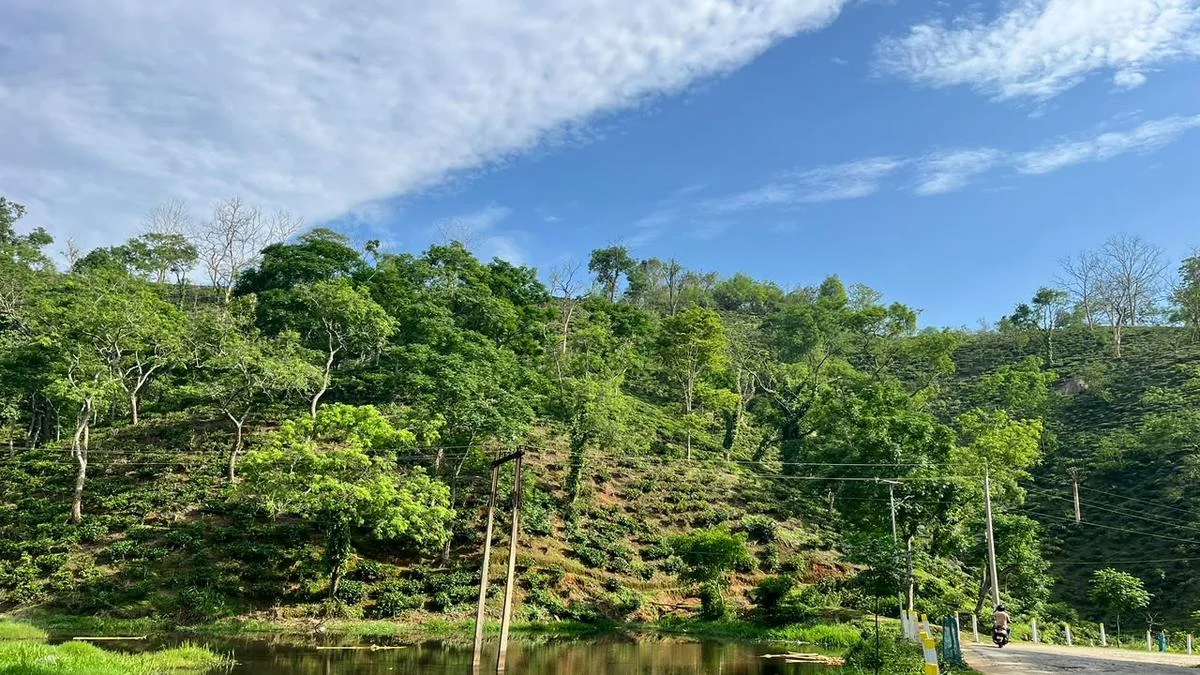
The landscape of Guwahati is often defined by its rapid urbanization, the sacred echoes of the Kamakhya Temple, and the rhythmic flow of the Brahmaputra. However, on the city’s immediate periphery, a transformation is occurring that seeks to reconnect the urban population with the region’s most storied legacy: tea. Amchong Tea Estate, a 1,782-acre expanse situated just 40 minutes from the city center, has transitioned from a traditional production unit into a sophisticated hub for experiential tourism.
This evolution comes at a pivotal moment as Assam celebrates 200 years of its tea industry, signaling a shift in how the "Assam Tea" brand is marketed to a global and domestic audience.
Main Facts: The Modernization of a Heritage Estate
Amchong Tea Estate, located on the outskirts of Guwahati near Narengi, has recently launched "Amchong Leaf: A Tea Walkthrough Experience." This initiative is designed to demystify the complex process of tea production, moving beyond the simple commodity trade into the realm of sensory education and luxury tourism.

The estate, which remains one of the oldest tea-growing properties within the city’s functional limits, has undergone a significant architectural and operational overhaul. The core of the new experience is a "leaf-to-cup" journey that integrates a model factory, an experiential center, and high-end culinary offerings. Key features of the site include:
- The Experiential Center: A museum-style facility using projection-mapping technology to narrate the history of tea.
- Viewing Gallery: A modern glass-walled corridor overlooking the processing floor, allowing visitors to witness the Crush, Tear, Curl (CTC) and Orthodox manufacturing processes in real-time.
- Steep House & Tea Leaf: Culinary venues that blend traditional Assamese cuisine (such as khorikat diya maas and til chicken) with contemporary international fare.
- The Tasting Room: A dedicated space for "Blend n Sip" sessions, where visitors are educated on the nuances of different tea varietals.
With visitor numbers reaching approximately 10,000 per month, Amchong is setting a new benchmark for how tea estates can diversify their revenue streams while preserving their agricultural identity.
Chronology: From Amsoi to Amchong
The history of Amchong is a microcosm of the broader tea industry in the Northeast. To understand its current success, one must trace its development through three distinct eras.

The Colonial and Early Post-Independence Era (1950s–1980s)
Sixty-eight years ago, the estate was established during a period when the Indian tea industry was transitioning from British colonial management to Indian ownership. In its early decades, the estate was known locally as "Amsoi." For the residents of Guwahati in the pre-digital era, Amsoi was a legendary picnic spot—a destination characterized by rolling hills, mulberry trees, and orange groves. It represented the "wild" frontier of the city, accessible only by arduous travel but offering a pristine escape into nature.
The Era of Consolidation (1990s–2010s)
Under the management of Bhauram Jodhraj, the estate entered its second and third generations of family ownership. During this time, the focus remained primarily on yield and production. The estate expanded its acreage and refined its tea-growing techniques to compete in the global auction markets. The "Amsoi" identity gradually faded into the formal "Amchong Tea Estate," and the orange and mulberry trees were largely replaced by high-yielding tea clones, reflecting the industrialization of the sector.
The Modern Pivot (2024–2026)
In February 2024, the management identified a gap in the market: while Assam produced a significant portion of the world’s tea, very few people understood how it was made. This led to the conceptualization of "Amchong Leaf." By 2026, the estate had fully integrated its tourism wing, offering structured packages (ranging from ₹599 to ₹2,499) that cater to everyone from casual tourists to "tea nerds" and corporate groups.

Supporting Data: The Economics of the Tea Experience
The success of Amchong Leaf is backed by a strategic tiered pricing model and a diverse range of activities that maximize "dwell time" on the property.
Package Breakdown and Accessibility
The estate offers four primary tiers of engagement:
- The Basic Walkthrough: Priced at ₹599, focusing on the factory tour and garden access.
- The Blend n Sip: A mid-tier offering focused on the chemistry of tea blending.
- The T’Journ: An immersive deep-dive into the history and culture of the Brahmaputra Valley’s tea heritage.
- The Adventure Package: Priced at ₹2,499, including 4×4 gypsy safaris and ATV rides through the rugged terrain of the 1,700-acre estate.
Operational Reach
The estate is strategically located. It is 40 minutes from Chandmari (Guwahati’s central residential hub) and 20 kilometers from Sonapur. This proximity allows it to tap into the "day-tripper" market of Guwahati’s 1.1 million residents, as well as transit tourists heading toward Meghalaya or upper Assam.

Gastronomic Integration
The "Steep House" restaurant has become a revenue driver in its own right. By offering wood-fired pizzas alongside traditional Assamese pitika (mashed delicacies), the estate caters to a multi-generational demographic. The inclusion of indigenous flavors like til (sesame) chicken ensures that the experience remains rooted in Assamese culture, even as it adopts international service standards.
Official Responses: A Vision for the Next Century
The leadership at Amchong views this initiative not merely as a tourist attraction, but as a necessary evolution for the survival of the tea industry.
Ananya Khemka, Director of Bhauram Jodhraj and Amchong Leaf, emphasizes the importance of storytelling in modern commerce. "Each package offers a different way to experience the estate and understand the journey of tea," Khemka states. "Rather than simply talking about tea, we wanted visitors to walk through the gardens, see how fresh leaves are transformed, and interact with the people behind every harvest. Today’s travelers are looking for authentic, immersive experiences, and Assam is uniquely placed to offer them."

Khemka further notes that the timing of the launch was intentional, coinciding with the 200th anniversary of the Assam tea industry. The goal is to elevate the perception of Assam tea from a "commodity in a bag" to a "craft in a cup."
Zameer Sodhi, Head of the Tea Experience, highlights the technical precision required for the new tasting sessions. "One can choose from CTC, orthodox black, green, and oolong teas," Sodhi explains. He notes that the brewing process is "surprisingly precise," involving borosilicate kettles and specific temperature controls to demonstrate how different varietals express their flavor profiles.
Implications: The Future of Tea Tourism in Assam
The "Amchong Model" has significant implications for the regional economy and the global tea trade.

1. Economic Diversification
The tea industry in India has faced challenges in recent years, including fluctuating auction prices, rising labor costs, and the impacts of climate change on harvest cycles. By diversifying into tourism, estates like Amchong create a "buffer" economy. The 10,000 monthly visitors provide a steady cash flow that is independent of the volatile global tea commodity market.
2. Branding and Value Addition
For decades, Assam tea was often used as a "filler" in international blends. By educating domestic and international tourists on the differences between CTC and Orthodox teas, and the specific terroir of the Guwahati outskirts, Amchong is helping to build "brand equity." This allows the estate to sell its premium teas directly to consumers at higher margins.
3. Preservation of Heritage
The "Amchong Leaf" experience serves as a living museum. By documenting the history of tea smuggling, the rise of milk tea culture, and the evolution of planting techniques, the estate ensures that the cultural history of the region is not lost to modernization. The nostalgic link—the chauffeur’s mention that the estate was once "Amsoi"—bridges the gap between the memories of the older generation and the experiences of the new.

4. Environmental and Social Impact
Large-scale tea tourism encourages the maintenance of green cover within city limits. As Guwahati expands, the 1,782 acres of Amchong act as a "green lung" for the city. Furthermore, the interaction between visitors and tea artisans (pluckers and factory workers) provides a platform for social recognition of the labor force that sustains the industry.
Conclusion
Amchong Tea Estate has successfully navigated the transition from a closed industrial site to an open, experiential landmark. By blending the rugged adventure of 4×4 safaris with the refined science of tea tasting, it offers a comprehensive look at the past, present, and future of Assam. As the industry looks toward its third century, the "leaf-to-cup" journey at Amchong serves as a blueprint for how tradition can be packaged for the modern world without losing its soul. For the visitor, it is no longer just a picnic spot remembered from childhood; it is a sophisticated masterclass in the craft of one of the world’s most beloved beverages.
