

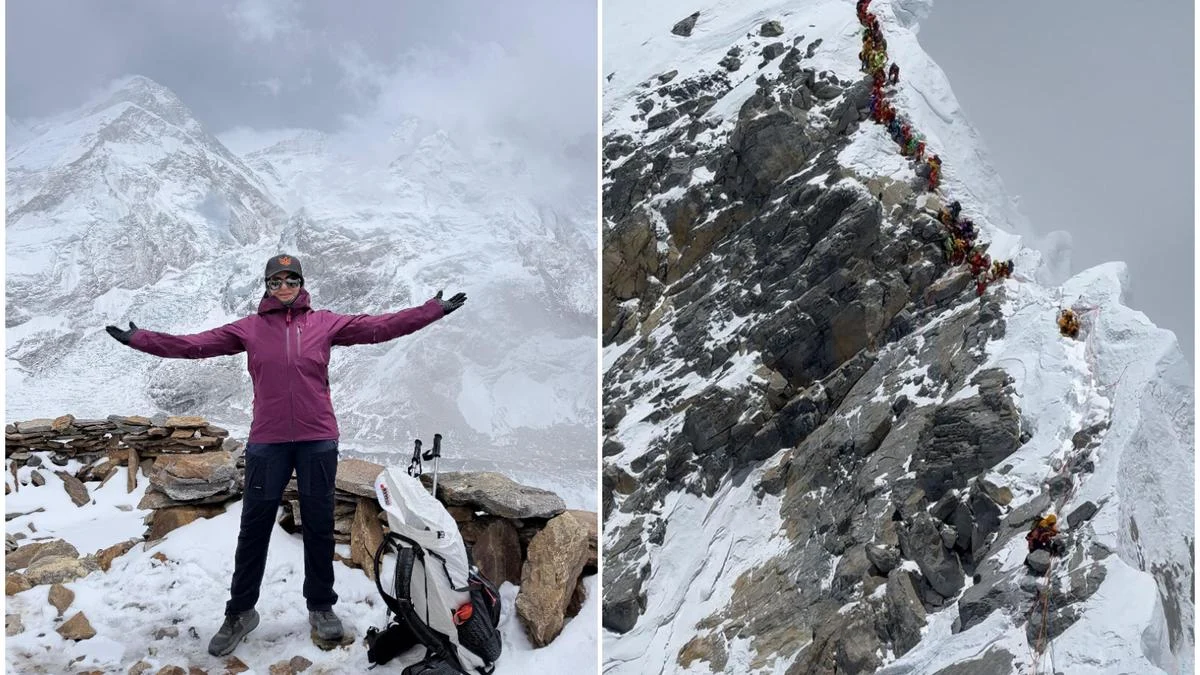
KATHMANDU / CHENNAI – In the rarefied air of the Himalayas, where oxygen is scarce and the margin for error is non-existent, Dr. Priya Selvaraj found a different kind of life-giving force. A prominent fertility specialist from Chennai, Dr. Selvaraj recently joined the elite ranks of mountaineers who have successfully summited Mount Everest (8,848.86 meters). However, her journey to the world’s highest peak was not born out of a lifelong obsession with summits, but rather as a profound response to the collective trauma of the COVID-19 pandemic and the heavy burden of personal loss.
Main Facts: A Journey Born of Necessity
For Dr. Priya Selvaraj, a woman whose professional life is dedicated to the delicate science of creating life, the pursuit of Everest was an unlikely pivot. Her ascent represents more than a physical achievement; it is a testament to the "refuge" that the mountains provide to those seeking to escape the noise of modern existence and the echoes of grief.
Following the devastating waves of the COVID-19 pandemic, which saw healthcare professionals worldwide pushed to their breaking points, Dr. Selvaraj sought a "scenic yet culturally significant" outlet for healing. What began as a search for a quiet trek evolved into a high-stakes mountaineering career. Her progression from the rolling hills of West Bengal to the "Death Zone" of Everest was a calculated, disciplined evolution, mirroring the precision required in her medical practice.
Dr. Selvaraj’s success is a highlight in the growing trend of high-achieving professionals turning to extreme endurance sports to manage burnout and find spiritual clarity. Her path to Everest was paved with rigorous training and the successful summiting of other formidable peaks, including Manaslu (8,163 meters), the eighth-highest mountain in the world.
Chronology: The Ascent from Grief to the Summit
The timeline of Dr. Selvaraj’s mountaineering career is a study in incremental progression and mental fortification. Unlike many who target Everest as their first major climb, her approach was methodical.
2021-2022: The Catalyst of Quiet
In the aftermath of the pandemic’s peak and experiencing a significant personal loss, Dr. Selvaraj turned to the internet to find a sanctuary. She sought a location that offered "refuge from the noise." This led her to her first major Himalayan trek: Sandakphu Phalut. Situated on the border of India and Nepal, this trek offers views of four of the world’s five highest peaks. It was here that the "mountain bug" first took hold.
2022: Scaling the Continental Heights
Emboldened by her Himalayan experience, she sought greater challenges. She traveled to Tanzania to climb Mount Kilimanjaro (5,895 meters), the highest peak in Africa. While Kilimanjaro is a non-technical "trekking peak," its altitude served as a vital testing ground for her physiological response to thin air. This was followed by the Khopra Ridge trek in the Annapurna region, further cementing her affinity for the high-altitude landscape.
2023: Transition to Technical Mountaineering
Realizing that her aspirations were shifting from trekking to climbing, Dr. Selvaraj moved toward technical training. She completed the Everest Base Camp (EBC) trek, but rather than stopping there, she utilized it as a springboard for Lobuche East (6,119 meters). Lobuche is a recognized "technical" peak that requires the use of crampons, ropes, and ice axes. Success here qualified her for the "8,000-meter club."
Late 2023: The Spiritual Summit of Manaslu
Before eyeing Everest, Dr. Selvaraj tackled Manaslu. Known as the "Mountain of the Spirit," Manaslu is notoriously dangerous due to avalanche risks. Her successful summit of this 8,163-meter giant provided the "spiritually fulfilling" experience she had been searching for and served as the final validation of her physical and mental readiness for Everest.
2024: The Roof of the World
Equipped with the technical skills from Lobuche and the high-altitude endurance from Manaslu, Dr. Selvaraj launched her Everest expedition. Navigating the treacherous Khumbu Icefall, the steep Lhotse Face, and the final, oxygen-depleted ridge to the summit, she reached the top of the world, completing a journey that had begun in the quiet corners of a Google search just a few years prior.
Supporting Data: The Rigor of the 8,000-Meter Peak
Mountaineering at this level is not merely an athletic feat; it is a physiological battle. Dr. Selvaraj’s medical background provided her with a unique perspective on the data of survival.

- The "Death Zone": Above 8,000 meters, the atmospheric pressure is about one-third of that at sea level. The human body cannot acclimatize to this altitude; it begins to die cell by cell. Dr. Selvaraj had to manage supplemental oxygen levels with clinical precision.
- Success Rates: According to the Himalayan Database, the success rate for Everest expeditions has hovered around 50-60% over the last decade, with factors like the "summit window" (weather) playing a critical role.
- The Gender Gap: While the number of female climbers is increasing, women still represent less than 20% of total Everest summiters. Dr. Selvaraj’s achievement contributes to the growing visibility of Indian women in high-altitude mountaineering.
- Physiological Prep: Her training involved intense cardiovascular conditioning, strength training, and "hypoxic training" to prepare her lungs for the oxygen-starved environment.
Official Responses and Perspectives
The mountaineering community and the medical fraternity have reacted with high praise for Dr. Selvaraj’s achievement.
The Nepal Mountaineering Association (NMA):
In a general statement regarding the 2024 season, officials noted that "The presence of medical professionals on the mountain brings a level of discipline and self-awareness that is often the difference between a successful summit and a tragedy. Dr. Selvaraj’s progression from trekking to 8,000-meter peaks is the gold standard for how climbers should prepare."
The Medical Community (Chennai):
Colleagues at GG Hospital and the wider obstetric community in India have lauded her as an inspiration. "Dr. Priya has always shown immense focus in the operating theater," said a senior colleague. "To see her translate that discipline to the harshest environment on Earth is a testament to her character. She has shown that life doesn’t end with grief; it can be reborn through challenge."
Expedition Leaders:
Logistics coordinators for her climb emphasized that her success was due to her "humility toward the mountain." They noted that many climbers arrive with ego, but those who come seeking "refuge" and "quiet," as Dr. Selvaraj did, often possess the mental resilience needed to endure the grueling weeks at Base Camp.
Implications: Mountaineering as a Therapeutic Frontier
Dr. Priya Selvaraj’s journey carries significant implications for how we view mental health, professional burnout, and the pursuit of extreme goals.
1. The Therapeutic Value of "Extreme Silence"
The article highlights a growing phenomenon: the use of extreme physical challenges as a "refuge." For Dr. Selvaraj, the mountains provided a space where the "noise" of the pandemic—the constant clinical decisions, the loss of patients, and the personal grief—could be processed through the singular focus of survival and movement. This suggests a shift in how high-stress professionals may seek "work-life balance" not through rest, but through redirected intensity.
2. Inspiring a New Demographic
Her story breaks the stereotype of the "career mountaineer." By balancing a demanding medical career with world-class climbing, she serves as a role model for women in their 40s and 50s, proving that the most ambitious physical goals are attainable even later in life and after significant career establishment.
3. The Ethics of the "Everest Industry"
Dr. Selvaraj’s methodical approach—climbing several smaller and mid-sized peaks before Everest—addresses a major criticism of modern Everest tourism: the "novice climber" problem. Her journey underscores the importance of the "qualifying" peaks like Lobuche and Manaslu, advocating for a safer, more respectful approach to the Himalayas.
4. A Legacy Beyond Medicine
While Dr. Selvaraj remains a dedicated physician, her name is now etched in the annals of Indian mountaineering. She has demonstrated that the skills required to nurture life—patience, precision, and resilience—are the very same skills required to stand on top of the world.
As she returns to her practice in Chennai, the "Everest" she carries with her is no longer a mountain of rock and ice, but a permanent internal landscape of peace. Her journey proves that sometimes, to find oneself after a period of loss, one must go to the highest point on Earth to truly find the ground beneath their feet.
