

By Journal Staff
In the quiet corridors of the GG Hospital in Chennai, Dr. Priya Selvaraj is known as a pioneer in reproductive medicine, a clinician whose life is measured in the delicate success rates of IVF cycles and the rhythmic beating of fetal hearts. However, in the high-altitude wilderness of the Himalayas, she is known by a different set of metrics: oxygen saturation levels, the crunch of crampons on blue ice, and the sheer grit required to stand atop the world’s highest peaks.
Her journey to the summit of Mount Everest (8,848.86 meters) was not the result of a lifelong obsession with mountaineering. Instead, it was a profound response to the crushing weight of the COVID-19 pandemic and the personal tragedies that followed in its wake. What began as a search for silence evolved into a historic odyssey, marking a significant transition from a high-stakes medical career to the pinnacle of technical mountaineering.
Main Facts: A Sanctuary in the Clouds
Dr. Priya Selvaraj’s ascent of Mount Everest and her preceding success on Manaslu (8,163 meters) represent a rare feat for a medical professional in mid-career. While many climbers spend decades preparing for the "Eight-Thousanders," Dr. Selvaraj’s trajectory was accelerated by a singular, focused need for emotional refuge.
The primary drivers of her journey include:
- The Catalyst of Loss: The emotional upheaval of the COVID-19 years and a significant personal loss prompted a search for a "scenic yet culturally significant" escape.
- Rapid Progression: Within a span of a few years, she moved from moderate trekking (Sandakphu) to high-altitude technical climbs (Lobuche East) and finally to the "Death Zone" peaks of Manaslu and Everest.
- Technical Qualification: Unlike "adventure tourists," Dr. Selvaraj underwent rigorous training to qualify for technical climbs, mastering the use of fixed ropes, ice axes, and oxygen systems.
- The Dual Identity: Balancing her role as a leading fertility specialist with the physical demands of elite mountaineering, she has become a symbol of resilience for women in the medical fraternity.
Chronology: The Path of Ascent
The transition from a city-bound doctor to a high-altitude climber did not happen overnight, though its pace was remarkable. Her journey can be mapped through a series of increasingly difficult challenges.
2021-2022: Seeking the Silence
Following the peak of the pandemic, Dr. Selvaraj sought a retreat from the "noise" of urban life and the trauma of the medical frontlines. Her first forays were into the Eastern Himalayas.
- Sandakphu-Phalut: This trek along the Singalila Ridge offered her the first panoramic views of the Everest cluster. It was here that the mountains first stopped being a backdrop and started being a destination.
- Khopra Ridge: A more secluded trek in the Annapurna region of Nepal, this journey solidified her love for the high-altitude landscape and the spiritual solace it provided.
2023: Testing the Limits
Encouraged by her physical performance, Dr. Selvaraj turned toward more iconic peaks.
- Mount Kilimanjaro (5,895m): Climbing Africa’s highest point served as a litmus test for her body’s reaction to altitude. Her success here opened the door to technical training.
- Everest Base Camp (EBC) and Lobuche East (6,119m): This was the turning point. Lobuche East is often used as a training ground for Everest because it requires technical climbing skills. Successfully summiting Lobuche East provided her with the "technical qualification" necessary to join expeditions to 8,000-meter peaks.
2024-2025: Entering the "Death Zone"
With the requisite skills in place, Dr. Selvaraj set her sights on the giants.
- Manaslu (8,163m): Known as the "Mountain of the Spirit," Manaslu was her first 8,000-meter peak. The summit was not just a physical victory but a spiritual one, providing the "fulfilling" experience that paved the way for the ultimate challenge.
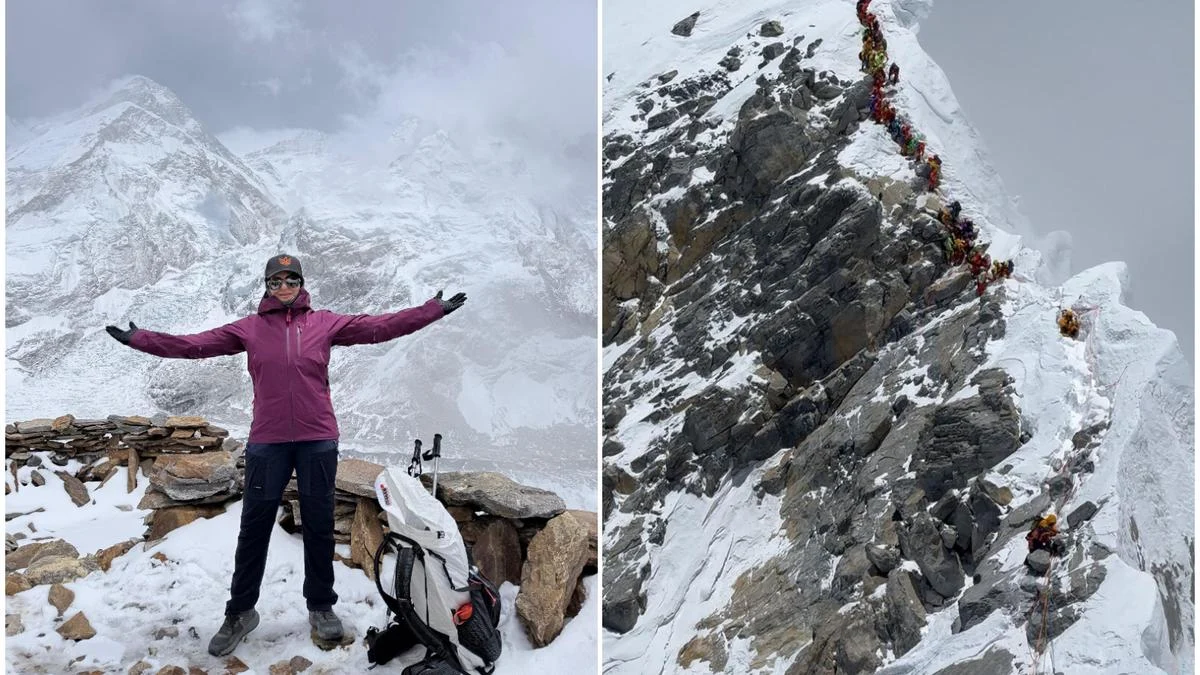
- Mount Everest (8,848m): The culmination of her journey. Moving through the Khumbu Icefall, the Western Cwm, and the Hillary Step, Dr. Selvaraj reached the summit, completing a cycle of healing that had begun in the depths of the pandemic.
Supporting Data: The Physical and Psychological Toll
Mountaineering at this level is a feat of extreme physiology. For Dr. Selvaraj, her medical background provided a unique lens through which to view the challenges.
The Physiology of 8,000 Meters
At the summit of Everest, the atmospheric pressure is about one-third of that at sea level. This means a climber takes in only 33% of the oxygen they would normally breathe.
- Hypoxia: Dr. Selvaraj had to monitor her own body for signs of High-Altitude Pulmonary Edema (HAPE) and Cerebral Edema (HACE), conditions she understood well from a clinical perspective.
- Caloric Deficit: A climber can burn between 6,000 to 10,000 calories a day during the summit push. Maintaining muscle mass and energy levels is a constant battle.
The "Everest Boom" and Success Rates
Data from the Nepal Department of Tourism indicates a steady rise in female climbers from India. In the 2024-2025 seasons, Indian climbers constituted one of the largest demographics on the mountain. However, the success rate for non-professional climbers remains approximately 50-60%, highlighting the significance of Dr. Selvaraj’s achievement.

Demographic Shift
Dr. Selvaraj represents a growing trend of "high-achiever mountaineers"—professionals in their 40s and 50s who turn to extreme sports as a counter-narrative to professional burnout. Statistics show that this age group often possesses the mental resilience and financial stability required for such expeditions, even if they lack the youthful recovery speeds of younger athletes.
Official Responses: Recognition of the Feat
The mountaineering and medical communities have reacted with a mixture of awe and professional respect for Dr. Selvaraj’s achievements.
The Mountaineering Fraternity:
Expedition leaders in Nepal have noted that Dr. Selvaraj’s approach was characterized by a "quiet discipline." Unlike many who seek the summit for social media prestige, her guides noted her focus on the technical aspects of the climb and her respect for the Sherpa culture. "She didn’t come to conquer the mountain; she came to find herself," noted one lead expedition coordinator.
The Medical Community:
Colleagues at the GG Hospital and the wider Indian medical community have hailed her as an inspiration. "Dr. Priya has always been a meticulous surgeon," said a senior colleague. "To see that same precision applied to the slopes of Everest is a testament to her character. She has shown that the life of a doctor does not have to be confined to the clinic."
Family Legacy:
As the daughter of the legendary Dr. Kamala Selvaraj and granddaughter of the iconic actor Gemini Ganesan, Dr. Priya Selvaraj has always lived in the public eye. Family spokespeople have expressed that this achievement is a "deeply personal victory" that adds a new chapter to the family’s legacy of breaking barriers.
Implications: Mountaineering as a Path to Mental Wellness
Dr. Selvaraj’s journey carries broader implications for how society views mental health, grief, and the role of nature in healing.
The "Refuge" Phenomenon
Her description of the mountains as a "refuge" from the "noise" of the COVID years resonates with a global movement toward "Green Exercise" and "Adventure Therapy." For many frontline workers who faced the trauma of the pandemic, traditional therapy was supplemented or replaced by the visceral, grounding reality of physical survival in nature.
Challenging Gender and Professional Stereotypes
By summiting Everest, Dr. Selvaraj challenges two prevailing stereotypes:
- The "Professional Ceiling": The idea that high-ranking professionals cannot afford the time or physical risk for extreme hobbies.
- The "Age/Gender Myth": The misconception that technical high-altitude climbing is the exclusive domain of young, male, professional athletes.
The Future of High-Altitude Medicine
Dr. Selvaraj’s experience may also bridge the gap between clinical medicine and high-altitude physiology. Her firsthand experience with the effects of extreme altitude on the human body, particularly from a woman’s physiological perspective, provides invaluable anecdotal evidence for future medical studies on mountaineering.
Conclusion: The Summit Beyond the Peak
As Dr. Priya Selvaraj returns to her practice in Chennai, the thin air of the Himalayas remains a part of her. Her story is a reminder that the most difficult mountains we climb are often the ones within us—the peaks of grief, the ridges of exhaustion, and the valleys of loss.
"My journey to Everest did not begin with a fascination for summits," she reflects. Yet, in reaching the top, she found more than just a view; she found the silence she had been searching for, and a new strength to bring back to the world below. Her achievement stands as a beacon for anyone seeking to transform their personal "upheaval" into a monumental triumph.
