

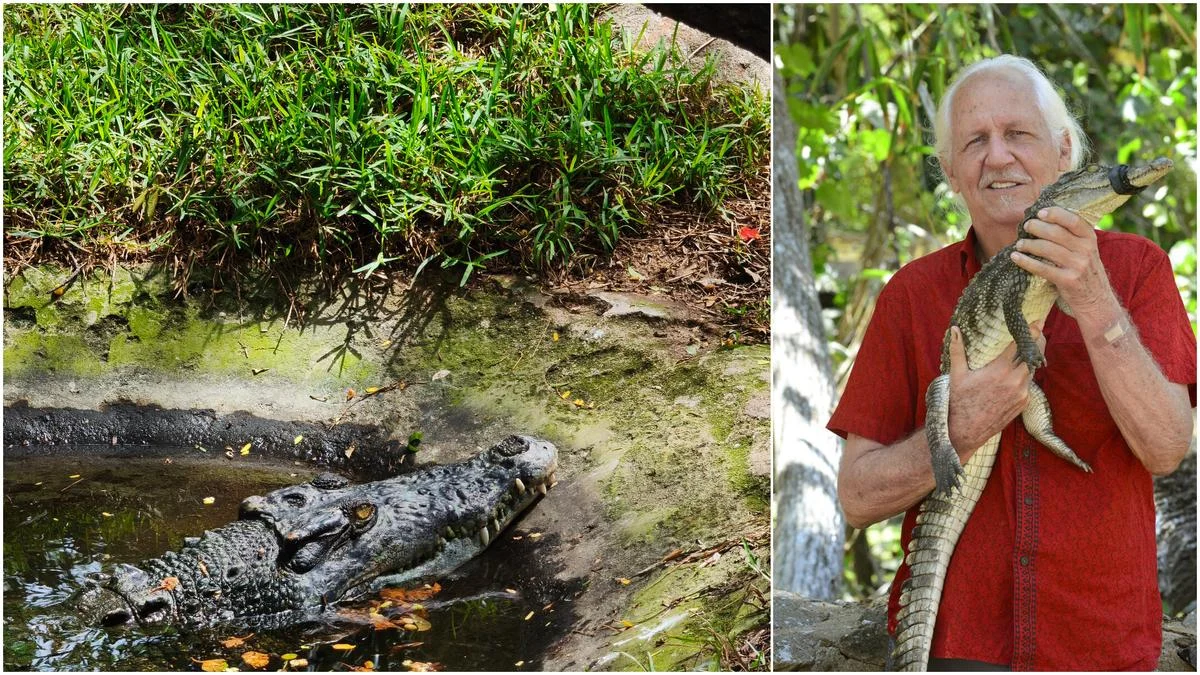
Five decades ago, on a desolate stretch of the East Coast Road (ECR) in Tamil Nadu, a vision for reptilian conservation began with little more than a sandy plot of land, a few wedding gifts, and a radical passion for creatures that most people feared. Today, the Madras Crocodile Bank Trust (MCBT) stands as a global beacon for herpetology, celebrating its 50th anniversary not just as a zoo, but as a pioneering research station and a sanctuary for some of the world’s most misunderstood predators.
From its humble beginnings in 1976 to its current status as home to over 2,500 crocodiles and dozens of other reptile species, the MCBT has redefined India’s relationship with its "river guardians." As the institution marks this golden jubilee, it looks back on a legacy built by Romulus "Rom" Whitaker and Zai Whitaker—a legacy that began, quite literally, with a crocodile in a box.
Main Facts: A Sanctuary Born of Necessity
The Madras Crocodile Bank Trust and Centre for Herpetology was established at a critical juncture in India’s environmental history. By the 1960s, the populations of India’s three primary crocodilian species—the Mugger (Crocodylus palustris), the Saltwater Crocodile (Crocodylus porosus), and the Gharial (Gavialis gangeticus)—had plummeted toward extinction due to unregulated hunting for the skin trade and habitat destruction.

Today, the MCBT campus in Vadanamelli village spans eight and a half acres and serves as a gene bank and breeding center. Its primary achievements include:
- Species Diversity: Housing 47 gharials and over 348 other crocodiles, alongside 32 species of turtles, snakes, and lizards.
- Conservation Impact: Successful captive breeding programs that have seen thousands of crocodiles replenished in the wild in collaboration with state forest departments.
- Social Ecology: The founding of the Irula Snake Catchers’ Industrial Cooperative Society, which revolutionized snakebite mitigation and provided sustainable livelihoods for indigenous communities.
- Research Frontiers: The establishment of the Andaman and Nicobar Environmental Team (ANET) and the Agumbe Rainforest Research Station (ARRS).
Chronology: From a Truck Ride to a Global Institution
1972: The Spark of an Idea
The genesis of the Croc Bank can be traced to a dusty truck ride in 1972. Romulus Whitaker, already a recognized herpetologist who had founded the Guindy Snake Park, was returning from a crocodile survey in Odisha. Running low on funds, he hitched a ride with a sympathetic truck driver. During that long journey toward Chennai, Rom penned a letter to Zai Whitaker, proposing the creation of a dedicated crocodile-breeding facility. The goal was twofold: to rewild the species and to create a self-sustaining educational space where visitors’ ticket fees could fund the conservation work.
1976: Foundation and Early Struggles
The MCBT was formally established on August 26, 1976. The initial funding was a patchwork of personal sacrifices. The Whitakers used their wedding gifts and even sold a prized tape recorder to gather the ₹5,000 per acre needed for the first plot of coastal land. Supported by legendary conservationists like Zafar Rashid Futehally (founder of WWF-India) and the "Birdman of India," Salim Ali, the bank began its mission on what was then a remote and quiet coastline.

The late 1980s: The Arrival of the Gharial
One of the most vivid memories for Zai Whitaker remains the arrival of the bank’s first gharial. The gharial, a critically endangered fish-eating crocodile with a long, thin snout, arrived in a simple wooden box, likely from Kukrail, Uttar Pradesh. At the time, the gharial was facing an existential crisis in the north due to sand mining and river pollution.
"When the animal is released from the box, you don’t know what it’s going to do," Zai recalls. Fortunately, the river guardian behaved impeccably, heading straight for the water of its newly dug pen. Since that moment, the MCBT has become a primary stronghold for the species, which remains one of the rarest crocodilians on Earth.
1990s and Beyond: Expanding the Scope
By 1990, the bank expanded its reach by setting up ANET to study the fragile ecosystems of the Andaman and Nicobar Islands. Simultaneously, the focus shifted toward human-wildlife conflict. The Irula Snake Catchers’ Cooperative became a vital pillar, helping the Irula tribe transition from the banned snakeskin trade to the life-saving work of extracting venom for anti-venom production—a project that continues to save thousands of lives across India today.

Supporting Data: The Scale of Conservation
The success of the MCBT is best understood through its logistical and biological scale. The bank is not merely a display of animals; it is a high-functioning laboratory of life.
| Category | Details |
|---|---|
| Total Crocodilians | ~395 individuals |
| Gharial Population | 47 (Significant portion of the global captive population) |
| Total Reptile Species | 35+ (Including turtles, snakes, and lizards) |
| Campus Size | 8.5 Acres |
| Outreach | Hundreds of thousands of annual visitors |
| Livelihood Support | 300+ Irula families supported via the venom cooperative |
The bank’s educational impact is equally significant. Through its volunteer programs, it has trained a generation of herpetologists. The "Snake Bite Mitigation Project" remains one of the most critical public health initiatives in rural India, where snakebite mortality remains a significant concern.
Official Responses: Perspectives from the Frontlines
The longevity of the Croc Bank is attributed to its "passionate team," a group Zai Whitaker describes as being enthusiastic about saying "yes" to the most unlikely circumstances.

Zai Whitaker, Co-founder:
Reflecting on the 50-year journey, Zai notes that time seems to both "shrink and expand" in the presence of these ancient reptiles. She emphasizes the legacy of researchers like Jagannathan Vijaya and Satish Bhaskar, who braved dacoits and pythons to conduct the first foundational studies on sea turtles and gharials. "Their initial studies were what took that whole conservation movement forward," she says.
G. Gowrishankar, Senior Animal Handler:
A second-generation handler, Gowrishankar represents the deep bond between the keepers and the kept. Known as a "crocodile whisperer" to visitors, he can herd Mugger crocodiles with the ease of a shepherd. "The crocs recognize his voice," onlookers note. For Gowrishankar, the work is a blend of brute strength and a psychological understanding of the animal, allowing him to assess their health and quarantine them when necessary.
Vaibhavi Bhardwaj, Zoo Educator:
Bhardwaj highlights the importance of the bank’s volunteer and educational programs. "Illnesses are hard to detect among reptiles because they are very good at masking anything that’s wrong—it’s a survival instinct," she explains. Her role involves breaking the "barrier of the pen," helping visitors realize that these animals are keystone species essential for healthy ecosystems.

Implications: The Next 50 Years of Reptile Advocacy
As the MCBT enters its sixth decade, the challenges facing reptiles have evolved but not disappeared. While hunting has largely been curtailed, habitat loss, climate change, and human-wildlife conflict remain potent threats.
The "Save the Reptiles" Campaign
To mark the 50th year, Ganesh Muthiah, a long-term volunteer turned trustee, is embarking on a 15,000-kilometer journey across 20 Indian states. This 120-day odyssey aims to launch the "Save the Reptiles Campaign," educating rural and urban populations about the reptiles in their midst. This initiative reflects the bank’s shift from purely captive breeding to nationwide advocacy and education.
Changing Perceptions
The primary implication of the MCBT’s work is the slow but steady shift in public perception. By allowing people to see crocodiles not as "monsters" but as "still, wild creatures" with complex behaviors and ecological roles, the bank has fostered a culture of tolerance.

The future of the Madras Crocodile Bank lies in its ability to navigate the modern world. With the ECR becoming a bustling hub of tourism and development, the bank remains a "pothole portal"—a step back into a time when the river and the coast belonged to the scaled guardians of the water.
As Zai Whitaker sits near the hatchery, overseeing operations with a "quiet enthusiasm," the message to the world remains clear: These animals are wild, they are integral, and after 50 years, their story is still being written.
Visitor Information:
- Location: 4, East Coast Road, Vadanamelli Village, Mahabalipuram, Tamil Nadu.
- Schedule: Closed on Mondays.
- Admission: ₹110 for adults; ₹50 for children.
- Highlights: Feeding sessions, underwater gharial viewing, and the Irula snake venom extraction demonstrations.
