

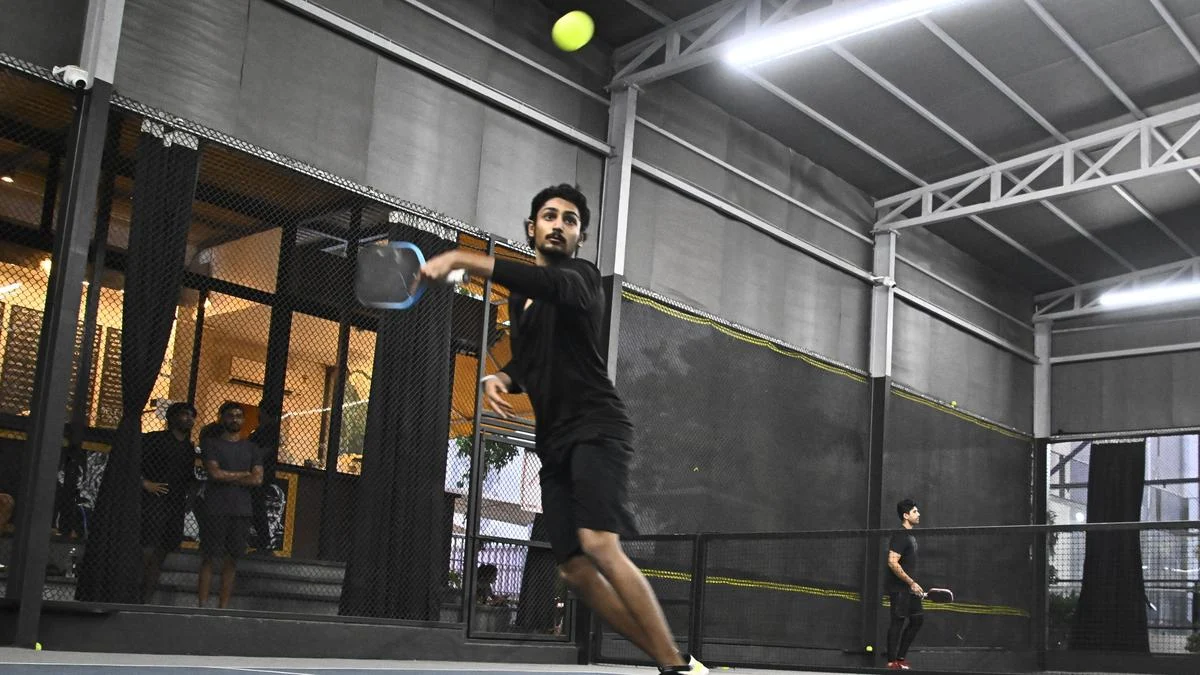
Hyderabad is experiencing a surge in pickleball participation, transforming quiet weekday evenings into a symphony of plastic balls and energetic rallies. What began as a niche social sport has rapidly evolved into a city-wide phenomenon, attracting a diverse demographic from IT professionals to seasoned athletes. This article delves into the burgeoning pickleball scene in Hyderabad, exploring its rapid growth, the sport’s unique appeal, the challenges it presents, and its burgeoning community.
The Explosive Growth of Pickleball Courts Across Hyderabad
Once a rarity, pickleball courts are now a common sight across Hyderabad. "Earlier there were only 8 to 10 courts in the city. Now you can find courts in different localities," states Dorlodhu Pradeep, a part-time coach at Hyderabad Paddle Park. This exponential increase in infrastructure is a testament to the sport’s escalating popularity.
The city’s strategic development has fostered distinct hubs for the sport. Jubilee Hills has emerged as a prominent center, boasting facilities like Hyderabad Paddle Park and The Kitchen, which consistently draw substantial evening crowds. These venues offer a blend of accessibility and a vibrant social atmosphere, making them prime destinations for pickleball enthusiasts.
Meanwhile, Madhapur’s Ayyappa Society has become a favored spot for IT professionals, with Pickle Yard being a particularly popular choice. The proximity to major tech parks allows these professionals to easily transition from their demanding desk jobs to the engaging physicality of pickleball. Gandipet’s Cross Court Sports offers a different proposition, providing a larger sports campus environment that caters to a broader range of athletic pursuits alongside pickleball. Other frequently visited venues contributing to the sport’s accessibility include Dink N Dash and the esteemed Pullela Gopichand Academy, further solidifying pickleball’s widespread presence.
A significant trend observed in Hyderabad’s pickleball landscape is the shift towards indoor, air-conditioned courts. This transition is driven by two primary factors: the city’s often oppressive heat and the increasing demand for a more comfortable playing experience. These climate-controlled facilities have inadvertently elevated the sport into a premium bracket, attracting players willing to invest in a more refined playing environment.
Understanding the Appeal: What Exactly is Pickleball?
Pickleball, a sport that has captured the attention of Hyderabad, is a fascinating hybrid that skillfully blends elements from tennis, badminton, and table tennis. At its core, it’s a paddle sport played on a court roughly the size of a badminton doubles court, making it considerably smaller than a tennis court. This compact playing area contributes to faster-paced rallies and a more intimate game experience.
The equipment used in pickleball is distinct. Players wield solid paddles, a departure from the strung rackets of tennis or badminton, and a perforated plastic ball. This unique ball, often referred to as a "wiffle ball," possesses a less predictable bounce, adding an element of surprise and strategic nuance to the game.

A fundamental rule of pickleball dictates that the ball must bounce once before players can volley it. This "no-volley zone" or "kitchen" area near the net prevents players from aggressively smashing the ball from an advantageous position, encouraging a more tactical and less power-dependent approach. Points are typically scored only by the serving side, a scoring system that adds a strategic layer to serving and receiving.
While various formats exist, doubles play is the most prevalent in Hyderabad. With four players sharing a court, the dynamic of teamwork and communication becomes paramount. This communal aspect of doubles pickleball strongly aligns with its origins as a casual social sport, making it accessible and enjoyable for a wide range of participants.
The origin of the name "pickleball" itself is shrouded in a bit of playful mystery, with competing theories adding to its charm. One popular narrative links the name to a dog named Pickles, who, according to the story, was fond of stealing the ball during early games. Another widely circulated explanation traces its etymology to the "pickle boat" in rowing, a term used to describe a crew formed from leftover members of other teams. These competing, yet widely accepted, stories contribute to the sport’s unique narrative and are frequently discussed within its growing community.
From Social Media Feeds to Court Dominance: How Hyderabad Embraced Pickleball
The meteoric rise of pickleball in Hyderabad can be largely attributed to its potent presence on social media platforms. Short-form video content, showcasing the sport’s engaging gameplay and social appeal, served as a powerful initial introduction for many. This digital exposure quickly translated into tangible interest, with corporate groups actively seeking out pickleball as a novel and engaging team-building activity.
Many players recount their initial encounters with pickleball online, drawn in by the seemingly simple yet captivating visual of the game. Darla Jyotirmayi, a finance professional who makes a regular commute from Nanakramguda to Jubilee Hills to play, shares this sentiment. "We kept seeing it online and finally decided to try it," she recalls. "Though it seemed simple at first, we discovered it wasn’t." This initial perception of simplicity, quickly giving way to the sport’s underlying complexities, has been a significant factor in its sustained popularity. Players, intrigued by the initial challenge, return to hone their skills and unravel the game’s strategic depth.
This sentiment is echoed by Garikapati Madhavi, an engineer from Kukatpally, who experienced a similar disconnect between online portrayals and the reality of playing. "Online videos never show how hard it is to judge the bounce," she explains. "You think you know where it will go, and then you miss it completely." This perceived difficulty, far from deterring players, often acts as a catalyst, motivating them to refine their technique and improve their understanding of the game’s nuances. The gap between initial expectation and the actual playing experience has, paradoxically, fueled the sport’s growth by fostering a desire for mastery.
A Diverse Court: Who is Playing Pickleball in Hyderabad?
A casual observation of any Hyderabad pickleball court reveals a remarkably diverse mix of players. The sport has successfully transcended traditional demographic boundaries, attracting individuals from various professional backgrounds and age groups.

Corporate teams, often participating as part of team-building initiatives or employee wellness programs, are a common sight. These groups typically comprise individuals new to the sport, discovering pickleball as a refreshing alternative to conventional office activities. IT professionals, a significant demographic in Hyderabad, frequently head to the courts straight from work, seeking an energetic outlet after long hours at their desks.
The presence of teenagers with strong tennis backgrounds adds a competitive edge to the scene. Their familiarity with racket sports allows for a quicker adaptation to pickleball’s mechanics, though they too find themselves challenged by the sport’s unique demands.
Gaurav Jha, a digital marketer from Madhapur, discovered pickleball during a corporate outing. "My boss explained the rules and I just joined," he recounts. He admits to an initial struggle to connect with the game, frequently missing the ball. "I struggled to connect with it," he recalls. It took him several matches, approximately five to six, to gain a comfortable grasp of the sport. This experience highlights the initial learning curve, even for those with a basic understanding of racket sports.
Chandravela Yash, a competitive tennis player who travels from KPHB to The Kitchen in Jubilee Hills, highlights how his existing skills provided an advantage. "Tennis helped me adjust," he says. However, he also emphasizes that assumptions can be misleading. "But the dink is the hardest shot and consistency matters." This statement underscores that even experienced athletes must adapt and refine their techniques to excel in pickleball.
At the more dedicated end of the spectrum is Kannur Gopi from Begumpet. A regular player at The Kitchen, Gopi has transitioned from casual play to participating in competitive tournaments in less than a year. His dedication is reflected in his expenditure, with an estimated investment of around ₹40,000 covering court bookings, equipment, and shared costs. His high-performance carbon fiber paddles, priced at approximately ₹6,000, require replacement every three to four months due to aggressive play. "Most other sports are cheaper," he admits, "But once you start, it is hard to stop." This sentiment encapsulates the addictive nature of the sport and the commitment it inspires in its dedicated players.
The Investment: Understanding the Cost of Pickleball
While pickleball offers an accessible entry point, the cost can escalate depending on the venue, frequency of play, and equipment choices. Court rental prices exhibit considerable variation across Hyderabad. Smaller, more informal facilities might charge around ₹700 per hour, whereas premium indoor venues command higher rates. At established locations like Hyderabad Paddle Park, court time can range from approximately ₹1,500 per hour, while The Kitchen charges around ₹1,600 per hour.
Equipment represents another significant cost component. Entry-level paddles can be purchased for approximately ₹1,500 to ₹2,000. For those seeking enhanced performance, advanced carbon fiber paddles can cost considerably more, often in the ₹6,000 and upwards range, as exemplified by Kannur Gopi’s experience. While the typical format involves four players sharing a court, thereby reducing individual costs, it necessitates coordination among participants or a willingness to join rotating groups. This shared cost model makes the sport more economically viable for individuals.

Navigating the Learning Curve: Skills, Safety, and Progression
The learning curve in pickleball presents a unique set of challenges and rewards. Experienced players often differentiate between indoor and outdoor balls, noting that indoor balls tend to be slower and lighter, while outdoor balls are faster and heavier. Neither behaves intuitively for newcomers, requiring a period of adaptation.
Wrist control emerges as an initial hurdle for many beginners. Small technical errors, rather than raw power, significantly impact consistency in pickleball. Mastering the "dink" shot, a delicate shot played with backspin into the opponent’s kitchen, is often cited as particularly challenging, requiring precision and finesse.
Safety is paramount, and proper footwear is strongly recommended. Due to the constant lateral movements involved in pickleball, court shoes that provide adequate ankle support are essential. Standard running shoes, while comfortable for linear motion, can increase the risk of ankle strain and injury on the court.
Dorlodhu Pradeep, a coach at Hyderabad Paddle Park, emphasizes a fundamental principle applicable to all sports and fitness routines: "Most injuries happen when players skip warm-ups. People only take it seriously after they get hurt." He stresses the importance of proper warm-up exercises to prepare the body for the physical demands of the game. Furthermore, he highlights that correcting wrist movement alone can dramatically transform a beginner’s game, improving both their control and effectiveness.
For individuals with prior racket sport experience, two to three sessions are typically sufficient to become comfortable with the game’s basic mechanics. Those without such a background may require a longer period to acclimatize. A deeper understanding of pickleball’s strategic intricacies and advanced techniques typically develops over several weeks of consistent play.
For now, pickleball sessions in Hyderabad have evolved beyond mere sporting activities. They have transformed into vibrant community gatherings, centered around the shared passion for this dynamic and engaging sport. The courts have become social hubs, fostering friendships and a sense of belonging among players from all walks of life. The sport’s infectious energy and the camaraderie it cultivates are undoubtedly key drivers of its sustained popularity in the city.
