


Bengaluru Gears Up for Record-Breaking Event as Global Fitness Phenomenon Takes Root in India
The air in Bengaluru is thick with anticipation, not just for the blooming of spring, but for the roaring commencement of the Ultrahuman Hyrox event this weekend, April 11th and 12th, at the Bangalore International Exhibition Centre. This highly anticipated fitness race is poised to break previous records, drawing an astounding 8,200 participants. This surge in numbers mirrors a nationwide trend, as Hyrox, a unique blend of functional fitness and endurance running, rapidly transforms from a nascent concept to a dominant force in India’s burgeoning fitness landscape.
Raj Ganpath, a seasoned fitness and nutrition coach and co-founder of Chennai’s The Quad fitness centre, admits to a palpable sense of nervous energy. "That nervous energy comes from the fact that this will be my first Hyrox event," he shares, his voice tinged with both excitement and a healthy dose of trepidation. His sentiment encapsulates the experience of many who are stepping into the Hyrox arena for the first time. The exponential growth of participation is undeniable: Mumbai hosted 1,650 athletes for its inaugural event, followed by Delhi’s impressive 2,200 participants last year. The upcoming September 2025 Mumbai event is already projecting a staggering 3,350 attendees, underscoring Hyrox’s rapidly escalating appeal across major Indian cities.

The Global Genesis of Hyrox
Launched in 2017 in Germany by visionary race organizer Christian Toetzke and Olympic gold medalist Moritz Fürste, Hyrox was conceived with a clear mission: to create a global fitness racing series grounded in the fundamental principles of athletic performance. Its genius lies in its inherent inclusivity, meticulously designed to welcome individuals across diverse age groups and fitness levels. The format offers multiple participation avenues, including individual singles, dynamic doubles, and collaborative relay formats. Today, Hyrox boasts a formidable global footprint, spanning over 80 events across 25 countries and engaging more than 250,000 participants worldwide.
India officially joined this international circuit on October 17, 2024, marking its entry as the seventh Asia-Pacific market. The inaugural race in the country was held in Mumbai in May of last year. Bengaluru now stands as the second major pit stop in the current Indian tour, with Delhi scheduled to host an event in July (registrations for which are already open), and Mumbai gearing up for a follow-up in September.
Deepak Raj, founder and CEO of Yoska, and the country head for Hyrox India and Ironman India, articulated Hyrox’s core value proposition in a previous interview with The Hindu: "Gym-goers don’t have a race – this fills the gap. Hyrox’s USP is that it’s accessible, and can be held any time of the year because it is an indoor event. Hyrox is for everybody; for all forms, and builds endurance and strength. You can do the doubles or a relay that has four participants." This democratized approach to competitive fitness has clearly resonated with the Indian populace.
The Multifaceted Allure of Hyrox
For athletes like Raj Ganpath, the inherent structure of the Hyrox race itself is a significant draw. "If you look at the overall circuit, it’s heavily endurance-based, but there’s a significant strength component as well," he explains. Competing in the Pro Doubles category, which features more demanding weights than the Open division, Raj has dedicated the past three-and-a-half months to rigorous preparation. His training regimen has largely revolved around simulations designed to meticulously mirror race conditions, alternating between one-kilometer runs and functional strength stations. The limited availability of dedicated Hyrox-style training setups in cities like Chennai has meant creative solutions, with some of his training taking place at Momentum Studio in MRC Nagar.
As the two-day event in the "Garden City" of Bengaluru approaches, Raj’s focus has strategically shifted to tapering. "You want to taper down and make sure you show up on race day feeling fresh and recovered," he advises. "The idea is not to overdo things at this stage; you don’t want to drain yourself. You also don’t want to take the entire week off, because then you risk feeling deconditioned." Instead, the emphasis is on judiciously reducing training load while maintaining activity – "just enough to keep the body primed and the central nervous system engaged."
The journey itself, Raj emphasizes, has been as rewarding as the prospect of the race. "To be very honest, for me, Hyrox is already done; I’ve gotten everything I needed out of the training," he states with satisfaction. "My endurance has improved, my strength has improved, and my nutrition has become more streamlined." This holistic improvement underscores Hyrox’s effectiveness as a comprehensive fitness challenge.

Building the Ecosystem: From Affiliation to Social Clout
The burgeoning popularity of Hyrox in India is a reflection of a global pattern, as observed by Mumbai-based Nike Training coach Kunal Rajput. "In places like Singapore and other parts of the world, the fitness community was really excited, and it became a thing because everybody wanted to participate," he remarks, noting that these markets were already hosting multi-day events just a couple of years ago.
This growth is visibly fueling the development of an entire ecosystem surrounding the sport. Kunal highlights the financial aspect of this expansion, explaining that gyms and training centers looking to align with Hyrox, either through official affiliation or by developing specialized programming, invest annual fees ranging from ₹50,000 to ₹60,000. "You pay a fee and you’re sorted," he notes, illustrating how structured training environments are rapidly coalescing around the Hyrox format.
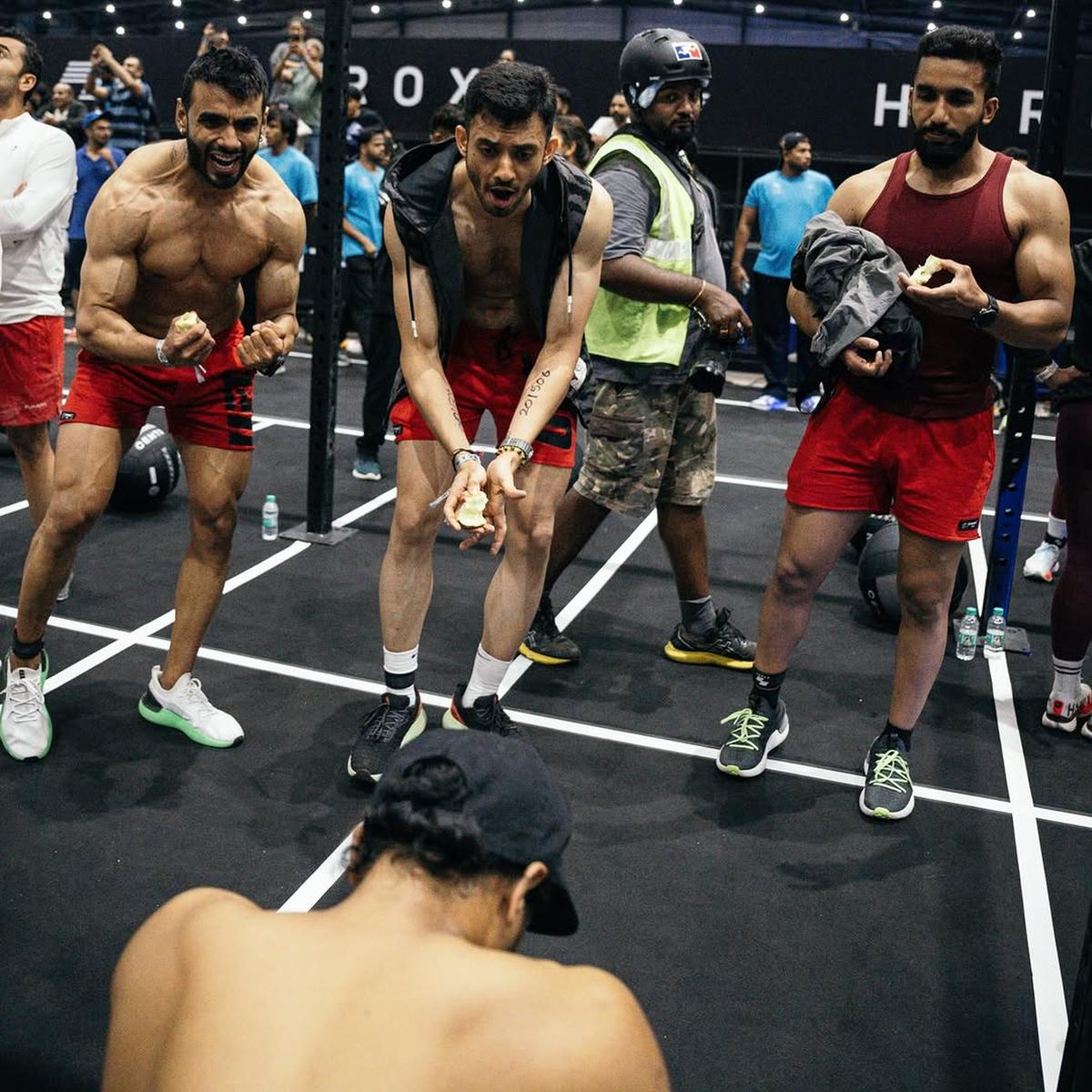
Kunal also draws a nuanced distinction between participation and genuine competition within the Hyrox community. "There’s a massive pool of people who are participating, but only a certain pool who are actually competing," he observes. For a significant segment of participants, the primary appeal lies less in their competitive standing and more in the experiential aspect of the event. "People are signing up to try it out, to do it with their partners, with a group of friends, even for the social aspect of it," he explains. He also acknowledges the element of "social clout" and visibility that participating in such a high-profile event can bring.

This sense of shared effort and camaraderie often proves to be the most potent hook. Kunal recounts his own experience: "My sister and I did the Bangkok Hyrox in March – that was my sixth race." What consistently stands out for him is the organic way the Hyrox format fosters connection. Whether it’s among friends, family members, or even complete strangers sharing the same course, a palpable sense of shared rhythm pervades the experience. "It’s a lovely event in that sense – people come together, push through it side by side, and that makes the whole thing far more enjoyable."
Nutrition and Recovery: The Unsung Heroes of Hyrox Performance
For Bengaluru-based fitness trainer Shwetambari Shetty, her journey in Hyrox has been one of continuous learning and growth. She participated in the inaugural Mumbai event last year, clinching a podium finish in the Women’s Pro Doubles category, a feat that qualified her and her teammate for the World Championships in Sweden this June. Her engagement with Hyrox has since extended internationally, with a recent race in Bangkok undertaken partly for the experience and partly as a community outing, with a group of 20 individuals from her gym, Thirdspace in Indiranagar, traveling together.
Shwetambari believes Hyrox’s growing appeal, particularly in urban centers, stems from its remarkable accessibility. "If you’re already someone who goes to the gym – lifting weights and doing some cardio – it’s not an impossible leap," she asserts. The primary adjustment, she notes, often lies in the running component. "Running becomes a big part of it, but it’s about eight kilometers in total, which you can build up to over a couple of months."

While training lays the foundational physical capabilities, Shwetambari emphatically stresses the critical role of nutrition and recovery in translating that training into peak race-day performance. "Unlike strength-focussed disciplines such as powerlifting, endurance events demand a very different fuelling strategy."
Central to this strategy is carbohydrate loading. "You should be consuming roughly five grams of carbohydrates per kilogram of body weight in the early part of the week, and then increase that to about seven to eight grams per kilogram in the last two days before the race," she explains. The objective is straightforward: to maximize the body’s glycogen stores, the primary fuel source for prolonged physical exertion.
Race-day fuelling requires meticulous planning and practice. "If you’re using energy gels, you need to practise with them in training," Shwetambari advises. A typical approach involves consuming one gel 15 to 20 minutes before the race, followed by smaller doses administered every 20 to 30 minutes. Beyond simply fueling for energy, managing fatigue-related issues like cramping is equally crucial. This is where strategies commonly employed in endurance sports, such as salt tablets, electrolyte mixes, or even pickle juice-based solutions, can prove invaluable.

Shwetambari further expands the definition of preparation beyond just diet and training. Even seemingly minor details like clothing can significantly impact performance. "If you’re carrying gels or snacks, you need functional clothing with pockets," she cautions, recalling instances where participants resorted to storing gels in their sports bras, leading to discomfort, chafing, and even potential injuries.
The Evolution of Footwear: A Hybrid Approach for a Hybrid Sport
The rise of Hyrox has also spurred innovation in athletic footwear, necessitating a re-evaluation of designs to cater to a discipline that bridges the gap between running and strength training. "There is running, but there’s also multiple forms of functional fitness," notes Shreya Sachdev, Puma India’s Head of Marketing and Strategic Initiatives, Footwear. "So regular training shoes don’t work, and typical running shoes aren’t fully optimized either."
This identified gap in the market spurred the development of Puma’s Hyrox-specific iteration within its acclaimed Nitro line. This line has been meticulously crafted in partnership with Hyrox and is backed by extensive research and rigorous testing. "We’re treating it as a distinct category," Shreya explains. "Just like you wouldn’t use a badminton shoe for cricket, you wouldn’t use a pure running shoe for Hyrox."

Traditional running shoes, she elaborates, are engineered primarily for forward motion, optimizing energy return through responsive foam cushioning (such as nitrogen-infused midsoles) and, in some instances, carbon plates for enhanced propulsion over extended distances.
"The key difference is stability and grip," Shreya emphasizes. "When you’re doing movements like wall balls, sled pushes or sled pulls, you need a grounded, stable base. You also need traction." Consequently, the Hyrox-adapted Nitro models achieve a delicate balance between cushioning and lateral stability, incorporating enhanced outsole grip and a more controlled ride. These features empower athletes to seamlessly transition between running intervals and strength stations without compromising their performance. The current iteration, presented in a distinctive pink colorway, serves as the official Hyrox edition for the ongoing season and is anticipated to make its debut at the Bengaluru race. The Puma x Hyrox footwear range is priced between ₹12,999 and ₹21,999.
Hyrox: Championing Inclusivity and Adaptive Performance
For Pune-based performance coach Veenita Johnson, Hyrox embodies a powerful synergy of intensity and inclusivity. As one of the few Hyrox-certified female trainers in Maharashtra and a Hyrox India consultant, Veenita currently guides a cohort of 16 trainees preparing for the Bengaluru race, with further participants lined up for Delhi and Mumbai.

Veenita’s personal journey with Hyrox is particularly inspiring, given her ongoing battle with bilateral peroneal neuropathy (commonly known as foot drop) since 2020 – a neurological condition that significantly impacts lower limb mobility. She is now poised to compete in the Adaptive category at the Bengaluru race, a division specifically designed to accommodate athletes with a spectrum of physical conditions. This follows her previous successful participation in the doubles category in Mumbai.
In Veenita’s case, while she will complete the full one-kilometer runs between stations, she may implement modifications for certain strength components. "For something like sled push or sled pull, which puts a lot of stress on the lower limbs, I may do a reduced distance – say 25 metres instead of 50," she explains. For movements like wall balls, she has the option of utilizing a plyometric box (approximately 75 cm high) to enhance stability during squats. "You can choose whether to take that support or not – it’s flexible depending on your condition."
Crucially, Hyrox champions varying levels of participation within its adaptive framework. "If there are too many modifications required, you can choose to participate out of the race, just for the experience," Veenita notes, highlighting the sport’s commitment to ensuring everyone can be a part of the Hyrox community.

Her training regimen, however, is far from diminished. It incorporates supplementary mobility work, physiotherapy-led exercises, and focused strengthening to compensate for less functional muscle groups. "I have to spend extra hours building endurance and managing compensation patterns," she elaborates, revealing that she recently completed a 10-kilometer run as part of her intensive preparation.
The Pricing Debate: Value Proposition in an Emerging Market
The question of Hyrox’s pricing has been a subject of discussion, with Raj Ganpath offering a nuanced perspective. "If you compare it to something like a 10K or a half marathon, then yes, it does feel expensive," he acknowledges. "You’re looking at registrations starting around ₹7,500 and going upwards of ₹10,000 depending on the category." Spectator passes, which grant access to observe the event and support participants, are priced between ₹500 and ₹1,500.
However, Raj is quick to point out that a direct comparison with road races is not entirely equitable. "Here, you’re dealing with an indoor, controlled environment – air-conditioning, specialised equipment like sleds and ski ergs, plus judges and timing systems. Naturally, the cost of putting something like this together is much higher."
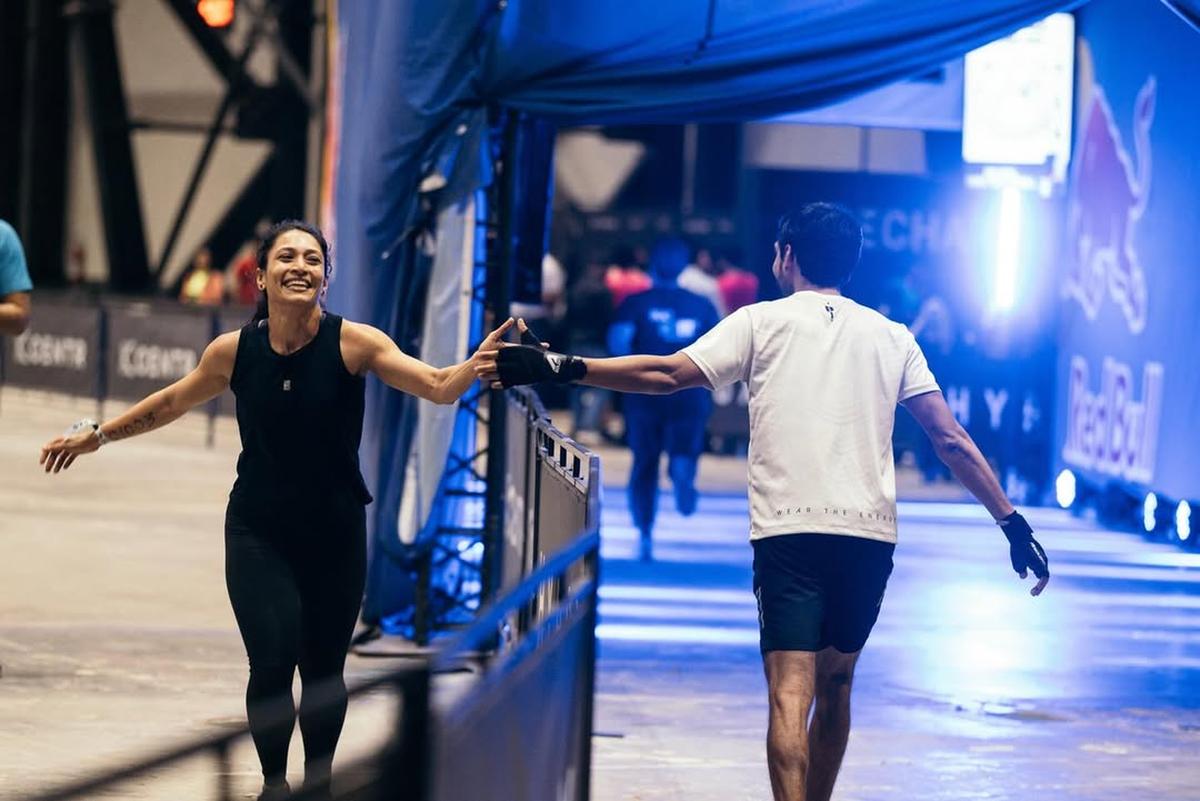
He views India as currently being in an early phase of Hyrox adoption. "We’re still at that stage where people are trying it out," he observes. "And like anything new, the first set of participants are usually the ones willing to pay that premium." This early adopter enthusiasm, coupled with the unique value proposition of a comprehensive fitness challenge, suggests that Hyrox is poised for sustained growth and deeper integration into India’s vibrant fitness culture. The Bengaluru event, with its record-breaking participant numbers, stands as a powerful testament to this burgeoning phenomenon.
