

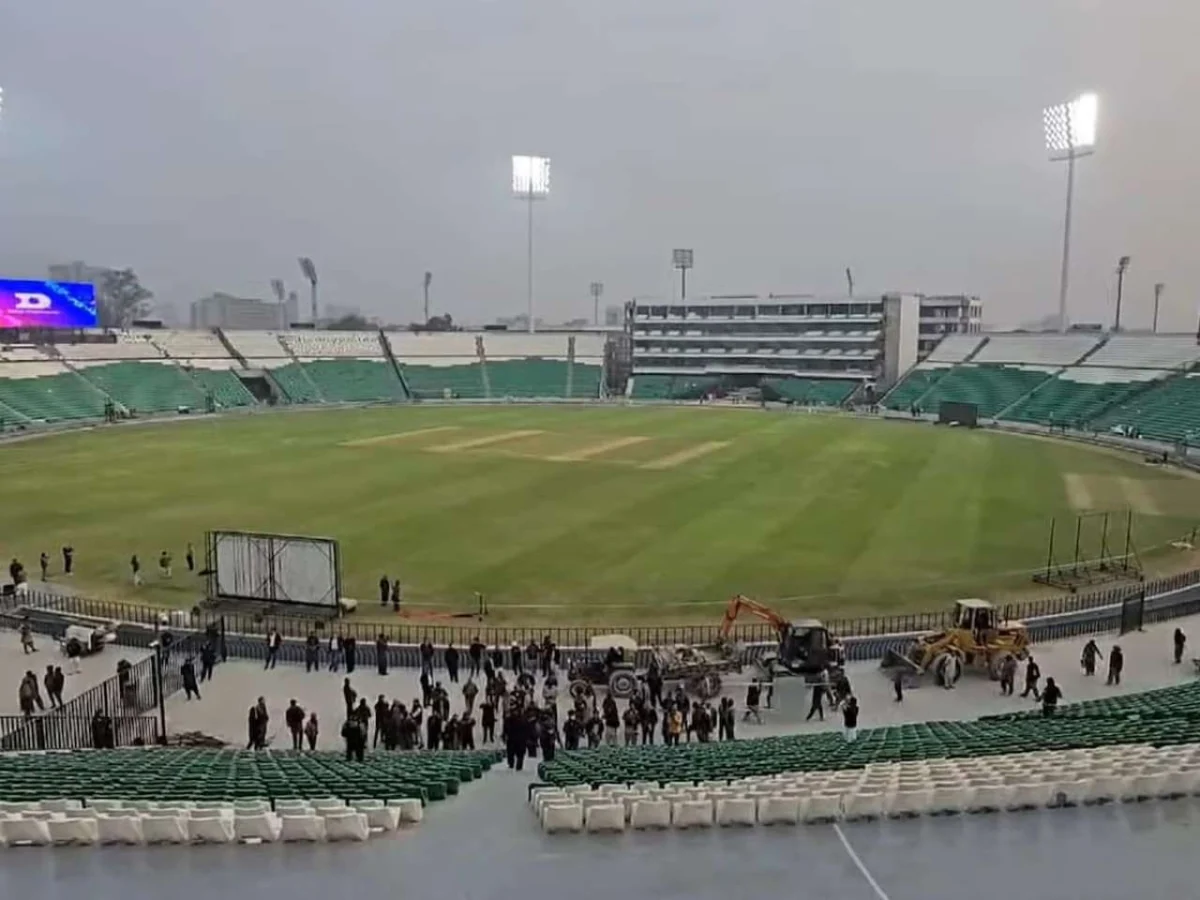
Lahore, Pakistan – August 20, 2026 – In a significant development that has been met with widespread relief and optimism across Pakistan’s cricketing landscape, the International Cricket Council (ICC) has officially rescinded the demerit point previously imposed on Lahore’s iconic Gaddafi Stadium. The global governing body’s decision, announced on Thursday (August 20), follows a comprehensive review of the circumstances surrounding the initial sanction, offering a crucial boost to Pakistan cricket’s ongoing efforts to solidify its position as a regular host of international matches.
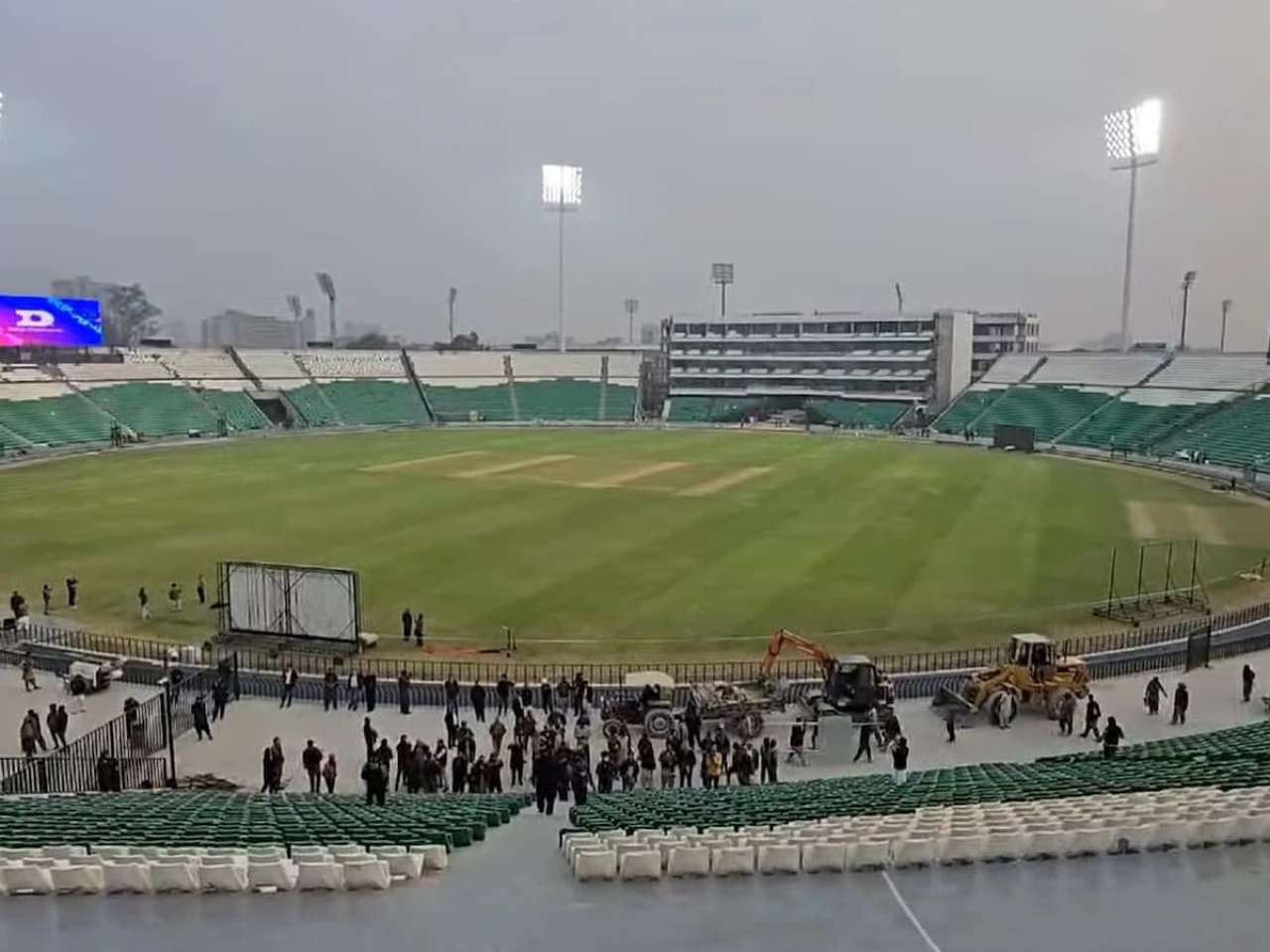
The stadium, a cornerstone of Pakistan’s cricketing infrastructure and history, had been penalised earlier this year under the ICC Pitch and Outfield Monitoring Process. This reversal not only clears Gaddafi Stadium’s record but also underscores the intricate challenges and scrutiny involved in maintaining pitch standards at elite international venues. For the Pakistan Cricket Board (PCB), this outcome represents a significant vindication and a clear path forward for future high-profile fixtures.
The Heart of the Matter: Rescinded Sanction and its Immediate Impact
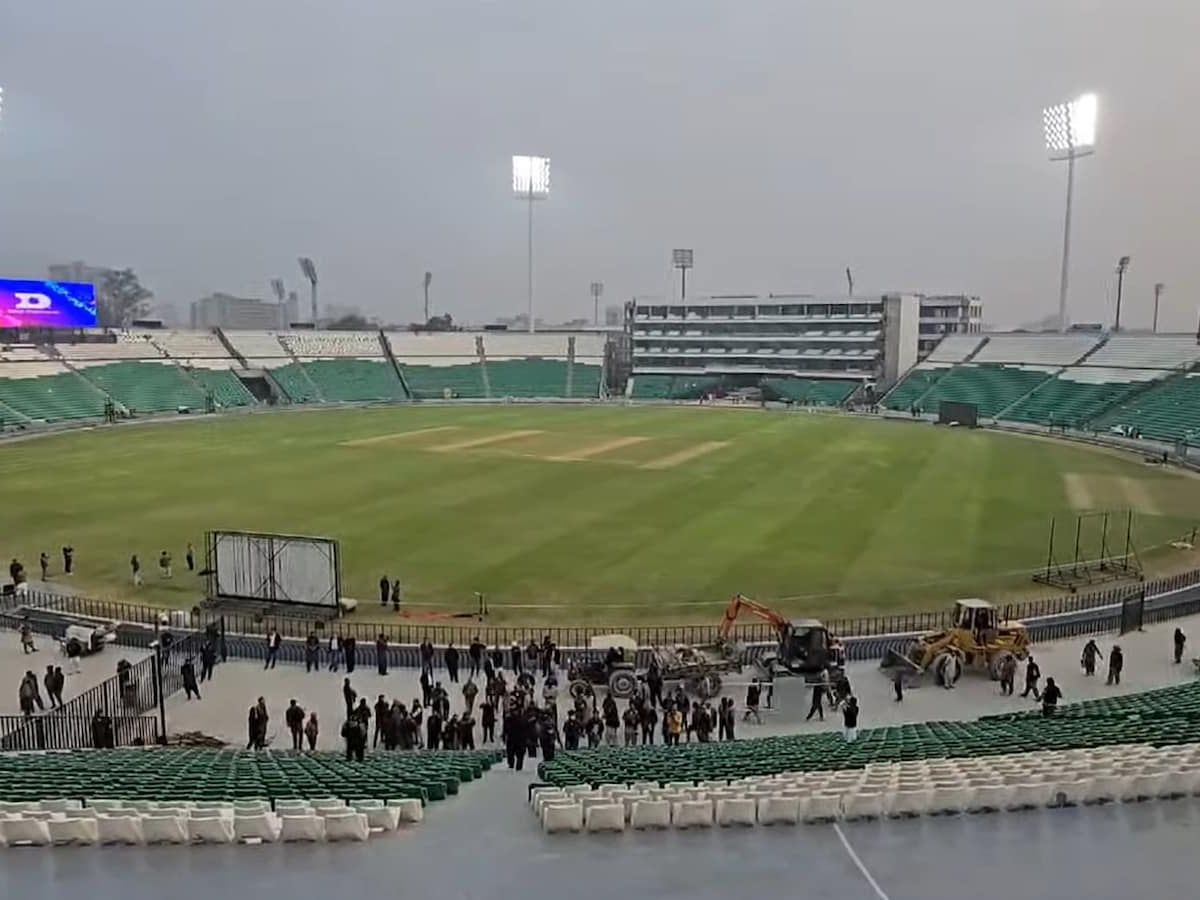
The ICC’s decision to revoke the demerit point for Gaddafi Stadium provides immediate and profound relief. Under the stringent ICC regulations, accumulating six demerit points within a 12-month period can lead to a severe 12-month ban from hosting any international matches. With the initial sanction, Gaddafi Stadium had been placed under this watchlist, creating a cloud of uncertainty over its future hosting capabilities. The removal of this demerit point means the venue now stands at zero demerit points, effectively removing any immediate threat of suspension and ensuring its availability for upcoming international assignments, including crucial bilateral series and potential ICC events.
)
This relief is particularly vital for Pakistan cricket, which has worked tirelessly over the past decade to re-establish regular international cricket on home soil following a prolonged period of isolation due to security concerns. Gaddafi Stadium has been at the forefront of this revival, hosting numerous high-stakes matches and serving as a symbol of the nation’s cricketing resilience. The clean slate allows the PCB to confidently plan for a robust schedule, assuring international teams and fans of the venue’s reliability and compliance with global standards.
The announcement was made after an appeal panel convened by the ICC meticulously reviewed the case presented by the PCB, alongside the original match referee’s report. This rigorous process highlights the multi-layered scrutiny applied to pitch conditions and the availability of avenues for redressal within the ICC’s framework.

A Detailed Chronology of Events: From Sanction to Salvation
To fully appreciate the significance of this reversal, it is crucial to trace the timeline of events that led to the initial sanction and subsequently, its overturning.
Pre-Match Buildup: Pakistan vs. Australia ODI Series (June 2026)
The series between Pakistan and Australia was a highly anticipated affair, marking another chapter in the fierce rivalry between the two cricketing nations. The teams arrived in Pakistan with strong squads, promising an enthralling contest. As the series progressed, the focus naturally shifted to the performance of the players and the tactical battles on the field. The third and final One Day International (ODI) was scheduled to be played at Gaddafi Stadium, Lahore, a venue known for its vibrant atmosphere and passionate crowds. The series was finely poised, adding extra pressure on the pitch curators to provide a surface conducive to a thrilling finale.
)
The Third ODI: A Low-Scoring Affair and the Initial Assessment
The match in question took place in June 2026. The third ODI between Pakistan and Australia at Gaddafi Stadium turned out to be a tightly contested, low-scoring encounter. Australia, batting first, struggled to build momentum and were eventually bowled out for a modest total of 157 runs. Pakistan, while successfully chasing the target, also found scoring challenging, ultimately clinching the victory by four wickets with 49 balls to spare. Notably, Pakistan’s captain and star pacer, Shaheen Afridi, delivered a match-winning performance, securing figures of 3-30.
Following the conclusion of the match, the official match referee, Graeme La Brooy, submitted his report to the ICC. In his assessment, which is standard procedure for every international match, the pitch for the third ODI was deemed "Unsatisfactory." His report elaborated: "The pitch was slow and low, making it very challenging to score runs. It was not suitable for a One Day International match, as batters needed more time to settle in. Spin was effective very early in the game and continued throughout the match." Based on these observations and the guidelines of the ICC Pitch and Outfield Monitoring Process, Gaddafi Stadium was assigned one demerit point.
)
PCB’s Response and the Appeal Process
Upon receiving notification of the demerit point, the Pakistan Cricket Board (PCB) swiftly moved to review the situation. While accepting the match referee’s initial assessment, the PCB believed there were nuances and contextual factors that warranted an appeal. The Board, under its Chairman, initiated the formal appeal process as stipulated by ICC regulations. This involved compiling a detailed submission, potentially including expert opinions, historical pitch data, and technical explanations regarding the pitch preparation and its behavior during the match. The PCB’s argument likely focused on demonstrating that while the pitch might have been challenging, it did not cross the threshold of being inherently unsafe or unplayable, and that the nature of the game, including player performance, also contributed to the low scores.
The ICC Appeal Panel Review and Rescission
The appeal panel, comprising independent experts and ICC officials, meticulously reviewed all submitted evidence, including the original match referee’s report, video footage of the match, and the PCB’s detailed counter-arguments. After careful deliberation, the panel concluded that, despite the match referee adhering to the ICC Pitch and Outfield Monitoring Process guidelines in his initial assessment, the pitch itself "did not exhibit excessive unevenness or spin." This crucial distinction formed the basis of their decision to overturn the sanction, effectively revoking the demerit point assigned to Gaddafi Stadium. The announcement of this reversal was made on Thursday, August 20, bringing an end to the uncertainty surrounding the venue.
)
Supporting Data: Understanding ICC’s Pitch Monitoring and Demerit System
The ICC Pitch and Outfield Monitoring Process is a critical mechanism designed to ensure fair playing conditions and uphold the integrity of international cricket. It is a comprehensive framework that outlines the criteria for evaluating pitches and outfields, and the consequences for venues that fail to meet these standards.
The ICC Pitch and Outfield Monitoring Process Explained:
The process involves match referees submitting detailed reports on the pitch and outfield conditions after every international match. These reports assess various aspects, including:
)
- Pace and Bounce: Whether the pitch offers a fair contest between bat and ball.
- Seam Movement: The extent to which the pitch assists fast bowlers.
- Spin: How much turn the pitch offers to spinners, and at what stage of the match.
- Evenness: The consistency of bounce across the surface.
- Cracks/Wear and Tear: The development of cracks and general deterioration.
- Outfield Condition: The quality of the outfield for fielding and ball movement.
Pitches are categorized as "Very Good," "Good," "Average," "Below Average," "Unsatisfactory," or "Unfit." An "Unsatisfactory" rating, as was the case for Gaddafi Stadium, typically indicates a pitch that, while not dangerous, does not provide a reasonable contest or meet the expected standards for the format of the game. For ODIs, a pitch is generally expected to offer opportunities for both batsmen and bowlers, allowing for a healthy run rate and exciting play. A slow, low pitch that heavily favours spin from an early stage, as described by La Brooy, could be seen as deviating from this ideal for a limited-overs match.
The Demerit Point System:
The system is designed to act as a deterrent against repeated failures in pitch and outfield preparation.
)
- Below Average: One demerit point.
- Unsatisfactory: Two demerit points. (Note: Original article says Gaddafi received one, implying the ICC deemed the specific incident closer to a "Below Average" impact or a nuanced interpretation).
- Unfit: Three demerit points.
Crucially, demerit points remain active on a venue’s record for a rolling 12-month period. If a venue accumulates six demerit points within this timeframe, it automatically faces a 12-month ban from hosting any international matches. This ban can have significant financial and reputational consequences for the host board and the stadium itself. The appeal panel’s decision to revoke Gaddafi Stadium’s demerit point is therefore a critical intervention, preventing the venue from being placed on a precarious path towards a potential ban.
The Art and Science of Pitch Preparation:
Pitch preparation is a complex endeavor, blending scientific understanding of soil composition, grass varieties, and moisture content with the artistic intuition of experienced groundskeepers. Factors such as local climate, recent weather patterns, and the specific demands of the match format (Test, ODI, T20I) all play a crucial role. A Test match pitch might be prepared to slowly deteriorate, offering something for all facets of the game over five days. An ODI pitch, on the other hand, is generally expected to provide a good balance between bat and ball, encouraging aggressive scoring while still offering assistance to bowlers. The challenge lies in creating a surface that is both competitive and consistent, ensuring a fair contest without being overly dominant for one discipline. The Gaddafi Stadium incident underscores the fine line between a challenging pitch and one deemed "unsatisfactory."
)
Official Responses: Statements and Interpretations
The ICC’s statement regarding the reversal provided clarity but also highlighted the nuanced interpretations that can arise in pitch assessments.
ICC’s Official Stance:
The ICC’s latest statement explicitly noted, "While the match referee adhered to the ICC Pitch and Outfield Monitoring Process guidelines, the pitch did not exhibit excessive unevenness or spin." This statement is key. It implies that Graeme La Brooy, the match referee, correctly applied the existing guidelines based on his observation of a slow, low pitch that favoured spin. However, the appeal panel, possibly with access to more detailed technical analyses, video replays, and expert opinions, concluded that these characteristics, while present, did not reach the threshold of "excessive" or "problematic" to warrant a demerit point under a broader interpretation. This suggests a potential area for refinement in how "unsatisfactory" is quantitatively defined or interpreted across different review levels.
)
PCB’s Expected Reaction:
While an immediate official statement from the PCB Chairman or CEO was not provided in the original text, their reaction would undoubtedly be one of profound relief and satisfaction. This outcome validates their appeal and their commitment to providing high-quality cricketing venues. The PCB would likely reiterate its dedication to adhering to ICC standards for pitch and outfield preparation and express gratitude to the ICC for conducting a thorough and fair review process. This decision bolsters their confidence in hosting future events and reassures stakeholders about Pakistan’s capability to deliver world-class cricketing experiences.
The Match Referee’s Role:
Graeme La Brooy’s initial report was based on his professional judgment and adherence to established protocols. The appeal panel’s decision to overturn the sanction is not necessarily a rebuke of his initial assessment but rather a different interpretation based on a higher level of review. Match referees play a vital role in upholding game standards, and their initial reports are crucial starting points for any disciplinary action. This incident, however, demonstrates the importance of an independent appeal mechanism to ensure fairness and prevent potentially undue penalties.
)
Implications: A Broader Look at Pakistan Cricket’s Future
The rescission of the demerit point for Gaddafi Stadium carries significant implications, extending far beyond the immediate relief for the venue itself.
For Gaddafi Stadium and Lahore:
With its record cleared, Gaddafi Stadium can continue to serve as a premier international venue without any restrictions. This is crucial for Lahore, a city with a deep-rooted cricketing culture and a history of hosting major tournaments. The stadium is expected to be a central venue for upcoming bilateral series involving top international teams and will undoubtedly be a key location for potential ICC events that Pakistan may host in the future, such as the 2025 Champions Trophy. The ability to guarantee a clean bill of health for its primary stadium is invaluable for the PCB’s long-term planning.
)
For Pakistan Cricket as a Whole:
This decision is a significant morale booster for Pakistan cricket. The nation has fought hard to regain the trust of international teams and cricket boards after the security challenges of the past. Every positive development, such as a major venue being cleared of sanctions, reinforces the narrative of Pakistan as a safe and capable host. It helps in attracting more teams, ensuring a steady flow of international cricket, which is vital for the development of local talent, fan engagement, and the financial health of the sport in the country. It also sends a message to the global cricketing community that Pakistan is committed to maintaining high standards across all aspects of hosting international matches.
Impact on ICC’s Monitoring Process:
The incident also provides a useful case study for the ICC’s Pitch and Outfield Monitoring Process. It demonstrates that while initial assessments by match referees are critical, the appeal mechanism serves as an important check and balance. It ensures that decisions are robust and consider all available evidence, potentially preventing unintended consequences for host nations. It might also lead to internal discussions within the ICC about refining the guidelines or providing further clarity on subjective terms like "unsatisfactory" or "excessive" to minimize discrepancies in interpretation. The goal is always to achieve consistency and fairness across all venues globally.
)
Financial and Reputational Gains:
Hosting international cricket generates significant revenue through ticketing, broadcast rights, sponsorship, and tourism. A stadium ban would have resulted in substantial financial losses for the PCB. The current decision safeguards these revenue streams and allows Pakistan to continue leveraging its cricketing infrastructure for economic benefit. Furthermore, the positive resolution enhances Pakistan’s reputation as a responsible and compliant member of the international cricketing fraternity, capable of addressing and resolving complex issues through due process.
Future Pitch Management in Pakistan:
While the demerit point has been rescinded, the initial incident will undoubtedly serve as a learning experience for the PCB and its ground staff. It will likely lead to an even more meticulous approach to pitch preparation, with greater emphasis on consistency, balance, and adaptability to different match formats. Investing in pitch technology, expert consultants, and ongoing training for groundskeepers will be crucial to ensure that Gaddafi Stadium and other venues in Pakistan consistently produce surfaces that meet the highest international standards, fostering exciting and competitive cricket for years to come.
)
In conclusion, the ICC’s decision to revoke the punishment against Gaddafi Stadium is a moment of significant relief and forward momentum for Pakistan cricket. It underscores the challenges and complexities of elite sports administration but ultimately reaffirms the commitment to fair play and due process. As Pakistan continues its journey to solidify its place on the global cricketing map, this clean slate for its premier venue marks a crucial step in the right direction.
